Declaring a Firearm at the Canadian Border
There's nothing quite like the excitement of an upcoming hunting trip to Ontario. You've scouted your areas, maybe even booked a fantastic outfitter, and your gear is packed. But then a little anxiety creeps in: crossing the Canadian border with your trusty hunting firearm. It's a common worry, and many seasoned hunters have felt that knot in their stomach, wondering if they've got all their ducks in a row. This guide is here to untangle the process of declaring a firearm at the Canadian border, making sure your entry into Ontario is as smooth as freshly fallen snow.
Understanding Canadian Firearm Classifications for Hunters
Before you even think about packing your rifle, it's absolutely crucial to understand how Canada classifies firearms. It's not quite the same as other jurisdictions, and knowing the difference can save you a world of trouble at the border. Getting this wrong is one of the quickest ways to have your hunting trip end before it even truly begins.
Non-Restricted Firearms: Your Hunting Essentials
For the vast majority of hunters heading to Ontario, your firearms will fall into the "non-restricted" category. This includes most common hunting rifles and shotguns – think your standard bolt-action deer rifle, lever-action bear gun, or pump-action waterfowl shotgun. These are the workhorses of the hunting world, designed for sport and sustenance, and are generally what Canadian law considers acceptable for temporary import by visitors for hunting purposes.
When you're packing a non-restricted firearm, the process at the border, while requiring due diligence, is much more straightforward. You're bringing in a tool for its intended, legal purpose. It’s important to confirm your specific firearm fits this classification before your journey. Most outfitters or hunting resources will explicitly state this, and checking the official Canadian government guidelines is always a wise move.
Remember, even though they're "non-restricted," they still require proper declaration and transport. It doesn't mean you can treat them casually. This category is your green light, but it comes with a few conditions to ensure safety and legal compliance. Many non-resident hunters find that familiarizing themselves with these classifications well in advance through resources like GoHunt helps to alleviate pre-trip stress.
Prohibited and Restricted Firearms: What's Not Allowed
Now, this is where you need to pay very close attention. Canadian law has strict classifications for "restricted" and "prohibited" firearms, and generally speaking, these are not allowed for non-residents to import for hunting. Trying to bring one of these across the border, even unintentionally, can lead to serious legal problems, confiscation of your firearm, and being turned away from Canada, or worse.
Restricted firearms typically include most handguns, certain semi-automatic rifles, and some shotguns with specific barrel lengths. Prohibited firearms are an even stricter category, encompassing fully automatic firearms, certain types of assault-style rifles, and firearms that have been modified to be shorter than legal limits. These are absolute no-gos for hunting trips.
The frustration many hunters feel when they realize their handgun, which they might carry for personal protection at home, is a prohibited item for import into Canada is completely understandable. However, Canadian law is very clear on this. Save yourself the headache and leave anything that might fall into these categories at home. Focus on your non-restricted hunting firearms to ensure a smooth crossing.
The Non-Resident Firearm Declaration (Form CAFC 909)
This form is not just a piece of paper; it's your key to legally bringing your hunting firearm into Canada as a non-resident. Without it, or without completing it correctly, your firearm won't make it past the border crossing. Think of it as your temporary permit, proof that you're an authorized, temporary importer of a firearm for a legitimate purpose – in this case, hunting.
Why This Form is Your Best Friend
The Non-Resident Firearm Declaration (Form CAFC 909) is absolutely critical. It serves as your temporary firearm possession license and import permit. Once validated by a Canada Border Services Agency (CBSA) officer, this form legally authorizes you, as a non-resident, to possess and transport specific firearms in Canada for up to 60 days. This means that for the duration of your hunting trip, this document is your proof of legal firearm ownership and presence in the country.
Many hunters underestimate the importance of this form, perhaps viewing it as mere bureaucratic red tape. However, it's designed to ensure that only legitimate, law-abiding individuals bring firearms into the country, maintaining public safety while still allowing for legal activities like hunting. It’s a foundational document for any non-resident hunter, so make sure you treat it with the respect it deserves.
Having this form prepared in advance is a huge time-saver and stress reducer. Imagine arriving at a busy border crossing, jet-lagged and eager to start your adventure, only to realize you have to fill out a lengthy form from scratch. Preparing it ahead of time, with all the correct information, allows for a much quicker and smoother process once you're at the customs booth. It’s truly your best friend for a hassle-free entry. You can learn more about the specifics of Bringing Firearms Into Ontario by checking out our other resources.
Filling Out the Declaration Correctly
Filling out the Non-Resident Firearm Declaration (Form CAFC 909) is a straightforward process, but accuracy is paramount. You'll need to include precise details about each firearm you're bringing. This means the exact make, model, serial number, calibre, and barrel length. Don't guess – double-check every detail against your firearm itself. Any discrepancy could cause delays or issues at the border. You'll also need to state the value of the firearm and your destination in Canada.
One of the most important instructions is to NOT sign the form until you are in front of a CBSA officer at the border. They need to witness your signature. This is a common mistake that can lead to having to fill out a new form, wasting precious time. You'll also need to pay a fee, which is applied per declaration, not per firearm. So, whether you're bringing one rifle or two, the declaration fee is typically the same. Check the official Canadian Border Services Agency website for the most current fee schedule.
Take your time when completing the form at home. Gather all the necessary information, type or print clearly, and ensure there are no errors. Print two copies – one to present and one as a backup. While booking a guided trip, many outfitters, especially those listed on platforms like BookYourHunt, will send you guidance or even a pre-filled template for this form, which can be incredibly helpful for first-timers or those feeling a bit overwhelmed.
The Border Crossing Procedure
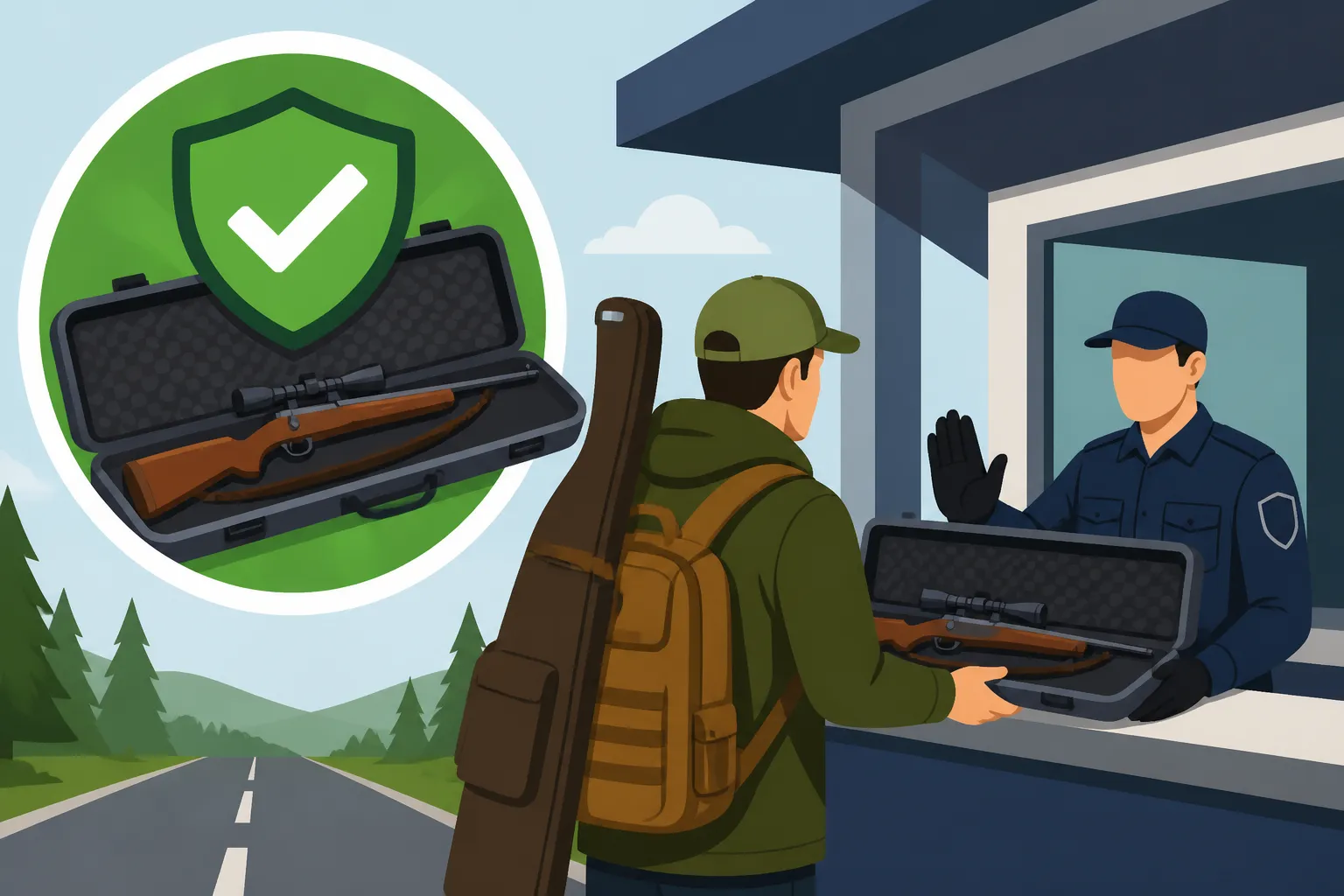
So, you’ve arrived at the Canadian border, form in hand (unsigned!). What now? Your first step is to declare your firearms to the Canada Border Services Agency (CBSA) officer when you first approach the booth. Be upfront and clear: "I am a non-resident, and I am here to declare firearms for a hunting trip." This honest declaration sets a positive tone and indicates you're aware of the rules.
Your firearms must be transported safely and legally within your vehicle. This means they should be unloaded, locked in a case, and ideally, stored in a place that's not easily accessible, like the trunk of a car or a locked toolbox in the bed of a truck. Ammunition should be stored separately from the firearms, also in a locked container. When the officer directs you to secondary inspection, they will review your completed (but unsigned) Non-Resident Firearm Declaration.
At secondary inspection, the officer will confirm the details on your form against your actual firearms, which they may inspect. They will then have you sign the form in their presence, collect the fee, and validate your declaration. It's vital that you keep this validated copy with you at all times while possessing your firearms in Canada, as it serves as your legal documentation. Losing it could cause issues if you're ever stopped by law enforcement.
Transporting Firearms and Ammunition Within Ontario
Once you've successfully crossed the border and had your Non-Resident Firearm Declaration validated, your journey continues, but the rules for safe transport and storage of your firearms and ammunition within Ontario remain critical. It's not a free-for-all; Canada has clear regulations you need to follow.
Safe Storage and Transport Rules
When you're driving through Ontario, whether it's on a major highway or a remote bush road, your firearms must always be transported safely and legally. For non-restricted firearms, this means they must be unloaded, and they should be stored in a case or container that is securely locked. This isn't just about preventing theft; it's about preventing accidental discharge and ensuring that the firearm isn't readily accessible for immediate use.
You can't just toss your rifle on the back seat; it needs to be out of sight and secured. Many hunters use hard-sided cases with padlocks, or soft cases secured with a cable lock, stored in the trunk or a locked compartment of their vehicle. This keeps you compliant with Canadian law and prevents any misunderstandings if you happen to be pulled over. When you arrive at your camp or lodge, the same secure storage principles apply. Firearms should be stored unloaded and locked, ensuring they are not accessible to unauthorized individuals. It is also important to know the Legal Firearms and Bows for Big Game you can use while actually hunting.
These rules are in place for everyone's safety, and compliance shows respect for Canadian laws and responsible gun ownership. Nobody wants to have their hunting trip marred by a legal infraction due to improper storage. A common tip from veteran hunters is to have a dedicated travel box for your firearms and ammunition, specifically designed to meet these regulations, making packing and compliance much simpler.
Ammunition Rules at the Border and Beyond
Just like with firearms, there are specific rules for bringing ammunition across the border and for transporting it within Ontario. When crossing into Canada, non-residents are generally allowed to import a reasonable amount of ammunition for their declared firearms. What's "reasonable" usually means what you'd need for your specific hunting trip, not a bulk supply for years to come. It’s always best to check the current regulations or contact the CBSA for precise limits before you travel.
The most crucial rule for ammunition transport is that it must be stored separately from your firearms. This means your ammunition goes into its own locked container, distinct from where your cased and locked firearms are stored. This separation is a key safety measure. Whether it's in an ammo can, a locked box, or the factory packaging stored in a secure compartment, ensure it's not readily accessible alongside your guns. For more details, refer to our guide on Ammunition Rules at the Border.
Once you're in Ontario, these same separate, secure storage rules apply for ammunition during transport. Also, keep in mind specific regulations for hunting. For example, if you're hunting waterfowl, you must use non-toxic shot throughout Canada. Lead shot is strictly prohibited for migratory game birds. Make sure your ammunition choices align with the species you intend to hunt to avoid any issues in the field.
Avoiding Common Pitfalls and Ensuring a Smooth Crossing
Even with all the information, the border can feel like a high-pressure environment. But with a bit of foresight and adherence to some best practices, you can make your crossing as smooth as possible, letting you get to the exciting part of your Ontario hunting adventure.
Double-Checking Everything Before You Leave
The most common reason for delays or issues at the border is incomplete or incorrect paperwork, or improper firearm/ammunition storage. Before you even leave home, create a checklist. This checklist should include your validated Non-Resident Firearm Declaration form (the unsigned one you’ll complete at the border), your hunting license, Outdoors Card, and any other permits you might need. Make sure your firearms are unloaded, properly cased, and locked. Confirm your ammunition is in a separate, locked container.
It's a really frustrating experience to drive all the way to the border, only to be turned back because of a missing detail or a misunderstood rule. Don't let that happen to you. If you have any lingering doubts, call the Canada Border Services Agency directly or reach out to your outfitter. Reputable outfitters, especially those working with non-residents, are well-versed in these rules and are usually happy to answer questions. They want your trip to be successful as much as you do. Our Rules for Non-Residents Hunting Ontario post is another great resource to consult.
A good tip is to stage everything the day before you leave. Lay out your firearms, the cases, the locks, the ammunition, and all your paperwork. Do a mental walk-through of the border process. This final check can often catch small errors that could otherwise become big problems.
Honesty and Patience at the Border
When you arrive at the border, your attitude can make a significant difference. Be completely honest and transparent with the CBSA officer. Declare your firearms immediately, even if they don't ask directly about them at the primary booth. Trying to "forget" to declare a firearm is a serious offense that can lead to confiscation, fines, and potentially a lifetime ban from entering Canada. It’s simply not worth the risk.
Border agents are professionals doing an important job. Be patient, cooperative, and polite. They might ask detailed questions, inspect your vehicle, or thoroughly examine your firearms and paperwork. This is standard procedure, and it's their job to ensure everyone crossing the border complies with Canadian law. Expect potential delays, especially during peak travel times or busy hunting seasons, and build that extra time into your travel plans.
Remember, a smooth border crossing is a team effort. You do your part by having everything in order and being truthful, and the CBSA officers will do theirs. By following the rules and being prepared, you’ll clear customs with your firearms, ready to enjoy the incredible hunting opportunities that await you in Ontario. Once you’re through, consider checking out posts like Taking Meat and Antlers Across the Border to prepare for your eventual trip home.
| Firearm Classification | Description for Hunters | Key Considerations for Border Crossing |
|---|---|---|
| Non-Restricted | Most common hunting rifles (bolt-action, lever-action) and shotguns (pump-action, semi-automatic). | YES for import for hunting. Requires Form CAFC 909. Must be unloaded, locked, and transported securely. |
| Restricted | Most handguns, certain semi-automatic rifles, and some specific shotguns. | NO for non-resident hunting import. Generally not permitted for visitors. |
| Prohibited | Fully automatic firearms, certain assault-style rifles, some modified firearms. | ABSOLUTELY NO for non-resident hunting import. Do not attempt to bring these into Canada. |
Disclaimer
This article is for general informational purposes only and does not constitute professional advice. Laws, prices and regulations vary by location and change over time. Consult a qualified professional for guidance on your specific situation.