Driving Into Ontario With Firearms
One of the biggest anxieties for any hunter planning a trip to Ontario from outside of Canada is undoubtedly navigating the border crossing, especially when you're bringing your hunting firearms with you. The thought of encountering stern border agents, confusing paperwork, or even having your gear confiscated can cast a serious shadow over what should be an exciting adventure. This guide aims to clear up the confusion and provide a realistic, step-by-step understanding of what you need to know to drive into Ontario with your firearms safely and legally for your next hunting trip.
Understanding Canadian Firearms Law for Hunters
Before you even pack your truck, it's crucial to understand Canada's firearms regulations. These aren't just suggestions; they are strict laws, and ignorance is rarely an acceptable excuse at the border. The key distinction you need to wrap your head around is the classification of firearms: non-restricted, restricted, and prohibited. For most hunters coming to Ontario, you'll be dealing exclusively with non-restricted firearms.
The Basics of Non-Restricted Firearms
In Canada, non-restricted firearms generally include most ordinary hunting rifles and shotguns, the kinds that have always been staples in the deer woods or duck blinds back home. These are typically break-action, bolt-action, lever-action, or pump-action long guns. The vital thing to remember is that certain firearms considered common in the United States, like many AR-15 variants or other semi-automatic rifles with certain features or barrel lengths, are classified as restricted or even prohibited in Canada. Bringing one of these to the border, even by accident, will almost certainly result in refusal of entry, confiscation of the firearm, and potentially serious legal repercussions. Always double-check your specific firearm against Canadian regulations before you leave.
Handguns, for instance, are almost universally classified as restricted or prohibited and are virtually never permitted for non-residents entering for hunting purposes. If you're unsure about a particular firearm, it's always better to err on the side of caution and either leave it at home or seek official clarification from the Canadian Border Services Agency (CBSA) or the Royal Canadian Mounted Police (RCMP)'s Canadian Firearms Program before you drive to the border. Don't risk your hunting trip or your freedom over a misunderstanding. Many outfitters, especially those listed on platforms like BookYourHunt, are well-versed in these regulations and can offer guidance, but ultimately, the responsibility lies with you.
The Non-Resident Firearm Declaration Form (CAFC 909)
This form, officially known as the Non-Resident Firearm Declaration, is your golden ticket for temporarily importing your non-restricted hunting firearms into Canada. It's not optional; it's absolutely mandatory. The form needs to be filled out accurately and completely, but here's a critical piece of advice that many first-timers miss: DO NOT SIGN THE FORM BEFORE YOU ARRIVE AT THE BORDER. You must sign it in front of a Canadian Border Services Officer, who will then officially confirm and validate it. Signing it prematurely renders it invalid and can cause unnecessary delays and headaches.
You can download and print this form (CAFC 909) from the Canadian Firearms Program website ahead of time, which I highly recommend. Fill in all your personal details, firearm descriptions (make, model, serial number, calibre/gauge, barrel length), and clearly state the purpose of your visit (hunting). When you get to the border, you will present this form to the CBSA officer. There is a fee associated with the declaration, and once confirmed, it acts as a temporary licence and registration certificate for up to 60 days. Keep this validated form with your firearms at all times. It is your proof that you're legally allowed to possess them in Canada. Losing it could be a major problem, so treat it like gold! For more general information about what permits you need, check out Rules for Non-Residents Hunting Ontario.
Here’s a quick checklist for the CAFC 909 process:
| Step | Description | Important Note |
|---|---|---|
| 1. Download & Print | Get the CAFC 909 form from the official Canadian Firearms Program website. Print several copies. | Have spares in case of mistakes. |
| 2. Fill Out Details (Unsigned) | Complete all sections with your personal info and detailed firearm descriptions. | Do NOT sign Section G (Declaration of Applicant) yet! |
| 3. Prepare Payment | Have the applicable fee ready (check current rates on official government sites, cash or credit card). | Fees can change; verify closer to your trip. |
| 4. Present at Border | Declare your firearms immediately to the CBSA officer upon arrival. Hand over the unsigned form. | Honesty and full disclosure are paramount. |
| 5. Sign in Front of Officer | You will sign Section G of the form in the presence of the CBSA officer. | This step legally validates the document. |
| 6. Pay Fee & Receive Validation | Pay the fee, and the officer will validate the form. You'll get a copy. | Keep this validated copy with you and your firearms for the duration of your trip. |
Ammunition Rules and Limits
Bringing ammunition into Canada along with your firearms is also subject to specific rules. Generally, non-restricted firearms can be accompanied by ammunition appropriate for their calibre or gauge. However, there are typically limits on the amount of ammunition you can bring. While specific quantities can vary or be at the discretion of the border agent, a common guideline is that you can bring a reasonable amount for your hunting trip, often around 200-500 rounds per firearm. This isn't meant for bulk importation or resale.
More importantly, ammunition must be stored and transported separately from your firearms. It must be securely packed in a container designed for ammunition storage and not readily accessible during transport. Imagine what would happen if you had a box of shotgun shells rolling around loose in your truck bed right next to an uncased shotgun – that's a recipe for disaster at the border. Ensure your ammo is in its original packaging or a sturdy, closed container, like a plastic ammo can, and kept in a separate, secure part of your vehicle, away from your firearms. This separation is key to demonstrating responsible firearm ownership and adherence to Canadian regulations.
Proper Storage and Transport in Your Vehicle
The way you store and transport your firearms and ammunition, both while crossing the border and during your hunting trip in Ontario, is paramount. Canadian law is very specific about this, and failing to comply can lead to serious legal consequences. It's not enough to just have the right paperwork; you need to demonstrate responsible handling.
Securing Firearms for Travel
When driving into Ontario, your non-restricted firearms must be unloaded, rendered inoperable, and securely encased. "Unloaded" means no ammunition in the chamber or magazine. To render them inoperable, it's highly recommended to use a secure trigger lock or cable lock that passes through the action, preventing the firearm from being fired. Many hunters also choose to remove the bolt from bolt-action rifles or the forestock from pump shotguns, further ensuring the firearm cannot be quickly assembled or fired. This extra step demonstrates diligence and leaves no doubt about your intent.
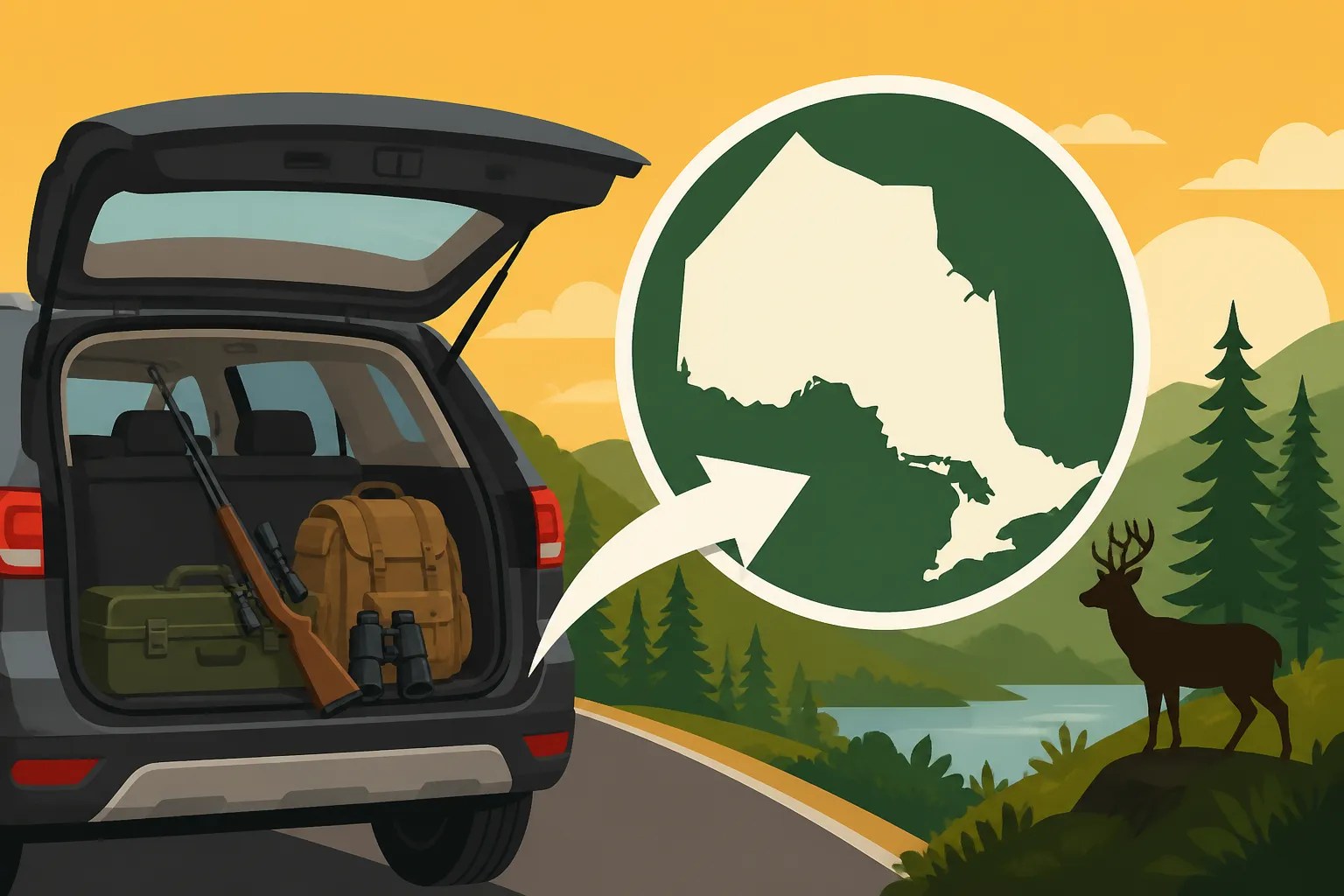
"Securely encased" means the firearm must be in a case, scabbard, or even a securely tied blanket or bag. A hard-sided, lockable case is always the best option. This not only protects your firearm from damage but also clearly signifies that it is not readily accessible for immediate use. When you approach the border, your firearms should be stored in the trunk of your car, the bed of your truck (preferably under a tonneau cover or in a locked toolbox), or in another area of your vehicle that isn't immediately accessible from the driver's seat. Don't have your rifle casually leaning against the back seat; that's a definite red flag.
Ammunition Storage During Transport
As mentioned before, ammunition must be transported separately from firearms. This isn't just a suggestion; it's a legal requirement designed to enhance safety. Your ammunition should be stored in a sturdy, secure container that prevents accidental discharge or spillage. A dedicated ammunition box or a metal/plastic container with a locking lid is ideal. This container should then be placed in a separate part of your vehicle from your cased firearms. For example, if your firearms are in the trunk, your ammunition could be stored in a locked container in the back seat, or vice-versa.
Think about layers of security. Your firearms are locked and cased. Your ammunition is in a separate, secure container. This separation and secure storage minimize any perceived risk and ensure that both items are not readily available for quick use. This level of care demonstrates to border officials that you are a responsible hunter who respects the laws of the country you are entering.
Border Crossing Etiquette and Expectations
Approaching the Canadian border requires a specific mindset, especially when declaring firearms. First and foremost, be honest and upfront. When the CBSA officer asks about the purpose of your visit, clearly state you are coming to hunt and that you have firearms to declare. Do not wait for them to ask specifically about firearms; make it part of your initial declaration. Trying to conceal them or being vague will only raise suspicion and could lead to severe consequences, including seizure of your firearms, fines, and even a ban from entering Canada. Remember, they have various tools and methods to detect firearms, and lying or omitting information is never worth the risk.
Have all your documentation ready: your passport, your Ontario's Outdoors Card Explained if you have one already (otherwise, you'll get it after), your hunting licence (or proof of eligibility), and, most importantly, your unsigned CAFC 909 form. Present these calmly and clearly. The officer will likely ask you to pull over for a secondary inspection, where they will review your paperwork and physically inspect your firearms to ensure they match the declaration and are stored correctly. Be polite, cooperative, and answer all questions directly and truthfully. Avoid making jokes or being flippant, as this is a serious process. A good attitude can go a long way in ensuring a smooth and efficient border crossing experience. For a wider view on trip planning, consider our article on Booking an Ontario Hunting Trip.
Potential Pitfalls and How to Avoid Them
Even with all the preparation, things can sometimes go sideways at the border. Understanding the common mistakes and how to react if issues arise can save your hunt and prevent legal trouble.
Common Mistakes Non-Residents Make
One of the most frequent and severe mistakes is attempting to bring prohibited firearms into Canada. Many semi-automatic rifles and shotguns, certain handguns, and firearms with specific features (like certain barrel lengths or magazine capacities) that are perfectly legal in the US are strictly prohibited in Canada. An AR-15, for example, is a prohibited weapon in Canada. Do not bring it. Research your specific firearm's Canadian classification well in advance. Another common error is failing to properly fill out the CAFC 909 form or, as mentioned, signing it before presenting it to the border officer. These seem minor, but they invalidate the declaration.
Improper storage and transport are also big culprits. Having a loaded firearm, even if cased, or having ammunition readily accessible alongside a firearm, will immediately raise red flags. Not declaring your firearms upfront is another critical mistake that can lead to seizure and charges. Some hunters also forget to bring proof of their hunting intentions, like an outfitter booking confirmation or previous year's licence, which can sometimes help support your declaration, though it's not strictly required for the firearm declaration itself. When considering an outfitter, it's wise to Asking an Ontario Outfitter for References and check if they are familiar with cross-border firearm rules.
What to Do If You Encounter Issues
If a border officer raises concerns or questions your declaration, remain calm and cooperative. Do not argue, become defensive, or try to conceal anything. Be honest. If there's a misunderstanding about a firearm's classification, politely explain your belief, but ultimately, the officer's decision is final. If a firearm is deemed prohibited, it will be seized. You might be given the option to store it at the border, return to the US, or face charges. Your best course of action is almost always to cooperate to minimize further complications.
Should your firearm be seized, understand the process. It's an unfortunate situation, but escalating it will not help. You will likely be refused entry for the firearm, possibly for yourself as well, and could face fines or a ban. Knowing what to do if you get turned around or have issues with your gear is part of being prepared. While rare for hunters bringing legal, non-restricted firearms, it's a possibility you should be aware of.
Planning Ahead with Outfitters or Resources
Many reputable Ontario outfitters specialize in catering to non-resident hunters and are often excellent resources for navigating Canadian firearm regulations. They frequently deal with these questions and can provide up-to-date advice on what specific firearms are generally acceptable and what the current border protocols are. Don't hesitate to reach out to them directly with your questions. They want your trip to be successful as much as you do!
Online platforms like BookYourHunt and GoHunt can also connect you with outfitters who are experienced in hosting American clients. These outfitters usually include information about border crossing assistance in their packages or can direct you to relevant government resources. Always cross-reference any advice with official Canadian government websites (CBSA and RCMP) to ensure you have the most current and accurate information. It's your responsibility to be compliant, so always verify. Remember, information is power, and a well-informed hunter is a confident hunter.
After Crossing: Legalities While Hunting
Once you've successfully navigated the border and are officially hunting in Ontario, remember that the rules around firearms continue to apply. These regulations ensure safety and responsible hunting practices throughout the province. Understanding them is just as important as knowing how to cross the border.
Carrying Your Firearms in the Field
While you're actively hunting, the rules for carrying a firearm are different than for transport. When a firearm is actively being used for hunting, it can, of course, be loaded. However, when you're moving your firearm in a vehicle within Ontario, even after you've legally crossed the border, it generally needs to be unloaded and stored properly. This means no loaded firearms in your truck while driving between hunting spots, especially on public roads. Many seasoned hunters will case their firearms when moving between different areas, even short distances, to avoid any appearance of impropriety.
When walking or navigating the bush, your non-restricted firearm can be carried openly, provided it's safe to do so. Always ensure the safety is engaged, and the muzzle is pointed in a safe direction. Treat every firearm as if it's loaded. While the rules for Legal Firearms and Bows for Big Game will guide your initial choices, remember that safe handling is a continuous responsibility throughout your hunt. Familiarize yourself with the specific regulations of the Wildlife Management Unit (WMU) you are hunting in, particularly if you are heading into areas like Hunting Ontario's Crown Land, where public safety often dictates stricter adherence to visible safety practices.
Prohibited Areas and Restrictions
Even with a validated firearm declaration and a valid hunting licence, you cannot simply hunt anywhere you please in Ontario. There are many areas where hunting is prohibited or restricted. This includes provincial parks (though some areas within specific parks might have designated hunting opportunities), municipal boundaries, safety zones around buildings and occupied dwellings, and certain conservation areas. It's your responsibility to know the specific boundaries of the property you are hunting on and to ensure you are not trespassing or hunting in a prohibited area.
Rules around shooting across roads, near power lines, or close to populated areas are also strictly enforced. Always consult the Ontario Hunting Regulations Summary, which provides detailed information about these restrictions for the current season. Planning your hunt, whether you're stalking Whitetail Hunting in Ontario or calling Moose Hunting Ontario's Northern Bush, should always begin with a thorough review of the local regulations and boundaries. Maps from the Ministry of Natural Resources and Forestry (MNRF) showing WMU boundaries and specific regulations are indispensable tools.
Reporting and Exporting Game
After a successful hunt, there are still rules to follow, particularly concerning reporting your harvest and exporting your game. In Ontario, mandatory hunter reporting is a requirement for certain species, including deer, moose, and bear. You need to report your harvest online or via phone by specific deadlines, even if you didn't harvest an animal. This data is critical for wildlife management and population assessments. Our article Reporting Your Ontario Harvest can guide you through this process.
If you're a non-resident, you'll also need to consider how to take your game meat and trophies back home. This typically involves obtaining an export permit. For meat, ensure it's properly cared for and processed. Our guide on Transporting Game Meat in Ontario provides crucial details. For antlers, hides, or other trophy parts, you may need a separate export permit, sometimes specifically for non-residents. Getting a Non-Resident Export Permit details this process. Your outfitter can often assist with this paperwork, or you can obtain it from an MNRF office. Failing to properly report your harvest or secure the correct export permits can lead to issues when you try to cross back into the United States, so ensure all your paperwork is in order before you head to the border for your return journey.
Disclaimer
This article is for general informational purposes only and does not constitute professional advice. Laws, prices and regulations vary by location and change over time. Consult a qualified professional for guidance on your specific situation.