Hunting a Cutover Block in the North
Navigating the dense, often chaotic landscape of a Northern Ontario cutover block can feel like a daunting challenge for any hunter. These areas, while sometimes difficult to traverse, are absolute magnets for big game like moose, whitetail deer, and black bears. This guide will walk you through understanding these unique habitats, how to effectively scout them, and the best tactics to employ to increase your chances of success in this incredibly productive terrain.
Understanding the Dynamics of a Northern Ontario Cutover Block
A cutover block isn't just a patch of cleared trees; it's a dynamic ecosystem reborn, offering a buffet and sanctuary for a variety of game animals. For a hunter, understanding the different stages of a cutover is like having a secret map to where the animals will be.
What is a Cutover and Why Do Game Love It?
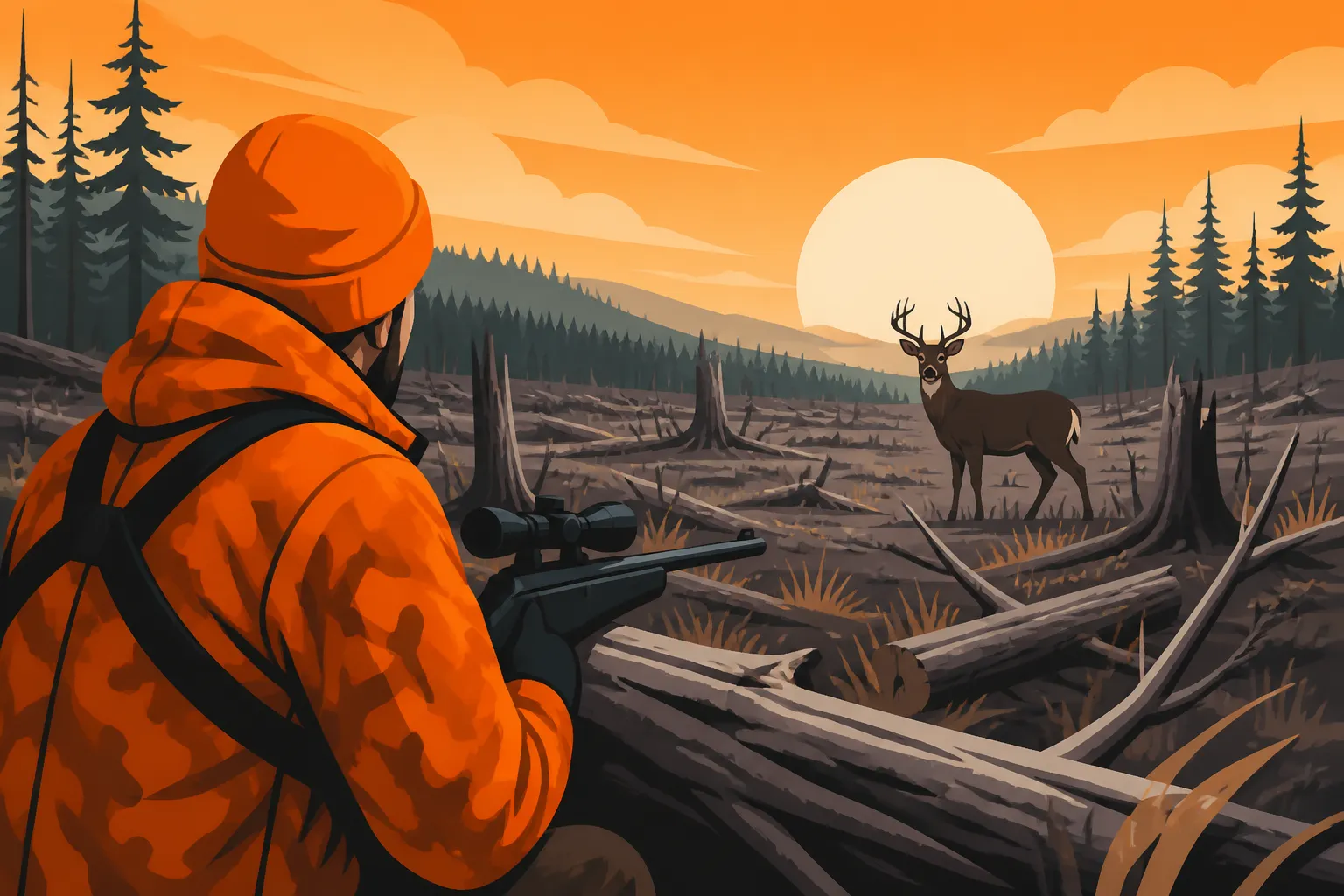
At its simplest, a cutover block is an area of forest that has been harvested, typically by logging operations. When a stand of timber is cut, especially through clear-cutting, it fundamentally changes the landscape. Sunlight, which previously struggled to reach the forest floor, now floods in, stimulating rapid new growth. This burst of fresh vegetation – young hardwoods, shrubs, grasses, and pioneer species – provides an incredible source of browse and cover.
For moose, these tender new shoots, particularly aspen and willow, are like an all-you-can-eat buffet, especially a few years after the initial cut. They thrive on the prolific browse that springs up. Whitetail deer also benefit immensely, finding both food and dense security cover in the regenerating growth, particularly as the saplings get taller. Black bears are drawn to the berry bushes and other soft mast that flourish in the open sunlight, and the thick regenerating cover provides perfect bedding and denning opportunities. The leftover slash piles from logging offer fantastic bedding and hiding spots for deer and bear, especially when combined with thick new growth.
The Life Cycle of a Cutover: Age Matters
Not all cutovers are created equal, and their age profoundly influences the type and density of game they attract. What might be prime moose habitat at five years could be impenetrable for a hunter but fantastic for fawns at ten years, and then become less productive as the canopy closes.
- Fresh Cutovers (0-3 Years Post-Cut): Immediately after logging, these areas are often a jumble of logging debris, stumps, and exposed earth. While the initial food sources are limited, the disturbance can sometimes push animals through or create temporary travel corridors. Deer might use the edges for quick browsing, and bears might scavenge in the early spring. Human access is often easiest immediately after logging, before the thick saplings take over. However, finding game here can be challenging as cover is sparse.
- Young Regeneration (3-10 Years Post-Cut): This is often the sweet spot for many big game species. The ground is teeming with young trees, shrubs, and forbs. For moose, the abundance of tender browse is a major draw. Deer find both ample food and excellent security cover in the burgeoning thickets. Bears feast on berries and use the dense growth for bedding. Access for hunters can become incredibly challenging at this stage, requiring real dedication to push through the tangles. This is where patience and persistence pay off.
- Maturing Regeneration (10-20+ Years Post-Cut): As the trees grow taller, the canopy starts to close, reducing sunlight to the forest floor. This means less understory browse, which in turn means less food for deer and moose. While still offering good thermal and security cover, these areas become less about feeding and more about travel corridors or bedding areas near remaining food sources. Bears might still use them, but often they'll shift to newer cutovers with more abundant berries. Game trails become more defined as animals navigate the maturing stands.
Understanding this progression is crucial. A cutover that's 5-7 years old will often hold different game, or at least different densities, than one that's 15 years old. This knowledge helps you prioritize your scouting efforts and tailor your hunting strategy.
Scouting Strategies for Success in Cutover Terrain
Successfully hunting a Northern Ontario cutover block begins long before you set foot in the woods. Effective scouting, both digitally and on the ground, will drastically improve your odds.
Pre-Season Digital Reconnaissance
Before you ever pack your boots, spend some serious time with digital mapping tools. These are invaluable for deciphering the vastness of Northern Ontario's bush. Platforms like onX Hunt or GoHunt allow you to overlay satellite imagery with various land ownership layers, helping you pinpoint potential cutovers and understand their accessibility.
Start by looking for areas that appear lighter green or have a distinct texture on satellite maps – these often indicate recent logging activity. Zoom in to identify clear-cut boundaries, regenerating clearings, and existing logging roads. Logging roads are your lifeline for access, but remember that some might be gated, washed out, or reclaimed by nature. Look for topography features like ridges, low spots, and water sources (small ponds, creeks, beaver flows) within or adjacent to these cutovers. Animals will often travel along these natural funnels. You can use historical imagery, if available, to see how old a cut might be and estimate its stage of regeneration. A cutover from a few years ago will look different from a freshly cut block. Pay attention to how the cutover connects to older timber, swamps, or water bodies; these transitions are often high-traffic zones. Reading an Ontario WMU Map Before You Go and Scouting With Satellite Imagery in Ontario are excellent resources for honing these skills.
Boots-on-the-Ground Scouting
Digital scouting gives you the big picture, but the real secrets of a cutover are revealed by putting boots on the ground. Once you've identified promising areas, it's time to explore. This is where the challenge and the reward truly meet.
When you're actually in the cutover, focus on these critical signs:
- Game Trails: Look for well-worn paths, especially those leading from bedding cover into feeding areas or to water. In dense regeneration, game trails can be surprisingly subtle, but they will be there. Follow them to see where they lead. Are they winding through the thickest part of the cut, or are they following a slightly easier path along a rise or a small gully?
- Browse and Feeding Sign: Examine the young vegetation for signs of heavy browsing. Moose will strip bark and break off branches, leaving distinct "moose chomps." Deer will nip off buds and leaves. Fresh browse indicates recent activity. Look at the height of the browse line; this can tell you whether moose or deer are feeding in the area.
- Rubs and Scrapes: During the rut, these become critical indicators. Rubs are where bucks or bulls have scraped their antlers against saplings or small trees, leaving behind polished wood and antler scent. Scrapes are pawed-up spots on the ground, often with an overhanging branch, where bucks deposit scent. These signs scream "I'm here!" and are often found along travel corridors or near bedding areas. Reading Whitetail Sign in Ontario Hardwoods covers similar principles applicable to cutovers.
- Beds: Look for flattened areas in the dense cover where animals have rested. In cutovers, beds might be tucked deep into brush piles or within thick stands of regenerating conifers. Fresh beds, still warm or with disturbed leaves, indicate very recent use.
- Water Sources and Escape Routes: Animals need water, and a small seep, creek, or beaver pond within or adjacent to a cutover can be a major draw. Identify potential escape routes – paths that lead into deeper, older timber or down into a swamp – as these are areas animals will bolt to when pressured. Hunting a Beaver Dam Crossing can give you insights into how these water features funnel game.
Remember to scout quietly and thoroughly. Cutover blocks are often loud environments due to the dense brush, but movement should still be stealthy. Focus on finding patterns of movement and key locations within the cut.
Effective Hunting Tactics for Northern Cutover Blocks
Hunting a cutover isn't like hunting open woods or fields; it demands a specific approach. The dense cover and often limited visibility require patience, stealth, and sometimes, teamwork.
Still-Hunting and Stand Placement
Still-hunting is perhaps the most effective tactic in a cutover. This involves moving incredibly slowly, stopping frequently, and observing your surroundings. Take a few steps, then pause for several minutes, scanning every shadow and listening intently. Use binoculars to pick apart the dense cover. Look for horizontal lines (an animal's back) in a vertical world (trees). Many times, you'll hear an animal before you see it. The key is to be patient; animals often feel secure in the thick stuff and won't bolt immediately unless you make sudden noise or movement.
When it comes to stand placement, traditional treestands can be challenging due to the lack of mature trees. However, if you find a strategic older tree on the edge of a particularly thick section, or overlooking a natural funnel or game trail, it can be deadly. More often, hunting cutovers involves ground blinds or simply finding a good, thick natural hide. Look for elevated spots – even a small knoll can give you a better view over the regenerating growth. Place yourself downwind of likely travel routes or bedding areas, especially during the morning or late afternoon when animals are most active. Consider setting up where a game trail exits the cutover into older timber or near a water source.
Group Hunting and Drives
For species like whitetail deer or moose, especially in large cutover blocks, a well-planned group hunt or drive can be incredibly effective. The dense nature of cutovers makes it difficult for a single hunter to cover enough ground or push animals effectively.
- Deer Drives: With a few trusted hunting partners, you can organize small, controlled drives. Position "blockers" or "standers" at likely escape points or funnel areas (such as where the cutover meets a swamp or an old logging road). The "pushers" then slowly and deliberately move through the cutover, attempting to gently nudge deer towards the standers. Communication is paramount, usually through two-way radios, and everyone must be aware of safety zones and shooting lanes. This can be a great way to tag a buck hunkered down in seemingly impenetrable cover. Remember to adhere to all provincial regulations regarding group hunting. Deer Drives With Three or Four Hunters offers more detail on this tactic.
- Moose Hunts: For moose, a silent push by a couple of hunters through a dense cutover towards a single stander can also work. Moose, while large, can be incredibly stealthy in thick cover. The goal isn't to scare them into a full sprint, but to get them to slowly move into an area where a shot might be presented. Often, moose will circle back or try to use their incredible senses to avoid detection. Again, safety and clear communication are key. Moose Hunting Ontario's Northern Bush provides a broader context for these majestic animals.
Reading the Wind and Using Natural Features
Wind is your silent partner (or your worst enemy) when hunting cutovers. Always hunt with the wind in your face or quartering into it. Your scent will travel far, and in dense cover, an animal's nose is often its primary defense. Regularly check wind direction, especially if it's a shifty day.
Natural features within the cutover are your strategic allies.
- Ridges and High Ground: Animals often prefer to travel along contours or on high ground, giving them a slight advantage for observation. Use these features to your advantage by positioning yourself on them or along their bases.
- Swamps and Low Spots: These can act as funnels or bedding areas, especially during warmer weather. Deer might bed down in the cooler, wetter confines of a swampy edge, emerging into the cutover to feed.
- Old Logging Roads and Trails: Even if overgrown, these still provide easier travel than pushing through the thickest regeneration. Animals will often use them, making them prime locations for stand placement or ambush points. Hunting an Old Logging Road in the North delves deeper into hunting these pathways.
- Conifer Patches: Even within a mixedwood cutover, small pockets of dense spruce or pine can offer crucial thermal cover during cold snaps or security cover during daylight hours.
A table outlining typical game preferences in cutover stages:
| Game Species | Preferred Cutover Age (Years Post-Cut) | Key Attractions in Cutover |
|---|---|---|
| Moose | 3-10 years (peak browse) | Young aspen, willow, birch regeneration; thick cover for security. |
| Whitetail Deer | 3-15 years (food & cover) | Abundant browse, dense escape cover; logging slash piles for bedding. |
| Black Bear | 3-20 years (food & cover) | Berry bushes (raspberries, blueberries), denning sites in thickets/slash. |
| Ruffed Grouse | 5-20 years (dense cover) | Regenerating aspen and birch for buds; thick cover for protection. |
| Snowshoe Hare | 5-15 years (dense undergrowth) | Thick young conifers for hiding from predators; abundant forage. |
Essential Gear and Safety Considerations for Cutover Hunting
Hunting a cutover block, especially in the rugged Northern Ontario environment, requires specific gear and a keen awareness of safety. The challenges here are unique, and being prepared can make all the difference.
Must-Have Gear for Northern Bush
Your gear list for a cutover hunt needs to emphasize durability, comfort, and functionality in challenging terrain.
- Layered Clothing: The physical exertion of pushing through thick brush, combined with periods of stillness, means you'll be constantly managing your body temperature. Layers are essential. Choose rugged, tear-resistant outer layers that can stand up to thorns and branches. Don't forget your Ontario Blaze Orange Requirements for visibility.
- Sturdy, Waterproof Boots: This isn't the place for flimsy footwear. You'll be crossing uneven ground, mud, and potentially small streams. High-quality, waterproof boots with good ankle support are non-negotiable.
- Navigation Tools: A reliable GPS unit (like a handheld Garmin or your onX Hunt app on your phone with downloaded offline maps) is paramount. Don't rely solely on cell service; it's often non-existent in remote cutovers. Carry a compass and a physical map as backup, and know how to use them. Marking your truck, key trails, and any game sightings as waypoints is crucial.
- First-Aid Kit: Minor cuts and scrapes are common in dense brush. A well-stocked first-aid kit, along with knowledge of how to use it, is a must.
- Game Retrieval Gear: If you're successful, getting an animal out of a thick cutover can be a monumental task. Bring a good game cart if the terrain allows, or at least a strong dragging harness and a sharp knife. For larger animals like moose, quartering in the field is often necessary. Consider how you'll manage Getting a Moose Out by Canoe if your hunt takes you near water, or how you'll handle Meat Care in Ontario's Warm Early Seasons if you're hunting during milder weather.
- Water and Snacks: Physical exertion means you'll need to stay hydrated and energized.
- Emergency Supplies: Whistle, fire starter, space blanket, headlamp, and a fully charged power bank for your phone.
Your Truck Kit for a Northern Ontario Hunt should also be well-stocked with additional essentials, recognizing that your vehicle might be far from help.
Navigating the Challenges: Thick Cover and Limited Visibility
Hunting cutovers demands physical stamina and mental fortitude. The dense, regenerating growth can be incredibly disorienting, and visibility is often limited to mere yards.
- Slow Down: This cannot be stressed enough. Rushing through a cutover is a recipe for missing game or getting turned around. Your pace should be a crawl.
- Maintain Direction: Even with a GPS, it's easy to veer off course in thick cover. Pick prominent landmarks, use your compass, and regularly check your GPS to ensure you're heading in the right direction. If you're doing a drive, ensure all participants know the exact direction of travel and their assigned boundaries.
- Sound Discipline: Every snap of a twig or rustle of leaves will be amplified in the quiet bush. Move deliberately and quietly. Listen more than you move.
- Wildlife Safety: In bear country, especially during spring and fall hunts, always be bear aware. Make noise when moving, carry bear spray, and know how to use it. Be prepared for encounters with other large wildlife, including moose and deer, which can surprise you in thick cover. Black Bear Hunting in Ontario and Moose in Ontario's Boreal Forest detail these animals' behaviour.
- Communication: If hunting with a group, maintain regular communication. Know each other's positions, especially when making pushes or navigating dense areas.
Hunting a cutover block in Northern Ontario is an incredible experience that, with the right preparation and tactics, can yield unforgettable results. Embrace the challenge, learn the nuances of these dynamic landscapes, and you'll unlock some of the most productive hunting grounds the province has to offer.
Disclaimer
This article is for general informational purposes only and does not constitute professional advice. Laws, prices and regulations vary by location and change over time. Consult a qualified professional for guidance on your specific situation.