Hunting a Muskeg Island of Spruce
Many hunters feel the pull of untouched wilderness, searching for those secluded spots where game animals can truly thrive away from constant human pressure. In Ontario's vast northern expanse, one such hidden haven often reveals itself as a muskeg island of spruce – a dense, often water-surrounded patch of evergreen that looks forbidding but holds incredible potential. These isolated pockets of dense forest within vast wetlands can feel impenetrable, and honestly, they often are, presenting a unique challenge and a unique reward. This guide will help you decipher these remarkable ecosystems, equip you with the knowledge to locate them effectively, and outline the strategies needed to successfully hunt the resilient game that calls these remote islands home, transforming a daunting landscape into an unforgettable hunting adventure.
The Unique World of a Muskeg Island of Spruce
Before you even think about setting foot on one, understanding what a muskeg island of spruce actually is, and why it's so appealing to wildlife, is key. It's not just a clump of trees; it's a specific, often challenging, micro-ecosystem that demands respect and a certain level of preparedness. Think of it as nature's fortress, built to withstand the elements and provide sanctuary.
Decoding the Landscape: What is a Muskeg Island?
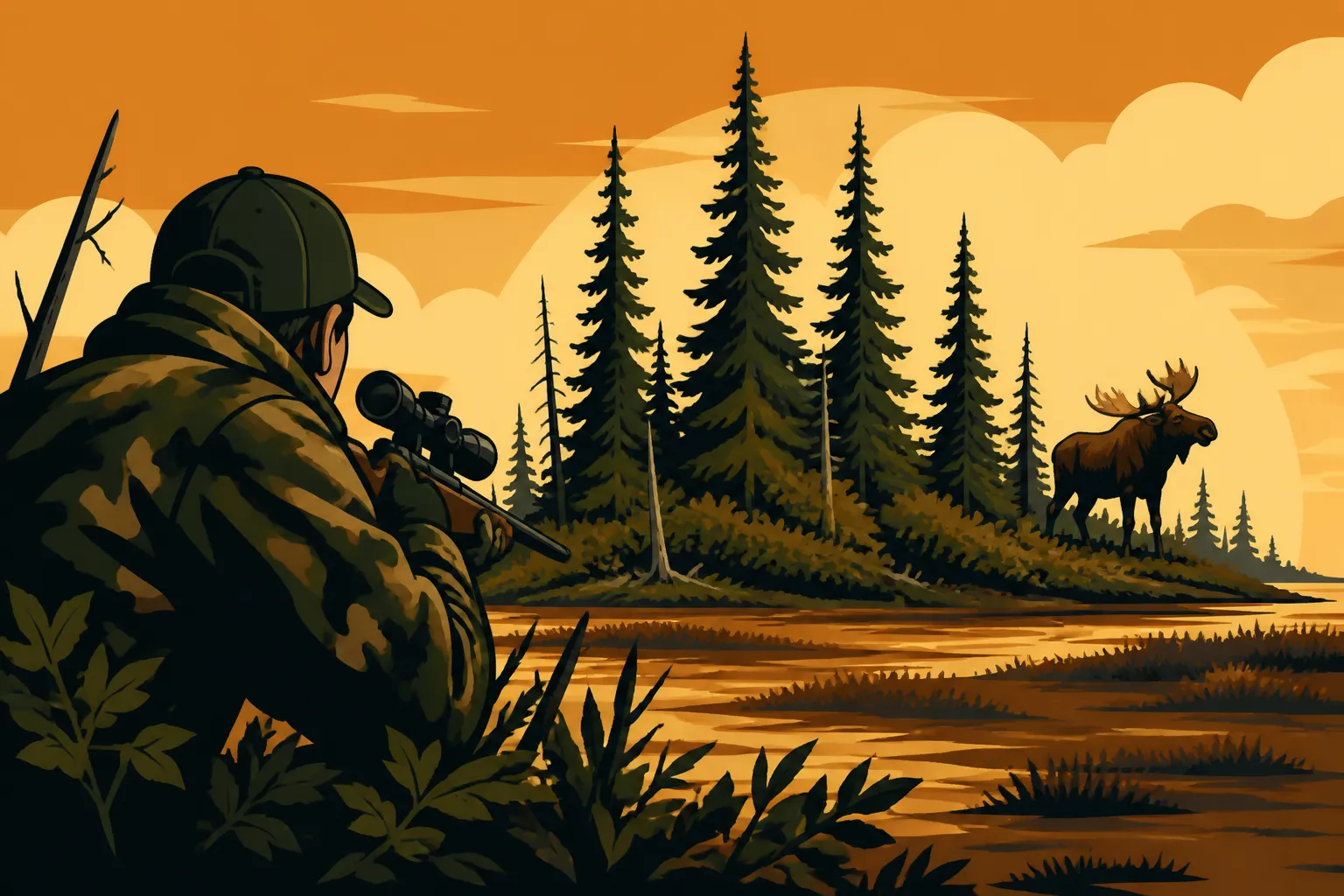
At its heart, a muskeg island of spruce is exactly what it sounds like: a relatively higher, drier patch of ground, densely forested with spruce trees, completely surrounded by a muskeg wetland. Muskeg itself is a type of peat bog, characterized by layers of decomposing sphagnum moss, acidic soil, and often standing water or saturated ground. It's a notoriously difficult environment to traverse, acting like a giant, waterlogged sponge. Imagine sinking up to your knees with every step, the ground giving way beneath you, and you're getting close to the experience.
Within this challenging boggy expanse, these spruce islands emerge like verdant ships. They form where there's just enough elevation, perhaps a subtle ridge or an old glacial deposit, to allow for slightly better drainage. This drier ground permits the growth of mature black spruce and sometimes balsam fir, creating a dense, often dark canopy that stands in stark contrast to the more open, scrubby, and boggy vegetation of the surrounding muskeg. For a hunter, these islands are distinct features, often visible on satellite maps as dark green blobs within lighter, more variegated wetlands. Hunting a Boreal Muskeg Edge can give you a better idea of the surrounding terrain. Navigating the true muskeg to get to these islands is a formidable task, involving careful foot placement, often hip-waders, and an intimate understanding of the terrain. The ground might look solid, but a hidden puddle or a pocket of quicksand-like peat can quickly make you regret a careless step.
Why Game Animals Thrive in These Micro-Habitats
So, with such difficult access, why would any animal, let alone a hunter, bother with these places? The answer lies in the incredible refuge and resources they offer. For many game species in Ontario's vast boreal forest, a muskeg island of spruce is a safe haven from predators, harsh weather, and human disturbance.
Firstly, the dense spruce cover provides unparalleled thermal protection. In the biting winds of winter or the driving rain of fall, the thick canopy and intertwined branches create a microclimate that offers shelter and warmth. Imagine a moose trying to escape a blizzard; burrowing into the lee side of one of these spruce islands offers significant relief. Secondly, the difficult terrain surrounding these islands acts as a natural barrier. Wolves, bears, and even human hunters find crossing extensive muskeg to be a slow, energy-draining ordeal. This inherent difficulty grants resident game a sense of security, making them less wary than animals in more accessible areas. They know few creatures are willing to pay the physical price to reach them. Finally, these islands often offer unique food sources. While the deeper muskeg might hold bog cranberries, the slightly firmer ground on the island's perimeter can support a wider variety of browse for moose and deer. The spruce itself provides cover, but the edges often transition into different vegetation types, creating a buffet. For species like Ruffed and Spruce grouse, the dense spruce offers escape cover from aerial predators and a steady supply of needles and buds. It's a self-contained ecosystem that serves as a vital component of the larger boreal landscape. Moose in Ontario's Boreal Forest and Black Bears Across Ontario's Bush Country certainly understand the value of such sanctuary.
Locating and Accessing Your Muskeg Sanctuary
Finding a promising muskeg island is one thing; actually getting to it and understanding its nuances is quite another. This isn't the kind of hunting where you just drive up, park, and walk in. It requires meticulous planning, smart use of technology, and a healthy dose of caution during your on-the-ground scouting.
Digital Reconnaissance: Mapping the Untamed
Given the arduous nature of navigating muskeg, extensive ground scouting from the outset is often impractical and exhausting. This is where modern technology truly shines. Your best friend in the initial phase will be high-resolution satellite imagery. Spend hours, not minutes, poring over maps, looking for those tell-tale dark green blobs within the lighter, often yellowish or brownish hues of wetland and muskeg.
Mapping applications like onX Hunt and GoHunt are invaluable for this type of terrain analysis. These platforms offer multiple satellite imagery layers, including historical views, which can sometimes reveal seasonal water levels or past logging activity that might have created subtle access routes. Look for islands that have distinct, sharp edges where the spruce meets the muskeg, indicating a more significant elevation change. Pay close attention to any faint lines or breaks in the muskeg leading to the island – these could be slightly firmer ground, old game trails, or even remnants of forgotten trapper's routes. Identify potential "hard ground" corridors or fingers of land that might allow for easier access. Remember, just because you see an island doesn't mean you can reach it without a boat or serious waders. Always cross-reference satellite imagery with topographic maps to confirm even the slightest elevation changes. A two-foot rise might be all it takes for that dense spruce to take root. Scouting With Satellite Imagery in Ontario is essential, and pairing that with a good understanding of Reading an Ontario WMU Map Before You Go will put you miles ahead.
Boots-on-the-Ground: Confirming the Potential
Once you've identified a few promising muskeg islands on your digital maps, it's time for the painstaking but crucial step of on-the-ground reconnaissance. This is not about barging in; it's about carefully probing the landscape, confirming what the maps suggest, and discovering what they can't tell you.
Start by identifying the most feasible access points you spotted during your digital scouting. These might be along an old logging road that skirts the edge of the muskeg, a subtle ridge that runs perpendicular to it, or even a section where the muskeg appears narrower or less saturated. Approach slowly and methodically. Your goal is not to storm the island but to find a safe and quiet way in. Look for subtle signs of firm ground: taller, drier vegetation, less spongy moss, or even patches of small shrubs that indicate better drainage. Once you're near the island, begin to circle it cautiously. Look for definitive game sign: fresh tracks of moose or bear entering and exiting the island, well-used game trails that lead through the marginal areas, rubs on smaller trees, or concentrated scat. These will confirm that your chosen island isn't just a pretty patch of trees, but an active wildlife sanctuary. If you find a solid travel route, it's wise to mark it with biodegradable flagging tape for your actual hunt, especially if the weather is overcast or foggy, which can make these areas incredibly disorienting. Just remember to retrieve your markers once the hunt is over. Finding a good, forgotten Hunting an Old Logging Road in the North can be a game-changer for access.
Strategic Hunting on a Muskeg Island
Hunting a muskeg island isn't like hunting a woodlot or a cornfield. It demands a specific approach, tailored techniques, and an acute awareness of your surroundings. The elements are always a factor, and the dense cover offers both advantages and disadvantages.
The Silent Approach and Navigation
Stealth is absolutely paramount when hunting a muskeg island. The dense spruce blocks sound, but it also means that any noise you make—a rustle of clothing, a misplaced step, the splash of a boot—will be amplified and carry further to the animals within the quiet confines of the island. Assume every animal on that island knows you're there, or will soon. Your approach must be slow, deliberate, and as silent as possible.
Footwear is not a suggestion here; it's a requirement. High-quality, waterproof boots are non-negotiable. Muck boots, hip waders, or even chest waders might be necessary depending on the water levels of the surrounding muskeg. Expect to get wet and muddy. Walking through muskeg is physically demanding, so ensure your footwear is comfortable and supportive enough for the long haul. Once on the island itself, the ground might be firmer, but deadfall and uneven terrain will still require careful foot placement. Navigation is another critical concern. These dense spruce islands can be incredibly disorienting. The trees all look the same, the canopy blocks the sun, and the lack of distinct landmarks makes it easy to get turned around. Always carry a reliable GPS unit with extra batteries, and a traditional compass as a backup. Before you enter, pick a landmark you can see from outside, or note your entry point on your GPS. Hunting Ontario's Northern Bush provides further insights into navigating such challenging terrain. Move at a snail's pace, constantly scanning, listening, and testing the ground ahead.
Techniques for Different Ontario Game
Different species will require different tactics when targeting a muskeg island of spruce. The key is understanding how each animal uses this unique habitat.
- Moose: These islands are often prime bedding areas for moose, especially during the day after they've fed in more open areas or along the edges of the muskeg. Still-hunting through the island, moving incredibly slowly against the wind, is often productive. Look for fresh beds, browse lines, and heavily used trails within the spruce. If hunting with a partner or a small group, a very slow, methodical push can sometimes be effective, with standers positioned on likely escape routes. During the rut, calling can be highly effective, as the dense cover amplifies sound and the security of the island makes a bull feel safe to investigate. They often use the islands as staging areas before venturing out into more open terrain to feed. Moose Hunting Ontario's Northern Bush offers more details on these magnificent animals.
- Black Bear: Bears also gravitate to these islands for security and dens. They might day-bed in the thick spruce, especially if there's a nearby food source like berries on the muskeg edges. Hunting bears requires meticulous attention to wind direction, as their sense of smell is legendary. Still-hunting, similar to moose, or even setting up a quiet ambush near well-used trails leading into or out of the island can work. Keep an eye out for claw marks on trees and disturbed ground where they've rooted around. Black Bear Hunting in Ontario means understanding their movements.
- Grouse: Both Ruffed and Spruce grouse will utilize these islands. The dense spruce offers excellent protection from aerial predators, and the ground cover provides insects and berries. Ruffed grouse will often be found along the edges where the spruce transitions to more mixed forest or even in small openings within the island. Spruce grouse, true to their name, prefer the deeper, denser spruce stands. Flush hunting with a dog can be effective, but be prepared for limited visibility and quick shots in the thick cover. Ruffed Grouse Hunting Ontario's Bush Roads is a good read if you're targeting them more generally.
- Deer: While less common deep in the northern boreal, white-tailed deer in transition zones or southern reaches of muskeg country will certainly use these islands for thermal cover during harsh winters. What a Hard Ontario Winter Culls can lead deer to seek out any available shelter. In these cases, still-hunting or carefully placed ground blinds can be effective.
Stand Placement and Ambush Tactics
Setting up a traditional treestand on a muskeg island can be challenging. The ground is often too soft to support a ladder stand, and suitable trees for hang-ons might be scarce or too spindly. However, don't despair; ambush tactics are still highly effective, just requiring a different approach.
Your best bet is often a lightweight, portable ground blind or simply utilizing natural cover. Look for slight rises within the island, or areas where game trails converge. Natural funnels, such as a narrow strip of firmer ground between two boggy sections, are prime locations. Sometimes, a small, naturally occurring clearing within the dense spruce can act as a natural feeding or staging area, making it an ideal ambush spot. Always consider the wind direction – this is non-negotiable. Game animals will almost always approach with the wind in their favour. Try to set up where you can cover their likely approach routes without them catching your scent. You might also consider hunting the edge of the island, where animals might move in and out to feed in the surrounding muskeg. A natural blind can be constructed from fallen spruce boughs, blending seamlessly into the environment. Remember, the goal is to disappear into the landscape, not to dominate it. Hanging a Stand on an Ontario Bush Edge provides principles that can be adapted here, even if it's a ground setup.
Essential Gear and Safety for Remote Muskeg Hunts
Hunting a remote muskeg island isn't a casual outing. It's a venture into wild, unforgiving terrain where preparedness isn't just a good idea, it's a necessity. Being properly equipped and having a solid safety plan can mean the difference between an unforgettable hunt and a dangerous ordeal.
Preparing for the Elements and Terrain
The Ontario bush, especially in northern muskeg country, can throw a lot at you, often all in one day. Dressing in layers is crucial, allowing you to adapt to changing temperatures and exertion levels. Opt for synthetic or wool base layers that wick moisture away from your body, even when you're working hard to cross a bog. A good mid-layer for insulation and a waterproof, breathable outer shell are essential. Expect dampness, even if it's not raining. The ground is often saturated, and the dense canopy traps moisture.
As reiterated earlier, your footwear is your foundation. High-quality rubber boots (like Muck Boots) or hip waders are often the best choice for navigating the wet, muddy, and spongy terrain. Ensure they fit well and offer good ankle support. Carrying a reliable GPS unit with fully charged extra batteries is not optional. These islands are disorienting, and a lack of cell service means you cannot rely on your phone for navigation. A traditional compass and map of the WMU you are hunting in should always be carried as a backup, and you should know how to use them. Your backpack should be large enough to carry all your essentials but light enough not to hinder your movement through tough terrain. Don't forget bug protection! Especially during early fall or spring bear seasons, mosquitoes, black flies, and deer flies can be relentless. A head net and strong insect repellent (like those containing DEET or picaridin) are absolute must-haves. A small, lightweight saw or pruning shears can also be invaluable for clearing shooting lanes or making a path through dense alder thickets. Truck Kit for a Northern Ontario Hunt covers many of these essentials for broader northern expeditions.
| Item Type | Muskeg Island-Specific Considerations | Why It's Critical |
|---|---|---|
| Footwear | High rubber boots (Muck-style) or hip waders, good ankle support. | Protects from deep mud, water, and acidic bog conditions; prevents trench foot. |
| Navigation | GPS with extra batteries, traditional compass, printed map. | Cell service is non-existent; easy to get disoriented in dense, uniform spruce. |
| Clothing | Layered, moisture-wicking (wool/synthetic), waterproof outer shell. | Regulates body temperature in damp, variable conditions; prevents hypothermia. |
| Bug Protection | Head net, strong repellent. | Mosquitoes, black flies, and deer flies are intense and relentless in muskeg environments. |
| Shelter | Lightweight tarp or emergency space blanket. | For unexpected overnight stays or shelter from sudden downpours. |
| Fire Starter | Waterproof matches, lighter, tinder. | Essential for warmth and morale in an emergency, especially when wet. |
| Communication | Satellite messenger (e.g., Garmin InReach, Zoleo). | Critical for emergencies where cell service is unavailable. |
| First-Aid Kit | Comprehensive, including blister treatment, trauma dressing. | Accidents and minor injuries are common in rough terrain; hypothermia treatment. |
| Food/Water | High-energy snacks, water filter/purifier. | Sustenance for strenuous activity; local water may be unsafe without purification. |
| Game Retrieval | Lightweight game cart (if terrain allows near edges), strong rope, sharp knife. | Getting game out of soft, uneven terrain is incredibly difficult; needs planning. |
Prioritizing Communication and Survival
In these truly remote settings, your personal safety and ability to communicate are paramount. Assume there will be absolutely no cell service. Your smartphone is a camera and perhaps a backup GPS, but not a communication device. Invest in a satellite messenger or a satellite phone. Devices like a Garmin InReach or Zoleo allow you to send and receive text messages, share your location, and most importantly, send an SOS signal to emergency services, even when miles from civilization. This single piece of gear is arguably more important than your rifle in this type of environment.
Beyond communication, be prepared for a survival scenario. A comprehensive first-aid kit is essential, going beyond just bandages to include items for sprains, major cuts, and even a small trauma dressing. Blister treatment will be a lifesaver for your feet after navigating muskeg. Carry multiple ways to start a fire – waterproof matches, a reliable lighter, and fire-starting tabs or cotton balls soaked in petroleum jelly. Hypothermia is a genuine risk, even in mild weather, if you get wet and the temperature drops. An emergency space blanket or a lightweight tarp can provide crucial shelter. Always carry a loud whistle and a signal mirror. Perhaps most importantly, never venture into a muskeg island hunt without telling someone exactly where you are going, your planned route, and when you expect to return. Give them a detailed map and instructions on what to do if you don't check in. A hunting partner is also a massive asset in these challenging conditions. What to Do If You Get Turned Around offers critical advice for any unexpected detours.
Disclaimer
This article is for general informational purposes only and does not constitute professional advice. Laws, prices and regulations vary by location and change over time. Consult a qualified professional for guidance on your specific situation.