Hunting the Carden Alvar Country
The Carden Alvar is one of those places in Ontario that can leave a hunter scratching their head. It's not your typical deep northern bush, nor is it the rolling agricultural fields of the south. Instead, you're met with vast, open landscapes, punctuated by exposed limestone bedrock, scattered cedars, and unique grassland. For many, figuring out how to successfully hunt this distinct environment, which looks so different from what we're used to, feels like trying to solve a puzzle with half the pieces missing. This guide will help you understand the nuances of hunting the Carden Alvar, offering strategies to make your efforts here both productive and respectful of this incredibly special ecosystem.
Understanding the Carden Alvar's Unique Landscape for Hunting
The Carden Alvar is a globally rare ecosystem, a truly special place right here in Central Ontario. It’s characterized by thin or absent soil over bedrock, creating a unique mix of prairie-like grasslands, scattered shrubs, and stunted trees, primarily eastern red cedar. This isn’t a dense forest, and it’s certainly not traditional farmland. This unique geology and ecology directly impact how game behaves and where they can be found, which means hunters need to adapt their approach considerably.
Geology and Ecology of the Alvar
Imagine solid limestone bedrock just inches beneath the surface, or sometimes, completely exposed. That’s the foundation of the Carden Alvar. Over thousands of years, pockets of glacial till and organic matter have accumulated in depressions, creating areas with slightly deeper soils. It’s these subtle variations in soil depth that dictate where certain plants can grow and, by extension, where different wildlife species find their sustenance and cover. The vegetation is often drought-tolerant, with many rare species, including alvar grasses and wildflowers that bloom in stunning profusion in spring and summer.
What does this mean for hunting? It means understanding that the "bush" here isn't towering pines or dense hardwoods. Instead, you'll find thickets of juniper and cedar, often growing in tight, impenetrable clumps that offer crucial cover in an otherwise open landscape. These clumps might not look like much, but they're gold for deer seeking refuge from the wind or predatory eyes. The open grasslands, while offering long sightlines, also mean less cover for you, the hunter, and for the game trying to move undetected. Recognizing these distinct ecological zones – the open rock barrens, the grassy swales, and the dense cedar thickets – is the first step to truly understanding game movement in the alvar.
Habitat for Wildlife in the Alvar
Despite its seemingly harsh appearance, the Carden Alvar is teeming with life, and quite a few game species call it home. White-tailed deer are perhaps the most popular target, but wild turkeys have also found a niche, and various small game species and waterfowl utilize its ponds and edges. The key is understanding how each species interacts with the specific habitat features of the alvar.
Deer, for instance, don't have vast tracts of dense forest to disappear into. Instead, they rely heavily on the aforementioned cedar and juniper thickets for bedding and security. These thickets act like small, isolated islands of cover in a sea of open ground. Deer will often bed right in them, moving out into the more open grassy areas or agricultural fields on the periphery to feed, especially at dawn and dusk. The shallow ponds and wetlands, often fed by groundwater seeping through the limestone, provide essential water sources. Turkeys will often roost in the scattered mature trees along the edges of the alvar or in the deeper bush lines bordering it, moving into the open alvar to feed on insects, seeds, and any available mast. Waterfowl, though perhaps not the primary draw, can be found on larger alvar ponds or nearby agricultural drainage systems, especially during migration. Don't overlook these smaller, more discreet water bodies that can act as magnets for ducks and geese.
Scouting and Planning Your Alvar Hunt
Hunting the Carden Alvar demands a different approach to scouting and planning than you might be used to. Traditional methods still apply, but the unique topography means you'll need to emphasize certain tools and techniques more than others. It's easy to get turned around or spend valuable time in unproductive areas if you don't do your homework.
Mapping and Satellite Imagery
Before you even set foot in the alvar, your best friends will be high-quality satellite imagery and digital mapping tools. Services like onX Hunt or GoHunt are absolutely invaluable here. The Carden Alvar can look quite uniform from the ground, but from above, you can pinpoint crucial details. Look for the darkest green patches – these often indicate denser cedar cover, which is prime bedding or travel corridor. Trace the edges of these patches, noting where they meet open grassland or agricultural fields. Identify any visible water sources, even small ones, as these are critical for all game.
Pay close attention to subtle changes in elevation, old fence lines, or rock outcrops that might funnel deer movement. A slightly raised ridge, even a small one, could offer a better vantage point for a deer to scan its surroundings before entering an open area, or provide a hunter with a crucial observation spot. Don't just look at the wide-open spaces; zoom in on the transition zones, the "fringe" areas where cover meets open ground. These are often the most productive hunting spots. You can save these potential spots and access points on your mapping app, which will be a lifesaver when you're on the ground trying to orient yourself in what can feel like an endless sea of similar-looking terrain.
Access and Boundaries
The Carden Alvar is a patchwork of public and private land, and understanding these boundaries is paramount to a successful and legal hunt. While there are significant tracts of public access land, especially within conservation areas and designated wildlife management zones, private agricultural fields and woodlots surround much of it. Always confirm property lines before you hunt. Hunting Ontario's Crown Land details general rules for public access, but the alvar often has specific local designations.
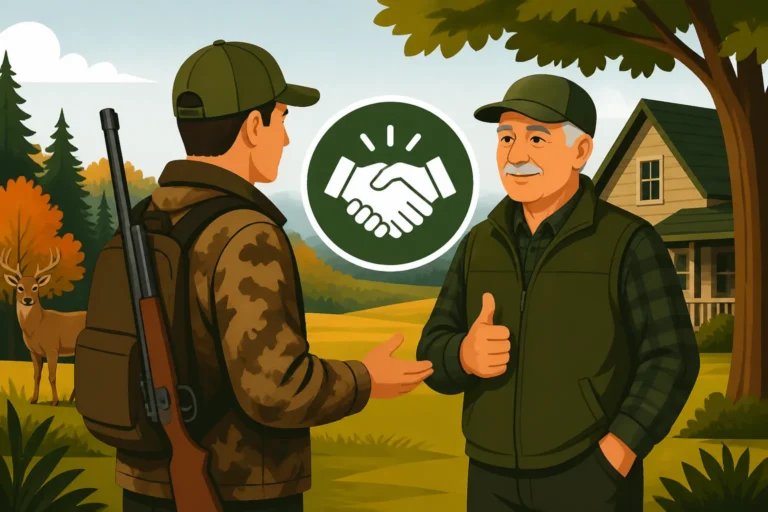
For private land, securing permission well in advance is essential. Landowners in the Carden area are often very knowledgeable about the wildlife on their property and can offer invaluable insights into game movement or areas they prefer you avoid. When you do gain permission, always respect their property as if it were your own. Close gates, don't damage fences, and leave no trace. This helps maintain good relationships for all hunters. It's not uncommon to find landowners who are happy to grant access for turkey or deer hunting, but they appreciate being asked and having you present yourself as a responsible, respectful hunter. Remember, the alvar is a working landscape for many, with cattle grazing on some properties, so be mindful of livestock and fencing. Always double-check Getting Private Land Permission in Ontario rules, as a refresher.
Hunting Strategies for the Carden Alvar
Because the Carden Alvar is so distinct, the hunting strategies you employ here will need some tailoring. What works in dense bush might be a bust in these open conditions, and vice-versa. Adaptation is the name of the game.
Whitetail Deer in the Alvar
Hunting whitetails in the Carden Alvar is largely a game of patience and observation, often relying on spot-and-stalk tactics or carefully placed stands near cover. Given the open nature, long-range optics are your best friend. Spend time glassing at dawn and dusk from a discreet vantage point, looking for deer moving between bedding cover and feeding areas. Once you spot deer, plan a careful stalk, using what little cover is available – low junipers, rock formations, or even the slight undulations of the terrain – to approach undetected. Wind direction is critical here, even more so than in dense woods, as thermals can be tricky in open country.
When considering stand placement, forget the towering oak or maple you might find elsewhere. Focus on the edges of those dense cedar thickets. Deer will use these as security cover, often slipping just inside the edge before stepping out into more open feeding grounds. Hunting a Cedar Swamp Edge offers similar principles that apply to these dense alvar thickets. You're looking for pinch points where deer are naturally funneled. This could be where two thickets almost meet, creating a narrow corridor, or where a game trail skirts the edge of a particularly open area. Reading the subtle sign, such as rubs on small cedars or scrapes along a game trail, can reveal these crucial travel routes. Reading Whitetail Sign in Ontario Hardwoods provides a great foundation for understanding deer behaviour that can be adapted to the alvar's unique vegetation.
Wild Turkeys in the Alvar
Spring turkey hunting in the Carden Alvar offers a thrilling experience, often with good visibility. Turkeys here utilize the mix of open grasslands for feeding and the denser perimeter treelines for roosting and security. Your calling strategy will need to be flexible. In the early morning, listen carefully for gobblers sounding off from their roosts in the scattered hardwood or pine stands bordering the alvar. Once you locate a bird, your approach needs to be stealthy. The open terrain means you're easily spotted. Calling a Gobbler Off an Ontario Roost is a fundamental skill that takes on added importance here.
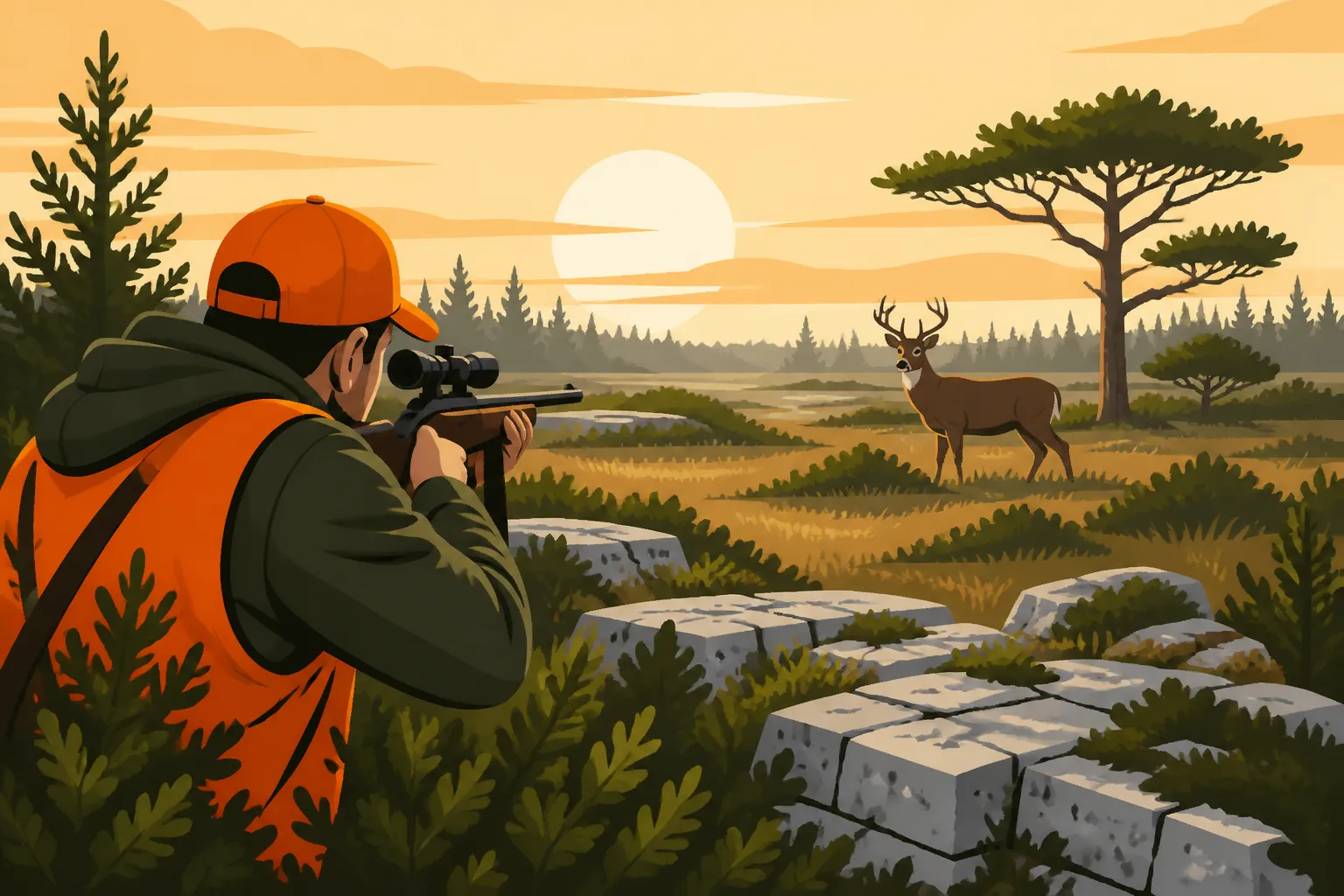
Often, setting up against the sparse cover available, like a large cedar or a stone fence line, and calling the bird to you is the most effective tactic. Decoys can be very effective in these open settings, as they're highly visible and can draw a curious gobbler across a significant distance. However, always be mindful of other hunters, as your decoys are also visible to them. If a gobbler is "hung up" and won't commit, sometimes a long, patient stalk using terrain features can get you closer, but it's a high-risk, high-reward move in such open country.
Small Game and Waterfowl
While not typically the main draw, the Carden Alvar and its surrounding areas can offer some surprisingly good opportunities for small game and waterfowl. Ruffed grouse and woodcock can be found along the edges where the alvar transitions into more traditional treed bush or along old logging roads. The dense, low cover of alvar shrubs can hold grouse, making for exciting flushes. Hunting Ruffed Grouse on an Ontario Bush Road provides excellent tips for this, and the principles apply to the alvar's less-traveled tracks.
For waterfowl, focus on the small, often unassuming ponds and wetlands scattered throughout the alvar, especially those with some emergent vegetation. These can be prime jump-shooting spots for ducks during migration or even for local birds. Jump-Shooting an Ontario Beaver Pond is a tactic that transfers well to the small, secluded water bodies you'll find here. Geese may also feed in the agricultural fields bordering the alvar, particularly in the fall, offering field-hunting opportunities if permission is secured.
Respecting the Alvar and Its Regulations
Hunting in a unique and sensitive ecosystem like the Carden Alvar comes with an added responsibility to ensure its preservation for future generations. Understanding and adhering to specific regulations and practicing ethical hunting are paramount.
Regulatory Considerations
The Carden Alvar is often subject to specific local regulations or is part of broader Wildlife Management Units (WMUs) that may have distinct season dates and bag limits. Always consult the current Ontario Hunting Regulations Summary for the specific WMU you plan to hunt in. You might find areas designated as "no hunting" zones or specific rules around vehicle access on sensitive alvar terrain. These regulations are in place to protect both the unique ecosystem and the wildlife that depends on it.
It's also crucial to remember general Ontario hunting regulations, such as blaze orange requirements during certain seasons, which are essential for hunter safety in any environment, but especially in areas where visibility can be both extensive and quickly obscured by low-lying cover. Ontario Hunter Education Requirements covers many of these safety fundamentals. Always carry your Outdoors Card and relevant licences, and be prepared to show them to enforcement officers. The Carden Alvar is actively managed, and conservation officers patrol these areas regularly.
Ethical Hunting and Conservation
Beyond the legal requirements, ethical hunting is about respecting the land, the wildlife, and other users of the alvar. Because of its sensitive nature, minimizing your footprint is incredibly important. Stick to established trails or access points where possible, and avoid driving off-road unless explicitly permitted, as the thin soils are easily damaged. Pack out everything you pack in – leave no trash, spent casings, or other debris.
Be mindful of the rare and protected plant species that thrive here. Avoid unnecessary trampling or disturbance to vegetation. When field dressing game, choose locations away from water sources and pack out any non-biodegradable waste. The Carden Alvar is a natural treasure, attracting birdwatchers, hikers, and naturalists as well as hunters. Demonstrating responsible, ethical behaviour ensures that hunting remains a respected and accepted activity in this special landscape. Your actions reflect on the entire hunting community, so leave the alvar better than you found it.
Conclusion
Hunting the Carden Alvar offers a truly distinct Ontario experience, far removed from the dense forests or typical farmlands many of us are accustomed to. It challenges hunters to adapt their scouting, strategy, and even their mindset, embracing the open landscapes and unique cover it provides. With careful planning, a solid understanding of the terrain, and a commitment to ethical practices, you can unlock the secrets of this remarkable ecosystem and enjoy some truly memorable hunts for deer, turkey, and small game. The alvar might seem daunting at first glance, but for those willing to learn its rhythms, it offers a rewarding and enriching connection to Ontario's wild side.
Disclaimer
This article is for general informational purposes only and does not constitute professional advice. Laws, prices and regulations vary by location and change over time. Consult a qualified professional for guidance on your specific situation.