Ontario Landowner Relations for Hunters
For many Ontario hunters, finding reliable and accessible hunting land can feel like an impossible puzzle, especially if you live in the more populated parts of the province where public land is sparse. It's frustrating to drive past prime habitat only to see "No Trespassing" signs everywhere. This guide will walk you through the essential steps and etiquette for building positive relationships with landowners, helping you unlock private land opportunities and experience some of Ontario's finest hunting.
Why Landowner Relationships Are Crucial for Ontario Hunters
Hunting in Ontario offers a rich tradition, but the landscape for accessing quality hunting ground has changed dramatically over the decades. While vast tracts of Crown Land exist, particularly in the North, much of the sought-after big game and waterfowl hunting in Southern and Eastern Ontario occurs on private property. Understanding this reality is the first step toward expanding your hunting horizons beyond crowded public areas.
The Increasing Pressure on Public Land
Think about your last opening weekend on public land. Did you encounter other hunters at every turn? Did you find yourself competing for prime spots or hearing shots close by throughout the day? This isn't just your imagination; it's a growing reality. As hunter numbers remain stable or increase in certain areas, and development encroaches on wild spaces, the pressure on accessible Crown Land, especially near urban centers, intensifies. This often means less solitude, more disturbance of game, and sometimes, a less enjoyable experience overall. Hunters are constantly looking for alternatives, and private land is often the answer, but it requires effort and respect.
Beyond the sheer number of hunters, public land can also be quite variable in quality. Some Crown Land parcels are excellent, offering diverse habitat and healthy game populations. Others might be heavily logged, fragmented, or simply picked over year after year. For consistent success, particularly with species like deer, wild turkeys, and geese, accessing private agricultural land or well-managed woodlots can make all the difference. This is where a strategic approach to landowner relations truly pays off.
The Benefits of Private Land Access
The advantages of hunting private land are numerous and often lead to a more rewarding experience. Firstly, you gain access to less-pressured animals. Deer on private farms, for instance, are often more predictable and less wary than those constantly pushed by hunters on public ground. You might find untouched bedding areas, consistent food sources, and travel corridors that rarely see human disturbance. Secondly, private land often provides safer hunting conditions, as you're typically aware of who else is in the area and can coordinate with the landowner. This significantly reduces the stress of accidental encounters or concerns about property lines.
Moreover, developing a strong relationship with a landowner can open doors to long-term hunting opportunities. Imagine having a reliable spot year after year, where you understand the land, the deer patterns, and can even help with management. This kind of access can be transformative. It allows for better scouting, more strategic stand placement, and a deeper connection to the land itself. It's about becoming a trusted steward of their property, not just a transient hunter.
Understanding Ontario's Trespass Act
Before you even think about stepping foot on private property, you absolutely must understand Ontario's Trespass to Property Act. This isn't just a courtesy; it's a legal requirement with serious implications. Ignorance of the law is never an excuse, and violating trespass laws can lead to fines, loss of hunting privileges, and irreparable damage to the reputation of all hunters.
What Constitutes Trespass in Ontario
In Ontario, the Trespass to Property Act is quite clear: you are trespassing if you are on someone else's land without permission. It's not just about fences and "No Trespassing" signs. If land is cultivated or clearly being used for agriculture (like a corn field or pasture with cattle), permission is always required, even if there are no signs. For uncultivated, unposted land, the general rule has often been that you are not trespassing unless asked to leave or explicitly told not to enter. However, the safest and most responsible approach for a hunter is to always assume permission is needed, especially if there's any doubt about land use or ownership. Always try to obtain permission beforehand. Ontario Trespass and Landowner Law is something every hunter should study carefully.
The key takeaway here is that "No Trespassing" signs aren't the only indicator. A homeowner's yard, a farm field, a well-maintained woodlot, or any land where the owner has a reasonable expectation of privacy or control, requires permission. Even if you're just following a blood trail, retrieving a downed animal from an adjacent property without prior consent is technically trespassing and can cause significant issues. This is why building relationships before you're in a high-stress situation is so vital.
The Importance of Asking for Permission
Asking for permission isn't just good manners; it's fundamental to legal and ethical hunting in Ontario. It's about respect for private property rights and building trust within the community. When you ask, you're acknowledging the landowner's ownership and control. This simple act opens the door for conversation, allows the landowner to set specific rules or boundaries, and ensures everyone is on the same page. Without it, you're not just breaking the law, you're potentially creating conflict, instilling fear, and making it harder for every other hunter to gain access in the future.
Think about it from the landowner's perspective: they often have concerns about safety, liability, potential damage to their crops or livestock, and simply not knowing who is on their property. By asking, you alleviate many of these anxieties. It provides an opportunity to introduce yourself, explain your intentions, and demonstrate that you are a responsible, respectful individual. This upfront communication is the bedrock of positive landowner relations.
Penalties and Legal Implications
The consequences of trespassing while hunting in Ontario can be severe. Fines can range from several hundred dollars for a first offense to much higher amounts for repeat violations. But it's not just about the money. A conviction for trespassing can also lead to the suspension or revocation of your hunting licence, impacting your ability to hunt anywhere in the province. Imagine losing your privilege to hunt for a year or more because you didn't take the time to knock on a door.
Beyond the legal ramifications, there's the reputational damage. Landowners in rural communities talk. One bad experience with a disrespectful hunter can quickly spread, making it harder for anyone to get permission in that area. This can create lasting animosity between hunters and landowners, eroding trust and closing off access for years to come. Ultimately, protecting your privilege to hunt and the future of hunting depends on every individual hunter upholding the highest standards of respect and legality.
Approaching Landowners for Permission
Asking for permission can feel intimidating, but with the right approach, it can be a highly successful way to find new hunting grounds. It's less about a magic formula and more about genuine respect, clear communication, and presenting yourself as a responsible individual. Don't be discouraged by initial rejections; every "no" brings you closer to a "yes."
Timing and First Impressions
Timing is everything when approaching a landowner. Avoid showing up during busy farming periods like planting or harvest, or early in the morning when people are just waking up or getting ready for their day. Weekends, particularly Sunday afternoons, can often be a good time when people are more relaxed and likely to be home. Always approach during daylight hours. A good rule of thumb is to go when you wouldn't mind being interrupted yourself.
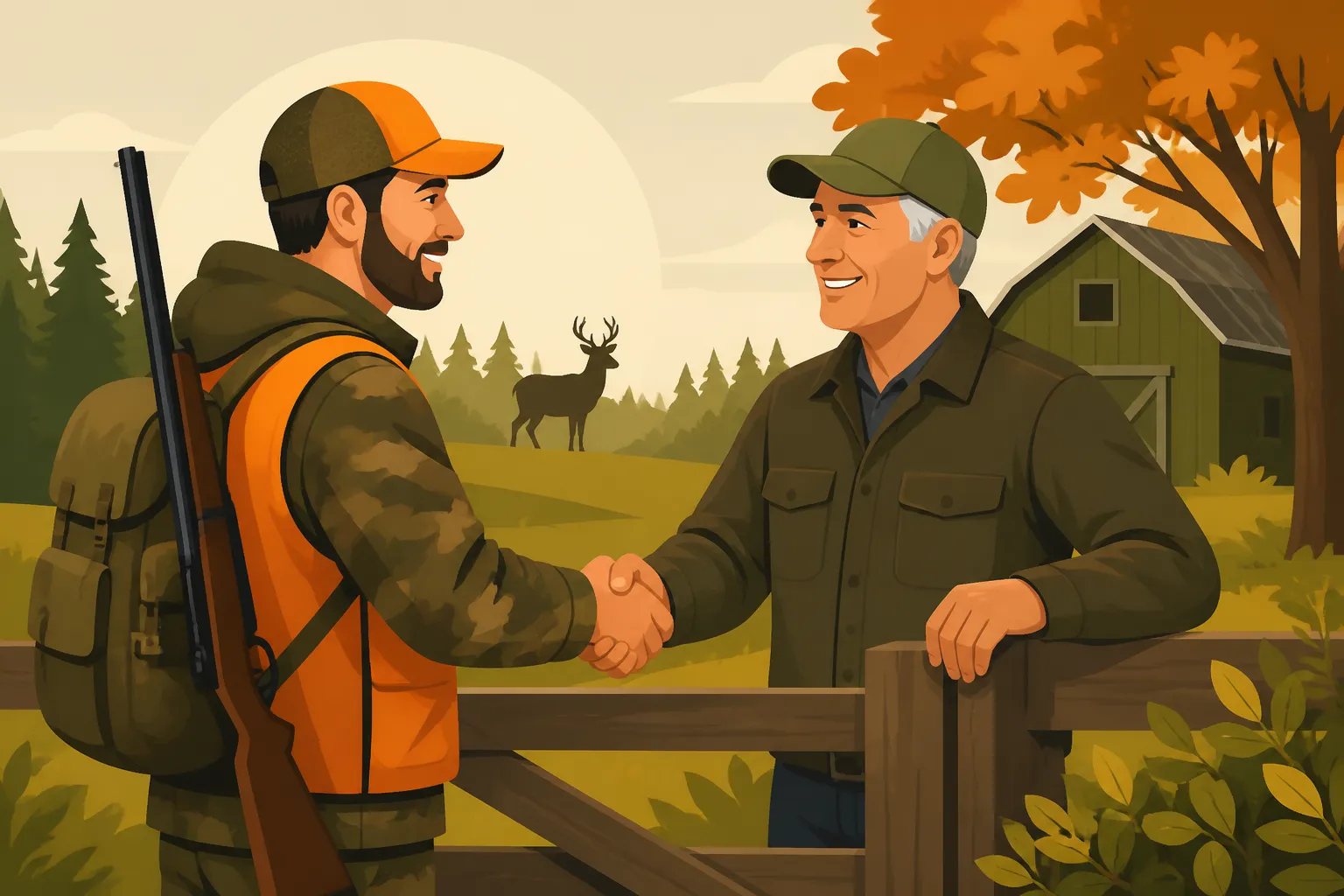
First impressions truly matter. Dress neatly and presentably, but still like a hunter or outdoorsperson – no need for a suit, but don't show up covered in mud either. Leave your hunting gear, including firearms or bows, locked in your vehicle. Your hands should be empty and visible. A friendly smile and a polite greeting go a long way. Introduce yourself clearly, state where you're from, and explain why you're there. For instance, "Hi, my name is Chris Miller, and I'm a hunter from [your town]. I was hoping to speak with you for a few minutes about the possibility of hunting deer on your property this fall."
What to Say and What to Bring
Once you've introduced yourself, be clear and concise about your request. Explain what species you're interested in hunting and during what season. For example, "I'm primarily interested in bowhunting for deer in the early archery season" or "I'd love to try and call in a few coyotes on your back fields." Offer to show them your hunting license and Outdoors Card if they ask. You might even bring a map of their property, perhaps printed from a tool like onX Hunt, and offer to mark the areas you'd like to hunt and any no-go zones they designate. This shows foresight and respect for their boundaries.
Be prepared to answer questions about your experience, safety practices, and what kind of vehicle you'll be using for access. Highlight your commitment to safety, like wearing blaze orange (if applicable for the season) and shooting away from buildings or livestock. It's often helpful to offer something in return. This isn't about paying them for access, but about demonstrating good neighbourliness. Perhaps you could offer to help with a task on their property, like fixing a fence, clearing brush, or even just sharing some of your wild game harvest if you're successful. This thoughtful gesture can really set you apart.
Handling Rejections Gracefully
Not every landowner will say yes, and that's perfectly okay. Don't take it personally. There could be many reasons for a refusal: they might have had bad experiences with hunters in the past, they might already have friends or family hunting the property, or they might simply not be comfortable with hunting on their land. Whatever the reason, accept a "no" with grace and a polite "Thank you for your time anyway." A positive attitude, even in rejection, leaves a good impression and keeps the door open for future possibilities, or perhaps even a referral to a neighbour.
If they say no, don't press them or try to argue. Just thank them and move on. Sometimes, a polite "Is there anyone else in the area you might suggest I speak with?" can open up new leads. Remember, your goal is not just to get access to one property, but to build a reputation as a respectful and responsible hunter in the community. One good impression, even if it doesn't result in immediate hunting access, can lead to future opportunities.
Building and Maintaining Positive Relationships
Getting initial permission is just the first step; maintaining a positive, respectful relationship with landowners is what truly sustains private land access year after year. Think of it as a partnership, where mutual respect and clear communication are key.
Communicating Expectations Clearly
Once permission is granted, sit down with the landowner and clearly discuss expectations for both sides. This is critical to avoid misunderstandings. Cover topics like:
- Specific hunting areas: Use maps (even drawn ones) to clearly delineate where you can and cannot go.
- Access points: Where should you park? Which paths or gates can you use? Should gates be closed or left open?
- Hunting times: Are there specific hours they prefer you hunt, or avoid?
- Species and methods: Confirm what you're allowed to hunt (deer, turkey, coyotes?) and with what weapon (bow, shotgun, rifle?).
- Reporting: Do they want to know when you'll be on the property, and when you've left? Do they want updates on what you've seen or harvested?
- Guests: Can you bring a hunting partner, or is it just you? If so, should they also meet the landowner?
- Emergencies: Exchange contact information. What should you do if you see something concerning on their property?
Write down these agreements if necessary, especially for complex arrangements. This clarity protects both you and the landowner. For longer-term access, a written agreement can even be beneficial, especially if it defines liability. Ontario Landowner Hunting Privileges often come with unstated expectations, so it's always best to ask.
Showing Gratitude and Respect
Gratitude isn't just a thank you when you get permission. It's an ongoing practice. Always thank the landowner when you arrive and when you leave. Send a thank-you card after the season, perhaps with a photo of a successful harvest (if you think they'd appreciate it). Offering some of your venison, turkey, or other game is a time-honoured tradition that many landowners appreciate, especially if they enjoy wild game but don't hunt themselves.
Respect extends beyond the hunt. If you see a gate open, close it. If you drive over a muddy field, try to stick to existing tracks. Clean up any litter you find, even if it's not yours. Report any suspicious activity, downed fences, or problems you notice on their property. Remember, you're a guest, and treating their land as if it were your own – or even better – shows true respect. This builds immense goodwill.
Helping Out and Being a Good Neighbour
Being a good neighbour goes a long way. Beyond hunting, look for opportunities to help the landowner. This could be simple acts like offering to help with a task during planting or harvest season, assisting with minor repairs, or even just checking on their property when they're away. If they have livestock, offer to keep an eye out for strays or problems.
Consider offering your services for predator control if they have issues with coyotes or other nuisance animals impacting their livestock or deer herd. This can be a tangible way to give back and prove your value as a responsible hunter. Remember, the relationship isn't just transactional; it's about forming a bond based on trust and mutual benefit. This is the kind of consistent positive interaction that builds lasting access and good rapport.
Addressing Common Challenges and Etiquette
Even with the best intentions, situations can arise that test landowner relationships. Knowing how to navigate these challenges with grace and honesty is vital for maintaining access and upholding your reputation.
Dealing with Posted Land and Signage
When you encounter "No Trespassing," "Posted," or "Private Property" signs, the message is clear: do not enter. Period. These signs reflect a landowner's choice, for whatever reason, to restrict access. Disregarding them is not only illegal but deeply disrespectful. It's one of the quickest ways to sour public opinion on hunters and make it even harder for others to gain permission elsewhere.
If you previously had permission to hunt a property and then it becomes posted, assume your permission has been revoked unless you have a direct, explicit conversation with the landowner confirming otherwise. Changes can occur for various reasons – a new owner, past negative experiences, or new agricultural plans. Always respect the signs. If you're unsure about specific boundaries, especially with complex property lines, tools like onX Hunt can be incredibly valuable. They provide detailed property ownership maps right on your phone, allowing you to clearly see where one parcel ends and another begins, ensuring you stay on the right side of the law and respect boundaries.
Retrieving Game from Adjacent Properties
This is a common and often stressful scenario. You make a good shot, but the animal crosses onto a neighbouring property that you do not have permission to hunt. Your first instinct might be to follow immediately. Resist this urge. Retrieving Game From Private Land in Ontario without permission is still trespassing. The correct protocol is to contact the landowner of the adjacent property before you cross the line. Explain the situation calmly and politely ask for permission to retrieve your downed animal.
If you can't reach the landowner immediately, wait. Mark the last known location of the animal. If it's a cold day, the meat will likely be fine for a few hours. If it's warm, you might have to make a quicker decision, but never sacrifice legality for haste. If you've been granted permission on one property, it's a good idea to ask that landowner for contact information for their neighbours, specifically for such an eventuality. This kind of proactive planning can save a lot of heartache and legal trouble later on.
Respecting Property Boundaries
Even when you have permission, it's critical to respect the boundaries of the specific property you're hunting. Do not assume that permission on one parcel extends to an adjacent one, even if both are owned by the same family but listed under different names. Always confirm the exact limits of your access. Be mindful of neighbouring houses, barns, and other buildings, and ensure all your shots are taken with a safe backstop and well away from occupied dwellings, even if they're on another property.
Fencerows, hedgerows, and old logging roads often mark property lines. Pay attention to your location, especially in thick cover or unfamiliar territory. Using a GPS with accurate property line overlays, such as those found on mapping apps like onX Hunt, can be an invaluable tool for staying within your permitted boundaries. This level of diligence demonstrates professionalism and trustworthiness to the landowner.
Alternative Private Land Access Options
While knocking on doors is often the best way to get access, there are other avenues for hunting private land in Ontario that might suit different situations or preferences. These options often come with their own sets of rules and considerations, but can provide reliable access.
Hunting Leases and Their Appeal
Hunting leases involve paying a landowner for exclusive hunting rights to their property for a specified period, usually a season or a year. This option is particularly appealing for groups of hunters or those seeking guaranteed, long-term access to quality land without the constant worry of asking for permission or dealing with other hunters. Leases often cover larger tracts of land and can be a significant investment, but they offer unparalleled control over your hunting experience. Ontario Hunting Lease Prices Per Acre can vary widely depending on location, acreage, and game populations, so research is key.
The benefits of a lease include exclusivity, which means you won't be competing with other hunters, and the ability to implement specific management strategies, such as food plots or habitat improvements, often with the landowner's approval. You typically have clear, written agreements outlining access, rules, and liability, providing peace of mind. While they require more financial commitment, hunting leases provide a sense of ownership and the freedom to manage the property for optimal hunting success.
Conservation Authority Lands and Managed Forests
Ontario has various conservation authority properties and privately owned lands managed under programs like the Managed Forest Tax Incentive Program (MFTIP). Some of these lands allow hunting, often with specific rules, permits, or limitations. Conservation Authority lands, for example, may have designated hunting zones and require a special permit in addition to your provincial hunting license. They often provide valuable access, especially in Southern Ontario, but demand careful research into their specific regulations.
Managed forests are private lands where owners receive tax incentives for good forest stewardship. While not all MFTIP lands are open to hunting, some landowners may be more amenable to granting permission, especially if you can demonstrate how hunting, particularly deer management, aligns with their forest management goals. These properties can offer excellent habitat and often see less pressure than public lands. Similarly, various land trusts and even some municipal forest tracts might offer limited hunting opportunities. Researching these options, usually through their respective websites or direct inquiry, can uncover hidden gems for responsible hunters. While general platforms like GoHunt might offer broad planning tools, understanding these specific local access programs requires targeted provincial research.
Table: Key Dos and Don'ts for Landowner Relations
| Do's | Don'ts |
|---|---|
| Do dress neatly and politely. | Don't show up unannounced with gear. |
| Do state your request clearly and honestly. | Don't assume permission for adjacent land. |
| Do offer to show your licence/Outdoors Card. | Don't trespass, even for game retrieval. |
| Do clarify boundaries and rules. | Don't argue if permission is denied. |
| Do thank the landowner sincerely. | Don't leave litter or create a mess. |
| Do offer help or share harvest. | Don't drive off-road without explicit permission. |
| Do communicate when you'll be on the property. | Don't bring unannounced guests. |
| Do respect their privacy and property. | Don't forget to follow up with thanks. |
Conclusion
Building and maintaining positive relationships with landowners is arguably one of the most important skills an Ontario hunter can cultivate. It's about more than just finding a place to hunt; it's about fostering respect, trust, and a sense of community. By understanding trespass laws, approaching landowners with courtesy and clear communication, and consistently demonstrating gratitude and responsible behaviour, you not only open doors to incredible hunting opportunities but also become an ambassador for all hunters. Let's work together to ensure private land access remains a viable and positive part of Ontario's hunting heritage for generations to come.
Disclaimer
This article is for general informational purposes only and does not constitute professional advice. Laws, prices and regulations vary by location and change over time. Consult a qualified professional for guidance on your specific situation.