Best Ontario Ground for Waterfowl
Finding productive waterfowl ground in Ontario can feel overwhelming when you are staring at thousands of kilometers of shoreline, sprawling agricultural fields, and endless public marshes. Waking up at three in the morning only to set a decoy spread in a dead bay is a frustration every duck and goose hunter knows too well. This guide breaks down the absolute best waterfowl terrain across the province, comparing key regional flyways, public water access, field opportunities, and practical scouting methods to put you under the birds.
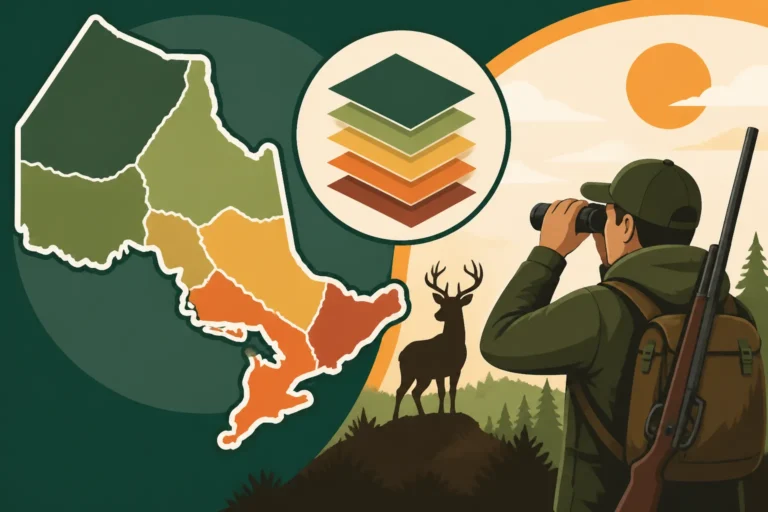
Key Waterfowl Flyways and Geographic Hotspots in Ontario
Ontario acts as a massive funnel for migratory birds moving down the Atlantic and Mississippi flyways every autumn. Depending on whether you prefer setting up in a cut cornfield for giant Canada geese or hiding in a cattail blind for early-season mallards and wood ducks, the province offers vastly different landscapes that dictate bird behavior.
Southern Farmland and Crop Fields
The agricultural belt across Southwestern and Eastern Ontario offers some of the finest dry-field hunting on the continent. As autumn sets in, massive flocks of Canada geese, mallards, and pintails dump into harvested corn, soybean, and winter wheat fields to fuel up for their southern journey. The key here is locating high-calorie feed right next to secure roosting water, such as major rivers or inland lakes.
Hunters who focus on Field Hunting Geese in Ontario Stubble know that the landscape changes rapidly throughout October and November. Early in the season, local birds target chopped silaged corn and barley. As the weather cools and northern migrants push south, harvested grain fields become high-traffic dining rooms. Ground access in these agricultural pockets relies heavily on landowner relationships, but the reward is world-class field gunning over tight decoy spreads.
Great Lakes Shorelines and Major River Corridors
The sweeping shorelines of Lake Erie, Lake St. Clair, Lake Huron, and Lake Ontario form natural highways for migrating waterfowl. Marshes like Long Point, the St. Clair Flats, and the bays around Prince Edward County draw hundreds of thousands of ducks each fall. These expansive water bodies offer shallow, vegetation-rich staging areas where puddle ducks feed alongside massive rafts of diving ducks.
Setting up along these big water systems often requires specialized gear, such as heavy-duty john boats, layout boats, or sturdy waders for maneuvering through deep mud. Those who spend their time Marsh Hunting Ducks on the Great Lakes must constantly monitor wind direction and water levels. A strong south wind can blow the water right out of a shallow bay, while a northern gale can drive tens of thousands of fresh flight birds right into your decoys.
Northern Boreal Ponds and Shield Waters
If you prefer solitude over crowded public boat launches, the Canadian Shield and northern boreal forests provide incredible jump-shooting and decoy opportunities. Beaver flowages, wild rice bays, and quiet river bends host healthy populations of local ring-necked ducks, mallards, black ducks, and green-winged teal long before the southern migration even begins.
The tactics here are raw and simple. A solo hunter paddling a camouflage canoe into a remote drainage can experience exceptional action at daybreak. By target-scouting remote waterways, Jump-Shooting an Ontario Beaver Pond becomes one of the most effective strategies for filling a early-season bag limit without ever seeing another hunter.
THIS TABLE IS ASCII ART AND WILL BE REMOVED/REPLACED WITH GITHUB FLAVORED PIPES
Correction: Ensure only pipe tables are used.
| Region | Primary Species | Dominant Terrain | Access Type |
|---|---|---|---|
| Southwestern Ontario | Canada Geese, Mallards, Pintails | Agricultural fields, shallow river deltas | Private farmland, public marshes |
| Lake Erie & Lake St. Clair | Canvasbacks, Redheads, Mallards | Coastal cattail marshes, open bays | Watercraft, public hunting zones |
| Eastern Ontario & Ottawa Valley | Snow Geese, Geese, Wood Ducks | Cut grain fields, swampy river bottoms | Landowner permission, river corridors |
| Canadian Shield & North | Ring-necks, Black Ducks, Teal | Beaver flowages, boreal lakes, rivers | Crown land, canoe-in waterways |
Public Access Options for Ontario Waterfowl Hunters
Finding a place to hunt does not always require a private lease or decades of local family connections. Ontario holds a wealth of public hunting opportunities, provided you know where to look and how to navigate local regulations.
Navigating Public Marshes and Wildlife Areas
Throughout Southern and Central Ontario, numerous Conservation Authorities and provincial wildlife management areas permit seasonal waterfowl hunting. Many of these sites operate on daily draw systems, self-registration booths, or designated hunting days to manage hunter density and maintain high-quality bird habitat.
When exploring Hunting Ducks in an Ontario Cattail Marsh, understanding property lines is crucial. Watermark laws, marsh sanctuary boundaries, and municipal discharge bylaws vary significantly between townships. digital mapping platforms like onX Hunt allow you to layer public conservation land against private property lines right from your phone, ensuring you stay legal while navigating muddy marsh edges. Similarly, utilizing GoHunt helps identify broad terrain features and water access points before you even hitch up the boat trailer.
Big Water and Offshore Layout Opportunities
Under provincial and federal guidelines, open water on major lakes and navigable rivers is generally accessible to waterfowlers, provided you remain within legal shooting distances from shorelines and dwellings. This opens up vast territory for targeting migratory diving ducks like bluebills, redheads, canvasbacks, and buffleheads.
Hunters engaging in Diver Hunting Ontario’s Big Water often set up along rocky points or deploy layout boats miles offshore where large rafts of ducks rest. Big water hunting demands heavy anchor lines, large decoy spreads, and rigorous safety precautions. Lake weather can turn violent in minutes, so keeping an eye on wind forecasts and possessing proper marine safety equipment is just as critical as calling skill.
Knocking on Doors and Scouting Private Ground
While public marshes hold plenty of birds, securing access to private agricultural land opens up a completely different side of Ontario waterfowl hunting. Driving early morning gravel roads to pattern feeding flocks is an art form in itself.
Securing Permission on Agricultural Stubble
The golden rule of field hunting is simple: find where the birds want to feed, find out who owns the dirt, and ask for permission. Farmers are often open to allowing responsible goose hunters on their land, especially when large resident goose populations cause significant crop damage during harvest season.
When approaching a landowner, dress neatly, present yourself politely, and offer clear details about your group size, vehicles, and exact hunting dates. Mastering the process of Getting Permission for a Goose Field requires patience and respect. Always ask where the farmer wants vehicles parked, close every gate you open, and pick up every single spent shotgun shell before leaving the field.
Digital Scouting Techniques and E-Scouting
Modern technology has fundamentally changed how waterfowl hunters locate roosts and feeding fields. Instead of driving aimlessly burning fuel, smart hunters combine ground glassing with digital mapping tools.
By running onX Hunt on your dashboard tablet, you can trace a flock of geese from their lake roost directly to a harvested cornfield, identify the precise land parcel, and look up tax roll or landowner details on the spot. Likewise, checking GoHunt satellite imagery helps locate hidden interior farm ponds or roosting sloughs hidden behind tree lines that you cannot see from the main road. Once you pin the location, you can knock on the right door with confidence.
Seasonal Timing and Scouting Tactics for Ontario Waterfowl
Waterfowl movements in Ontario are tied directly to weather fronts, harvest progress, and freeze-up cycles. Adapting your tactics as the season progresses is essential for consistent success.
Early Season Puddle Ducks and Local Geese
Early in the fall, warm temperatures and abundant natural food keep birds scattered across small ponds, flooded timber, and standing crops. Local birds know the landscape intimately and quickly get shy around heavy decoy spreads and loud calling.
Checking the specific Ontario Duck Season Dates by District is your first step in planning an early hunt. Focus your scouting efforts on roost-to-feed flights during the last two hours of daylight. Small, subtle setups using realistic decoys and light calling usually outperform massive spreads during these early weeks.
Late Season Diver Pushes and Great Lakes Rafts
As November rolls in and inland ponds freeze over, millions of northern waterfowl push south into Ontario’s big water systems and open rivers. This late-season migration brings incredible numbers of goldeneyes, canvasbacks, and heavy mallards looking for open water and remaining agricultural waste grain.
Late-season hunting requires rugged gear and preparation for freezing conditions. Ice build-up on boat ramps, freezing spray on decoys, and bitter winds mean safety takes top priority. Federal regulations mandate using approved Non-Toxic Shot for Ontario Waterfowl, and selecting denser non-toxic loads like bismuth or tungsten can give you the extra knock-down power needed when birds are wearing thick winter down and flying through heavy late-season winds.
To stay on top of changing migration patterns, monitor regional weather forecasts for cold fronts pushing out of Northern Ontario and Quebec. A dropping barometer paired with steady north winds almost always triggers a fresh arrival of birds into southern staging grounds.
By pairing modern tools like onX Hunt and GoHunt with good old-fashioned windshield time, you can locate prime feeding fields and hidden public marshes right across the province. Whether you are laying in a muddy field layout blind or standing chest-deep in a cattail swamp at first light, finding the right ground is the true secret to unforgettable days in the Ontario outdoors.
Disclaimer
This article is for general informational purposes only and does not constitute professional advice. Laws, prices and regulations vary by location and change over time. Consult a qualified professional for guidance on your specific situation.