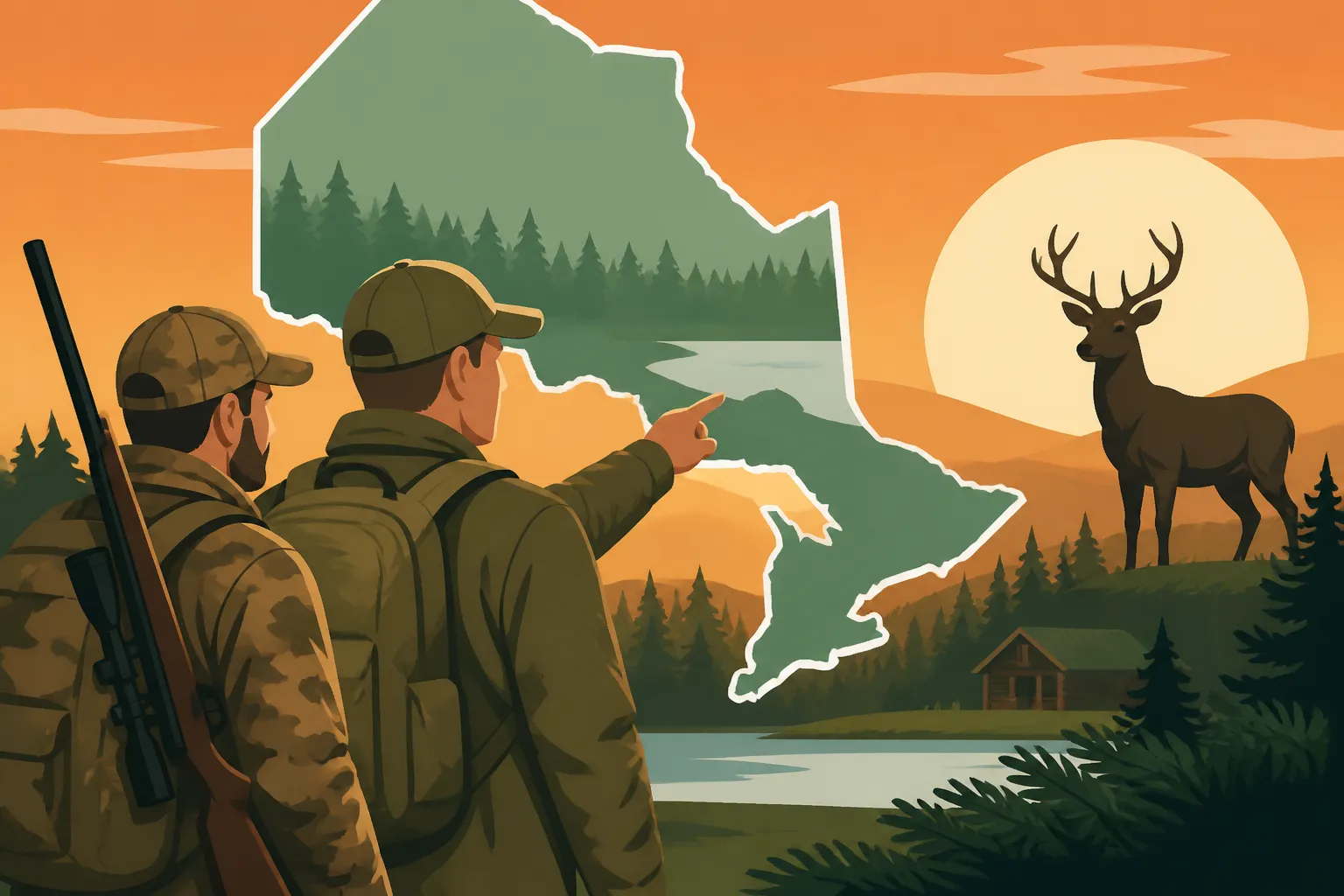
What a Semi-Guided Hunt Means Here
You’ve likely seen the term “semi-guided hunt” when browsing for an Ontario adventure, and if you’re anything like many hunters, you might have scratched your head wondering what exactly that entails. It’s not quite a full-service experience where every detail is handled for you, but it’s certainly more than just showing up with a map. This guide aims to clear up the confusion and give you a realistic picture of what a semi-guided hunt means here in Ontario, so you can decide if it's the right fit for your next trip.
Decoding the Hunt Spectrum: Fully Guided, Semi-Guided, and Unguided
Before we dive deep into what "semi-guided" truly means, let's establish a clear understanding of the different levels of support you can find when hunting in Ontario. It's a spectrum, really, and knowing where each type falls will help you gauge your expectations. Many hunters find themselves trying to balance cost with comfort and expertise, and this is where the distinctions really matter.
Fully Guided: The Full-Service Experience
Imagine arriving at a beautiful lodge, your meals are cooked, your bed is made, and a knowledgeable guide is waiting to take you directly to prime hunting spots. They’ve scouted, they know the land, they’ll call, track, field dress your game, and often even assist with getting it out of the bush. This is the epitome of a fully guided hunt. You're paying for expertise, convenience, and a high level of support. This option is fantastic for first-time visitors to Ontario, those who are short on time, or anyone who simply wants to maximize their chances of success with minimal personal logistics. The guide is actively involved in the hunting process itself, from strategizing the approach to the actual shot opportunity. They become your hunting partner for the duration, sharing their deep local knowledge.
Unguided (DIY): The Independent Adventure
On the other end of the spectrum is the unguided or Do-It-Yourself (DIY) hunt. This is where you, as the hunter, are responsible for absolutely everything. You scout your own areas, figure out your own access, set up your own camp, handle all your meals, track your own game, field dress it, and get it out of the bush entirely on your own. Many resident hunters, especially those with years of experience on Hunting Ontario's Crown Land or private parcels, opt for this. It's the most cost-effective option, offering maximum independence and the satisfaction of earning your success completely on your own terms. However, it demands a significant amount of planning, research, and self-reliance. You'll need to know your Ontario Hunting Licences and What They Cost, understand the local regulations, and be prepared for all contingencies.
Semi-Guided: The Best of Both Worlds?
This is where our focus lies. A semi-guided hunt is precisely what it sounds like – a middle ground. It offers some level of support and assistance from an outfitter or guide service, but it leaves many of the core hunting tasks and daily responsibilities up to you. It's designed for hunters who want some local insight and logistical help, but who also value a degree of independence and want to keep costs a bit more manageable than a full-blown guided trip. Think of it as having a helpful partner or host who provides the framework for a successful hunt, without holding your hand every step of the way. It’s a great option for experienced hunters visiting an unfamiliar area or those who want to learn a new region without the full upfront investment of a completely DIY trip.
What to Expect from a Semi-Guided Hunt in Ontario
When you sign up for a semi-guided hunt in Ontario, you're generally looking at a package that provides significant logistical support and local knowledge, but still expects you to do the actual hunting. This balance makes it a popular choice, particularly for big game like moose and bear.
Accommodation and Camp Logistics
One of the primary benefits of a semi-guided hunt is that the outfitter usually takes care of the accommodation. This could range from a cozy cabin at a drive-in lodge to a more rustic What a Housekeeping Camp Actually Means setup, or even a remote tent camp that you access via boat or ATV. The beauty here is you don't have to worry about packing an entire camp setup, finding a suitable spot, or dealing with the permits that might come with it.
For instance, if you're looking at a moose hunt, the outfitter might provide a comfortable cabin with basic amenities, or a wall tent camp in a remote area they know holds animals. They might get you to the camp, but once there, the cooking, cleaning, and general camp upkeep become your responsibility. This is a huge time-saver compared to a full DIY expedition where every nail and tarp is on your packing list.
Pre-Scouting and Local Knowledge
This is perhaps the most valuable aspect of a semi-guided hunt. Outfitters usually operate on specific parcels of private land or have extensive knowledge of certain Crown Land areas. They've often spent considerable time pre-scouting, setting up stands, or identifying active game trails, food sources, and bedding areas.
For a deer hunt, for example, a semi-guided outfitter might provide you with detailed maps of their property, pointing out areas where they've seen activity, where specific stands are hung, or where recent sign like rubs and scrapes have been found. They might have trail cameras out and share the intel, giving you a massive head start compared to trying to learn new territory from scratch. They might even drive you to a general area and then leave you to hunt the specific spots they've identified. It's like having access to years of accumulated wisdom without having to put in all the legwork yourself. This is particularly useful when hunting complex terrain, like Hunting Ontario's Mixed Hardwood Bush or Hunting a Cedar Swamp Edge.
Stand Placement and Access Assistance
In many semi-guided scenarios, the outfitter might have pre-hung tree stands or ground blinds in strategic locations based on their scouting. This saves you the effort of packing in your own stands, finding suitable trees, and setting them up, which can be a significant chore, especially in thick bush or rough terrain.
Imagine arriving for a black bear hunt. A semi-guided package might include access to established bait sites that the outfitter has been actively maintaining and monitoring. They'll show you to your blind, tell you the wind direction to be mindful of, and explain the typical bear activity at that particular site. While you'll be responsible for sitting the bait and making the shot, the setup and bait maintenance are handled for you, giving you a strong chance of encountering a bear. Setting a Bear Bait Site in Ontario takes consistent effort, and having that done for you is a major perk.
Game Retrieval Assistance
This is another area where semi-guided hunts can be a lifesaver, especially with large game like moose or bear. Getting a several-hundred-pound animal out of the deep bush can be an incredibly arduous task, often requiring multiple people, ATVs, boats, or even horses.
With a semi-guided package, the outfitter might offer assistance with retrieving your downed animal. This could mean they provide an ATV and trailer for you to use, or they might come in with their own equipment and crew to help you haul it out to the nearest accessible road. This service alone can prevent immense frustration and back-breaking work, allowing you to focus on the hunt itself rather than the logistics of extraction. Discuss this explicitly when booking, as the level of retrieval assistance can vary greatly.
Limited Hands-On Guiding During the Hunt
It's crucial to understand what "semi" really means during the actual hunt. Unlike a fully guided trip where your guide is often with you in the blind, calling for you, or actively tracking, in a semi-guided hunt, you are generally on your own once you’re dropped off or reach your designated hunting area.
They might give you a rundown of the area, suggest tactics, or even show you where recent game activity has been. For example, for a moose hunt, they might tell you specific clearings to check or beaver ponds to glass, and suggest Calling a Bull Moose in the Rut techniques to use. But then, it’s up to you to implement that advice, stalk, call, and make the shot. This is where your hunting skills and decision-making come into play.
The Pros and Cons of Opting for a Semi-Guided Experience
Choosing a semi-guided hunt is a balance, and like any choice, it comes with its own set of advantages and disadvantages. It’s about matching the offering to your personal hunting style, experience, and budget.
Advantages of a Semi-Guided Hunt
- Cost-Effectiveness Compared to Fully Guided: This is often the biggest draw. Fully guided hunts can be a significant investment. A semi-guided option provides a substantial amount of support, especially in terms of camp and initial scouting, at a more palatable price point. It allows you to access prime hunting ground and professional insights without the premium price tag of a dedicated, in-the-field guide for your entire trip.
- Access to Prime, Often Private, Hunting Grounds: Many reputable outfitters have leases or own land that would otherwise be inaccessible to the average hunter. Opting for a semi-guided hunt can open doors to highly productive areas that are carefully managed and scouted, increasing your chances of success significantly over trying to find unpressured Hunting Whitetails on Ontario Crown Land yourself in an unknown WMU.
- Local Knowledge and Expert Advice: Even without a guide by your side, the pre-hunt briefing and detailed maps you receive are invaluable. Outfitters live and breathe hunting in their area. They know where the game typically travels, what they're eating, and how local conditions (like a late berry crop or heavy snow) might influence animal movement. This local intel can drastically shorten your learning curve, especially if you're hunting species like Black Bear Hunting in Ontario or Moose Hunting Ontario's Northern Bush for the first time in a specific region.
- Reduced Logistical Burden: Setting up a remote camp, particularly for a week-long hunt, requires a monumental amount of gear, planning, and effort. With accommodation, and sometimes even access to specific hunting areas taken care of, you can significantly reduce the amount of personal gear you need to bring and the stress of organizing complex logistics. This means more time scouting and hunting, and less time hauling and setting up.
- Enhanced Safety Net: Venturing deep into Ontario's wilderness, especially in northern regions, carries inherent risks. A semi-guided outfitter provides a crucial safety net. They know you're in the area, often check in on you, and are there to assist with game retrieval or, in a worst-case scenario, an emergency. This peace of mind is invaluable.
Disadvantages of a Semi-Guided Hunt
- Limited In-Field Guidance: This is the trade-off for the lower cost. If you thrive on having a guide calling for you, actively tracking alongside you, or making real-time decisions, a semi-guided hunt might feel a bit isolating. You need to be confident in your own hunting skills, navigation abilities, and decision-making once you're out in the field. There's no one to whisper "don't move" or point out the subtle flicker of an ear in the brush.
- Self-Reliance is Still Key: While logistics are reduced, you're still responsible for a lot. This includes all your personal gear, your food and cooking in a housekeeping camp, actual hunting, tracking a wounded animal, and often processing your game. If you're not comfortable with these tasks, or if your group lacks the necessary skills, you might find yourself overwhelmed.
- Potential for Misunderstandings: Because the line between "some help" and "full help" can sometimes be blurry, it's absolutely critical to clarify every detail with the outfitter before booking. What exactly is included in "game retrieval assistance"? Does "pre-scouted areas" mean marked trails, or just general directions? Don't leave anything to assumption; get it in writing if possible. Clear communication is your best friend here.
- Success Rates Vary: While an outfitter provides access and knowledge, your personal hunting skill plays a much larger role in a semi-guided hunt than in a fully guided one. If you struggle with patience, fieldcraft, or accurate shooting, the advantages of the semi-guided setup won't guarantee success. You are still the hunter, and the outcome largely rests on your shoulders.
Finding and Booking Your Ontario Semi-Guided Hunt
So, you've decided a semi-guided hunt strikes the right balance for you. Now, how do you go about finding and securing that perfect Ontario adventure? It requires some good old-fashioned research and asking the right questions.
Researching Outfitters and Their Offerings
Start by identifying the species you want to hunt and the general region in Ontario you're interested in. For instance, are you dreaming of a Whitetail Hunting in Ontario trip in the south, or perhaps a Black Bear Hunting in Ontario adventure up north? This will narrow down your search considerably.
Many reputable outfitters will clearly state on their websites or brochures whether they offer fully guided, semi-guided, or unguided (often called "housekeeping" or "self-guided") packages. Look for detailed descriptions of what each package includes. Pay close attention to things like:
- Accommodation type: Cabins, lodges, wall tents, etc.
- Meals: Are they provided (American Plan) or do you cook your own (Housekeeping)?
- Access to hunting areas: Do they provide transportation to specific zones, or do you use your own vehicle?
- Pre-scouting intel: How much information do they provide? Maps, trail cam photos, specific stand locations?
- Stand availability: Are stands provided, or do you bring your own?
- Game retrieval: What level of assistance is offered? Is it a charge per animal, or included?
- Licence and tag acquisition: Do they assist non-residents with this process, or is it entirely up to you? Remember to research Rules for Non-Residents Hunting Ontario carefully.
Websites like BookYourHunt and GoHunt can be excellent resources for finding outfitters that specifically list semi-guided options. These platforms often provide reviews, photos, and clear package breakdowns, making it easier to compare services from different providers. However, always go directly to the outfitter's own website and contact them personally for the most current and detailed information.
Essential Questions to Ask Before Booking
Once you've shortlisted a few outfitters, it's time to pick up the phone or send those emails. Clear communication is paramount to avoid any disappointment later on. Here's a table of crucial questions to ask:
| Category | Key Questions to Ask |
|---|---|
| Services Included | Can you provide a detailed list of everything included in the semi-guided package? What specifically is not included? How much pre-scouting is done, and what information (maps, trail cam intel) will be shared? |
| Accommodation | What type of accommodation is it? Is it private for our group, or shared with others? What amenities (kitchen, running water, heat, electricity) are available? What do we need to bring for the camp (linens, cooking gear)? |
| Hunting Area | Will we be hunting on private land, Crown Land, or both? What WMU (Wildlife Management Unit) will we be in? How will we access the hunting areas? Are there pre-hung stands or blinds, and are they safe and well-maintained? |
| Game Retrieval | What is the exact process for game retrieval? Is there a limit on distance or terrain? Is there an extra charge for retrieval? What happens if an animal goes down in a difficult-to-access spot? |
| Emergencies | What is your emergency plan in case of injury or severe weather? Is there cell service in the hunting area, or do you provide satellite communication? |
| Licences/Tags | What licences and tags will I need, and how do I acquire them? Can you assist non-residents with The Non-Resident Firearm Declaration process or with obtaining an Ontario Outdoors Card Explained? |
| References | Can you provide contact information for past semi-guided hunt clients? (This is one of the best ways to vet an outfitter, as advised in Choosing the Right Ontario Outfitter). |
| Payment/Booking | What are the deposit requirements and cancellation policies? What methods of payment do you accept? When is the final payment due? |
Understanding Expectations and Realistic Outcomes
It’s easy to get caught up in the excitement, but it's important to set realistic expectations. While an outfitter will provide you with a solid foundation, a semi-guided hunt still requires your active participation and skill. Don't expect a guarantee of success, but rather a significantly enhanced opportunity.
A good outfitter will be transparent about their typical success rates for semi-guided hunts and help you understand the challenges specific to the species and region. Be honest with yourself about your own hunting experience and physical capabilities. If you're new to the species or unfamiliar with bush hunting, you might consider practicing your Rattling Volume in Thick Bush or improving your Reading Whitetail Sign in Ontario Hardwoods skills before you go.
Ultimately, a semi-guided hunt in Ontario can be an incredibly rewarding experience. It offers a fantastic compromise for those who want to blend independence with valuable support, opening up new hunting opportunities without breaking the bank for a full-service experience. Do your homework, ask plenty of questions, and get ready for an adventure that’s truly your own, with a little help from your friends in the Ontario bush!
Disclaimer
This article is for general informational purposes only and does not constitute professional advice. Laws, prices and regulations vary by location and change over time. Consult a qualified professional for guidance on your specific situation.