Rules for Hunting Deer With Dogs
It's a common query among hunters, especially those new to Ontario or coming from other jurisdictions, about the use of dogs for hunting deer. The romanticized image of hounds baying on a deer's trail, or even just using your trusty Labrador to roust a whitetail, is often ingrained in our hunting culture. However, the reality in Ontario is quite different, and misunderstanding these regulations can quickly lead to serious legal trouble. This guide aims to clear up all the confusion around hunting deer with dogs in Ontario, explaining the strict rules, why they exist, and the specific, limited ways dogs can legally be involved in a deer hunt.
The Legal Landscape of Deer Hunting with Dogs in Ontario
Let's cut right to the chase: using dogs to actively hunt, pursue, or drive deer in Ontario is broadly illegal. This isn't just a suggestion; it's a firm regulation designed to manage wildlife and maintain specific hunting ethics. Many new hunters might feel a bit frustrated by this, especially if they've seen videos or heard stories from places like the southern U.S. where deer drives with dogs are a traditional method. But here in Ontario, the rules reflect a different approach to conservation and the hunting experience.
General Prohibition and Historical Context
The general prohibition against hunting deer with dogs in Ontario stems from conservation principles established many years ago. Historically, certain hunting methods, including the use of dogs to actively run game, were sometimes associated with excessive harvests or a perceived lack of "fair chase." As wildlife management evolved, the province shifted towards regulations that emphasize still-hunting, stand-hunting, and tracking, which are considered more selective and less disruptive to deer populations and their habitat. The intent is to provide a challenging hunting experience while also ensuring the long-term health and stability of the deer herd. While you might recall old stories from grandad about dogs being involved in some capacity, modern regulations are clear and have been for quite some time.
Specific Regulations from the Fish and Wildlife Conservation Act
The Fish and Wildlife Conservation Act, 1997 (FWCA) and its associated regulations are the bedrock of hunting law in Ontario. Under these rules, it is explicitly prohibited to use a dog to hunt or pursue deer. This prohibition is quite comprehensive. It means you cannot send a dog out to find deer, push deer towards hunters, or chase deer in any manner with the intent to hunt them. The language is designed to prevent any active participation of dogs in the hunting process itself, beyond what's specifically allowed (which we'll get to). Ignoring these rules isn't just a slap on the wrist; it can lead to significant fines, seizure of equipment, and even loss of hunting privileges. When you're out there, whether in the vast expanses of Hunting Northwestern Ontario's Big Bush or closer to home in Hunting Deer in Southern Ontario Farmland, it's your responsibility to know these rules inside and out. Always consult the current Ontario Hunting Regulations Summary, available through the Ministry of Natural Resources and Forestry (MNRF) to ensure you have the most up-to-date information. Many hunters use tools like GoHunt to quickly cross-reference these regulations with their location.
Exceptions for Tracking Wounded Game
Now, here's where the crucial distinction comes in, and it's often the source of confusion. While you absolutely cannot use a dog to hunt deer, you can use a leashed dog to track a wounded deer in Ontario. This is a common and incredibly valuable practice for ethical hunters who want to ensure they recover their game.
Here are the key points for using a dog to track wounded game:
- Leashed Only: The dog must be on a leash and under the immediate control of the handler at all times. This isn't about letting your dog free-range; it's about a controlled, deliberate search.
- Purpose: The sole purpose of the dog's involvement must be to locate and recover an animal that has already been shot or otherwise wounded. You cannot use this as an excuse to actively hunt or push deer.
- Proof of Wounding: You should have reasonable evidence that an animal has been wounded. This could be blood trail, hair, gut contents at the shot site, or a confirmed hit. Conservation Officers might ask for this if you're encountered tracking with a dog.
- Timeframe: While there's no explicit time limit, the reasonable expectation is that you are actively tracking a recently wounded animal. Using a dog days later without clear evidence might raise questions.
- Species Specific: This exception generally applies to big game, including deer.
- No Firearm for the Dog Handler (under certain conditions): If the person handling the dog did not shoot the deer, they are generally not permitted to carry a firearm while tracking with the dog, unless they also possess the appropriate hunting licence and tag for that species and season. The person who did shoot the deer is often the one tracking, and they would be permitted to carry their firearm to dispatch the animal if found alive. It's always best practice to clarify this with the MNRF directly, as interpretations can vary.
This exception is a testament to the province's commitment to ethical hunting and minimizing wasted game. Losing a wounded animal is every hunter's worst nightmare, and a well-trained tracking dog can be an invaluable asset in these difficult situations. However, it's vital to understand that this is a very specific allowance and not an open door to general deer hunting with dogs. If you're a responsible hunter who values game recovery, consider training a tracking dog; it's an incredible skill to have in your hunting toolkit.
Understanding the "Running Deer with Dogs" Concept (and why it's restricted)
When we talk about "running deer with dogs," it conjures different images for different people. For some, it's about tradition; for others, it raises immediate red flags about conservation and fair chase. In Ontario, the latter perspective largely guides our regulations. It's important to understand not just what the rules are, but why they are in place.
The Traditional Practice in Other Jurisdictions
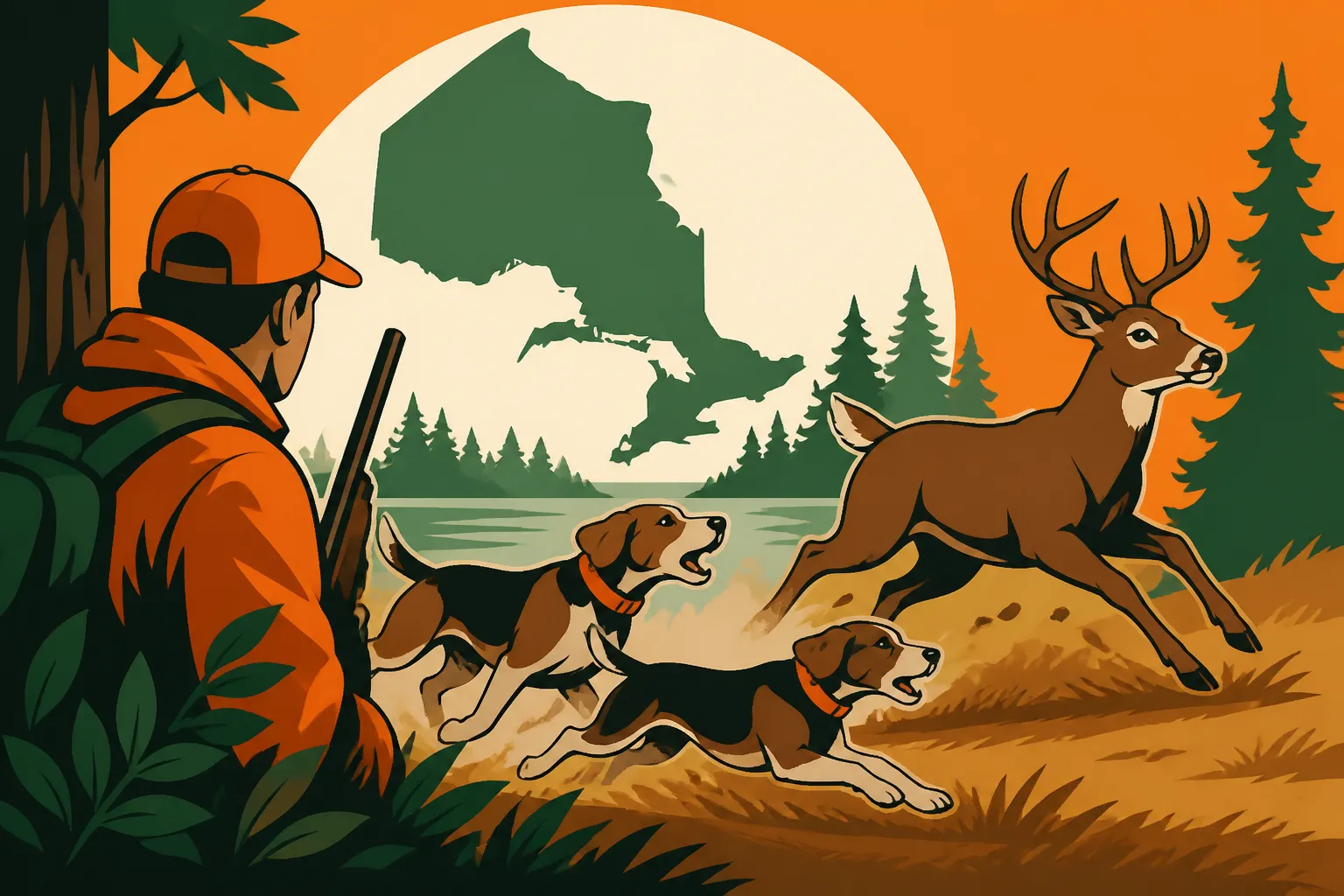
In many parts of the world, particularly in the southeastern United States, running deer with dogs is a deeply embedded cultural and traditional hunting method. Here, packs of hounds are released to track and chase deer, essentially driving them past standers positioned on property lines or travel corridors. Hunters listen to the baying of the dogs, which indicates the deer's movement, and intercept the animals as they flee. This method often involves a large group of hunters, extensive private land, and a significant amount of coordination. The dogs are typically highly trained to focus solely on deer and to return to their handlers. While this tradition thrives elsewhere, it's never been a widespread, legally sanctioned practice for deer hunting across most of Ontario, and certainly not in the modern era.
Ethical and Conservation Concerns in Ontario
Ontario's approach to wildlife management has prioritized different values and concerns compared to regions where dog-running is common. The primary reasons for the restriction on actively hunting deer with dogs include:
- Stress on Deer: Chasing deer with dogs, especially for extended periods, can cause significant stress, particularly during harsh winters when deer are already struggling to conserve energy. This can lead to increased mortality, especially among fawns or weaker individuals.
- Fair Chase Principles: Many Ontario hunters and conservationists believe that actively driving deer with dogs diminishes the "fair chase" aspect of the hunt. The idea is to challenge the hunter's skill in scouting, tracking, and stealth, rather than relying on dogs to do the driving.
- Conflict with Other Hunters: Ontario has a diverse hunting population, including many who prefer still-hunting or stand-hunting. The uncontrolled movement of deer and dogs across the landscape could severely disrupt other hunters' experiences and create unsafe situations. Imagine carefully Hanging a Stand on an Ontario Bush Edge and having your hunt ruined by dogs pushing deer erratically through the woods.
- Poaching Concerns: Allowing dogs to actively pursue deer could create loopholes for illegal activities, making it harder for conservation officers to distinguish legal hunting from poaching.
- Impact on Local Populations: In some ecosystems, constantly pushing deer can scatter them from their traditional ranges, impacting local population dynamics and making it harder for deer to find wintering areas or secure cover. This is especially true in areas with fragmented habitats.
These concerns collectively contribute to the steadfast regulation against running deer with dogs, reflecting a province-wide commitment to responsible wildlife stewardship.
Impact on Deer Behavior and Hunter Experience
The absence of widespread deer hunting with dogs in Ontario has shaped both deer behavior and the typical hunting experience here. Deer in Ontario are, for the most part, not accustomed to being systematically run by packs of hounds. This means they often hold tighter, rely more on stealth and cover, and react differently to human presence compared to deer in dog-hunting regions. This makes the art of still-hunting or patiently waiting in a blind, perhaps after Reading Whitetail Sign in Ontario Hardwoods, a more effective and central part of the hunting culture.
If dogs were allowed to run deer, it could lead to:
- Increased Skittishness: Deer would likely become much more agitated and prone to fleeing at the slightest disturbance, making traditional still-hunting incredibly difficult.
- Scattering of Herds: Local deer populations could be fragmented, pushed off smaller private woodlots, or forced into areas where they might be more vulnerable to road collisions or other hazards.
- Disruption of Patterning: Hunters spend countless hours Scouting a Wildlife Management Unit to understand deer patterns. The unpredictable movement caused by dogs would effectively negate much of this effort.
- Safety Concerns: The unpredictable movement of both deer and dogs could increase the risk of accidental shootings or other safety incidents in hunting areas, especially where many hunters might be afield, such as during Hunting Ontario's November Gun Season.
Ontario's regulations aim to foster an environment where hunters can engage with wildlife in a manner that respects the animal's natural behaviour and ensures a quality experience for all participants, while maintaining healthy deer populations.
Legal Use of Dogs in Ontario Hunting (Beyond Deer)
While actively hunting deer with dogs is a no-go in Ontario, it's important to remember that dogs are incredibly valuable partners in many other forms of hunting. Their senses, athleticism, and trainability make them indispensable for a variety of game species, adding immensely to the hunting experience and often improving game recovery.
Waterfowl and Upland Bird Hunting
This is perhaps the most common and universally accepted role for hunting dogs in Ontario. A well-trained retriever is an absolute game-changer for Waterfowl Hunting Across Ontario. Imagine watching a mallard fall into a dense cattail marsh or open water; without a dog, recovery can be nearly impossible, leading to wasted birds. Labradors, Golden Retrievers, Chesapeake Bay Retrievers, and many other breeds excel at this. They're bred for it, and their enthusiasm for fetching a downed bird is infectious.
For upland birds like ruffed grouse, spruce grouse, and woodcock, flushing dogs (like spaniels) or pointing dogs (like pointers and setters) are invaluable. A pointing dog will scent a bird and "freeze" on point, allowing the hunter to approach for a flush and shot. Flushing dogs, on the other hand, actively work through cover, pushing birds out. Whether you're Hunting Ruffed Grouse on an Ontario Bush Road or deep in the alder bottoms for woodcock, a good bird dog makes the hunt infinitely more productive and enjoyable, turning what could be a fruitless walk into an exciting pursuit.
Small Game Hunting (Rabbits, Hares, Grouse)
For small game, certain breeds of hounds truly shine. Beagles, for instance, are iconic for Rabbit and Hare Hunting in Ontario. Their incredible noses allow them to follow rabbit and hare trails, baying as they go, effectively driving the quarry in a circle back towards the hunter. This is a thrilling style of hunting, where the sound of the chase is as much a part of the experience as the shot.
Similarly, dogs can be used to flush other small game like squirrels, although this is less common than for rabbits or birds. The key here is that these are distinct hunting methods for species where the use of dogs is both traditional and legally permitted, and critically, these methods do not involve actively pursuing big game like deer.
Bear Recovery and Tracking
Just as with deer, dogs can play a vital role in recovering wounded black bears in Ontario. While actively hunting bears with hounds (a practice seen in some other regions) is not legal in Ontario, using a leashed dog to track a wounded bear is permitted under the same ethical recovery principles as for deer.
- Trained Trailing Dogs: Specific breeds or mixed breeds trained for trailing wounded game are used. These dogs typically follow a scent trail, indicating the location of the downed or injured animal.
- Safety First: Tracking wounded bears requires extreme caution due to the animal's size and potential for aggression when injured. Handlers must be highly experienced, and the dog well-controlled.
- Ethical Recovery: This practice underscores the commitment to ethical hunting, ensuring that efforts are made to recover every animal legally harvested. Whether you're on a Spring Bear Hunting in Ontario trip or hunting a fall bait, having access to a good trailing dog for recovery is a mark of responsible hunting.
It's clear that while the role of dogs in Ontario deer hunting is very restricted, their companionship and utility in other hunting pursuits remain strong and are an integral part of the province's hunting heritage.
Best Practices for Hunters Using Dogs (for Legal Purposes)
For those hunters in Ontario who do use dogs for legal purposes like retrieving waterfowl, flushing upland birds, or tracking wounded big game, responsible ownership and adherence to best practices are paramount. A well-trained dog is not just a more effective hunting partner; it's a safer, more ethical one that contributes positively to the overall hunting community.
Training and Obedience
This cannot be stressed enough: a truly effective and ethical hunting dog is a well-trained one. Whether it's a pointing dog, a retriever, or a tracking hound, obedience is the foundation.
- Basic Obedience: Commands like "sit," "stay," "come," and "heel" are non-negotiable. Your dog must respond reliably, even in high-distraction environments like the field or dense bush. This prevents your dog from chasing unintended game, wandering onto private property, or interfering with other hunters.
- Specialized Training: For waterfowl, retrieve training, water work, and blind retrieves are essential. For upland birds, exposure to bird scent, steadiness to flush, and retrieve to hand are crucial. For tracking, scent discrimination and focus on a specific trail are key. Consider professional training or joining a local hunt test club to hone your dog's skills.
- Consistency is Key: Training is an ongoing process. Regular practice, even in the off-season, ensures your dog stays sharp and responsive. A good training regimen, even for something as basic as "stay," helps build a strong bond and ensures your dog is a reliable partner in the field.
A disciplined dog reflects positively on you as a hunter and upholds the reputation of all dog-owning hunters in the province.
Equipment and Safety
Ensuring your dog's safety and effectiveness in the field also relies on proper equipment. Hunting often takes us into challenging environments, and dogs need protection and aids just like we do.
- GPS Collars: These are invaluable, especially when hunting small game or birds where dogs might range out of sight. Brands like Garmin's Alpha or SportDOG Tek series offer real-time tracking, allowing you to monitor your dog's location and direction. This is especially useful in vast areas like Hunting Ontario's Crown Land or when trying to locate a dog that's run a rabbit out of sight. While not a direct GoHunt product, many hunters integrate information from their GPS collars with mapping apps to understand where their dog is in relation to property lines or WMU boundaries.
- High-Visibility Vests/Collars: Bright orange or reflective vests and collars are crucial, especially during big game seasons when other hunters are in the bush. This makes your dog much more visible to you and to others, reducing the risk of accidental injury.
- Paw Protection: Depending on the terrain and weather, dog boots can protect paws from sharp rocks, ice, or abrasive surfaces.
- First-Aid Kit: A basic dog first-aid kit is a must-have for any hunt. Include bandages, antiseptic wipes, tweezers (for thorns), and any specific medications your dog might need.
- Water and Food: Always carry enough water for your dog, especially on active hunts. A collapsible bowl makes it easy.
Being prepared with the right gear ensures your dog can perform safely and effectively throughout the hunt.
Respecting Property Boundaries and Other Hunters
This is perhaps the most critical ethical consideration for any hunter using a dog in Ontario. Your responsibility extends beyond just your own hunt; it impacts the experience of others and landowner relations.
- Know Your Boundaries: Before heading out, use mapping tools (like the aforementioned GoHunt app or others) to identify property lines, especially when hunting near private land. Ensure your dog doesn't trespass, even unintentionally. Uncontrolled dogs wandering onto someone else's property can quickly sour landowner relationships and jeopardize future hunting access for everyone. Remember, understanding Ontario Trespass and Landowner Law is crucial.
- Control Your Dog: Your dog should always be under effective control. For tracking wounded big game, this means a leash. For bird hunting, it means immediate recall or staying within a reasonable range. Preventing your dog from chasing non-target species or disturbing wildlife unnecessarily is a sign of a responsible hunter.
- Be Mindful of Others: If you encounter other hunters, especially those still-hunting or stand-hunting, ensure your dog is under strict control and doesn't disrupt their hunt. A friendly word and a leashed dog go a long way in showing respect.
- Clean Up After Your Dog: Whether in the field or at staging areas, pack out any waste. This is basic outdoor etiquette and helps maintain good relations with landowners and fellow outdoor enthusiasts.
By adhering to these best practices, you ensure a safe, ethical, and enjoyable hunting experience for yourself, your dog, and everyone else who shares Ontario's wild spaces.
Summary of Dog Use in Ontario Hunting
Here’s a quick overview of how dogs can and cannot be used when hunting in Ontario:
| Activity | Legal for Deer Hunting | Legal for Other Species (e.g., Birds, Small Game) | Key Considerations |
|---|---|---|---|
| Actively Pursuing/Driving Game | No | Yes (e.g., Beagles for rabbits, flushers for birds) | Must be for legal species, under control. |
| Tracking Wounded Game (Leashed) | Yes | Yes | Dog must be leashed, solely for recovery, handler has evidence of wounding. |
| Retrieving Downed Game | No (deer) | Yes (e.g., Labradors for waterfowl) | Must be for legal species. |
| Flushing Game for a Shot | No | Yes (e.g., Spaniels for grouse) | Must be for legal species, dog under control. |
| Using GPS Collar for Location | Yes | Yes | Permitted for safety and tracking dog's movement, not to aid in illegal pursuit. |
| Baiting with Dog Scent | No | No | Not a legal hunting method in Ontario. |
Disclaimer
The information provided in this guide is for general informational purposes only and does not constitute legal advice. Hunting regulations in Ontario are subject to change, and it is the responsibility of every hunter to consult the most current Ontario Hunting Regulations Summary published by the Ministry of Natural Resources and Forestry (MNRF) before participating in any hunting activities. Always prioritize safety and ethical hunting practices.