Ontario’s Moose Tag Allocation Process
Ah, the Ontario moose tag allocation process. If you’ve ever tried to wrap your head around it, you know it can feel like navigating a dense northern bush without a compass – utterly confusing and often frustrating. Many of us have spent countless hours poring over the regulations, trying to decipher the best strategy to finally land that coveted moose tag. This comprehensive guide is here to untangle the complexities, offering clear, empathetic, and realistic insights into how the system works, helping you improve your odds and plan your next big hunt.
Understanding the Ontario Moose Draw System
For many dedicated hunters, the dream of a moose hunt in Ontario is a powerful one. The sheer majesty of these animals, the vastness of the northern landscape they inhabit, and the incredible challenge of the hunt itself make it an unforgettable experience. However, actually securing a tag to pursue one is often the first, and sometimes the biggest, hurdle. The Ontario moose tag allocation process is designed to distribute a limited number of tags across a large pool of eager hunters, ensuring sustainable harvest levels while still offering opportunities. It’s a system rooted in conservation and fair access, but its intricacies can definitely test your patience.
Why the Moose Draw is Necessary
Ontario boasts a significant moose population, particularly in its northern and central regions, stretching from the dense boreal forests of the Northwest all the way to the mixed forests bordering Algonquin Park. However, these populations aren't infinite, and the provincial government, through the Ministry of Natural Resources and Forestry (MNRF), has a critical role in managing them sustainably. If everyone who wanted to hunt a moose could simply buy a tag over the counter, the pressure on the herds would be immense, leading to unsustainable harvest rates and potential population declines.
This is where the moose draw comes in. It acts as a regulated gatekeeper, carefully controlling the number of adult moose tags (bull, cow) issued each year within specific Wildlife Management Units (WMUs). By limiting tags, the MNRF can fine-tune harvest levels to meet biological objectives, such as maintaining healthy population structures, ensuring adequate calf recruitment, and preventing overharvest in certain areas that might be experiencing environmental stressors like harsh winters or habitat loss. This ensures that future generations of hunters will also have the opportunity to experience a true Moose in Ontario's Boreal Forest. It’s a balancing act, and while it can feel restrictive, it's ultimately for the long-term health of the resource we all cherish.
The Basic Principles of Allocation
At its heart, the Ontario moose tag allocation process is a preference point system combined with a lottery. Every hunter starts at the same level, but with each unsuccessful application for an adult tag, you accrue a "moose point." These points are designed to give preference to those who have waited longer, increasing their odds in subsequent draws. It's a system that rewards persistence, but it doesn't guarantee a tag, even with a large number of points. Think of it like a loyalty program for hunters – the more you participate (apply), the better your chances become, but there's still an element of chance involved.
The allocation process is split into two main stages: the Primary Allocation and the Second Chance Allocation. The primary draw is where most adult tags are distributed, heavily influenced by accumulated points. The second chance draw, as the name suggests, is for any remaining tags that weren't claimed or allocated in the primary round. Understanding both stages is crucial for developing an effective strategy, especially if you're targeting specific WMUs or types of tags. The goal is to make the process as fair as possible, while still managing a finite resource effectively across a province with diverse moose habitats and hunter densities.
The Primary Allocation Stage: Your First Shot at a Tag
The Primary Allocation is the main event for moose hunters in Ontario. This is where the vast majority of adult moose tags are distributed, and it’s the stage where your accumulated moose points truly come into play. Many hunters focus all their efforts here, knowing that drawing a tag in the primary round gives them the best chance to plan their hunt well in advance. It's an exciting, albeit anxious, time for anyone hoping to hear good news.
Applying in the Primary Draw
The application period for the primary moose draw typically opens in the spring, usually around April, and runs for several weeks. You can apply through the official online hunting licence portal or at a licence issuer. It’s critical to remember the exact dates for When Primary Moose Applications Open and The Primary Moose Application Deadline to avoid missing out. When applying, you’ll need to specify your top two choices for a Wildlife Management Unit (WMU), as well as your preferred tag type (bull or cow). This is where your research really pays off. You’ll want to consider which WMUs have healthy moose populations, what the historical point requirements have been, and what type of hunt you're after. For instance, some WMUs might have better odds for a cow tag but require significantly more points for a bull tag.
You can apply as an individual or as part of a group. If applying as a group, one person acts as the group leader, and everyone's points are essentially pooled – or rather, the group is considered to have the points of the applicant with the lowest number of points, which can be a double-edged sword. It's a common misconception that everyone's points are added together; instead, the system takes the lowest individual point total within the group to ensure fairness among all applicants. This is a crucial detail that often catches new groups off guard. When you're making your application, you’re not just picking a WMU; you're also indicating whether you want a bull or cow tag. Most hunters dream of a bull, but cow tags can often be drawn with fewer points, offering a valuable hunting opportunity and excellent meat.
What Happens After You Apply
Once the application deadline passes, the MNRF compiles all applications and begins the allocation process. This is not an instantaneous affair; it takes time for the system to run the draw, which can feel like an eternity if you're anxiously awaiting results. The system first allocates tags to groups and individuals with the highest number of moose points for their chosen WMU and tag type. As it moves down the list, points are used as a weighting factor, increasing the probability of drawing a tag for those with more points. However, it's not a guarantee – even with many points, there’s always a chance you might not draw, especially in highly sought-after WMUs.
The results of the primary allocation are typically posted online by early to mid-June. You'll receive a notification through your online account, letting you know if you were successful. If you drew a tag, congratulations! You then have a window to confirm and purchase your tag. It’s imperative to complete this step within the specified timeframe, otherwise, your tag will be forfeited and go back into the pool for the Second Chance Allocation. This period also allows you to finalize your hunting party members if you applied as a group. For those who didn't draw, it can be a real disappointment, but don't lose heart – your points roll over, and there's always the second chance draw.
Understanding Your Chances
Successfully drawing a moose tag in the primary allocation depends on several factors: the number of points you've accumulated, the WMU you apply for, and the type of tag you request (bull or cow). WMUs with high moose populations and relatively easy access are generally more popular, leading to higher point requirements to draw a tag. Conversely, more remote WMUs or those with fewer moose might require fewer points, but often present greater logistical challenges for hunters. Many hunters use resources like GoHunt, and other unofficial tools to analyze historical draw data, giving them a better sense of their odds. These resources often provide estimates of the minimum points required to draw a particular tag in a given WMU, helping you make an informed decision for your application.
It’s also important to understand that the number of available tags can fluctuate year to year based on population surveys, winter severity, and management objectives. This means that a WMU that required X points last year might require more or fewer points this year. The system doesn't publish exact odds, but by examining past draw results, you can make an educated guess. For many, especially those just starting out, targeting a cow tag in a less popular WMU might be the most realistic path to an adult moose tag, allowing them to gain valuable experience before aiming for a trophy bull in a high-demand unit.
Moose Points: Building Your Equity for Future Hunts
Moose points are arguably the most unique and significant aspect of Ontario's moose tag allocation process. They represent your history with the draw, essentially acting as a measure of how long you've been trying to secure an adult moose tag without success. Understanding how they accumulate, when they reset, and how to maximize their potential is fundamental to any long-term moose hunting strategy in the province. Without a grasp of the point system, you're essentially flying blind in the draw.
How Ontario Moose Points Accumulate
The beauty of the moose point system is its simplicity: for every year you apply for an adult moose tag in the primary allocation and are unsuccessful in drawing one, you automatically receive one moose point. It’s a consolation prize, yes, but a valuable one that builds up over time. These points are tied directly to your Outdoors Card number and are tracked meticulously by the MNRF. They don't expire, and they accumulate year after year, slowly increasing your chances in future draws. This mechanism is designed to eventually reward persistent hunters who have been in the system for many years.
For example, if you apply for a moose tag every year for five years and don't draw, you'll have five moose points. When you apply in the sixth year, those five points will significantly improve your chances compared to someone with zero points. Think of it as a priority system: the more points you have, the higher your application is ranked within the lottery for your chosen WMU and tag type. This system helps prevent new applicants from continuously drawing tags while others wait decades. You can always check your accumulated How Ontario Moose Points Accumulate through your online hunting account, a practice I highly recommend doing annually to ensure everything is correct and to keep track of your growing equity.
When Claiming a Tag Resets Your Points
Here’s the critical catch with moose points, and it's where many hunters, particularly those new to the system, can get confused: once you are successful in drawing and claiming an adult moose tag (whether it's a bull or a cow tag, in the primary or second chance allocation), your accumulated moose points reset to zero. This is a crucial rule designed to cycle hunters through the system and give everyone a fair chance eventually. It prevents a scenario where someone with a huge number of points could potentially draw a tag every few years, locking out other deserving hunters.
So, if you’ve diligently built up 10 points over a decade and finally draw that bull tag, those 10 points are gone as soon as you accept the tag. The next year, you’ll start again from zero. This means that after a successful hunt, you'll likely face a period of building up points again before you have a good chance of drawing another adult tag. This system effectively spreads out the opportunity to harvest a moose across the hunting population. It means you need to decide carefully whether to apply for a bull or cow tag, knowing that either will reset your hard-earned points. For a detailed explanation, refer to When Claiming a Tag Resets Your Points.
Strategies for Point Accumulation
Given the point reset rule, strategy becomes paramount. If your primary goal is simply to build points quickly to increase your odds for a bull tag in a desirable WMU, you might intentionally apply for a tag in a WMU where you know you have very low odds of success. By doing so, you minimize the chance of drawing a tag and resetting your points prematurely, allowing them to accumulate year after year. This "point-building" strategy is common among hunters who are years away from their dream hunt and want to maximize their chances when they eventually go for it.
Alternatively, some hunters might choose to apply for a tag in a less competitive WMU or for a cow tag, knowing they have a decent chance of drawing with fewer points. Their goal might be to get any moose hunting experience, even if it means resetting their points sooner. This approach allows them to learn the ropes of moose hunting, understand the landscape, and bring home valuable meat, accepting that they'll start building points from scratch again. The key is to align your application strategy with your personal hunting goals, whether that's maximizing points for a future dream hunt or getting a tag on the board sooner rather than later. Analyzing data from resources like GoHunt can help you understand How Many Points a Tag Usually Takes in different units.
The Second Chance Allocation: Finding Leftover Tags
Not everyone draws a tag in the primary allocation. In fact, for many, that’s the most common outcome year after year. But that doesn’t mean your moose hunting dreams are immediately dashed for the season. Ontario’s system offers a lifeline: the Second Chance Allocation. This stage provides an opportunity to pick up any tags that weren't successfully claimed or allocated in the initial draw, giving unsuccessful applicants another shot at securing a tag.
How the Second Chance Draw Works
After the primary allocation results are released and the period for successful applicants to claim their tags has passed, any unclaimed or leftover tags are funneled into the Second Chance Allocation. This process typically opens a few weeks after the primary draw results, usually in July or early August. Unlike the primary draw, your accumulated points do not play a role here. The Second Chance is a true lottery – every applicant has an equal chance, regardless of how many points they've accumulated. This means that even a hunter with zero points has the same mathematical chance as someone with ten points, provided they apply for the same tag.
When the application period for the second chance opens, hunters who were unsuccessful in the primary draw (or chose not to apply in the primary draw) can apply for one of the available tags. It's usually a much shorter application window, so you need to be prompt. The process is similar: you apply through the online portal or a licence issuer, selecting your preferred WMU and tag type from the available options. Since it's a completely random draw, success often comes down to sheer luck and how many people apply for the same available tags.
What Tags Are Available and Where
The types and locations of tags available in the second chance allocation can vary wildly from year to year. Generally, you’ll find that the most sought-after bull tags in popular WMUs are rarely available. Instead, the second chance often sees a higher proportion of cow tags, and tags in less accessible, more remote, or historically less productive WMUs. Sometimes, you might find a bull tag pop up in a WMU that experienced a lower than expected application rate in the primary draw or where a successful applicant simply failed to claim their tag. The key is to be flexible and pragmatic about your expectations.
The MNRF will publish a list of available tags by WMU before the second chance application window opens. This is your cue to quickly scout these WMUs, understanding their access challenges, moose densities, and previous hunter success rates. Websites like GoHunt or official MNRF publications will often detail these available tags. Hunters looking for specific WMUs or types of tags might be disappointed, but those willing to be flexible could find an unexpected opportunity. For example, a WMU in the far north that requires a float plane might have leftover tags that a resourceful hunter could secure, offering a truly wild Moose Hunting Ontario's Northern Bush experience.
Tips for the Second Chance Draw
While luck is a major factor in the second chance draw, you can still improve your strategic chances. First and foremost, be ready to apply as soon as the application window opens. This isn't a race to be the first in line, but the window is short, and you don't want to miss it. Second, thoroughly research the available WMUs. Just because a tag is available doesn't mean it's an easy hunt. Understand the terrain, access points, and historical moose activity in that area. For instance, a tag in a particularly rugged or remote WMU might have a lower applicant pool, increasing your odds, but it will also demand a more rigorous and potentially expensive hunting trip.
Consider applying for a cow tag if your primary goal is to bring home moose meat and experience a hunt. Cow tags are more frequently available in the second chance and often have lower competition. Finally, be open-minded. You might not get your dream WMU or a trophy bull, but a second chance tag could still offer an incredible adventure and valuable hunting experience. Many experienced hunters have found fantastic hunts through the second chance draw, discovering new areas and facing unique challenges that made the harvest all the more rewarding. It’s an opportunity to turn an initial disappointment into a successful hunting season.
Navigating Group Moose Tag Rules
Hunting is often a communal activity, and for many, the idea of pursuing a moose with a group of friends or family is part of the tradition. Ontario's moose tag allocation process recognizes this by allowing group applications, but understanding the specific rules, particularly how points are handled, is crucial to avoid frustration and ensure everyone in your party is on the same page. Group dynamics and strategies play a significant role in Ontario Group Moose Tag Rules.
Forming a Hunting Party
Before you even think about applying as a group, you need to officially form a hunting party. This involves designating one individual as the "group leader" and then having all other members link their Outdoors Cards to that leader's application. Every member of the group must have a valid Outdoors Card and be eligible to hunt moose. It's a good idea to have this conversation well in advance of the application window, ensuring everyone is committed and understands the implications of a group application.
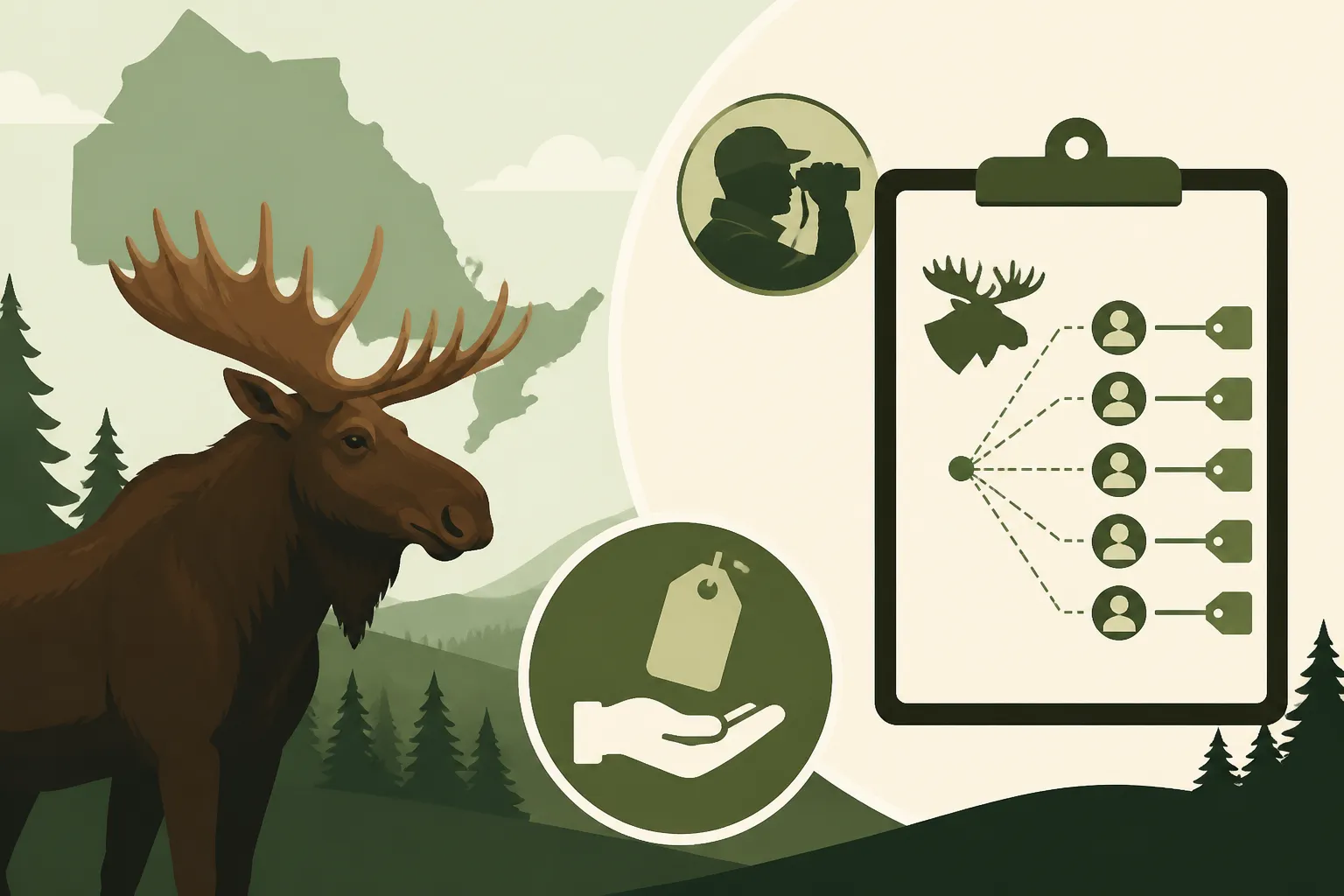
The most important aspect to grasp when forming a group for the moose draw is how your collective points are considered. Contrary to what some might assume, the group's point total is not the sum of all individual points. Instead, the entire group's application is treated as if it has the number of points belonging to the individual member with the lowest point total within that group. So, if you have 10 points, your buddy has 7, and another friend has 2, your group's application will be entered into the draw with only 2 points. This rule is in place to prevent high-point individuals from continually carrying low-point individuals to a tag, ensuring a more equitable distribution over time.
How Group Applications Work
Once your group is formed and the lowest point total is identified, the application process for a group is much like an individual application. The group leader will submit the application, selecting the desired WMU and tag type (bull or cow). All members of the group must agree on these choices. If the group is successful in drawing a tag, that tag is allocated to the group, not a specific individual. It then becomes the group's responsibility to decide who will actually use the tag to harvest a moose.
It's vital for all group members to understand that if the group draws and claims a tag, all members of that group will have their individual moose points reset to zero. This is a common point of contention and misunderstanding. A high-point individual who joins a group and draws a tag will lose all their accumulated points, even if they don't personally harvest the moose. This reinforces the need for clear communication and agreement within the group before applying. Make sure everyone knows the full implications of a successful draw on their individual point totals. This also means that if you're Applying for a Bull Versus Cow Tag as a group, the decision affects everyone's point accumulation history.
Benefits and Drawbacks of Group Tags
There are clear benefits to applying as a group. Primarily, it allows multiple hunters to potentially participate in a single moose harvest. This can be fantastic for logistics, sharing costs, splitting out meat, and enjoying the camaraderie of a shared outdoor experience. For new hunters, joining an experienced group can be an invaluable learning opportunity. Many hands make light work, especially when it comes to the heavy effort of quartering and packing out a moose from remote areas.
However, the drawbacks, especially regarding the point system, are significant. The reset of all individual points can deter high-point hunters from joining groups with low-point members, as it effectively sacrifices their accumulated advantage. This often leads to groups forming with members who have similar point totals, or new hunters joining groups where everyone is at zero points. If you're considering joining a group, weigh the shared experience and potential for a tag against the impact on your individual point accumulation strategy. For some, the social aspect and shared adventure far outweigh the point sacrifice, while for others, protecting their individual point total for a solo dream hunt is paramount.
The Role of Wildlife Management Units (WMUs) in Moose Allocation
Ontario is a vast province, and its diverse landscapes support varied wildlife populations. To manage hunting effectively, the province is divided into a network of Ontario's Wildlife Management Units, or WMUs. For moose hunters, understanding these units is not just helpful; it's absolutely critical. Your success in drawing a tag, and ultimately finding a moose, hinges on knowing the characteristics and draw dynamics of the WMU you choose.
WMUs with the Highest and Lowest Point Requirements
The point requirements for drawing a moose tag vary dramatically from one WMU to another. Generally, WMUs that are easily accessible, have consistently high moose densities, and a history of successful hunts tend to be the most popular. This popularity translates directly into higher demand for tags, meaning you’ll need a significant number of accumulated points to have a realistic chance of drawing a bull or even a cow tag in these areas. Think of WMUs in prime moose habitat near major roads or established communities – these are often the toughest draws.
Conversely, WMUs that are more remote, require extensive travel or specialized equipment (like float planes or boats), or have lower moose densities tend to have lower point requirements. These areas often present greater logistical challenges but can offer excellent hunting opportunities for those willing to put in the extra effort. For example, a WMU deep in Northwestern Ontario's big bush might only require a few points for a bull tag, but getting there and extracting a moose could be an expedition in itself. Researching Which Ontario WMUs Need the Most Points is a crucial step in formulating your application strategy. You'll often see that WMUs in regions like the Chapleau Crown Game Preserve area, or certain units in the Northeast, consistently demand high points, while units further north or those with more challenging terrain might be more accessible with fewer points.
Researching Your Chosen WMU
Choosing a WMU shouldn't be a random act. It requires diligent research and an understanding of your own hunting capabilities and resources. Start by looking at historical draw statistics, which can give you an idea of how many points were needed to draw a bull or cow tag in previous years for your desired WMUs. While past performance doesn't guarantee future results, it's the best indicator we have. You'll want to check the specific moose season dates for each WMU, as these can vary. Consider if the WMU allows rifle, bow, or muzzleloader hunting, and if there are any specific regulations tied to that area.
Beyond the numbers, delve into the actual hunting conditions of the WMU. What kind of terrain does it have? Is it dense boreal forest, mixed hardwoods, or swampy lowlands? How is access – are there logging roads, or will you be doing a remote canoe-in hunt? What is the human pressure like? Will you be competing with many other hunters, or can you find solitude? Tools like satellite imagery (Google Earth, onX Hunt), detailed topographic maps, and even reaching out to local MNRF offices or experienced hunters can provide invaluable insights. GoHunt resources often compile and interpret much of this information, helping you make a more informed decision. The more you know about a WMU, the better your chances of not only drawing a tag but also having a successful hunt once you're there.
Specific WMU Groupings for Moose
While Ontario has individual WMUs, for moose management and allocation purposes, some are often grouped together. These groupings can sometimes simplify the allocation process or create larger contiguous hunting zones. However, for the most part, hunters apply for specific WMUs. It’s important to familiarize yourself with the official MNRF hunting regulations summary each year, as WMU boundaries, regulations, and even groupings can occasionally be tweaked based on the latest management data.
Some WMUs might be entirely Crown Land, offering vast public hunting opportunities, while others might have a mix of Crown and private land. Knowing the land ownership is crucial for planning your hunt, especially if you plan on Hunting Ontario's Crown Land. For instance, WMUs in the Far North are almost entirely Crown Land, while many in Southern Ontario are predominantly private, making access more challenging. Understanding these nuances can save you a lot of grief and ensure you're hunting legally and ethically. Different WMU groups can have different season dates, bag limits, and even specific weapon restrictions, so always double-check the current regulations before you apply and certainly before you head into the bush.
Essential Tools and Resources for Moose Hunters
Navigating the Ontario moose tag allocation process successfully isn't just about understanding the rules; it's also about leveraging the right tools and resources. In today's digital age, hunters have access to a wealth of information that can simplify the application process, help strategize point accumulation, and ultimately improve the odds of drawing that elusive tag. Knowing where to look and how to use these tools is a game-changer.
The Ontario Hunter Portal and GoHunt Platform
The cornerstone of modern hunting in Ontario is the online hunter portal provided by the Ministry of Natural Resources and Forestry (MNRF). This is your digital hub for everything related to your hunting activities. Through this portal, you can purchase your Ontario Hunting Licences and What They Cost, manage your Outdoors Card, apply for moose tags, check draw results, and report your harvest. Getting familiar with this platform is non-negotiable for any serious Ontario hunter. It's designed to be user-friendly, but like any government website, it can sometimes have its quirks. Make sure your personal information is always up-to-date, especially your contact details, so you don't miss any critical notifications.
Beyond the official portal, platforms like GoHunt have emerged as incredibly valuable resources for moose hunters. While GoHunt itself is not directly part of the Ontario government, it acts as a centralized data aggregator and analytical tool. Many hunters find platforms like GoHunt invaluable for researching historical draw odds, understanding point requirements for specific WMUs, and visualizing complex data that isn't always presented clearly in official summaries. These third-party tools can help you model different application scenarios, giving you a better understanding of how your points might perform in various WMUs. They often feature interactive maps, statistics, and community forums where hunters share insights and tips, creating a dynamic environment for planning your next move.
Understanding the Annual Hunting Regulations Summary
Every single year, the MNRF publishes the Hunting Regulations Summary. This document is not merely a suggestion; it is the definitive legal guide for all hunting activities in the province. For moose hunters, this summary is your bible. It contains all the updated season dates, bag limits, WMU-specific regulations, changes to the allocation process, and any other pertinent legal requirements you must adhere to. Ignoring it is not only irresponsible but can lead to serious legal consequences.
Before you apply for your moose tag, and certainly before you head out into the field, you must consult the current year's summary. WMU boundaries can sometimes be adjusted, dates can shift, and rules can change. What was legal last year might not be this year. Take the time to read through the moose section thoroughly, paying close attention to the WMU maps and any specific notes about the units you're interested in. Don't rely on information from previous years or hearsay from other hunters. Always go straight to the official source to ensure you're compliant and well-informed. This diligence is part of being an ethical and responsible hunter.
Planning Your Application Strategy
With all this information at your fingertips, you can start to develop a robust application strategy. This isn't just about picking a WMU; it's a multi-year plan. Are you looking to accumulate points for a trophy bull hunt in a highly competitive WMU many years down the line? Or are you aiming for any adult moose tag as soon as possible, even if it means a cow tag in a more remote unit? Your strategy will dictate which WMUs you apply for and whether you apply as an individual or part of a group.
For example, if you're early in your hunting career and have few points, you might choose to apply for a WMU with low historical point requirements for cow tags, or apply for a very competitive bull tag knowing you'll likely accrue a point without drawing. If you have a significant number of points, you might target a WMU where your point total gives you a strong chance at a bull tag, understanding that a successful draw will reset your points. Consider the logistics and costs of hunting different WMUs – remote areas might require more time, specialized gear, or even a guide. Thinking long-term and evaluating your personal resources will help you make the most strategic decisions each year. Remember that there's specific advice for Booking an Ontario Moose Hunt if you plan to go guided.
Common Pitfalls and Frequently Asked Questions
Even with a clear understanding of the moose tag allocation process, mistakes can happen, and questions inevitably arise. The system can be complex, and certain aspects often trip up even experienced hunters. Being aware of common pitfalls and having answers to frequently asked questions can help you navigate the process smoothly and avoid unnecessary frustration.
Mistakes to Avoid in the Application Process
One of the most common and costly mistakes is simply missing the application deadline. Both the primary and second chance allocations have strict windows, and if you're a day late, you're out of luck for that year. Set reminders on your phone, mark your calendar, and ensure you apply well before the cutoff. Another frequent error, especially for new group applicants, is misunderstanding the group point system. Many mistakenly believe that individual points are added together, leading to disappointment when their application is entered with the lowest point total in the group. Always remember that for group applications, it’s the lowest individual point total that counts.
Incorrectly selecting your WMU or tag type can also be a major headache. Double-check your choices before submitting. Make sure the WMU code is accurate for the area you intend to hunt, and that you've selected either a bull or cow tag as desired. Once submitted, changes can be difficult or impossible. Furthermore, failing to confirm and purchase a drawn tag within the designated window is a common and heartbreaking mistake. If you're successful, ensure you act quickly to secure your tag, otherwise, it will be forfeited and returned to the pool, and your points will still be reset. Lastly, relying on outdated information is a big no-no. Regulations, WMU boundaries, and draw statistics can change annually. Always consult the most current Hunting Regulations Summary and up-to-date resources like the MNRF portal or GoHunt.
What to Do If You Don't Draw a Tag
If you find yourself among the many who don't draw an adult moose tag in the primary allocation, it's easy to feel disheartened. But don't despair! Your hard-earned moose point will automatically be added to your profile for the next year, improving your odds in the future. The first step is to accept the outcome and then immediately turn your attention to the Second Chance Allocation. This is your next opportunity to secure an adult tag for the current season, and since it’s a pure lottery, everyone starts on equal footing.
Even if you don't secure an adult tag through either draw, your hunting season isn't necessarily over. Depending on the WMU, you may still be able to hunt calf moose. While not the large animal most hunters dream of, a calf moose tag provides valuable meat and an excellent opportunity to gain experience hunting these incredible animals. Additionally, many WMUs allow for party hunting for moose, meaning if someone in your group or a friend does draw a valid tag, you can often assist them in their hunt, sharing in the experience and the harvest (if they choose). It’s also a perfect time to focus on other species. You could explore opportunities for Whitetail Hunting in Ontario, Black Bear Hunting in Ontario, or even Small Game Hunting in Ontario while you wait for your points to grow for the next moose draw.
Dispelling Common Moose Draw Myths
There are several myths that circulate among hunters about the moose draw, often leading to confusion or misguided strategies. Let's bust a few of them:
- Myth 1: The more hunters in my group, the higher our chances. False. As established, your group’s application is based on the lowest individual point total within the group. A group of five hunters with 2, 5, 8, 10, and 12 points will be entered with 2 points, not 37. Adding more low-point hunters to a high-point group actually decreases the effective points of the overall group.
- Myth 2: If I apply for a really remote WMU, I'm guaranteed a tag. Not necessarily. While remote WMUs generally have lower point requirements, there's no guarantee. Demand can fluctuate, and even these units can become competitive. Furthermore, "remote" doesn't always mean "abundant moose." Always do your research on population densities and access before applying.
- Myth 3: The Second Chance Draw uses my accumulated points. Absolutely not. The Second Chance Allocation is a completely random lottery. Your accumulated points for the primary draw have no bearing on your success in the second chance. It’s an even playing field for everyone who applies.
- Myth 4: Applying for a cow tag doesn't reset my bull points. Incorrect. Drawing and claiming any adult moose tag – whether it's a bull or a cow – will reset all your accumulated moose points to zero. Make your decision on tag type with this critical fact in mind.
- Myth 5: I can transfer my moose tag to another hunter. Generally, no. Moose tags are specifically allocated to the successful applicant or group and are not transferable. There are very strict rules about who can hunt under a tag and who can participate in a party hunt, and unauthorized tag transfers are a serious violation.
By dispelling these common myths, you can make more informed decisions, develop a realistic strategy, and approach the Ontario moose tag allocation process with greater confidence.
Disclaimer
The information provided in this guide is intended for general informational purposes only and is not a substitute for the official Ontario Hunting Regulations Summary published annually by the Ministry of Natural Resources and Forestry (MNRF). Regulations, dates, and procedures can change. Always consult the current year's official summary and the MNRF website for the most accurate and up-to-date information before applying for any licence or tag, or engaging in any hunting activities. Hunters are responsible for knowing and adhering to all applicable laws and regulations.