Ontario Group Moose Tag Rules
Trying to navigate the Ontario moose tag allocation system as a group can feel like you're trying to read a map printed in invisible ink, especially when you’re trying to coordinate multiple hunters with different point totals. The rules surrounding Ontario group moose tags are complex, often leading to frustration and missed opportunities for many hunting parties. This guide aims to clear up the confusion, walking you through the intricacies of applying as a group, understanding how points are utilized, and ultimately increasing your chances of securing one of those coveted tags.
Understanding the Fundamentals of Group Moose Tag Applications
When you decide to pursue moose as a group in Ontario, you're stepping into a system designed to fairly distribute a limited resource, but one that can feel anything but simple. The basic premise is that a group pools its resources – primarily, their moose points – to apply for a single tag. However, the devil is truly in the details when it comes to how this pooling actually works and what it means for each member's individual standing.
Defining Your Hunting Group and Eligibility
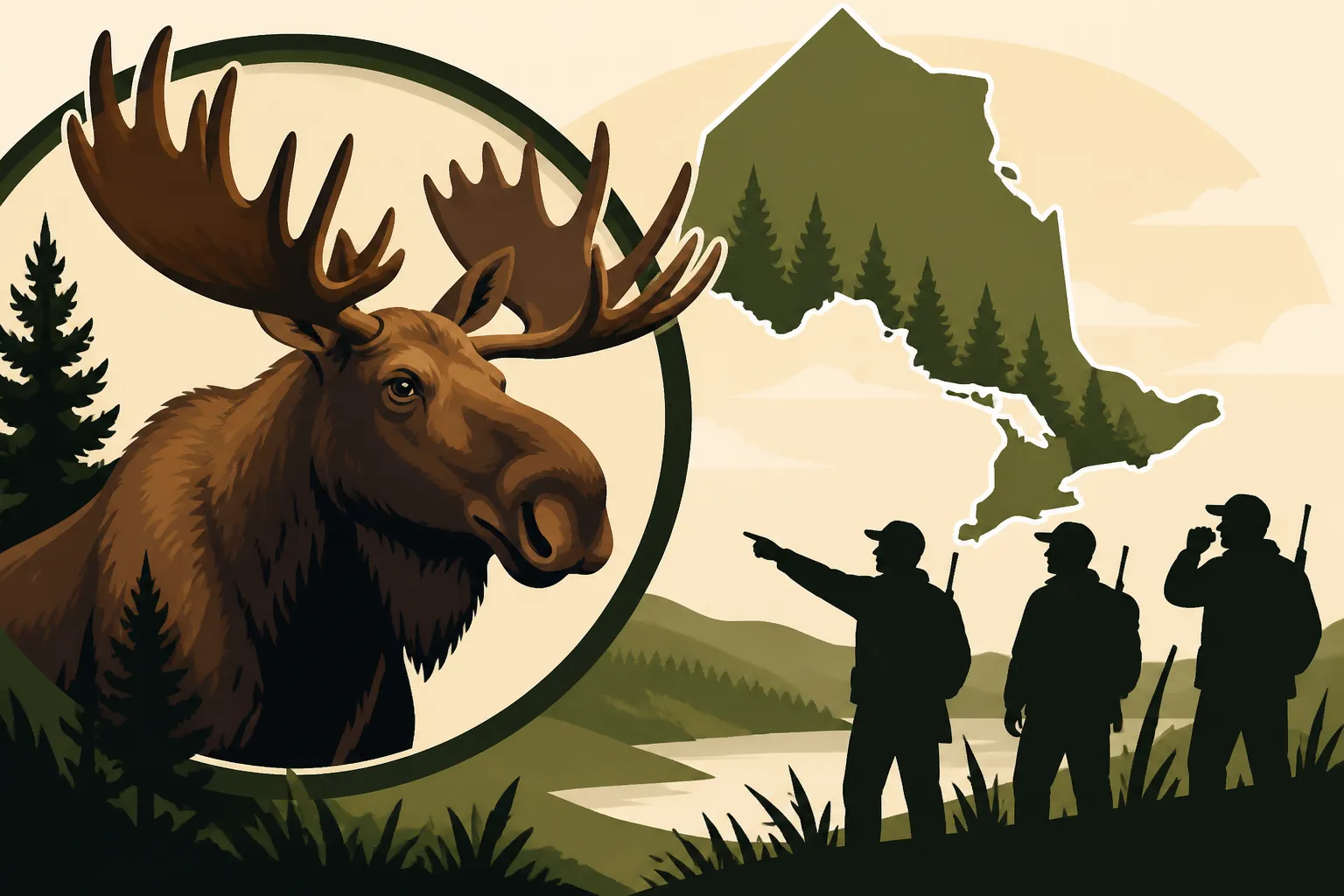
First things first, let's talk about what constitutes a "group" in the eyes of the Ontario Ministry of Natural Resources and Forestry (MNRF). A group is typically comprised of two to four eligible hunters, all of whom hold a valid Outdoors Card and the necessary moose hunting licence. One member is designated as the Group Leader, and they are the one responsible for submitting the application on behalf of the entire party. It's crucial that every member listed on the application intends to hunt together if successful, as the tag is tied to the group, not just the individual leader. Each hunter must have their licence and Outdoors Card up-to-date and have passed their hunter education requirements. This isn't just a formality; it's the foundation of your entire application.
The Group Leader is the primary point of contact and holds a significant responsibility. They need to ensure all group members are eligible, their information is accurate, and everyone understands the implications of the application. For instance, if you're planning a trip with friends or family, make sure everyone has an active Outdoors Card. For a deeper dive into general licensing requirements, you might want to review what is covered in Ontario Hunting Licences and What They Cost. Without these basic requirements met, your application will be immediately rejected, and that's a mistake you definitely want to avoid after all the planning that goes into a moose hunt.
The Role of the Group Leader and Member Coordination
The Group Leader isn't just a name on a form; they are the quarterback of your hunting party's application. They're responsible for collecting everyone's Outdoors Card numbers, ensuring all members agree on the Wildlife Management Units (WMU) and tag type (bull, cow, or calf) being applied for, and submitting the application by the deadline. It's a role that requires good communication and organization. Imagine the frustration of finding out your group didn't apply for the WMU you all agreed upon, or worse, missed the deadline because of a communication breakdown!
Beyond the initial application, the Group Leader is also the one who receives all correspondence from the MNRF regarding the draw results. This means they are responsible for notifying the rest of the group, and if successful, ensuring the tag is claimed correctly and that all members are aware of their responsibilities under a group tag. Open and honest communication within the group is paramount. Every member should understand the chosen WMU's regulations, potential access challenges, and the specific season dates for that unit. If you're looking to plan the logistics of getting to your hunting area, understanding Hunting Northwestern Ontario's Big Bush can be a great starting point for many groups.
Navigating the Primary and Second Chance Allocation Stages
Ontario's moose tag allocation process is split into two distinct stages: the Primary Allocation and the Second Chance Allocation. Each stage has its own rules and implications for group applications, especially concerning how your collective moose points are used and potentially reset. Understanding these differences is key to making informed decisions and maximizing your group's odds.
Primary Allocation: The Main Draw for Groups
The Primary Allocation is where the vast majority of moose tags are distributed. Groups apply with a specific WMU and tag type (bull, cow, or calf) preference. What's unique for groups here is that the application uses the average moose points of all adult members in the group, rounded to the nearest whole number. This is a critical detail because it means a group with a mix of high and low point holders will effectively apply with a point total somewhere in the middle. For instance, if you have two hunters with 10 points and two with 2 points, your group will apply with an average of 6 points.
This averaging system can be both a blessing and a curse. It allows newer hunters with few points to "ride" on the coattails of more experienced, high-point hunters. However, it also means that high-point hunters in a group will use their valuable points on an application that might have lower odds than if they applied individually or with other high-point hunters. It's a strategic decision that needs careful consideration. The application deadlines are strict, so make sure you're aware of The Primary Moose Application Deadline and have all your ducks in a row well in advance.
Second Chance Allocation: Filling Remaining Tags
After the Primary Allocation is complete, any remaining tags are offered through the Second Chance Allocation. This stage operates on a first-come, first-served basis, meaning points are irrelevant. While it offers a glimmer of hope for groups that were unsuccessful in the primary draw, it's also a mad dash. Tags disappear incredibly quickly, often within minutes of the opening window. Groups can apply, but the WMUs and tag types available are typically those that were less popular or had a very high point requirement in the primary draw.
For groups, the strategy for the Second Chance is all about speed and flexibility. You need to be ready right when the application window opens, and be prepared to accept any tag type or WMU that becomes available, even if it wasn't your first choice. It’s not uncommon for hunters to have multiple browser tabs open, ready to hit submit on the best available option. While individual points don't factor in, knowing your group's readiness to react and compromise on WMU or tag type is crucial. For more details on this stage, you can refer to The Second Chance Moose Allocation article.
The Critical Role of Moose Points for Your Group
Moose points are the currency of the Ontario moose draw system, accumulating each year you apply and are unsuccessful. For groups, understanding how these points accumulate, are used, and reset is perhaps the most confusing, yet most vital, aspect of the entire process. Get this wrong, and you could unintentionally reset years of accrued points for yourself or your hunting partners.
How Group Points Accumulate and Are Averaged
As mentioned, for the Primary Allocation, a group's application is assigned the average of the individual moose points of its adult members, rounded to the nearest whole number. This average is what determines your group's place in the draw for a specific WMU. If you have junior hunters (under 16) in your group, their points are not factored into the average; they simply participate under the group's application. Points continue to accumulate individually for each member as long as they apply and are unsuccessful.
Let's illustrate with an example:
- Hunter A: 10 points
- Hunter B: 8 points
- Hunter C: 2 points
- Hunter D: 0 points
Total points: 20
Average points for a group of 4: 20 / 4 = 5 points.
This means your group would be entered into the draw with 5 points, even if individual members have significantly more. This point pooling is what makes group hunting a unique experience, allowing a mix of experience levels to hunt together. If you want to understand the system better, reading How Ontario Moose Points Accumulate is a must.
Point Reset Rules for Successful Group Applications
Here's where many hunters get tripped up: when a group is successful in drawing a moose tag in the Primary Allocation, all adult members of that group have their moose points reset to zero for the next season. This is a significant consideration, especially for high-point hunters. It’s a trade-off: you get the tag, but you essentially start over in the points system. The only exception is if a random tag is awarded, which doesn't reset points, but these are rare.
If you claim a tag through the Second Chance Allocation, your points are not reset. This is a crucial distinction and one of the main advantages of pursuing a Second Chance tag if your group is unsuccessful in the primary draw. It allows you to maintain your accumulated points for future primary draws. Given the long game involved in accumulating points, especially for popular WMUs or bull tags, understanding When Claiming a Tag Resets Your Points is essential for long-term hunting strategy. This is why many hunters use tools like GoHunt to track their individual and group point totals over the years, planning their application strategy years in advance.
Here's a quick summary table to help visualize the point impact:
| Scenario | Allocation Stage | Group Point Calculation | Individual Point Impact on Success |
|---|---|---|---|
| Unsuccessful Application | Primary or Second Chance | Not Applicable (no tag) | Points increase by 1 for each adult member |
| Successful Primary Allocation | Primary | Average of adult members' points | All adult members' points reset to 0 |
| Successful Second Chance Allocation | Second Chance | Not Applicable (first-come, first-served) | All adult members' points are not reset |
Maximizing Your Group's Chances of Success
With the complexities of the group application process and point system laid bare, the next logical step is to figure out how to maximize your group's chances of actually drawing a tag. This involves careful planning, strategic WMU selection, and perhaps a bit of calculated risk-taking.
Strategic WMU Selection and Tag Type Preferences
Choosing the right WMU is paramount for any moose hunter, and even more so for a group. You need to consider several factors: the number of available tags, the average points required to draw in previous years (which often correlates with demand), and your group's collective point average. Some WMUs, particularly those in Northern Ontario with high moose densities, might require significantly higher points. You can check historical draw data, often available through the MNRF or third-party platforms like GoHunt, to gauge the competition. This data is invaluable when deciding where to apply; it lets you see Which Ontario WMUs Need the Most Points.
Another crucial decision is the tag type: bull, cow, or calf. Bull tags are almost always the most sought after and, therefore, require the highest points. Cow tags offer better odds, and calf tags, while not for everyone, often have the best draw success rates. Your group needs to have an honest conversation about what kind of hunt you’re truly after. Is the experience of hunting together paramount, even if it means a calf tag, or is everyone focused on a bull? Balancing desire with statistical reality is key. Understanding Ontario Moose Draw Odds by WMU can help your group make an informed decision based on actual data.
Balancing High and Low Point Members in a Group
The composition of your group can significantly impact your draw odds. As we know, the average point total is used. This means if you have one member with 15 points and another with 1 point, their average is 8. While this benefits the low-point hunter, it effectively "spends" the high-point hunter's valuable points on an application that's diluted. For groups composed primarily of high-point hunters, it often makes sense to stick together, as their collective average will still be high, giving them a better chance at those premium WMUs.
For groups with a significant disparity in points, a common strategy is to decide whether the goal is simply to get a tag for the group, or to aim for a specific high-demand WMU or bull tag. If the former, then combining high and low points might be beneficial for overall group cohesion and participation. If the latter, it might be more strategic for high-point members to apply together (or individually) for those tougher draws, and for lower-point members to pursue easier WMUs or the Second Chance Allocation. It's a delicate balance that requires transparent discussion and a shared understanding of everyone's hunting goals and point values.
Common Pitfalls and How to Avoid Them
Even with a solid understanding of the rules, it's surprisingly easy to make mistakes that can cost your group a tag, or worse, valuable points. Avoiding these common pitfalls requires vigilance and a thorough double-check of your application.
Application Errors and Missed Deadlines
One of the most disheartening experiences is finding out your group's application was rejected due to a simple error. This can range from an incorrect Outdoors Card number for a group member, an expired licence, or even applying for a WMU/tag combination that isn't valid. The online application system has some safeguards, but ultimately, the responsibility lies with the Group Leader and the members to ensure accuracy. Double-check every single piece of information before submission.
Missed deadlines are another frequent culprit. The application windows for both the Primary and Second Chance allocations are fixed and unforgiving. Mark these dates on multiple calendars, set reminders, and communicate them clearly within your group. Procrastination is the enemy here. Don't wait until the last minute, as technical glitches or unexpected issues can arise. It's far better to submit early and then confirm everything is in order. You can always check official sources for specific dates, such as When Primary Moose Applications Open and the associated closing dates.
Mismanaging Point Expectations and Group Dynamics
Perhaps the trickiest pitfall involves the human element: managing expectations and group dynamics. When a group of high-point hunters draws a tag, and their points are reset to zero, there can sometimes be resentment if they feel their points were "wasted" on a WMU they could have drawn individually with fewer points, or if the hunt wasn't what they envisioned. Conversely, low-point hunters might feel like a burden or that they aren't contributing enough. These feelings, if left unaddressed, can sour future hunting relationships.
Before applying, have a frank discussion about what everyone expects from the hunt. Are you all comfortable with points being reset if successful? What happens if you draw a cow tag but were hoping for a bull? What if the WMU drawn isn't ideal? Laying all these cards on the table beforehand can prevent misunderstandings and disappointment down the line. Remember, hunting is often as much about the camaraderie and shared experience as it is about the harvest. Maintaining that camaraderie is vital for long-term group hunting success.
What Happens After You Get a Group Tag
Congratulations! Your group drew a moose tag. The hard part of applying might be over, but now the real work—and the real fun—begins. Knowing what to do next, from claiming your tag to planning your hunt, is essential.
Claiming Your Tag and Finalizing Hunt Details
Once your group is successful, the Group Leader will be notified, and they are responsible for claiming the tag. This usually involves logging back into the online licensing system and completing the process, often within a specified timeframe. If the tag isn't claimed by the deadline, it might be forfeited, and that's a call no one wants to make. After claiming, ensure all members understand the specific details of the tag: the WMU, the tag type (bull, cow, or calf), and the precise season dates.
This is the point where the rubber meets the road for your hunting plan. You'll need to finalize logistics such as transportation to the WMU, accommodation (whether it's camping on Crown Land or booking a cabin), and who is bringing what gear. If your chosen WMU is remote, you might be considering a boat-in or fly-in option. Planning for how you'll manage your harvest is also critical. A moose is a massive animal, and you'll need a solid plan for field dressing, meat care, and extraction. Consider the internal link Getting a Moose Out by Canoe if you're planning a water-based extraction, or Meat Care in Ontario's Warm Early Seasons for practical advice on preserving your harvest.
On the Ground: Hunting with a Group Tag
Hunting with a group tag means the responsibility of harvesting an animal is shared, but so is the opportunity. Only one animal can be harvested per tag, regardless of how many members are in the group. This means clear communication and coordinated hunting strategies are essential once you’re in the field. Who will take the shot? How will you ensure ethical harvest practices? These are discussions to have before you even set foot in the bush.
Many groups use their combined knowledge and skills to track, call, and ultimately approach moose. One hunter might be a proficient caller, while another excels at tracking or spotting. It’s a true team effort, and the success of the group hinges on effective collaboration. Remember, the experience of a group hunt extends beyond the shot – it's about spending time in nature, sharing stories around the campfire, and the collective effort of pursuing such a magnificent animal. Whether your group is engaging in Rattling and Calling Ontario Whitetails for deer (which has different rules) or actively Calling Moose in Ontario's Boreal Forest for moose, the shared experience makes it all the more memorable.
Disclaimer
The information provided in this guide is for general informational purposes only and is not legal advice. Hunting regulations in Ontario can change frequently. Always consult the most current Ontario Hunting Regulations Summary available from the Ministry of Natural Resources and Forestry (MNRF) or official government websites before planning any hunt or applying for tags. It is the individual hunter's responsibility to understand and comply with all applicable laws and regulations.