Where to Read the Ontario Hunting Summary
You are planning a deer hunt in a unit you have never hunted, a buddy says “the season opens the Saturday before Remembrance Day,” another swears it is the Monday, and a forum post from three years ago says something else entirely. Every Ontario hunter has been there. The answer lives in one place: the Ontario Hunting Regulations Summary. This guide explains where to find it, how to read it and what it does not cover.
What the Ontario Hunting Regulations Summary Is
The Hunting Regulations Summary is the province’s plain-language guide to hunting rules. It is published by the provincial ministry responsible for natural resources and wildlife, and a new edition comes out each year. It pulls together the rules that most hunters need: licence requirements, Outdoors Card rules, seasons and bag limits by wildlife management unit, tagging and reporting rules, firearm and equipment rules, and a long list of general hunting regulations.
Why It Is a Summary and Not the Law
The word “summary” matters. The actual legal rules sit in the Fish and Wildlife Conservation Act and the regulations made under it, plus federal laws that apply to things like migratory birds and firearms. The summary translates those rules into something readable. It is the best place to start, and for most questions it gives you the answer you need, but where there is any difference between the summary and the legal text, the law is what counts.
The full legal text of Ontario’s statutes and regulations is published by the province in its online laws database. If you ever find yourself in a technical argument about a rule, or you are dealing with an unusual situation, that is where to confirm the exact wording.
How the Summary Is Organized
Editions vary a little from year to year, but the layout tends to follow a familiar pattern. Near the front you will find a list of what is new, followed by general information about the Outdoors Card, licences, hunter education and who can hunt. Next come the general rules that apply to all hunting, then species-by-species sections with seasons, tags and special conditions. Maps of wildlife management units and season tables by unit make up a large part of the document, and contact information for ministry offices usually appears near the back.
Once you understand that structure, finding an answer takes minutes rather than an evening. Questions about who may hunt and what licence you need sit near the front. Questions about how you may hunt sit in the general rules. Questions about when and where sit in the species sections and unit tables.
Why Last Year’s Copy Is a Trap
Plenty of hunters keep a dog-eared summary in the truck for years. It feels reliable because most rules do not change from one season to the next. The danger is in the ones that do. A season that shifted by a week, a unit that moved from shotgun-only to rifle, a new tag type, a change in reporting deadlines or a new restriction on baiting can all catch you out.
Picture a hunter who returns to the same unit every November using an old copy. The unit’s antlerless validation rules changed, and the hunter shoots a doe on a tag that no longer covers it. The mistake was honest, but the charge is still real. Five minutes with the new edition would have avoided it. Treat each summary as valid for its own hunting year only, and recycle the old one once the new edition is out.
What It Covers and What It Does Not
The summary covers most provincially managed hunting in Ontario, including big game like deer, moose, elk, black bear and wild turkey, small game, wolves and coyotes, and many general rules. It does not fully cover several important areas:
- Migratory birds, which are governed federally and have their own separate regulations summary.
- Trapping, which has its own licensing and season framework.
- Firearms licensing and transport, which are federal matters.
- Hunting within provincial parks, national parks and some protected areas, which may have their own rules.
- Local bylaws, such as municipal discharge bylaws that restrict where firearms can be used.
Knowing these gaps keeps you from assuming the summary is the last word on everything.
Where to Find the Summary
There are several ways to get your hands on the current edition. The most reliable is the province’s own website, but there are print and in-person options too.
Online on the Province’s Website
The province posts the Hunting Regulations Summary on its official website as a downloadable document. Search the government’s site for “hunting regulations summary” and look for the edition that matches the current hunting year. Download it to your phone or tablet so it is available offline, since many hunting areas have poor or no cell coverage.
The online version is also the one most likely to include updates. When a rule changes after printing, or the ministry issues a correction, the online page is where those changes usually show up first.
Printed Copies at Licence Issuers
Printed copies are often available at licence issuers, such as some sporting goods stores, outfitters and other vendors who sell licences. ServiceOntario locations and ministry offices may also have copies, though availability can vary from year to year and location to location. If you prefer paper, call ahead before making a special trip.
A paper copy is handy at hunt camp and in the truck, where you may not have power or signal. Many hunters keep a printed copy in a zip-top bag with their maps.
Through the Licensing Service
When you buy licences and tags through the province’s online licensing service, you will usually find links to the regulations and related information. Our guide to Buying Licences Through Ontario’s Portal explains how that system works. It is a good habit to open the summary right after buying a licence and read the sections that apply to the species and units you will hunt.
French Edition and Accessible Formats
The summary is generally available in both English and French. Accessible formats may also be available on request. If you need a different format, contact the ministry.
Third-Party Apps and Tools
Many hunters use apps for maps, scouting and planning. Apps like GoHunt focus on research and mapping, and some hunters use them to organize notes on seasons and units. GoHunt’s strongest coverage is in the United States, so check what Ontario information the platform offers before relying on it. No third-party app replaces the official summary; use apps for planning and the summary for rules.
How to Read the Summary Efficiently
The summary is a long document, and few hunters read it cover to cover every year. That is fine, as long as you read the parts that matter to you.
Start With What Changed
Each edition usually highlights changes from the previous year near the front. Read that section first, even if you have hunted for decades. Rules on seasons, tag allocations, bag limits and equipment do change. Our guides on Which Ontario Rules Changed This Season and Where Ontario Rules Changed This Year dig into recent updates.
Find Your Wildlife Management Unit
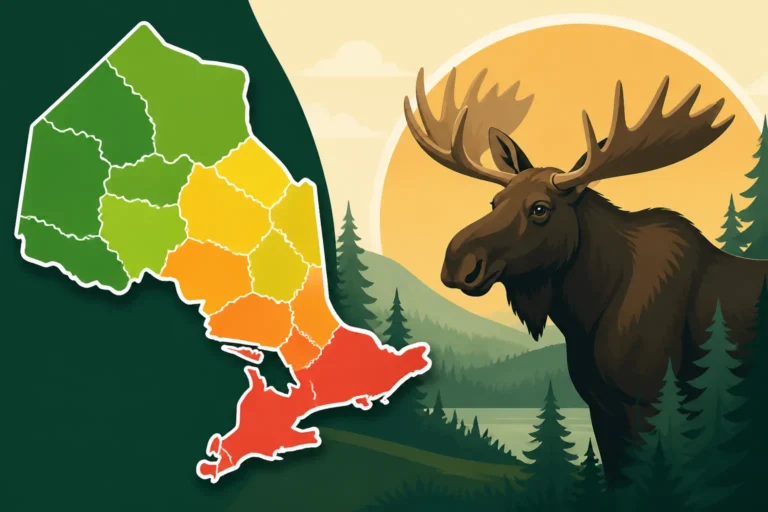
Ontario is divided into wildlife management units, and most seasons are set by unit. The summary includes maps and tables that list seasons for each unit. Start by finding your unit on the map, then look up the season tables for the species you are hunting. If you are not sure about unit boundaries, our guides to Ontario’s Wildlife Management Units and Finding an Ontario WMU Map help.
Pay attention to details in the tables. A unit may have different seasons for archery, muzzleloader and gun, and different dates for antlered and antlerless deer. Some units have special rules, such as shotgun-only areas or controlled hunts. For deer, see Ontario Deer Season Dates by WMU.
Read the General Rules Section
The general rules section covers things like legal hunting hours, blaze orange, firearms and bows, hunting from vehicles, hunting near roads, baiting, use of dogs and more. Many of the violations conservation officers see come from these general rules rather than seasons. Read this section every year.
Check Tagging and Reporting Requirements
The summary explains how and when to validate and attach tags, what evidence of sex must stay with the animal, and how to report your harvest. Mandatory reporting requirements apply to many big game tags, even if you do not harvest. Our guide on Reporting Your Ontario Harvest covers the details.
Common Misreadings of the Season Tables
The unit tables pack a lot of information into a small space, and a few mistakes come up again and again.
- Reading the wrong row. Neighbouring units often have similar numbers, and it is easy to slide a line up or down. Use a ruler or your finger and double-check the unit number before you read across.
- Mixing up antlered and antlerless dates. Many units run different dates for bucks and does, or allow antlerless deer only on certain days or only with a validation tag.
- Missing footnotes. Small symbols in a table often point to exceptions, such as a portion of a unit with different rules or a restriction on firearm type. Always read the notes beneath a table.
- Confusing archery-only seasons with seasons when archery is simply allowed. A bow may be legal during a gun season, but an archery-only season means firearms are not permitted at all.
- Assuming a whole unit follows one rule. Some units contain areas with special restrictions, such as shotgun-only zones near towns or areas with controlled hunts.
- Overlooking the reporting rules tied to a tag. Some tags require a report whether you harvest or not, and missing that deadline can affect future draws.
Slowing down on the tables pays off. Read once to find the answer, then read again to confirm it.
Using the Summary in the Field
Even if you plan carefully at home, questions come up at camp. Is it legal to shoot from the edge of this road allowance? Does a sunset time change by the end of the week? Can a hunting partner help drag an animal before it is tagged? Having the summary on hand lets you check instead of guessing.
A few habits help:
- Save the current edition as a file on your phone, not just a bookmark, so it opens without signal.
- Keep a printed copy, or at least the pages for your unit and species, in a waterproof bag.
- Write down the phone number for the local ministry district office and the poacher reporting line before you leave home.
- Carry a printed sunrise and sunset table for your area, since legal hunting hours are tied to those times.
A Simple Reading Routine
Here is a routine that works for most hunters.
- Download the latest summary as soon as it is released.
- Read the changes section at the front.
- Read the licence and Outdoors Card section if anything about your situation has changed.
- Find your unit on the map and read the season tables for your species.
- Read the general rules section.
- Read the tagging and reporting section for your species.
- Bookmark or highlight anything that affects your hunt.
- Check the online version again shortly before the season for any updates.
Related Documents Every Ontario Hunter Should Know
The Hunting Regulations Summary is the main document, but not the only one.
Migratory Birds Regulations Summary
Ducks, geese, woodcock, snipe and other migratory birds are governed by federal regulations. The federal wildlife service publishes a summary of migratory bird hunting regulations for each province, including Ontario. You also need a federal Migratory Game Bird Hunting Permit with the habitat conservation stamp. Our guides on The Federal Migratory Game Bird Permit and Ontario Duck Season Dates by District cover the basics.
Trapping Regulations
Trappers in Ontario have their own licensing requirements, seasons and rules. Those are covered separately from the Hunting Regulations Summary. See Ontario Trapping Season Dates for more.
Non-Resident Information
Non-residents have specific requirements, including licence types, guide or outfitter rules for some species, and Crown land camping permits in parts of the north. The summary covers much of this, but non-residents should also check federal rules on bringing firearms into Canada. Our guide on Rules for Non-Residents Hunting Ontario is a good starting point.
Outdoors Card and Licensing Rules
Every hunter needs a valid Outdoors Card and the correct licences. The summary covers the basics, and our guide to Ontario’s Outdoors Card Explained adds detail.
Proposed Changes and Public Consultation
Proposed changes to hunting regulations are often posted publicly for comment before they take effect, through the province’s environmental registry. Hunters who want to know what is coming, or who want to comment on proposals, can check there. GoHunt and other apps will not track those proposals for you, so if you care about upcoming rule changes, check the registry directly.
Comparing Sources of Hunting Rules
The table below compares where hunters typically get rule information and how much to trust each source.
| Source | What It Covers | Reliability | Best Use |
|---|---|---|---|
| Hunting Regulations Summary | Provincial hunting rules, seasons, tags | High, official plain-language guide | Primary reference every season |
| Fish and Wildlife Conservation Act and regulations | Full legal text | Highest, the actual law | Confirming exact wording |
| Federal migratory bird summary | Ducks, geese, other migratory birds | High, official | Waterfowl and migratory bird hunting |
| Licence issuers and ministry offices | Printed summary, general guidance | Good for basics | Getting a paper copy, simple questions |
| Hunting apps and websites | Maps, notes, planning | Varies | Planning, not legal reference |
| Forums and social media | Opinions, anecdotes | Low | Ideas only; confirm everything |
When to Call the Ministry
If the summary is unclear or your situation is unusual, call the ministry or your local district office. Conservation officers and ministry staff can clarify rules. Write down the date, the person you spoke to and what they said.
Keeping Your Own Notes
Many experienced hunters keep a simple notebook or digital file with the key rules for their units: season dates, tag types, special restrictions and reporting deadlines. Updating it each year after reading the new summary is a good way to make sure you have actually absorbed the changes.
Disclaimer
This article is for general informational purposes only and does not constitute professional advice. Laws, prices and regulations vary by location and change over time. Consult a qualified professional for guidance on your specific situation.