Hunting Around Thunder Bay and Kenora
Trying to figure out where to start hunting in the vast wilderness surrounding Thunder Bay and Kenora can feel like staring at an overwhelming, endless green map. It’s easy to get lost in the sheer scale of the land, wondering where the game actually lives, how to access it, and what regulations apply to specific areas. This guide is here to cut through that confusion, giving you a comprehensive breakdown of what to expect and how to plan a successful hunt in these incredible Northwestern Ontario regions.
Understanding the Unique Landscape of Northwestern Ontario
Northwestern Ontario is a beast of its own, a sprawling expanse of wilderness that demands respect and careful planning. It's not like the manicured woodlots or rolling farmlands of Southern Ontario; this is truly wild country, where nature reigns supreme. Getting a handle on its unique geography is the first step to understanding where the game lives and how you can access it.
The Boreal Forest Dominance
When you think of Northwestern Ontario, picture the endless boreal forest. This isn't just a collection of trees; it's a dense, ancient ecosystem dominated by black spruce, jack pine, balsam fir, and poplar. These forests provide incredible cover for moose and bear, but they can also be incredibly challenging to navigate. The undergrowth can be thick, making still-hunting slow and quiet movement difficult, especially in areas with limited logging activity. This vastness means that if you're willing to put in the legwork and get off the beaten path, you can often find unpressured game, but it also means getting turned around is a very real possibility.
The sheer scale of the forest influences everything from game movement to hunting strategies. Moose, for example, rely heavily on this mixed forest for both browse and shelter. Moose in Ontario's Boreal Forest delves into this in more detail. Deer, while present, tend to be more concentrated in areas where the boreal begins to transition, or near agricultural pockets if you can find them closer to settled areas.
Waterways and Lake Country Influence
Northwestern Ontario is aptly named "Lake Country" in many areas, particularly around Kenora and west towards the Manitoba border. The region is absolutely peppered with lakes, rivers, and wetlands – from the mighty Lake of the Woods to countless smaller, unnamed lakes and beaver ponds. These waterways aren't just scenic; they are crucial arteries for wildlife and often the easiest routes for hunters to access otherwise impenetrable bush.
Moose and bear frequently use shorelines for travel, feeding, and escape routes. Waterfowl, of course, find prime habitat in these areas, especially in the marshier sections of larger lakes and rivers. If you're planning a hunt here, especially for moose or ducks, a boat or canoe can be an invaluable tool. Hunting Moose From a Boat or Canoe can give you some excellent strategies. You'll find countless bays, islands, and river systems that offer fantastic hunting opportunities but also require a different approach than land-based hunts. Understanding how to read these water features on a map, and being prepared for varying water conditions, is key.
Terrain and Topography Challenges
While much of the boreal forest might seem flat and uniform at first glance, the landscape around Thunder Bay, in particular, has some dramatic geological features. You'll encounter rugged Canadian Shield country with granite outcrops, steep rock ridges, and deep valleys. This topography creates natural funnels and bedding areas for game, but it also means you'll be dealing with significant elevation changes and rough footing.
West of Thunder Bay, heading towards Kenora, the terrain tends to flatten out somewhat, though you'll still find plenty of rocky sections mixed with more rolling, forested hills. Understanding the local topography is crucial for scouting and planning your approach. For example, deer might use a specific rock ridge to bed during the day, or a bear might have a favourite ravine for denning. These features, while making travel more difficult, can also concentrate game, giving you a tactical advantage if you know how to read them. Be prepared for strenuous hikes and bring appropriate footwear.
Prime Game Species to Target in the Region
When you venture into the Thunder Bay and Kenora areas, you're stepping into some of Ontario's most legendary big game country. While deer hunting is popular across the province, this northwestern corner shines for those pursuing larger, more elusive animals, alongside excellent opportunities for smaller game and birds.
Moose: The Northern Icon
If there's one animal that defines hunting in Northwestern Ontario, it's the moose. These majestic creatures thrive in the vast boreal forests and wetland systems that dominate the region. Around Thunder Bay, and especially further north and west towards Kenora, you'll find some excellent moose habitat. The deep woods, regenerating cutovers, and abundant water sources provide everything these giants need.
Drawing a moose tag in Ontario can be a challenge, as the Ontario Moose Tag Allocation Process is highly competitive. However, for those fortunate enough to secure one, the experience of pursuing a moose in this rugged landscape is unforgettable. Hunters often focus on areas with recent logging activity where new growth provides abundant browse, or along beaver ponds and river systems where moose feed on aquatic vegetation. Spot-and-stalk hunting, calling during the rut, or even still-hunting through dense cover are all common methods here. Just remember, a successful moose hunt is often about patience, persistence, and being physically ready for the demanding task of retrieving a massive animal from remote areas.
Black Bear: Abundant Opportunities
Northwestern Ontario boasts a healthy and robust black bear population, making it one of the premier bear hunting destinations in the province. From the vast wilderness north of Thunder Bay to the rocky shores surrounding Lake of the Woods near Kenora, bears are plentiful. The diverse forest, abundant berry crops in late summer and fall, and proximity to water sources create ideal bear habitat.
Bear hunting here is often done over bait, particularly during the spring and fall seasons. Many local outfitters and experienced resident hunters set up bait sites to attract bears, providing consistent opportunities. Black Bears Across Ontario's Bush Country goes into detail about their behaviour. However, spot-and-stalk or still-hunting can also be effective, especially during the spring when bears are fresh out of their dens and seeking new food sources, or in the fall when they are gorging on berries and acorns. It's crucial to understand bear behaviour, be scent-conscious, and always prioritize safety in bear country. Make sure you're familiar with Ontario's Black Bear Rules before planning your trip.
Whitetail Deer: A Growing Presence
While the deep boreal forest isn't traditionally considered prime whitetail country compared to Southern Ontario, the deer population around Thunder Bay and Kenora is noteworthy and seems to be expanding in certain areas. You'll generally find higher densities closer to agricultural edges, human settlements, or in areas where logging has created more browse.
The deer here tend to be resilient and hardy, often carrying impressive body mass to withstand the harsh northern winters. Hunting techniques often involve scouting transition zones, old clearcuts, or natural funnels between bedding and feeding areas. During the rut, rattling and calling can be effective, especially in areas with a good buck-to-doe ratio. While you might not see the sheer numbers as in southern farmlands, the challenge and reward of taking a northern whitetail buck are significant. Pay attention to how the deer utilize habitat edges, like the line where a clearcut meets older timber or where a swamp provides winter cover.
Upland Birds and Waterfowl: Hidden Gems
Beyond the big game, Northwestern Ontario offers fantastic opportunities for upland birds and waterfowl, often overlooked by those focused solely on moose and bear. The vast network of logging roads and bush trails around Thunder Bay provides excellent access for grouse hunters. Ruffed grouse are abundant, often found along old roads, alder thickets, and regenerating clearcuts. Ruffed Grouse Hunting Ontario's Bush Roads is an essential read if you're targeting these birds. Spruce grouse are also present in denser conifer stands, especially further north.
For waterfowl enthusiasts, the numerous lakes and rivers, particularly around the Lake of the Woods area and the Rainy River, are major staging grounds for migrating ducks and geese. Species like mallards, common mergansers, wood ducks, and various diving ducks can offer incredible action. Setting up decoys in a marsh, jump-shooting small beaver ponds, or field hunting in agricultural pockets near water are all viable strategies. The key is scouting to find where the birds are feeding and resting.
Navigating Regulations and Wildlife Management Units (WMUs)
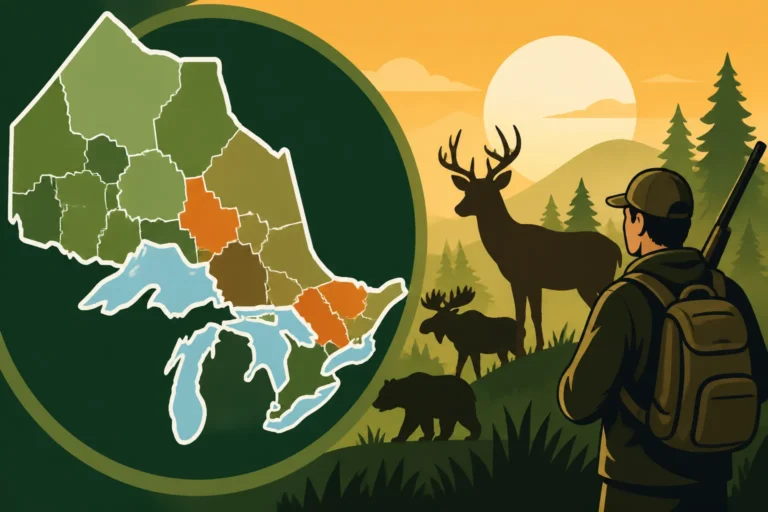
Hunting in Ontario, especially in a vast and diverse region like Northwestern Ontario, requires a solid understanding of the provincial regulations and how the Wildlife Management Unit (WMU) system works. These units dictate everything from season dates to tag allocations, and knowing which WMU you're in is paramount to a legal and ethical hunt.
Key WMUs Around Thunder Bay
The area directly surrounding Thunder Bay encompasses several WMUs, each with its own specific regulations. For example, WMUs like 13, 14, and 15 are immediately adjacent to the city and stretch outwards. As you move further north and east, you get into WMUs like 19 and 21. West of Thunder Bay, towards the Manitoba border, WMUs like 11A, 12B, and 13 are important.
These WMUs have varying season dates for big game, particularly for deer, moose, and bear. It's not uncommon to see different archery, gun, and muzzleloader seasons even between adjacent units. For moose, each WMU has a specific tag quota, which directly influences your odds in the draw. It's critical to consult the most current hunting regulations summary provided by the province before you head out. Understanding the boundaries of your chosen WMU, perhaps by using a mapping tool like onX Hunt, is absolutely essential.
Key WMUs Around Kenora
The Kenora district, stretching west towards the Manitoba border and south along Lake of the Woods, includes WMUs such as 2, 3, 4, 5, and 6. This is prime moose and bear country, with a growing deer population in certain areas, especially closer to agricultural interfaces or less dense forest. Lake of the Woods, being so vast, influences several units.
The units around Kenora often have extensive Crown land, offering significant public access. However, they also feature large, remote sections that require careful navigation and preparedness. Like the Thunder Bay area, specific season dates and tag allocations for moose and bear will vary by WMU. Some of these units might have specific regulations regarding baiting or certain hunting methods, so always double-check. Don't assume that what applies in one WMU automatically applies to its neighbour. This is where Ontario's Wildlife Management Unit System becomes your best friend.
Understanding Tagging and Season Dates
Ontario's hunting regulations are designed to manage wildlife populations sustainably, and this involves a clear system of tags, licenses, and season dates. For big game like moose, specific tags are allocated through a draw system, and these tags are usually valid only for a particular WMU and often for a specific type of animal (e.g., bull, cow, calf). Deer tags are generally purchased, but antlerless deer tags or tags for controlled hunts often require a separate application or draw.
It's vital to:
- Obtain an Outdoors Card: This is your base identifier for hunting in Ontario.
- Purchase the correct hunting license: This varies by species (e.g., resident deer license, small game license).
- Secure the appropriate tags: For moose, this means entering the draw. For bear, it might involve a validation certificate.
- Know your WMU's season dates: These dates, whether for archery, gun, or muzzleloader, are strictly enforced. Hunting outside these dates, or with the wrong equipment, carries severe penalties.
Always carry your valid Outdoors Card, hunting license, and any required tags or validation certificates with you while hunting. Digital copies on your phone are often acceptable, but having a physical backup is always a good idea, especially in remote areas with no cell service.
Accessing Hunting Grounds: Crown Land, Private Land, and Road Systems
One of the greatest appeals of hunting around Thunder Bay and Kenora is the sheer amount of accessible land. This isn't just a few public parcels; it's an enormous expanse of Crown land, often interwoven with an extensive network of logging roads. However, navigating this access requires some local knowledge and respect for land ownership.
Vast Tracts of Crown Land
Northwestern Ontario is blessed with immense tracts of Crown land, which is publicly owned and generally open for hunting by licensed individuals. This is where the majority of big game hunting opportunities lie. Around both Thunder Bay and Kenora, you can literally drive for hours and still be on Crown land, offering unparalleled solitude for those willing to venture deep into the bush. Hunting Ontario's Crown Land details these access rules.
However, the vastness also comes with challenges. Much of this land is remote, unmaintained, and can be difficult to access without proper planning and equipment. You won't find marked trails or designated hunting areas in most places. This means you need to be proficient with navigation tools, understand basic bushcraft, and be prepared for self-sufficiency. Identifying promising areas often involves studying maps for features like clearcuts, beaver ponds, or natural funnels that concentrate game.
Logging Roads and Bush Trails
The lifeblood of access into much of Northwestern Ontario's Crown land is its network of logging roads. These roads, often unpaved and sometimes rough, crisscross the landscape, providing entry points into areas that would otherwise be impenetrable. Around Thunder Bay, these roads radiate out in all directions. Near Kenora, you'll find similar networks connecting vast forested areas.
It's crucial to understand a few things about logging roads:
- Conditions vary wildly: Some are well-maintained gravel roads; others are barely two-track trails that can become impassable with rain or snow. Always check local conditions and ensure your vehicle is up to the task.
- Active logging: Some roads might be actively used by logging trucks. Yield to these large vehicles and be aware of logging schedules, as areas can be temporarily closed for safety.
- Seasonal closures: Some roads might be gated or seasonally closed, especially during spring thaw or periods of high fire risk.
- Mapping is key: Rely on detailed maps (digital or paper) to navigate these intricate networks. Tools like onX Hunt or GoHunt can overlay property lines and show road networks, which are indispensable for planning your route and knowing where you are.
These roads provide excellent opportunities for still-hunting, glassing cuts, or simply gaining access to trailheads for deeper hikes. Many hunters also use ATVs or snowmobiles (where permitted) to extend their reach beyond vehicle access points.
Private Land Considerations
While Crown land dominates, there are also pockets of private land, especially closer to towns, along major highways, or in agricultural areas. These can include farms, timber company holdings, or private cottages. It's absolutely crucial to respect private property boundaries. Hunting on private land without explicit permission from the landowner is trespassing and illegal.
If you identify a promising area that appears to be private, the best approach is always to seek permission well in advance. Knocking on doors, respectfully introducing yourself, and explaining your intentions can sometimes lead to access. Many landowners are open to hunters, especially if they have concerns about nuisance animals or crop damage. Always have a clear understanding of the boundaries, stick to agreed-upon terms, and leave the property in better condition than you found it. Knocking on Doors in Southern Ontario offers some great advice, much of which applies here.
Planning Your Hunt: Logistics and Local Considerations
A successful hunt in the Thunder Bay and Kenora regions isn't just about knowing where the game is; it's about meticulous planning and being prepared for the unique challenges of the northern wilderness. From weather to essential gear, every detail matters.
Seasonal Weather Considerations
Northwestern Ontario experiences dramatic seasonal changes, and the weather can be unpredictable, especially during hunting seasons.
- Early Fall (September/Early October): This can be mild, even warm, during the day, but nights can drop significantly. Expect swarms of insects (mosquitoes, black flies) in early season, especially near water. Meat Care in Ontario's Warm Early Seasons is a must-read if you harvest an animal during these times.
- Late Fall (Late October/November): This is when things start to get serious. Temperatures will plummet, often dipping below freezing consistently. Snow can arrive any time, from a light dusting to significant accumulation. Rain, freezing rain, and high winds are also common. Dressing in layers with good quality waterproof outer shells is non-negotiable.
- Late Season (December/Winter): Deep snow is likely, and temperatures can be brutally cold. Access roads may be impassable without a snowmobile or tracks. This is a hunt for the truly dedicated and well-prepared.
Always check the local forecast immediately before and during your trip, but be prepared for rapid changes. The weather forecast for Thunder Bay might be different from that for a remote camp 100 km north.
Essential Gear for Northwestern Hunts
Given the rugged terrain and unpredictable weather, your gear list needs to be robust. Beyond your firearms or archery equipment, consider these essentials:
- Navigation: A reliable GPS unit, detailed paper maps (like those from the MNRF or topo maps), and a compass are critical backups to smartphone apps. Scouting With Satellite Imagery in Ontario can help with initial planning.
- Communication: A satellite messenger or two-way satellite phone is highly recommended, as cell service is non-existent in many areas. A good quality whistle for emergencies.
- Clothing: Layered system, waterproof/windproof outer shell, insulated boots (ensure they are rated for cold temperatures and are waterproof), extra socks, gloves, and a warm hat. Blaze orange is often a legal requirement during gun seasons, so make sure you have enough. How Much Blaze Orange Ontario Requires will give you the specifics.
- Shelter/Survival: Emergency shelter (tarp, space blanket), fire-starting kit, first-aid kit (well-stocked), headlamp with extra batteries, knife, and a saw or axe for processing firewood or clearing trails.
- Food & Water: More than you think you'll need, and a way to purify water.
- Game Retrieval: Game bags, a sharp knife, bone saw, rope, and perhaps a game cart or sled, depending on the terrain and anticipated harvest.
Remember, you need to be self-sufficient. There are no convenience stores or quick fixes deep in the bush. Truck Kit for a Northern Ontario Hunt offers a great checklist.
Safety and Emergency Preparedness
Hunting in Northwestern Ontario comes with inherent risks, from navigating rough terrain to encountering large wildlife. Prioritizing safety is paramount.
- Tell someone your plans: Always leave a detailed itinerary with a trusted person, including your WMU, intended route, expected return time, and who you are hunting with.
- Bear Safety: Be bear-aware. Carry bear spray, know how to use it, and store food properly to avoid attracting bears to your camp. Make noise when walking through dense bush.
- Navigation Skills: Don't rely solely on technology. Practice using a map and compass. Know What to Do If You Get Turned Around.
- First Aid: Know basic first aid and carry a comprehensive kit. Consider taking an advanced wilderness first aid course.
- Hypothermia: This is a real danger, especially in cold, wet conditions. Know the symptoms and how to treat it.
- Hunting Partners: Whenever possible, hunt with a partner or in a group. It’s safer, and it makes game retrieval much easier. Establish clear communication plans.
The wildness of the region is part of its allure, but it demands respect and thorough preparation.
Leveraging Technology and Local Knowledge
In the vast and often challenging hunting grounds around Thunder Bay and Kenora, combining modern technology with time-honoured local knowledge can give you a significant edge. Neither is a substitute for the other, but together, they create a powerful toolkit for a more successful and safer hunt.
Mapping Tools for Remote Areas
Digital mapping applications have revolutionized hunting, and they are particularly invaluable in Northwestern Ontario's expansive wilderness. Brands like onX Hunt and GoHunt offer robust platforms that provide detailed satellite imagery, topographic maps, and crucial land ownership overlays.
Using these tools, you can:
- Scout from home: Identify potential hunting spots, access points, and features like clearcuts, beaver ponds, and natural funnels long before you set foot in the bush.
- Navigate confidently: Pinpoint your exact location, track your movement, and mark points of interest like rubs, scrapes, or recent game sightings.
- Respect boundaries: Clearly see Crown land boundaries versus private property lines, preventing accidental trespassing.
- Offline access: Crucially, download maps for offline use, as cell service will be non-existent in most remote hunting areas.
While these tools are fantastic, always remember the "backup rule": carry paper maps and a compass, and know how to use them. Electronics can fail due to cold, water, or battery drain.
Tapping into Local Expertise
No map, however advanced, can fully replace the wisdom of local knowledge. Talking to residents, outfitters, or even fellow hunters who have experience in the Thunder Bay or Kenora areas can provide invaluable insights. Locals understand the nuances of the terrain, current game movement patterns, and specific access points that might not be obvious on a map.
Consider:
- Local Bait Shops/Hardware Stores: These are often hubs of local hunting information. Shop owners and customers are often happy to share tips or direct you to productive areas (within reason, of course – don't expect their secret spots!).
- Outfitters and Guides: If you're new to the area or pursuing a species like moose or bear, booking a guided hunt with a reputable outfitter can be a fantastic investment. They know the land intimately, have established bait sites, and can greatly increase your chances of success. Hunting Guides and Outfitters in Ontario explores this option.
- Online Forums/Community Groups: While exercising caution with information quality, online communities focused on Ontario hunting can sometimes offer general advice or help connect you with experienced individuals.
Always approach locals with respect and genuine interest, not just an expectation of revealing their best spots. Building good relationships can open doors to incredible opportunities and knowledge.
Respecting the Land and Other Users
Hunting in Northwestern Ontario is a privilege, and maintaining access for future generations depends on respectful behaviour. The vastness means you might not encounter many other people, but when you do, courtesy goes a long way.
- Leave No Trace: Pack out everything you pack in, and perhaps even a bit more. This means all garbage, spent casings, and any non-biodegradable items.
- Respect Active Logging: If you encounter active logging operations, give them a wide berth and follow any posted signage or instructions from workers.
- Share the Roads: Many logging roads are used by trappers, fishermen, other hunters, and even cottagers. Drive cautiously and be considerate.
- Report Concerns: If you notice illegal activity or environmental damage, report it to the appropriate authorities.
By upholding high ethical standards and demonstrating respect for the land and its multiple users, you ensure that hunting remains a cherished tradition in the incredible wilderness of Thunder Bay and Kenora.
| WMU Group (General Area) | Primary Big Game Focus | Key Access Methods | Terrain Characteristics | Notes on Pressure |
|---|---|---|---|---|
| Thunder Bay North | Moose, Black Bear | Logging Roads, Boat | Boreal Forest, Canadian Shield | Can be remote, lower pressure further off main roads |
| Thunder Bay West | Moose, Black Bear, Deer | Logging Roads, Hwy 11/17 | Mixed Forest, Transition Zones | Moderate, increasing near settlements |
| Kenora East | Moose, Black Bear | Logging Roads, Canoe | Dense Boreal, Lakes & Rivers | Variable, depends on remoteness |
| Lake of the Woods Area | Moose, Black Bear, Waterfowl | Boat, Logging Roads | Islands, Lakes, Mixed Forest | High pressure on water for waterfowl; remote moose areas accessible by boat |
| Rainy River District | Deer, Moose, Waterfowl | Roads, Agricultural Edges | Farmland, Mixed Forest, Rivers | Higher deer density, more private land challenges |
Disclaimer
This article is for general informational purposes only and does not constitute professional advice. Laws, prices and regulations vary by location and change over time. Consult a qualified professional for guidance on your specific situation.