Ontario’s Duck Species and Where They Nest
It's easy to look at a flock of ducks flying overhead and just see "ducks." But for those of us who spend time in Ontario's wetlands and waterways, there’s a whole world of unique behaviours, habitats, and challenges that define each species. Understanding these differences, especially where ducks nest, is absolutely crucial – not just for successful hunting, but for truly appreciating the incredible biodiversity we have. This guide will take a deep dive into Ontario's diverse duck species, exploring their preferred nesting grounds and the intricate lives they lead before they even hit our autumn skies.
Ontario's Prolific Dabbling Ducks: Upland Nesters and Shallow Water Foragers
Dabbling ducks, often called "puddle ducks," are probably the most recognized group for many hunters. They feed by tipping their heads down to graze on vegetation and insects in shallow water, rarely diving completely. Their legs are set closer to the center of their bodies, making them agile on land, which is a key factor in their nesting habits. They also spring directly into the air when taking flight, which is a tell-tale sign if you're trying to identify them on the wing. You’ll find these birds across all of Ontario, from the smallest farm ponds to the edges of vast northern lakes.
Mallards and American Black Ducks: The Bread and Butter
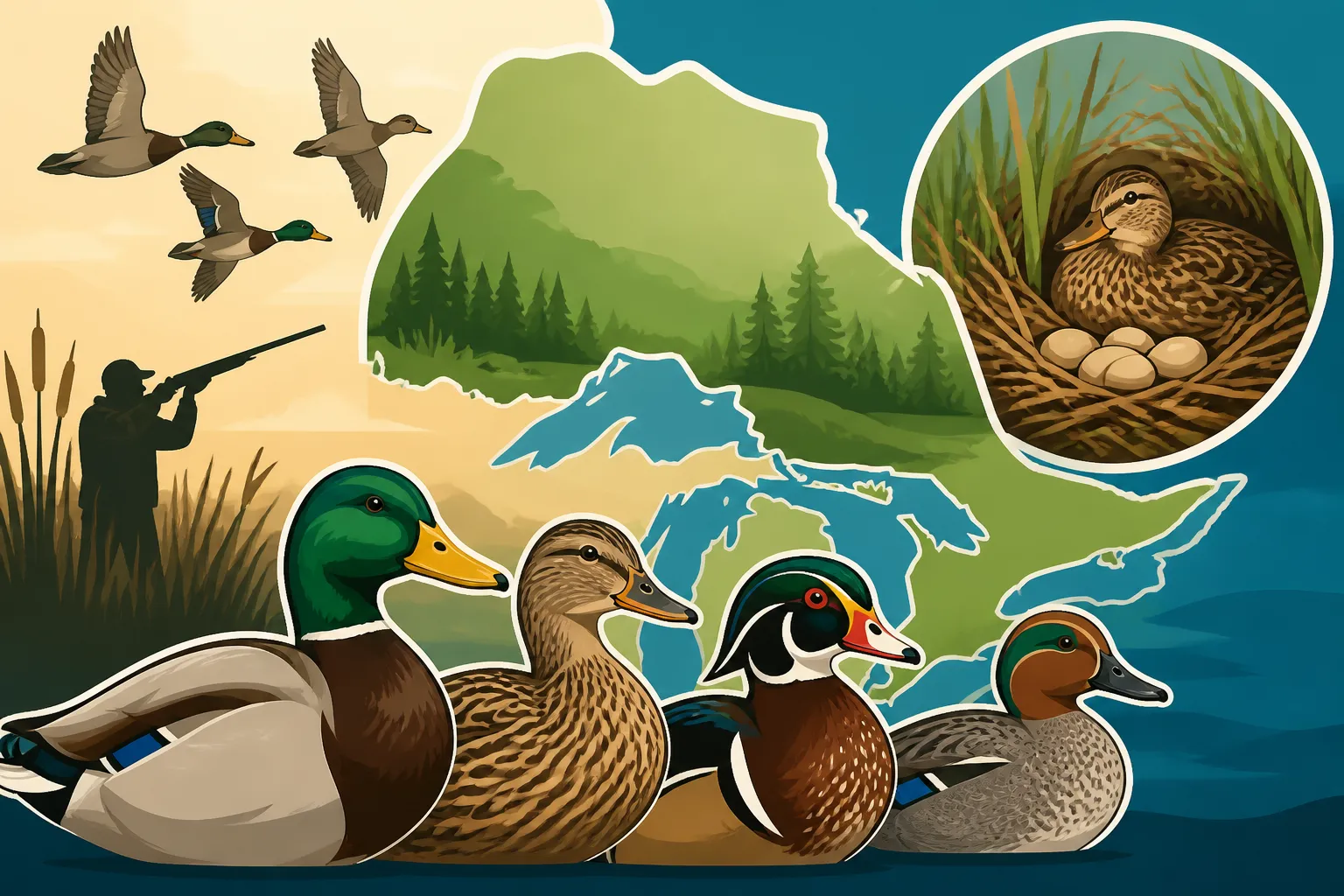
These two species are often seen together, and for good reason—they share many similarities in behaviour and habitat use, though the American Black Duck is noticeably warier. Mallards, with their iconic green head and iridescent speculum, are perhaps the most widespread and adaptable duck in North America, and certainly in Ontario. They'll nest just about anywhere there's decent cover near water: grassy fields, hayfields, even suburban parks. Their nests are typically a shallow depression lined with grass and down, often hidden under a clump of vegetation. A hen mallard might lay anywhere from 8 to 13 eggs, incubating them for about 28 days before the precocial ducklings hatch and follow her directly to the water. They are incredibly prolific, which contributes to their strong populations even with significant hunting pressure.
American Black Ducks, on the other hand, are a bit more secretive. They prefer nesting in undisturbed upland cover, often in dense woods or thick marsh vegetation, and are particularly prevalent in central and northern Ontario, though you'll find them in southern reaches too. Their eggs, usually 6 to 12, are incubated for a similar period. While they look quite distinct, with their dark bodies and light head, they can interbreed with mallards, which some conservationists watch closely. Both species benefit from efforts to maintain diverse habitats. For anyone interested in hunting these widespread birds, understanding their preference for upland nesting means scouting adjacent fields and dense cover, not just the water itself. A tool like GoHunt can help you scout potential nesting areas by showing you different land types.
Wood Ducks and Green-winged Teal: Woodland Jewels and Speedy Migrants
The wood duck is, without a doubt, one of the most stunning waterfowl species, often referred to as a "woodie" or "swamp duck." Unlike most other dabblers, wood ducks are cavity nesters. They rely heavily on mature trees with suitable holes, often old flicker or pileated woodpecker cavities, found in flooded timber, wooded swamps, or along wooded creek banks. These natural cavities provide excellent protection from ground predators. If natural cavities are scarce, they readily use artificial nest boxes, which has been a huge success story for their population recovery. Hens will typically lay 7 to 15 eggs, and after hatching, the ducklings incredibly leap from the cavity, sometimes dozens of feet up, to land unharmed on the forest floor before heading to water. Their presence often signals healthy, mature forested wetlands.
Green-winged Teal are a stark contrast: small, incredibly fast, and known for their early migration. They often nest in dense grassy cover, usually within a few hundred feet of water, preferring shallow wetlands, marshes, and even flooded pastures. Their nests are well-concealed, and the hens lay a relatively large clutch of 8 to 11 eggs for such a small bird. You’ll often find them nesting in the vast network of small ponds and marshy areas found throughout the prairie pothole region, but also in suitable pockets across Ontario, especially in more northern agricultural areas and boreal wetland complexes. Their swift, erratic flight makes them a challenging and rewarding target for any hunter. When considering Hunting Ducks in an Ontario Cattail Marsh, remember that teal will be in there too.
Northern Pintails and Gadwalls: Subtle Beauties of Open Marshes
Northern Pintails are elegant ducks with long necks and, in the drakes, a distinctive pin-like tail feather. They prefer to nest in open areas with short, sparse vegetation, often further from water than other dabblers. This choice of nesting site, frequently in grasslands or even lightly grazed pastures, can make them vulnerable to agricultural practices. Their nests are usually simple scrapes, well-camouflaged, and they lay 7 to 9 eggs. Pintails are early migrants and are often among the first ducks to head south, making them an exciting early-season bird. They’re common in the more expansive agricultural and marsh systems of southern and eastern Ontario, though suitable nesting habitat can be found further north.
Gadwalls, often overlooked, are actually one of the quiet success stories in duck populations. They're a medium-sized dabbler, often identified by the white speculum on their wing. They prefer to nest in dense, herbaceous cover near wetlands, often building a substantial nest of grass and down. They are quite adaptable and can be found nesting in a variety of habitats, including prairie potholes, marshes, and even island nesting sites. Their clutches usually number 7 to 13 eggs. Gadwalls are adept at utilizing diverse food sources, from aquatic vegetation to waste grain, making them resilient. When you're Hunting Canada Geese on Ontario Farmland, don't be surprised to see Gadwalls in the same fields, often looking for waste grain themselves.
The Deep Divers: Ontario's Diving Duck Species and Their Aquatic Nests
Diving ducks, as their name suggests, feed by diving completely underwater to forage for aquatic plants, mollusks, and fish. Their legs are set further back on their bodies, making them excellent swimmers and divers but quite clumsy on land. When taking flight, they typically run along the surface of the water for a distance before becoming airborne. While many dabblers nest in uplands, diving ducks often prefer to nest very close to or even over water, reflecting their more aquatic lifestyle.
Canvasbacks and Redheads: Royalty of the Wild Rice Beds
The Canvasback is arguably one of the most revered diving ducks, known for its sleek profile and delicious flavour. They are strongly associated with vast, productive wetlands, particularly those with abundant sago pondweed and wild rice. These birds are specific in their nesting choices, building large, bulky nests of emergent vegetation, usually cattails or bulrushes, directly over water or on muskrat houses. This unique nesting strategy keeps their eggs safe from most ground predators, though fluctuating water levels can be a concern. A hen Canvasback typically lays 7 to 10 eggs. While they primarily breed in the prairie pothole region, Ontario's large, vegetated marshes, especially along the Great Lakes, offer critical staging and some nesting habitat. You might encounter them during Marsh Hunting Ducks on the Great Lakes.
Redheads are another large diving duck often found in similar habitats to Canvasbacks, favouring extensive marshes with emergent vegetation. They are famous for their parasitic nesting behaviour, where a hen redhead will often lay eggs in the nests of other species (including other ducks and even coots) in addition to, or sometimes instead of, building her own nest. This strategy can increase their reproductive output but sometimes at the expense of the host species' success. When they do build their own nests, it's typically a floating structure or a well-hidden nest in dense emergent vegetation over shallow water. Redheads usually lay 7 to 10 eggs, but "dump nests" can contain many more. Ontario offers important breeding grounds in its larger southern and central marshes.
Scaup and Ring-necked Ducks: Common Visitors of Northern Waters
Both Greater and Lesser Scaup, often colloquially called "bluebills" or "broadbills," are common sights in Ontario, especially during migration. While their primary breeding grounds are further north in the boreal forest and tundra, significant numbers of Ring-necked Ducks breed right here in Ontario. Ring-necks are particularly fond of boggy, acidic wetlands, often with floating vegetation mats, making the vast network of lakes and wetlands in Ontario’s Central and Northern regions ideal. Their nests are typically well-concealed in dense vegetation, often sedges or grasses, right at the water’s edge or slightly over it. They lay 8 to 10 eggs. Their distinct ring around the bill (which is hard to see!) and their bold black and white plumage make them identifiable.
Scaup, particularly Lesser Scaup, also nest in Ontario’s northern reaches, favoring small ponds and shallow wetlands within the boreal forest. Their nests are often simple depressions in dense cover, usually near water. Both species are often seen in large rafts on bigger lakes during migration, but understanding that the Ring-neck especially is a true Ontario breeder is key. When you're in northern Ontario, Hunting Moose Around an Ontario Beaver Pond for example, keep an eye out for these ducks; their nesting cover might be nearby.
Goldeneyes and Buffleheads: Cavity Nesters of the North
Like the wood duck, both Common Goldeneyes and Buffleheads are tree cavity nesters, a unique adaptation among diving ducks. Common Goldeneyes, known for their striking golden eye and fast, whistling flight, prefer nesting in mature forests adjacent to lakes, rivers, or large beaver ponds. They readily use abandoned Northern Flicker cavities or even artificial nest boxes. The hen will lay 7 to 10 eggs, and like wood ducklings, the young will jump from the cavity soon after hatching. Their distribution largely follows the extent of Ontario's Boreal Forest and Shield country, where large, old trees with suitable cavities are plentiful.
Buffleheads, the smallest of the diving ducks, are equally charming and also cavity nesters. They are almost exclusively reliant on abandoned Northern Flicker holes, preferring smaller cavities than goldeneyes. They are particularly associated with smaller forest-lined lakes, beaver ponds, and slow-moving rivers in forested areas. A hen Bufflehead lays 8 to 10 eggs, and their ducklings, incredibly tiny, also make the leap from the nest cavity. While most common in northern Ontario, suitable habitat can be found in central and even parts of southern Ontario where mature forests meet water. It’s a testament to these small ducks that they manage to thrive in the harsh northern environment. Their rapid, buzzy flight is unmistakable.
Mergansers: The Fish-Eating Ducks of Ontario's Waterways
Mergansers are a specialized group of diving ducks, often called "fish ducks" due to their serrated bills, perfectly adapted for grasping slippery fish. While not always a favourite for the dinner table, they are fascinating to observe and an integral part of Ontario's aquatic ecosystems.
Common Mergansers: Widespread River and Lake Dwellers
The Common Merganser is the largest of the mergansers and is widespread across Ontario. These impressive birds are adaptable nesters, primarily using large tree cavities or abandoned buildings, but they will also nest in rock crevices, under roots of trees, or even in dense vegetation in secluded spots near water. They prefer clear, often moving water of rivers and large lakes for feeding. Hens typically lay a large clutch of 8 to 12 eggs. Their ducklings are quite striking, with a chestnut head and white cheeks, often seen following their mother in a long line on rivers or large lakes. You'll find them nesting throughout the province wherever suitable cavities and clear water are present, from the Great Lakes shoreline to the most remote northern rivers.
Red-breasted Mergansers: Coastal Nesters and Great Lakes Residents
The Red-breasted Merganser is more associated with coastal and large lake environments, making them a common sight on the Great Lakes and along large northern lakes in Ontario. They typically nest on the ground, often under dense cover, in thickets, or even in rock crevices on islands or shorelines. Their nests are well-concealed and lined with down. They lay 8 to 10 eggs, and the ducklings are highly mobile, taking to the water quickly. Their more "marine" tendencies mean you'll often see them feeding in open water far from shore, where they chase fish with incredible agility. If you're out Diver Hunting Ontario's Big Water, you're very likely to encounter red-breasted mergansers.
Hooded Mergansers: Smaller Cavity Nesters of Sheltered Waters
The Hooded Merganser is the smallest and arguably the most beautiful of the mergansers, with the drake sporting a spectacular fan-shaped crest. These birds are cavity nesters, much like wood ducks and goldeneyes, but they prefer smaller cavities in forested wetlands, beaver ponds, and sheltered sloughs. They are often found nesting in more intimate, sheltered waters than their larger merganser cousins. A hen Hooded Merganser lays 7 to 12 eggs. Their ducklings, with their distinctive crests even at a young age, are delightful to watch as they navigate the small, wooded waterways. They are common across much of Ontario's forested landscape, especially in areas with a good mix of mature trees and calm waters.
Crucial Nesting Habitats Across Ontario's Diverse Landscape
Ontario is a vast province, and its diverse geography offers a wide array of habitats for nesting ducks. From agricultural plains to dense boreal forests, each region provides unique conditions that different species exploit.
Southern Ontario's Agricultural and Wetland Mosaic
Southern Ontario, though heavily agricultural and urbanized, still holds vital nesting habitat for ducks. The mosaic of farm fields, woodlots, and remnant wetlands creates opportunities, particularly for dabbling ducks. Small marshes, flooded ditches, creek bottoms, and riparian zones adjacent to agricultural lands provide critical nesting cover and food sources. Mallards, wood ducks, and green-winged teal thrive in these areas. However, this region also presents significant challenges: habitat fragmentation, wetland drainage for agriculture or development, and increased predation pressure from species adapted to human-modified landscapes. When ducks choose to nest in hayfields, for instance, early cutting can devastate clutches.
Conservation efforts are vital here, often involving private landowners. Programs like those from Ducks Unlimited Canada focus on restoring and enhancing small wetlands and providing nesting cover in buffer strips around water bodies. Understanding these localized nesting dynamics is key for hunters. For example, Hunting Deer in Southern Ontario Farmland often means being right next to excellent duck nesting grounds, even if you're not targeting waterfowl. Organizations like GoHunt often provide mapping tools that can highlight these small, overlooked wetland pockets which can be crucial for local nesting success.
Central Ontario's Mixed Forest and Shield Country Waters
Moving into central Ontario, the landscape transitions to a mix of deciduous and coniferous forests, lakes, and Canadian Shield outcrops. This region offers a different suite of nesting opportunities. The abundance of mature forests provides crucial tree cavities for wood ducks, common goldeneyes, and hooded mergansers. The myriad of lakes, large and small, with their sheltered bays and emergent vegetation, support diving ducks like ring-necked ducks and scaup, as well as dabblers. Beaver activity here is also a huge boon, creating countless ponds that offer diverse nesting sites and food.
However, the typically more acidic waters of the Shield can sometimes limit the invertebrate populations that some duck species rely on. Forest management practices, if not carefully planned, can impact the availability of old-growth trees with suitable nesting cavities. This region is a sweet spot for species that like a bit of forest cover with their water. When exploring areas like the Haliburton Highlands, the mixed forests and rocky lakeshores are prime breeding grounds. You might also find good opportunities for other game species here, as discussed in Hunting the Haliburton Highlands.
Northern Ontario's Vast Boreal Forest and Peatlands
Northern Ontario is a veritable duck factory, especially for diving ducks and several dabbler species. The immense boreal forest is dotted with countless shallow wetlands, bogs, muskeg, and cold, clear lakes. This vast, largely undisturbed landscape provides an unparalleled amount of nesting habitat. Ring-necked ducks, both Greater and Lesser Scaup, Common Goldeneyes, and all three species of mergansers breed here in significant numbers. Mallards and American Black Ducks are also extremely common. The sheer scale of available habitat often means less direct human impact on nesting success.
Challenges in the north revolve more around natural cycles, such as wildfires impacting vegetation, and the sheer remoteness which makes broad-scale habitat management difficult. However, this also means less fragmentation and pressure from development. This region is critical for sustaining continental duck populations. For the adventurous hunter, exploring these northern reaches offers incredible opportunities, as detailed in Hunting Northwestern Ontario's Big Bush. The untouched nature of these breeding grounds makes them vital for the health of our waterfowl.
Conservation Challenges and Supporting Ontario's Duck Populations
Understanding where ducks nest inevitably leads to the question of how to protect those crucial areas. While ducks are resilient, they face a host of challenges that require ongoing effort from conservationists, landowners, and hunters alike.
Habitat Loss and Degradation: A Constant Threat
The most significant threat to nesting ducks in Ontario, and across North America, is the ongoing loss and degradation of wetlands and associated upland nesting cover. Wetland drainage for agriculture, urban development, and industrial expansion directly eliminates crucial breeding grounds. Pollution from agricultural runoff, industrial discharge, and urban sources can degrade water quality, impacting the aquatic invertebrates and plants that ducks rely on for food. The destruction of riparian buffers and mature forests also removes vital nesting cavities and upland cover. For instance, Why Wetland Loss Hurts Ontario Ducks is not just about losing water, but losing the entire ecosystem that supports their life cycle.
Think about a small, seemingly insignificant slough on the edge of a farm field. To us, it might look like a soggy mess. To a hen mallard or pintail, it's home, a place to raise her brood. When that slough is drained or filled, that nesting opportunity is gone, forever. The cumulative effect of these small losses adds up to massive impacts on duck populations. Education and policy are crucial, but direct action through wetland restoration and protection projects by groups like Ducks Unlimited Canada are absolutely paramount.
Predation and Environmental Factors: Natural Pressures
While habitat loss is largely human-driven, ducks also face natural pressures during the nesting season. Predation on nests and ducklings by a variety of animals is a significant factor. Mammalian predators like foxes, raccoons, skunks, and mink are opportunistic egg and duckling eaters, especially in fragmented landscapes where predators have easier access to nests. Avian predators such as crows, ravens, and various raptors also take their toll. Weather events can also play a role; a late spring snowstorm, a sudden cold snap, or severe flooding can destroy nests and kill newly hatched ducklings.
These natural pressures are part of the ecosystem, but their impact can be exacerbated in degraded habitats. For example, if nesting cover is sparse, nests are easier for predators to find. If wetlands are isolated, ducklings might struggle to find refuge. Climate change also introduces uncertainty, with altered precipitation patterns potentially impacting water levels in key nesting areas. This highlights the importance of creating resilient, extensive habitats that can better withstand these natural fluctuations.
The Role of Hunters and Conservation Organizations
It's a point of pride for me as a hunter that sportsmen have always been at the forefront of waterfowl conservation. When you buy an Ontario Hunting Licences and What They Cost for waterfowl, or the mandatory The Federal Migratory Game Bird Permit, a significant portion of those funds goes directly into habitat conservation and research. Organizations like Ducks Unlimited Canada, through their extensive wetland restoration and creation projects, have conserved millions of acres of critical habitat, much of which directly benefits nesting ducks in Ontario and across the continent. These efforts ensure not just better hunting, but healthier ecosystems for all wildlife.
Hunters also have a direct role in ethical practices, such as accurate identification of species to ensure legal harvests, respecting bag limits, and using Non-Toxic Shot Requirements for Waterfowl to prevent lead poisoning. Volunteering for habitat projects, advocating for wetland protection, and supporting conservation organizations are all ways we can give back to the resource that provides us so much enjoyment. It’s a reciprocal relationship: we cherish the ducks, and in turn, we help secure their future.
Ontario Duck Species: Nesting Habits at a Glance
| Species Group | Common Species | Primary Nesting Habitat | Typical Clutch Size |
|---|---|---|---|
| Dabbling Ducks | Mallard, American Black Duck | Upland grasslands, hayfields, dense vegetation near water | 8-13 |
| Wood Duck | Tree cavities in flooded timber, wooded swamps | 7-15 | |
| Green-winged Teal | Dense grassy cover near shallow wetlands | 8-11 | |
| Northern Pintail | Open, short-grass areas, often further from water | 7-9 | |
| Gadwall | Dense herbaceous cover near wetlands, islands | 7-13 | |
| Diving Ducks | Canvasback, Redhead | Bulky nests in emergent vegetation over water (wild rice) | 7-10 |
| Ring-necked Duck | Dense vegetation at water's edge in boggy wetlands | 8-10 | |
| Scaup (Greater/Lesser) | Dense cover near water in northern wetlands | 7-11 | |
| Common Goldeneye | Tree cavities near lakes, rivers, beaver ponds | 7-10 | |
| Bufflehead | Abandoned flicker cavities near forested waters | 8-10 | |
| Mergansers | Common Merganser | Tree cavities, rock crevices, dense ground cover | 8-12 |
| Red-breasted Merganser | Dense ground cover, thickets on islands/shorelines | 8-10 | |
| Hooded Merganser | Tree cavities in wooded wetlands, beaver ponds | 7-12 |
The world of Ontario's ducks is truly diverse and interconnected. From the subtle beauty of a Gadwall's nest tucked away in a marsh to the dramatic cavity jumps of Wood Ducklings, each species adds to the rich tapestry of our natural world. By understanding their unique nesting habits and the habitats they depend on, we become better hunters, better conservationists, and more appreciative stewards of this incredible resource.
Disclaimer
The information provided in this guide is for general informational purposes only. Hunting regulations, seasons, and licensing requirements in Ontario can change. Always consult the most current official Ontario Hunting Regulations Summary and relevant federal regulations before planning any hunting trip. It is your responsibility to know and follow all applicable laws.