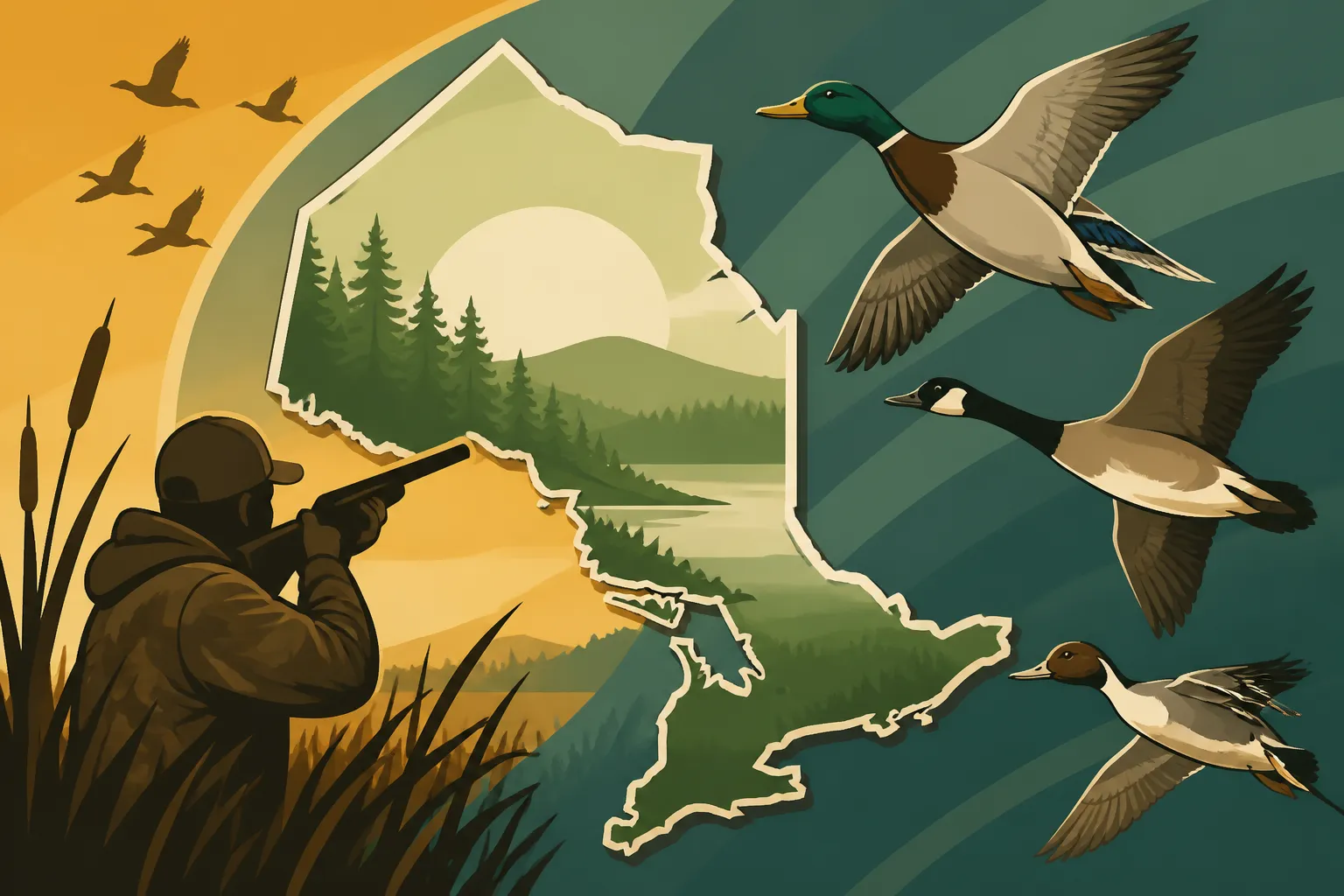
Ontario’s Ducks and Geese by Flyway
For anyone who's spent a frosty morning huddled in a blind, watching the dawn break over an Ontario marsh, you know the thrill and challenge of waterfowl hunting. It's not just about pulling the trigger; it's about understanding the intricate dance of migration, the habits of different species, and the unique influence of our vast waterways. This guide will unravel the mysteries of Ontario's ducks and geese, detailing their flyways, species, habitats, and how to successfully pursue them.
Understanding Ontario's Waterfowl Flyways
Ontario is uniquely positioned as a crossroads for migratory birds, influenced by not one, but two major North American flyways. This geographical advantage means a diverse array of waterfowl passes through or nests within the province, offering fantastic opportunities for hunters. Knowing which flyway dominates your hunting area can profoundly impact your success, helping you anticipate arrivals and understand bird behavior.
The Mississippi Flyway: A Major Migration Corridor
Stretching from the Canadian Arctic down to the Gulf of Mexico, the Mississippi Flyway is arguably the busiest and most significant migratory route for waterfowl in North America. A substantial portion of Ontario, particularly the western and central regions, falls squarely within this flyway. Birds funneling down this corridor use Ontario's numerous lakes, rivers, and vast wetlands as crucial staging and resting points before continuing their long journey south.
Hunters in areas like Lake of the Woods, Rainy River, or even further east into the Georgian Bay area will primarily observe birds utilizing this flyway. Key species like Mallards, Wood Ducks, various Teal, Northern Pintails, and American Wigeon are regular commuters. These ducks often stage in large numbers, particularly in the fertile agricultural areas and extensive marsh systems that dot the landscape. The sheer volume of birds that pass through this corridor can be staggering, making areas like the Lake St. Clair flats or Long Point on Lake Erie legendary among waterfowl enthusiasts. It’s no wonder so many birds pass through our province; after all, Ontario is strategically positioned along the Why Ontario Sits on the Mississippi Flyway.
The Atlantic Flyway: Connecting to the East
While the Mississippi Flyway might steal some of the spotlight, the Atlantic Flyway plays an equally vital, albeit different, role for Ontario waterfowl. This flyway predominantly influences the eastern parts of the province, guiding birds that breed in eastern Canada and the Arctic down the St. Lawrence River valley and along the eastern Great Lakes.
Hunters near Kingston, Ottawa, or along the shores of Lake Ontario will frequently encounter species that rely on the Atlantic Flyway. Black Ducks, which are a highly prized species for many, often show stronger numbers along this eastern corridor. Certain populations of Canada Geese and specific diving ducks, particularly those heading for wintering grounds along the Atlantic seaboard, utilize these routes. The St. Lawrence River, with its sprawling wetlands and fertile islands, acts as a natural funnel, concentrating birds for spectacular hunting opportunities. Understanding this dual influence is key; for instance, a major cold front pushing down from Quebec will have a different impact on bird movement in eastern Ontario than one moving through Manitoba into western Ontario.
The Great Lakes Influence on Waterfowl Migration
Beyond the traditional flyway definitions, the Great Lakes themselves exert an immense, almost gravitational, pull on waterfowl migration. These vast inland seas, Superior, Huron, Erie, and Ontario, serve as monumental navigational aids, staging areas, and wintering grounds for millions of birds. They act as massive resting places, offering abundant food and relative safety during their arduous journeys.
For diving ducks especially, the deep, clear waters of the Great Lakes are critical. Species like Greater and Lesser Scaup, Canvasbacks, Redheads, and various mergansers can be found rafting in incredible numbers on the open waters of the big lakes. They use the extensive shallow bays, points, and shoals for feeding and shelter. The sheer scale of these bodies of water means that even if smaller wetlands freeze up, the Great Lakes often provide open water much later into the season. It’s truly amazing Why the Great Lakes Concentrate Birds during peak migration periods, making them indispensable to waterfowl populations and a magnet for hunters.
Key Duck Species You'll Encounter in Ontario
Ontario's diverse aquatic habitats support an incredible variety of duck species, each with its own unique habits and preferred environments. From the shallow-water dabblers to the deep-diving specialists, understanding these different groups is fundamental to successful waterfowl hunting in the province.
Dabbling Ducks: Puddle Jumpers of the Marshes
Dabbling ducks, often called "puddle ducks," are perhaps the most iconic and sought-after waterfowl. They primarily feed in shallow water, tipping forward to reach submerged vegetation or picking seeds and invertebrates from the surface, rarely diving completely. Their ability to spring vertically into flight makes them challenging targets and a thrilling sight.
The undisputed king of dabblers in Ontario is the Mallard. These adaptable ducks are found almost everywhere, from remote northern marshes to urban ponds, and are a staple of many hunters' bags. Their distinctive green head (on drakes) and loud quacks are unmistakable. Close cousins, the American Black Duck, prefer wilder, more secluded marsh environments, especially in eastern Ontario. They are shier and more challenging to hunt, often highly prized for their stealth and dark plumage. Wood Ducks are another favourite, known for their stunning iridescent colours and preference for wooded swamps and beaver ponds. Their high-pitched "woo-eek" call is a common sound in timbered wetlands, especially at dawn and dusk. Green-winged and Blue-winged Teal, Northern Pintail, and American Wigeon also frequent these shallow, vegetated areas. Many hunters rely on mapping tools like GoHunt to identify these prime dabbler habitats, especially flooded timber or small, secluded ponds that hold birds.
Diving Ducks: Deep Water Specialists
In contrast to their dabbling cousins, diving ducks are built for the depths. They feed by submerging themselves completely, propelling themselves with their large feet to forage for mollusks, crustaceans, and aquatic vegetation on lake bottoms. Their heavier bodies require a running start to take flight, making them a unique challenge for hunters on open water.
Ontario's Great Lakes and larger inland lakes are prime territory for a variety of diving ducks. The Greater and Lesser Scaup, affectionately known as "Bluebills," are common visitors, often seen in vast rafts on large bodies of water. Canvasbacks, the "king of ducks" for many, are a prized trophy, known for their distinctive sloped profile and fast, powerful flight. They are particularly abundant in areas like Lake St. Clair and Long Point. Redheads, with their vibrant red heads and grey bodies, often associate with Canvasbacks. Other notable divers include the hardy Ring-necked Duck, often found in slightly shallower, vegetated lakes, and the energetic Common Goldeneye and tiny Bufflehead, which arrive later in the fall and stay until freeze-up. If you're planning on hunting these species, you'll want to pay close attention to When Divers Reach the Great Lakes and consider that Where Canvasbacks Raft in Ontario often become hotspots.
Sea Ducks and Mergansers: Unique Northern Visitors
While not as commonly targeted as dabblers or most divers, Ontario does host some unique sea duck species and several types of mergansers, particularly on the Great Lakes and in northern waters. These birds add another layer of diversity to the province's waterfowl scene.
Sea ducks, such as the Long-tailed Duck (formerly Oldsquaw) and various Scoter species (Surf, White-winged, and Black), are typically found on large, open bodies of water, particularly the Great Lakes during colder months. They are true oceanic birds but utilize these vast freshwater seas as crucial wintering and staging grounds. They are incredibly hardy, capable of withstanding frigid temperatures and rough waves. While some hunters pursue them, their strong fishy flavour means they are often less desired for table fare compared to other duck species. Mergansers, including the Common Merganser, Red-breasted Merganser, and the striking Hooded Merganser, are fish-eating ducks characterized by their long, serrated bills. They are found on rivers, lakes, and coastal areas, and while not typically targeted for eating, they are a common sight and can add excitement to a duck hunt.
| Species Group | Common Species | Primary Habitat | Flyway Usage (Ontario) | Feeding Method |
|---|---|---|---|---|
| Dabbling Ducks | Mallard, Black Duck, Wood Duck, Teal, Pintail, Wigeon | Shallow marshes, ponds, flooded timber, agricultural edges | Mississippi & Atlantic | Tip-up (surface feeding) |
| Diving Ducks | Scaup, Canvasback, Redhead, Ring-necked, Goldeneye, Bufflehead | Large lakes, deep bays, major rivers, Great Lakes | Mississippi & Atlantic | Dive (submerged feeding) |
| Sea Ducks & Mergansers | Long-tailed Duck, Scoters, Common Merganser, Hooded Merganser | Open Great Lakes, northern rivers, large coastal bays | Primarily Atlantic | Dive (fish & invertebrates) |
Geese Species That Grace Ontario Skies
When most people think of geese in Ontario, their minds immediately go to the iconic Canada Goose. However, the province is also visited by other fascinating goose species, each contributing to the rich tapestry of waterfowl migration. Understanding these different geese, their habits, and their vocalizations is key to a successful goose hunt.
Canada Geese: The Ubiquitous Honkers
The Canada Goose is perhaps the most recognizable waterfowl in Ontario, found literally everywhere from urban parks to remote northern wilderness. What many don't realize is that "Canada Goose" isn't just one type; it encompasses several subspecies that vary significantly in size, from the diminutive Cackling Goose (often mistaken for a small Canada) to the impressive "Giant" Canada Goose, which can weigh over 10 pounds.
Ontario hosts both migratory and resident populations. The resident geese, often found year-round in agricultural and urban areas, can provide early season opportunities. Migratory birds, on the other hand, pour into the province from northern breeding grounds as fall progresses, adding to the numbers. They are highly adaptable, feeding in vast agricultural fields (especially cut corn and soybeans), resting on large bodies of water, and creating spectacular flight formations. Their distinctive honking call is a quintessential sound of the Ontario autumn. Spotting flights of Canada geese moving between roosts and feeding fields is made easier with detailed aerial imagery, a feature often found in apps like GoHunt, which helps hunters pinpoint exact patterns and movements. The sheer number of Canada Goose Numbers Around Ontario Cities can be surprising, offering unique hunting challenges and opportunities even close to populated areas.
Snow and Ross's Geese: White Tornadoes of the Sky
For sheer spectacle, it's hard to beat the arrival of Snow Geese and Ross's Geese. These smaller, predominantly white geese migrate in truly immense flocks, often numbering in the thousands. When a flock descends into a field or takes flight, it's an unforgettable "white tornado" of sound and movement. While they are not as widespread as Canada Geese across Ontario, they are significant visitors to specific staging areas, particularly in the eastern parts of the province.
Snow Geese are characterized by their white plumage with black wingtips, while Ross's Geese are similar but smaller, with a shorter bill and rounder head. Both species are primarily grain and vegetation eaters, making agricultural fields their preferred feeding grounds during migration. They typically arrive later in the fall and depart earlier in the spring than Canada Geese. Hunting these birds requires different tactics, often involving massive decoy spreads and specific calls to attract their large, often wary flocks. Observing When Snow Geese Pass Through Ontario can inform hunters on optimal timing for these challenging, yet incredibly rewarding, hunts.
Brant and Other Less Common Geese
Beyond the dominant Canada and Snow/Ross's Geese, Ontario occasionally sees other goose species, though they are less common and typically not primary targets for most hunters.
Brant are small, dark geese that primarily inhabit coastal saltwater environments. However, they do make appearances along the Great Lakes, especially during harsh weather or if they get off course during migration. Their diet is largely sea grass, making them less likely to be found in inland agricultural fields. While encounters are rare, a Brant in the bag is a special trophy for an Ontario hunter. The Greater White-fronted Goose, often called a "Specklebelly" due to the dark barring on its breast, is another less common but highly prized visitor. These geese typically utilize the Mississippi Flyway more intensely, meaning sightings are more frequent in western Ontario, especially around Lake St. Clair or the Rainy River district. Their distinctive "laughing" call is a dead giveaway, and their excellent table fare makes them a highly sought-after, if rare, addition to an Ontario hunter's bag.
Habitat and Hotspots for Ontario Waterfowl
Understanding where waterfowl prefer to feed, rest, and stage is fundamental to successful hunting. Ontario's vast and varied landscape offers a plethora of habitats, from the massive inland seas to secluded inland ponds, each attracting different species at different times of the year.
Great Lakes Shorelines and Major Wetlands
The Great Lakes are undeniably the crown jewels of Ontario's waterfowl habitat. Their sheer size, diverse shorelines, and associated sprawling wetland complexes create unparalleled opportunities for migratory birds. Areas like Long Point Bay on Lake Erie and the vast wetlands surrounding Lake St. Clair are internationally recognized as critical staging areas, concentrating millions of birds during peak migration.
Long Point, a UNESCO Biosphere Reserve, is a peninsula extending far into Lake Erie, creating sheltered bays and extensive marshes. It's a magnet for diving ducks like Canvasbacks, Redheads, and Scaup, as well as dabblers and Canada Geese. Similarly, the shallow, fertile waters of Lake St. Clair are legendary for their duck and goose hunting, drawing colossal numbers of Mallards, Canvasbacks, and Canada Geese. The productive submerged vegetation and surrounding agricultural fields provide an irresistible smorgasbord for passing birds. These areas are not just important for hunters; they are vital ecological hotspots. For any waterfowler, understanding What Long Point Means to Waterfowl and Why Lake St. Clair Draws So Many Ducks is a pilgrimage in itself. These aren't just hunting spots; they are global birding phenomena.
Inland Marshes, Ponds, and Rivers
While the Great Lakes grab headlines, Ontario's myriad inland marshes, smaller lakes, ponds, and river systems are equally crucial, especially for dabbling ducks and local goose populations. These smaller, more secluded water bodies often offer less pressured hunting experiences and can hold significant numbers of birds.
Every year, countless numbers of ducks, particularly Wood Ducks, Green-winged Teal, and Mallards, utilize the smaller, often privately owned, wetlands across southern and central Ontario. Beaver ponds, oxbow lakes along rivers, and hidden sloughs provide crucial feeding and resting areas. Major river systems like the Grand River, Thames River, or the numerous tributaries feeding into the Great Lakes also act as migration corridors and valuable habitat. For hunters seeking less pressured opportunities, using GoHunt's public land layers can help uncover hidden inland marshes or river bends often overlooked by others. These spots may require more scouting and effort but can yield incredibly rewarding, intimate hunts away from the crowds of big water.
Agricultural Fields and Staging Areas
No discussion of Ontario waterfowl habitat would be complete without highlighting the immense importance of agricultural fields. For geese, especially Canada and Snow Geese, and even many dabbling ducks like Mallards and Northern Pintails, the vast fields of cut corn, soybeans, and winter wheat are indispensable feeding grounds.
As the fall migration progresses, birds will establish roosting areas on large, open water bodies and then fly out to nearby agricultural fields to feed, often twice a day – at dawn and dusk. These fields provide high-energy sustenance critical for their long migrations. Identifying active feeding fields is paramount for successful field hunting, whether for geese or ducks. This requires extensive scouting, often before light, to observe bird movements. Dedicated hunters know that Scouting Fields for Ontario Waterfowl is a non-negotiable part of the process, and understanding the local crop rotation and harvest timing can give you a significant edge.
The Impact of Weather and Environmental Factors
Waterfowl hunting is inherently linked to the whims of Mother Nature. Understanding how weather patterns, water levels, and food availability influence bird behavior and migration can turn a slow day into a memorable one. In Ontario, these factors are particularly pronounced, dictating the timing of flights and the concentration of birds.
How Cold Fronts and Freeze-Up Affect Migration
Nothing moves migratory birds quite like a strong cold front. As arctic air masses sweep down from the north, they bring plummeting temperatures, often ushering in new waves of ducks and geese from their breeding grounds. A significant cold snap can push birds out of northern Ontario and into central and southern regions, concentrating them on remaining open water.
The ultimate game-changer, however, is the "freeze-up." As smaller lakes, marshes, and even large bays begin to skim over with ice, waterfowl are forced to move. Dabbling ducks, which rely on shallow, open water, are typically the first to depart. Divers, being more accustomed to larger, deeper waters, will often linger longer on the Great Lakes until even these vast expanses begin to freeze in earnest. This progressive freeze-up concentrates birds on the few remaining open water bodies, like major rivers or springs, before finally pushing them out of the province entirely. Savvy hunters keep a close eye on weather forecasts, knowing that a looming cold front or significant freeze-up can trigger spectacular flights.
Water Levels and Habitat Availability
Water levels are another critical environmental factor that profoundly impacts waterfowl. Fluctuations, whether natural or managed, can create or destroy prime habitat, directly affecting bird distribution and feeding success.
In marshes and wetlands, consistent and appropriate water levels are essential for the growth of aquatic vegetation, which forms the basis of many ducks' diets. High water can flood out important feeding grounds, making food inaccessible, while extremely low water can dry out wetlands entirely, forcing birds to abandon an area. On the Great Lakes, long-term cycles of high and low water significantly influence the health and extent of coastal marshes. For instance, a period of low water might allow for the growth of emergent vegetation in areas that were previously too deep, creating new feeding zones. Conversely, high water can submerge these areas, reducing available food. Hunters often find themselves adapting to these changes, looking for newly flooded fields or exploring areas previously too dry to hold birds.
Food Sources and Their Seasonal Importance
Waterfowl are driven by their stomachs. The availability and quality of food sources are primary determinants of where birds will stop, how long they will stay, and their overall condition. Ontario offers a rich buffet of food for ducks and geese, but its availability changes throughout the season.
Early in the fall, dabbling ducks feast on natural vegetation like wild rice, pondweeds, and seeds from various marsh plants, along with aquatic invertebrates. As the season progresses and these natural foods become scarcer or freeze, agricultural grains become increasingly vital. Cut corn, spilled soybeans, and winter wheat provide high-energy carbohydrates crucial for migration. Geese, in particular, are heavy consumers of these field grains. Diving ducks, on the other hand, rely more on submerged aquatic vegetation, mollusks, and crustaceans found in deeper waters. Understanding what birds are currently feeding on, and where those food sources are abundant, is a significant part of successful scouting and hunt planning.
Essential Gear and Tactics for Ontario Waterfowl Hunting
Successful waterfowl hunting in Ontario isn't just about showing up with a shotgun. It's a blend of strategic planning, appropriate gear, and understanding bird behavior. The right setup can make all the difference when those wary ducks and geese are circling.
Decoy Spreads and Calling Strategies
The art of decoying is central to waterfowl hunting. Decoys are designed to fool approaching birds into believing an area is safe and inviting. For ducks, a mix of Mallard, Black Duck, and Wood Duck decoys is a good start for dabblers, often with a few motion decoys (spinners or wobblers) to add realism. For divers on big water, larger spreads of Scaup, Canvasback, and Redhead decoys are effective. Goose hunting often demands much larger spreads, sometimes hundreds of full-body or shell decoys, to mimic a large flock. Confidence decoys, like Herons or Crows, can also add to the illusion of safety.
Calling is equally important. For ducks, mastering the basic quack, a feeding chuckle, and a greeting call can entice birds. For geese, a range of honks, clucks, and moans can convince them to drop in. The key is realism and knowing when to call and, crucially, when to be quiet. Over-calling can spook wary birds, especially late in the season. Learning to read bird behavior – how they react to your calls and decoys – is a skill honed over many hours in the blind.
Blinds, Boats, and Camouflage
Concealment is non-negotiable in waterfowl hunting. Ducks and geese have incredibly sharp eyesight, and any unnatural shapes or movements will send them flaring. Depending on your hunting environment, your blind setup will vary significantly.
For field hunting, layout blinds that allow you to lie low in a stubble field are popular for geese and field-feeding ducks. These blinds need to be well-camouflaged with local vegetation. For marsh hunting, natural blinds built from cattails, dogwood, or willow are highly effective. Boat blinds, ranging from simple camouflaged jon boats to specialized layout boats, are essential for hunting big water or larger marshes, allowing you to get out to where the birds want to be. Remember that Marsh Hunting Ducks on the Great Lakes can require specialized boats and tactics, as can Layout Hunting on Lake St. Clair which is world-renowned. Beyond the blind, your personal camouflage clothing must match your surroundings, breaking up your outline and blending into the natural environment.
Non-Toxic Shot Requirements and Equipment
A critical and non-negotiable rule for all waterfowl hunting in Ontario (and indeed, all of Canada and the United States) is the use of non-toxic shot. Lead shot is prohibited due to its harmful effects on waterfowl and other wildlife.
Hunters have several excellent non-toxic options available today. Steel shot is the most common and affordable, offering good performance when matched with appropriate chokes and shot sizes. However, it is lighter than lead, so larger pellets are often needed. Bismuth shot is denser than steel, performing closer to lead, and is safer for older shotgun barrels not rated for steel. Tungsten-alloy shots (like Federal Heavyweight or Winchester Xtended Range) are the densest, offering superior knockdown power and range, but come at a higher cost. Selecting the right shot size and material depends on the species you're targeting (e.g., smaller shot for teal, larger for geese) and the typical shooting distances. Always consult the regulations for specifics on Non-Toxic Shot Requirements for Waterfowl and ensure your equipment is compliant.
Navigating Ontario's Waterfowl Regulations and Seasons
Ontario's waterfowl hunting regulations are a blend of federal and provincial rules, designed to conserve migratory bird populations while providing sustainable hunting opportunities. Navigating these rules can seem daunting at first, but understanding the basics is crucial for a legal and ethical hunt.
Federal Migratory Bird Permit and Provincial Licences
To hunt waterfowl in Ontario, you need a dual set of credentials. Firstly, you must possess a Federal Migratory Game Bird Hunting Permit (often simply called a "duck stamp"), issued by the Canadian Wildlife Service (Environment and Climate Change Canada). This permit contributes directly to habitat conservation. Alongside this, you will need a valid Ontario Outdoors Card and an Ontario Small Game Licence, issued by the Ministry of Natural Resources and Forestry (MNRF). These provincial licences cover small game, which includes migratory birds.
The Federal permit also requires you to purchase a Canadian Wildlife Habitat Conservation Stamp, which is physically affixed to your permit. This stamp is another direct contribution to habitat preservation efforts across the country. Keeping track of specific zone regulations and required permits can be a headache, but tools like GoHunt often compile this information to simplify planning your hunt. Always ensure you have both your federal permit (with stamp) and your provincial licences in your possession while hunting. More details on this permit can be found by researching The Federal Migratory Game Bird Permit.
Bag Limits and Possession Limits
Understanding bag limits and possession limits is fundamental to staying within the law. A bag limit refers to the maximum number of birds of a particular species or group of species that you can harvest in a single day. For example, the daily bag limit for Mallards might be 6, but only 2 of those can be hens. A possession limit refers to the maximum number of birds that you are allowed to have in your possession at any given time, whether in the field, in your vehicle, at home, or in cold storage. Possession limits are typically two or three times the daily bag limit.
These limits vary significantly by species, and sometimes even by sex within a species (like Mallards). They are established to ensure sustainable harvest rates and prevent overhunting. It is your responsibility as a hunter to know and adhere to these limits for every species you pursue. Misidentifying a bird or exceeding limits can lead to significant penalties. Always check the current year's hunting summary from both federal and provincial sources.
Species-Specific Season Dates by Zone
Ontario is a vast province, and its waterfowl seasons reflect this geographical diversity. The province is divided into different zones (e.g., Southern Ontario, Central Ontario, Northern Ontario, Hudson Bay Lowlands), and season dates for various duck and goose species can vary significantly from one zone to another.
For ducks, you'll find different opening and closing dates depending on the district you're hunting in, with earlier seasons typically in the north and later seasons in the south. Goose seasons can be even more nuanced, often including "early resident goose seasons" before the main duck season opens, followed by regular season dates, and sometimes even late-season opportunities. Species like Snow Geese might have different dates than Canada Geese. This staggered approach accounts for varying migration patterns and local populations across the province. You absolutely must consult the current year's Ontario Hunting Regulations Summary for the specific Wildlife Management Unit (WMU) or zone you intend to hunt. Information on Ontario Duck Season Dates by District and Ontario Goose Season Dates by District is published annually and available from the MNRF website.
Disclaimer
Please be aware that hunting regulations, season dates, and bag limits are subject to change annually. This guide provides general information and should not be used as the sole source for legal or regulatory guidance. It is the responsibility of every hunter to consult the official Ontario Hunting Regulations Summary, the Federal Migratory Game Bird Hunting Regulations, and any other relevant provincial or federal laws before participating in any hunting activity. Always prioritize safety, ethical hunting practices, and respect for wildlife and the environment.