Best Ontario Ground for Grouse
For many hunters, the quest for ruffed grouse in Ontario is less about a trophy and more about the simple pleasure of walking the fall woods, listening for the thunderous flush, and savoring the wild taste of a bird taken fairly. But finding consistent success means understanding where these elusive birds call home. This guide will walk you through the prime grouse habitats across Ontario, helping you decode the landscape and pinpoint the best ground for your next hunt.
Understanding Ontario's Grouse Species and Their Preferred Habitats
Ontario is home to three main grouse species, each with its own distinct habitat preferences. Knowing what kind of cover each species prefers is the first step in successful grouse hunting. It's not just about "woods"; it's about the right kind of woods.
Ruffed Grouse: The King of the Forest Floor
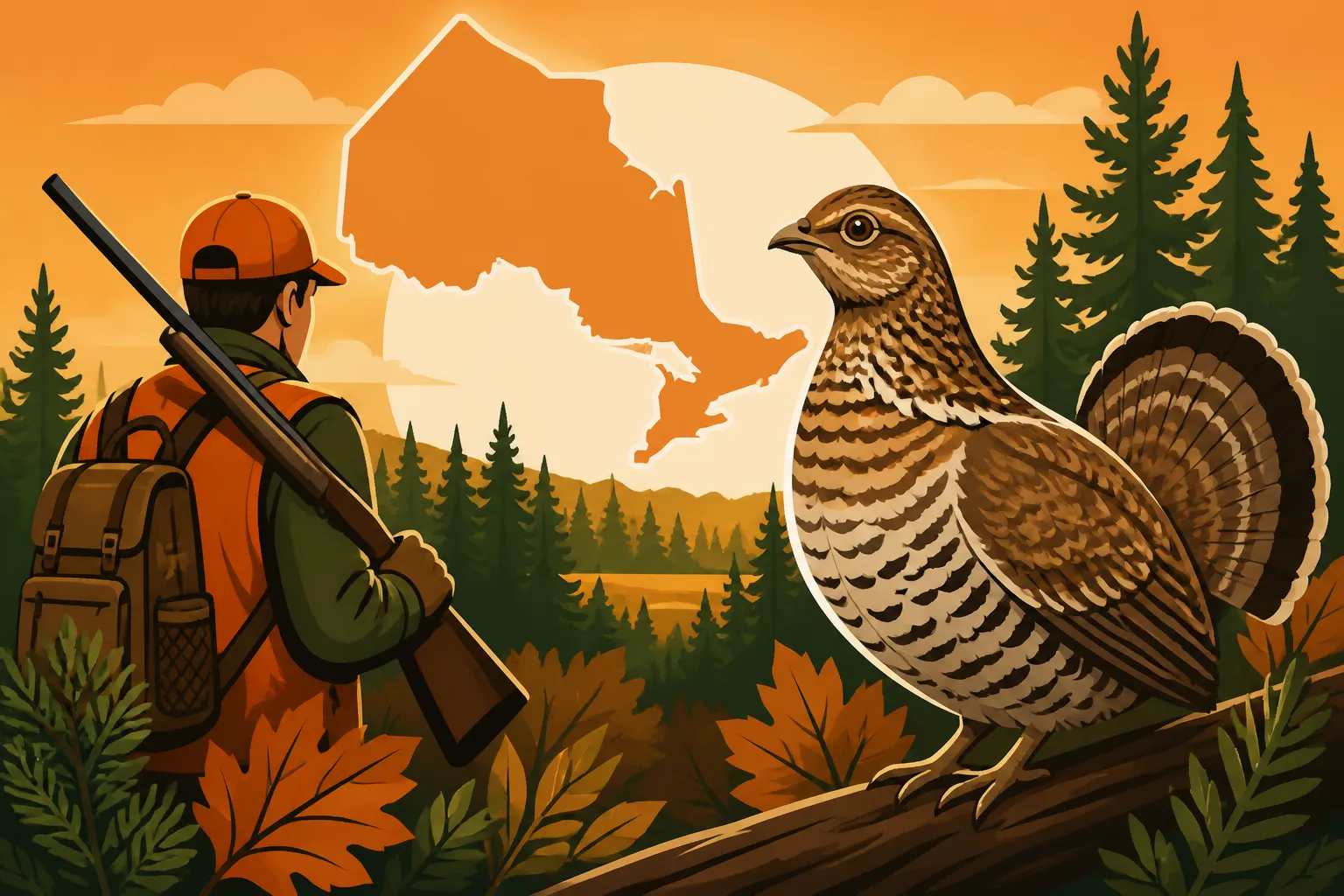
The ruffed grouse, often affectionately called "partridge" by many, is the most common and widespread grouse species in Ontario. These birds are masters of camouflage and can be found across a vast range of habitats, though they definitely have their favourites. They thrive in young, regenerating forests – think about those areas that were logged 5 to 20 years ago, where dense saplings and brush have grown up. Aspen stands, with their tender buds, catkins, and abundant ground cover, are absolute magnets for ruffed grouse. Look for a mix of young deciduous trees like poplar and birch, interspersed with thicker evergreens for thermal cover and protection from predators.
Alder thickets, especially those bordering wetlands or old logging roads, are also prime real estate. These dense, often wet areas provide fantastic cover and a steady food supply. As you walk through these areas, keep an eye out for tell-tale signs like droppings on logs or dusting bowls where they've groomed themselves. Old logging cuts, where the canopy has been opened up allowing new growth to flourish, are classic ruffed grouse country. These areas, particularly those with a mosaic of different-aged trees and brush, offer both food and escape routes. A slow, methodical walk along these routes, often pausing to listen, is a time-honoured technique. You might even want to check out Ruffed Grouse Hunting Ontario's Bush Roads for more insights on these productive pathways.
Spruce Grouse: The Boreal Specialist
The spruce grouse, often referred to as the "fool hen" due to its often unsuspecting nature, is a species tied intimately to Ontario's vast boreal forest. Unlike their ruffed cousins, spruce grouse prefer dense, unbroken stands of conifers. Their ideal habitat consists of thick black spruce, jack pine, and balsam fir, often in boggy or swampy areas. These birds have a diet almost exclusively focused on conifer needles and the occasional berry, making these deep, dark forests their pantry and sanctuary. If you find yourself in vast tracts of northern evergreen forests, particularly those with extensive stands of mature spruce, you're in spruce grouse territory.
Hunting spruce grouse often means venturing into more remote, less-travelled areas. They are far less prone to flushing explosively than ruffed grouse, sometimes allowing a hunter to get quite close before they take flight, if they even do. Their camouflage in the dense conifer needles is exceptional, making them a challenge to spot even when they're close. These are birds that blend seamlessly into their environment, preferring to walk or run away rather than fly. For a deeper dive into finding these specialized birds, take a look at Hunting Spruce Grouse in Black Spruce.
Sharp-Tailed Grouse: The Prairie Relic
Sharp-tailed grouse are a bit of a rarity in Ontario, with their populations largely concentrated in specific, often more open, grassland and savanna-like habitats. They are generally found in the northwestern parts of the province, where remnants of prairie and open brushland persist, often bordering agricultural fields. Their preferred habitat includes areas with a mosaic of tall grasses, brushy patches, and scattered aspen or willow clumps. These are not deep forest birds; rather, they are creatures of the open country, relying on expansive views and thick ground cover for protection.
Finding sharp-tailed grouse in Ontario can be a challenging but rewarding endeavor, often requiring specific local knowledge and an understanding of historical land use. They will utilize old farm fields that have gone fallow, overgrown pastures, and the edges of clearings that haven't reverted to dense forest. These birds will often gather in coveys, making a flush a truly spectacular event. If you're keen on pursuing this unique Ontario grouse, researching the specific areas known to hold populations is crucial. You'll find more information on tracking these birds in Hunting Sharp-Tailed Grouse Country.
Key Habitat Features That Hold Grouse
Understanding the general habitat for each species is a great start, but real success comes from recognizing the specific features within those habitats that act as magnets for grouse. These aren't just random patches of trees; they are specific micro-habitats that offer food, cover, and refuge.
The Importance of Edge Habitat
Edge habitat is a fundamental concept in wildlife management, and for grouse hunters, it's absolutely paramount. An "edge" is simply a transition zone where two or more different habitat types meet. For ruffed grouse, these edges are gold mines. Imagine where a dense, young aspen stand meets an older, more open hardwood forest, or where a thick alder swamp gives way to a drier pine ridge. These transition zones provide a rich diversity of food sources from both habitat types, as well as crucial escape cover. Grouse can feed in the more open, food-rich areas and then quickly dart into dense cover when a predator approaches.
Good edges often include old fencerows, abandoned farm lanes, the margins of clearcuts, or the point where a beaver pond floods a section of forest. These areas create natural corridors and concentrations of wildlife. Hunting along these edges, especially in a slow, methodical manner, will often produce flushes. Think about how a deer might use a "bush edge" to move between feeding and bedding areas; grouse utilize these same principles. Hunting an Ontario Bush Edge elaborates on how productive these transition zones can be for various game.
Water Sources and Topography
While grouse don't typically "water" in the same way deer or moose do, the presence of water sources and varied topography significantly influences the overall habitat quality and, by extension, grouse populations. Moist ground often supports a different, richer array of vegetation, which in turn provides more diverse food options for grouse. Small creeks, seepage areas, and the edges of beaver ponds or cattail marshes are often surrounded by dense, grouse-friendly cover like alder, willow, and young spruce. These areas can act as vital refuges, especially during dry spells or late in the season when other cover might be sparse.
Topographical features, such as slight elevation changes, can also concentrate grouse. A gentle rise in the land might support a dryer, more open forest, while the depression beside it holds a boggy, dense thicket. Grouse will move between these areas, seeking different foods or thermal cover depending on the weather and time of year. Consider a scenario where a small ridge descends into a beaver meadow. The ridge provides drumming logs and high ground, while the meadow's edge offers succulent vegetation and dense escape cover. This kind of varied landscape is ideal. For more on how water bodies concentrate game, you might find Hunting a Beaver Meadow Crossing useful.
Food Sources and Seasonal Changes
A successful grouse hunter knows that finding the birds means finding their food. Grouse diets change with the seasons, and understanding these shifts is key to knowing where to focus your efforts. In the early fall, when most grouse seasons open, birds are often feasting on berries (raspberries, blueberries, saskatoons), wild grapes, and insects. As the season progresses and frosts hit, these soft mast crops become scarce. Grouse then transition to a diet of buds, catkins, and evergreen needles. Poplar buds are a huge draw, as are the catkins of birch and willow. Clover patches, often found along old logging roads or clearings, are also popular feeding spots, especially on sunny days.
Here's a quick overview of how their diet generally shifts:
| Season | Primary Food Sources | Habitat Clues |
|---|---|---|
| Early Fall | Berries (raspberry, blueberry), wild grapes, insects | Bush edges, clearcuts, overgrown fields |
| Mid-Fall | Buds (poplar, birch, willow), clover, some residual berries | Young aspen/birch stands, old logging roads |
| Late Fall | Buds, conifer needles (spruce grouse), twigs | Dense mixed woods, conifer thickets, sheltered areas |
| Winter | Buds, conifer needles, dried berries | Dense conifer cover, sheltered areas |
As you can see, the specific type of ground that's "best" for grouse can literally change week by week as the natural larder evolves. This means staying agile in your scouting and observing what's available in a given area. If you find a vibrant poplar stand with fresh buds or a good patch of residual berries, you're likely in a prime feeding zone. Also, Hunting a Poplar Stand at First Light gives further insight into targeting these specific feeding areas.
Scouting and Locating Productive Grouse Cover
You can read all the habitat descriptions in the world, but until you get out there and start looking, it's just theory. Scouting, both from afar and on the ground, is indispensable for consistently finding grouse.
Utilizing Mapping Tools for Pre-Season Scouting
Before you even step foot in the woods, modern mapping applications can give you an incredible head start. Tools like onX Hunt and GoHunt are invaluable for pre-season scouting in Ontario. These platforms allow you to overlay satellite imagery, topographic maps, and even public/private land ownership boundaries. You can identify potential grouse habitat from your armchair: look for recent clearcuts (often visible as lighter green or brown patches), areas with dense, regenerating forest, and the crucial "edge" habitats we discussed. You can also trace old logging roads, power lines, or abandoned railway grades which often act as natural travel corridors and provide accessible hunting lanes.
By zooming in on these areas, you can virtually scout out promising sections before committing time and fuel to a physical visit. Look for areas with a mosaic pattern of different vegetation types rather than uniform, unbroken forest. These apps also allow you to drop pins, mark potential hot spots, and even create routes, making your actual time in the bush far more efficient. For planning any trip into unknown territory, understanding your lay of the land from a bird's eye view is a critical first step. Leveraging these tools for Scouting With Satellite Imagery in Ontario can save you countless hours.
Boots-on-the-Ground Reconnaissance
There's no substitute for getting your boots dirty and walking the ground. While maps are great for identifying potential areas, actual ground truthing confirms your suspicions and reveals nuances a satellite can't. Start by walking old logging roads, ATV trails, or even lesser-used bush paths that crisscross promising habitat. These paths provide easy access and often run through excellent cover. As you walk, pay attention to the vegetation: are there young aspens, dense alders, or thick spruce stands? Is there evidence of fresh feeding, like clipped buds or droppings?
Look for "drumming logs" – large, often moss-covered logs that male ruffed grouse use as a stage for their mating display. While the drumming itself happens in spring, a well-used drumming log indicates prime habitat. Listen for flushes, even if you don't get a shot; a flush tells you birds are present in that area. Walking slowly, stopping frequently, and using your ears as much as your eyes will significantly increase your success. For many, this slow, contemplative walk is the essence of the hunt. You can get more pointers on this specific approach in Hunting Ruffed Grouse on an Ontario Bush Road.
Timing Your Hunts for Success
Beyond finding the right ground, when you hunt that ground can make a big difference. Early morning and late afternoon are generally the most active feeding times for grouse, making these periods prime for hunting. However, grouse can be found throughout the day, especially on overcast days or in cooler weather. On bright, sunny days, they might be deeper in cover, dusting or resting. Weather also plays a role. A light rain can often quiet the woods, making it easier to hear flushes, but birds might hold tighter. After a heavy frost, birds might be more actively feeding to build up energy reserves.
As the season progresses into late fall, especially after deciduous leaves have dropped, grouse tend to concentrate in denser evergreen cover, like cedar swamps or thick pine plantations, for protection and warmth. This shift can actually make them easier to locate, as their habitat becomes more defined. If you're hunting in the late season, target these conifer strongholds, especially their edges. Hunting a Cedar Swamp Edge can give you good tips on how to approach these denser areas.
Navigating Ontario's Diverse Landscapes for Grouse
Ontario is a vast province, and what constitutes "best ground" for grouse can look quite different depending on whether you're in the far north or the agricultural south. Each region presents its own unique challenges and opportunities.
Northern Ontario: Vast Wilderness and Boreal Opportunities
Northern Ontario, particularly the areas around Thunder Bay, Kenora, and up into the Clay Belt near Timmins and Cochrane, offers an almost endless expanse of Crown land. This is the domain of the boreal forest, a mosaic of spruce, pine, and poplar. Here, you'll find abundant ruffed and spruce grouse. The sheer amount of habitat is staggering, but it also means finding concentrations of birds can be like finding a needle in a haystack without proper scouting. Old logging operations are your best friend here. Follow the logging roads, branch out onto the skid trails, and explore the cutovers that are now growing back.
Access can be a challenge; while there are endless roads, many are remote, unmaintained, or require a four-wheel-drive vehicle. Patience is key, and covering a lot of ground, often on foot, is part of the experience. Many hunters opt for truck or ATV-based hunts, stopping to walk promising sections. For the truly adventurous, a remote canoe-in trip can lead to untouched grouse havens. Canoe-In Hunting on Ontario Crown Land details how to approach these wilderness excursions. Keep in mind that some of the biggest-bodied ruffed grouse come from these northern forests, sustained by a rich diet of buds and berries.
Central Ontario: Mixed Forests and Accessible Bush
Central Ontario, encompassing regions like Algonquin Highlands, Parry Sound, and the Haliburton Highlands, offers a mix of northern and southern habitat types. Here, you'll find vast tracts of mixed hardwood and softwood forests, often interspersed with lakes, rivers, and smaller agricultural pockets. Ruffed grouse are the primary target here, thriving in the second-growth forests and along the edges of clearings. You'll encounter classic hardwood ridges, pine plantations, and cedar swamps. Access is generally better than in the far north, with more public road systems and Crown land that is less remote.
This region can be fantastic for grouse, particularly if you focus on areas with active logging or recent timber harvests, which create that vital young, regenerating cover. Look for the transition zones where mature hardwoods meet younger growth or conifer stands. Forest fire scars from decades past, now thick with new growth, can also be productive. Hiking trails, snowmobile trails (when not in use), and old wagon roads are excellent places to start walking. Hunting Ontario's Mixed Hardwood Bush provides a comprehensive look at navigating these varied landscapes. Even a seemingly uniform hardwood ridge, explored further in Hunting a Hardwood Ridge for Whitetails, can hold pockets of grouse in its younger growth.
Southern Ontario: Finding Pockets in Farm Country
Southern Ontario presents a different challenge entirely for the grouse hunter. With a denser human population and extensive agricultural land, large tracts of contiguous grouse habitat are less common. However, that doesn't mean grouse are absent. Quite the opposite! Ruffed grouse adapt and can be found in surprising pockets. Look for larger woodlots, river valleys with significant timbered edges, conservation authority lands (check their specific hunting regulations), and the edges of agricultural fields. Hunting a Fencerow Between Two Fields can be unexpectedly productive.
Securing access to private land is often key in Southern Ontario. A polite request to a landowner can open up incredible opportunities. Many farmers are happy to have hunters help manage small game, especially if you're respectful and follow their rules. Focus on the brushy edges of fields, old hedgerows, and creek bottoms that connect larger woodlots. These often provide just enough cover and food for grouse to thrive. While the vastness of the north isn't there, the density of birds in good southern cover can be quite high. Don't be shy about Knocking on Doors in Southern Ontario to find these hidden gems.
Here's a summary of the best ground for each type of grouse in Ontario:
| Grouse Species | Preferred Habitat Types | Key Features to Look For | Typical Ontario Region |
|---|---|---|---|
| Ruffed Grouse | Young, regenerating forests (5-20 years post-logging/fire) | Aspen/birch stands, alder thickets, old logging roads, mixed woods | Widespread, but excellent in Central & Northern |
| Mixed deciduous/conifer stands, clearcuts, transition zones | Edges, drumming logs, berry bushes, clover patches | ||
| Spruce Grouse | Dense, mature conifer forests (black spruce, jack pine, balsam fir) | Conifer swamps, boreal forest interiors, areas with abundant needles | Northern Ontario, particularly remote boreal zones |
| Boggy areas within conifer stands, remote, unbroken evergreen tracts | Secluded, less disturbed areas, consistent conifer needle diet | ||
| Sharp-Tailed Grouse | Open grasslands, brushy pastures, old farm fields, savanna-like areas | Tall grasses, brushy patches, scattered aspen/willow, agricultural edges | Northwestern Ontario (limited pockets) |
| Expansive views, thick ground cover for protection |
Disclaimer
This article is for general informational purposes only and does not constitute professional advice. Laws, prices and regulations vary by location and change over time. Consult a qualified professional for guidance on your specific situation.