Hunting Central Ontario’s Mixed Forest
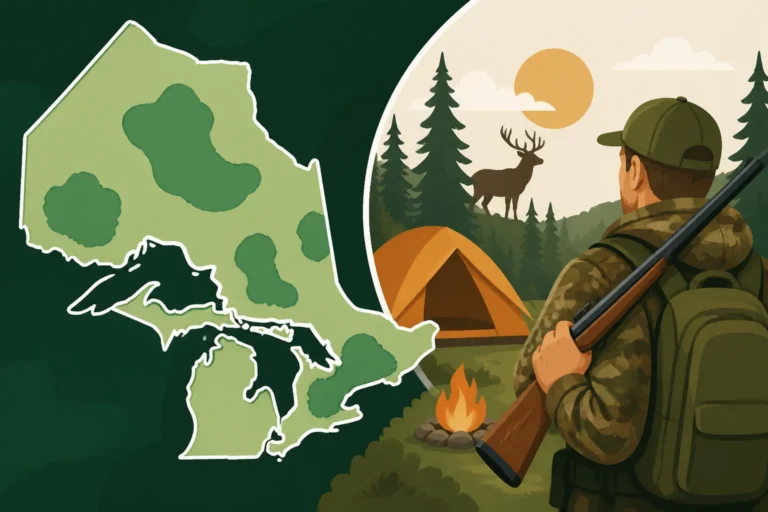
Hunting central Ontario's mixed forests can feel like trying to solve a puzzle with a constantly changing picture. It's not the vast, uninterrupted wilderness of the North, nor is it the neatly defined farm country of the South. Instead, you're faced with a beautiful, complex mosaic of hardwoods, conifers, swamps, fields, and bedrock that demands a flexible approach and a keen understanding of how game uses such diverse terrain. This guide is here to walk you through the nuances of this unique hunting landscape, helping you unlock its potential and navigate its challenges, from understanding the habitat to mastering the right techniques.
Understanding Central Ontario's Unique Landscape
Central Ontario’s mixed forest region is a truly fascinating place for anyone who loves the outdoors, and especially for hunters. It's where the raw, rugged beauty of the Canadian Shield starts to give way to the more rolling, fertile lands often associated with southern Ontario. This geographical sweet spot creates a habitat unlike any other in the province, offering both abundant game and a unique set of challenges that can test even the most seasoned hunters.
The Geographic Blend of Shield and Farmland
Imagine a landscape where ancient, Precambrian bedrock, scraped clean by glaciers, gives rise to vast tracts of forest, dotted with countless lakes and rocky outcrops. This is the Canadian Shield, dominant in the northern reaches of central Ontario. As you move south, however, this ruggedness softens. The land becomes less rocky, the soil deeper, and you begin to see more signs of human agriculture – small farms, pastureland, and fields of corn or soybeans. This creates a spectacular transition zone, often referred to as the "Shield fringe." You might be hunting a rocky, pine-studded ridge one minute, and within a few hundred yards, find yourself peering into a dense cedar swamp or across the edge of a standing cornfield. This blend provides an incredible array of food sources and cover types within a relatively small area, making it a hotspot for various game species that can adapt to both environments.
The intermingling of these two distinct geographical influences means that game animals, particularly deer, have access to a rich and varied diet. They can browse on woody stems and conifers in the bush, then shift to the high-energy crops found at the forest edges. This constant availability of different food sources contributes significantly to the health and size of the local wildlife populations. For hunters, it means needing to scout thoroughly and understand how game uses both the wild and the cultivated areas interchangeably throughout the seasons.
Navigating this mixed terrain also means being prepared for different travel conditions. Rocky hills can be steep and arduous, while low-lying areas might be boggy and wet. The transitions between these zones are often where you’ll find the most game movement, as animals travel between bedding areas in the dense forest and feeding grounds in the more open, fertile spots. Understanding these travel patterns, often funnelled by the terrain itself, is key to successful hunting in this blended landscape.
Dominant Tree Species and Their Impact
The "mixed forest" isn't just a catchy name; it truly reflects the botanical diversity of the region. Here, you'll find a delightful hodgepodge of tree species, each playing a critical role in shaping the habitat and influencing game movement. Dominant hardwoods like sugar maple, red oak, and American beech thrive on the richer soils, especially in the more southerly and fertile pockets. These deciduous trees are invaluable for their mast crops – acorns from oaks and beechnuts from beech trees – which are high-energy food sources that attract deer, bear, and other wildlife, particularly in the fall. A productive oak ridge can be an absolute magnet for whitetails once the acorns start dropping.
Interspersed with these hardwoods, and often dominating the more rocky or wetter areas, are various conifers. White pine, red pine, spruce, and balsam fir often form dense stands, providing crucial thermal cover during harsh winters and excellent bedding areas year-round. Cedar swamps, in particular, are vital wintering areas for deer, offering both shelter from deep snow and a consistent food source. Understanding where these different tree types grow can tell you a lot about where game animals will be at certain times of the year. For example, during a cold snap, deer will often seek out the dense protection of a pine plantation or a cedar swamp.
The transition zones between these different tree types are often where the magic happens. A hardwood ridge giving way to a conifer stand, or a pine plantation bordering a small field, creates a natural "edge habitat" that game animals love to frequent. These edges offer both food and cover within easy reach, making them prime locations for setting up a stand or planning a still-hunt. Paying close attention to the specific tree species and how they are distributed on your hunting property or Hunting Ontario's Crown Land can provide invaluable clues for patterning game.
Water Features and Topography
Central Ontario's mixed forests are absolutely riddled with water. We're talking about countless lakes, from massive bodies of water like Lake Simcoe or the larger Kawartha Lakes, to tiny, unnamed ponds tucked deep in the bush. Connecting these lakes are an intricate network of rivers, streams, and most notably, beaver flowages. Beavers are true engineers of the forest, and their dams and ponds create highly productive wetlands that are magnets for moose (further north), waterfowl, and a host of other wildlife. These watery expanses often act as natural barriers or funnels for game movement, dictating how animals travel through the landscape. A beaver dam can be a primary crossing point, creating a natural choke point for deer or bear.
Beyond the water, the topography itself is incredibly varied, reflecting that Shield-to-farmland transition. You’ll encounter everything from the dramatic, rocky ridges and granite outcrops of the Shield, to gently rolling hills, deep ravines, and extensive low-lying swamps and wetlands. This diverse terrain dictates visibility, travel routes, and where game animals will bed, feed, and seek refuge. Deer, for instance, might bed on the lee side of a rock ridge to escape the wind, or tuck into a dense cedar swamp to hide. Hunting a Beaver Meadow Crossing can be a productive strategy where these features converge.
Hunters must learn to "read" this diverse topography. A high vantage point on a ridge can offer excellent glassing opportunities, while a low-lying swamp might be the perfect spot to intercept deer moving between feeding and bedding areas. Understanding how water and land features interact is critical for predicting game movement. This is where tools like detailed topographic maps or modern hunting apps like onX Hunt truly shine. They allow you to visualize the elevation changes, locate water features, and identify potential funnels or pinch points even before you step foot in the woods, giving you a significant advantage in planning your hunt.
Key Game Species in Central Ontario's Mixed Forest
The diversity of Central Ontario's mixed forest habitat lends itself to a wide array of game species, making it a fantastic destination for various hunting pursuits. From the stealthy whitetail deer to the robust black bear and the spirited upland birds, this region offers unique opportunities for hunters willing to understand and adapt to its distinct environment. Each species leverages the mixed forest in its own way, seeking different types of cover, food, and security within the interwoven landscape of hardwoods, conifers, and wetlands.
Whitetail Deer Adaptation
Whitetail deer absolutely thrive in Central Ontario's mixed forest. This isn't surprising, as the blend of habitat types offers everything a deer needs: abundant food, excellent cover, and diverse terrain for evasion. The hardwoods provide critical mast crops like acorns and beechnuts, especially in the fall, which are high-energy foods that help deer pack on weight before winter. Alongside this, they browse on a wide variety of woody stems, forbs, and grasses found in forest openings, field edges, and cutovers. The proximity to agricultural fields, even small ones, offers supplementary food sources like corn and soybeans, boosting their nutritional intake and contributing to the region's reputation for growing quality deer. For more information, check out Why Southern Ontario Grows Heavy Bucks.
The cover available to whitetails here is equally diverse and crucial for their survival. Dense stands of pine and spruce offer thermal protection from cold winds and deep snow in winter, while also providing thick bedding areas year-round. Cedar swamps are particularly vital, acting as winter yarding areas where deer can find both shelter and browse when other food sources are buried. The constant intermingling of these dense cover types with more open hardwood stands or field edges creates a myriad of escape routes and hiding spots. This makes deer hunting both challenging and rewarding, as deer can easily disappear into the thick stuff at a moment's notice. Hunters often find deer utilizing the "edge" habitat where these cover types meet, moving between feeding in the more open areas and bedding in the security of the thickets.
Successfully hunting whitetails in this environment requires understanding their seasonal patterns and how they utilize specific habitat features. During the rut, bucks will cruise these mixed edges, checking doe groups in both the hardwoods and conifer stands. Scouting for rubs and scrapes along these transition lines can be highly productive. During early archery season, deer might still be heavily focused on specific food sources, while during late gun season, they'll prioritize dense cover for thermal protection. Adaptability and thorough scouting are your best allies when pursuing Whitetail Hunting in Ontario in this intricate landscape.
Black Bear Opportunities
Black bears are also very much at home in Central Ontario's mixed forests, finding the same habitat diversity appealing, albeit for different reasons than deer. The vast, often unfragmented forest tracts, particularly as you move north from the more agricultural zones, provide the seclusion bears crave. This region offers a smorgasbord of natural food sources that fuel their existence. In spring, bears emerge from their dens and seek out fresh green growth, often targeting new shoots in recent clearcuts or forest openings. As summer progresses, they shift their diet to a wide variety of berries—raspberries, blueberries, saskatoons—which are abundant in the understory of mixed forests.
As fall approaches, bears turn their attention to mast crops. The presence of oak and beech trees in the hardwood sections of the mixed forest makes these areas prime feeding grounds for bears, especially as they try to put on weight for hibernation. Finding a stand of mature oak or beech that is dropping nuts can be a significant indicator of bear activity. They will also readily visit agricultural fields, particularly cornfields, on the forest fringes, offering opportunistic feeding. This makes hunting the edges of these fields or adjacent bush lots potentially productive during the fall bear season. For a deeper dive, read Black Bear Hunting in Ontario.
Hunting black bears in this mixed forest often involves different strategies. While baiting is a common and effective method, requiring a specific setup and patience, still-hunting or spot-and-stalk can also be productive, particularly in areas with good natural food sources or along major travel corridors. Understanding bear sign—tracks, scat, overturned rocks, broken branches—is paramount. Looking for these indicators around berry patches, denning areas, or natural travel funnels that connect dense cover to food sources will be your best bet for encountering one of these magnificent animals.
Upland Bird Havens
Beyond big game, Central Ontario's mixed forest is a legitimate haven for upland birds, particularly ruffed grouse and American woodcock. This habitat offers the perfect blend of food, cover, and brooding areas that these birds require to thrive, making it an excellent destination for wingshooters. Ruffed grouse, in particular, are synonymous with this type of environment. They flourish in early successional forests, which are common in logged areas, old farm clearings, or disturbed patches within the mixed timber. They love dense thickets of young aspen, birch, and poplars, which provide both food (buds, catkins) and excellent cover from predators.
Hunting ruffed grouse often involves walking old logging roads, ATV trails, or forgotten bush paths that cut through these mixed stands. The edges where young growth meets mature timber, or where dense conifers border open areas, are classic grouse haunts. When hunting grouse, expect explosive flushes and quick shots. A good pointing or flushing dog can make all the difference, helping to locate birds tucked away in the thickest cover. For more details on this, check out Ruffed Grouse Hunting Ontario's Bush Roads.
American woodcock, while less common than grouse, also find ideal habitat in the mixed forests, especially in moist, rich bottomlands, alder swamps, and young, regenerating aspen stands. They feed on earthworms, probing the soft ground with their long bills. Woodcock are migratory, so timing your hunt to coincide with their fall migration can lead to exciting days in the field. Both species offer a dynamic and engaging hunting experience, demanding quick reflexes and a keen eye. The beauty of hunting upland birds in this region is the sheer diversity of cover you’ll walk through, always keeping you on your toes for what might flush next.
Navigating Access and Regulations in Central Ontario
Hunting in Central Ontario's mixed forest isn't just about understanding the game and the terrain; it's also about navigating the unique landscape of land ownership and the specific regulations that apply to this part of the province. Unlike the vast, uninterrupted tracts of Crown Land further north, or the predominantly private land of the deep south, central Ontario presents a patchwork quilt of public and private property, requiring careful planning and adherence to local rules.
Crown Land vs. Private Land Mix
One of the biggest distinctions you'll encounter when hunting Central Ontario is the fragmented nature of land ownership. While there's certainly a good amount of Crown Land available, especially as you head towards the Canadian Shield portion of the region, it's often broken up by private holdings, cottages, and small agricultural parcels. This means you can't simply assume that a stretch of woods is open to public hunting. It's not uncommon to find a beautiful section of accessible Crown Land bordered on all sides by private property, making access tricky or requiring specific entry points. To truly understand where you can legally hunt, it's absolutely essential to consult detailed maps that delineate public and private land boundaries.
This is where modern technology becomes an indispensable tool. Apps like onX Hunt or even detailed paper maps from the Ministry of Natural Resources and Forestry (MNRF) are crucial for identifying legal access points and avoiding accidental trespass. You can download land ownership maps directly to your device and know exactly where you stand, even without cell service in the deeper bush. Reading an Ontario WMU Map Before You Go is a great starting point for this. Failing to do your homework can lead to frustrating encounters with landowners or, worse, legal trouble. Always err on the side of caution: if you're not 100% sure it's public land, treat it as private and seek permission.
When considering private land, knocking on doors and asking for permission is a time-honoured tradition that still yields results in many areas. Landowners are often more receptive to polite, respectful hunters who ask in advance and demonstrate an understanding of their property. Building these relationships can open up exclusive hunting opportunities that simply aren't available on crowded public land. Remember, land is a privilege, not a right, and treating it with respect goes a long way towards fostering good hunter-landowner relations for everyone.
Wildlife Management Unit WMU Overview
Ontario is divided into numerous Wildlife Management Units (WMUs), and Central Ontario encompasses a range of these units, each with its own specific regulations and season dates. Understanding which WMU you plan to hunt in is not just important; it's absolutely critical. WMU boundaries often follow natural features like rivers, major highways, or distinct geographical lines, and they dictate everything from open seasons for certain species to bag limits, and even whether specific weapons are permitted (e.g., shotgun-only zones in more populated areas). Ontario's Wildlife Management Units provides a good overview.
Each WMU in the central region will have its own population dynamics and management objectives, which means that what's legal and available in one unit might be different just a few kilometers away in an adjacent unit. For example, some WMUs might offer specific antlerless deer tags through a draw system, while others might only permit antlered deer harvest during certain seasons. This localized management is designed to ensure sustainable hunting opportunities while managing wildlife populations effectively for that specific area.
Before you even plan your trip, your first step should always be to identify the specific WMU(s) you intend to hunt and then thoroughly review the current hunting regulations summary for that unit. This document, available online through the provincial government, is your ultimate authority on legal hunting practices. Ignorance of the rules is never an excuse, and violations can carry significant penalties. Taking the time to understand your WMU is a fundamental aspect of responsible hunting in Central Ontario.
Specific Season Dates and Tag Considerations
The hunting calendar in Central Ontario's mixed forest is diverse, with seasons for various species opening and closing at different times, often with specific limitations. For whitetail deer, for instance, you'll typically find an archery season, a general gun season, and sometimes a late muzzleloader season. The exact start and end dates for these seasons will vary by WMU, and they can also differ depending on whether you're hunting within a controlled hunt area or participating in an antlerless deer draw. Ontario Deer Season Dates and Tags is a vital resource.
Black bear seasons typically have a spring hunt and a fall hunt. The fall hunt often coincides with deer season in some areas, offering combination hunt opportunities. Upland birds like grouse and woodcock usually have a longer, more continuous fall season. It's imperative to consult the official Hunting Regulations Summary for the most up-to-date and specific dates for the WMU you plan to hunt. Do not rely on outdated information or hearsay.
Beyond season dates, tag considerations are equally important. For moose and elk (where available through specific draws), a successful draw application is required to obtain a tag. For deer, while resident licences typically include a basic tag, additional antlerless tags or controlled hunt validations often require a separate application process or draw. Even for small game, you need the appropriate licence. Always ensure you have the correct licence and tags for the species you are pursuing, and understand any specific conditions attached to them, such as antler point restrictions or geographical limitations. Proper tag notching and attachment rules are also critical to avoid violations.
Essential Scouting Strategies for Mixed Forests
Scouting is the cornerstone of successful hunting, and in Central Ontario's mixed forests, it becomes an art form. The diverse landscape, with its blend of hardwoods, conifers, water features, and agricultural fringes, means that game animals have a myriad of options for food, cover, and travel. To consistently find success, you need to understand how to read this complex environment and predict game movement, often long before you ever carry a weapon into the woods.
Reading the Landscape for Deer Sign
When hunting whitetail deer in the mixed forest, your boots-on-the-ground scouting needs to be hyper-focused on interpreting the subtle (and sometimes not-so-subtle) clues deer leave behind. Start by identifying the transition zones – where a dense cedar swamp meets a mature oak ridge, or a pine plantation borders a fallow field. These "edges" are natural travel corridors and often hotspots for activity. Look for well-used trails that connect bedding areas (often in thick conifers or swamps) to feeding areas (hardwoods dropping mast, or nearby agricultural fields). These trails will be worn down, often showing hoof prints. Hunting a Cedar Swamp Edge is a prime example of where to focus.
As you scout, keep an eye out for fresh deer sign. Rubs, where bucks scrape their antlers on small trees, indicate territorial marking and active buck movement. The freshness of a rub can tell you if a buck is currently in the area. Scrapes, patches of ground pawed clear by deer, often with an overhanging branch (licking branch) above it, are communication hubs. Fresh scrapes, especially those with strong urine odor, are exciting finds. Also, look for droppings (feces) to confirm species presence and estimate numbers. Different shapes and sizes can sometimes give clues to the deer's diet or even size.
Pay attention to bedding areas. In mixed forests, deer often bed in the thickest cover available, whether it's a dense stand of young pines, a thicket of tangled alders, or a cedar swamp. They will often choose spots that offer good visibility downwind or that provide thermal protection from the elements. By connecting these bedding areas to known food sources via visible trails, you can start to piece together a map of deer movement and identify prime stand locations or ambush points. Using mapping apps like onX Hunt during your scouting trips allows you to mark these findings directly on your map, building an invaluable database of information.
Locating Bear Hotspots
Locating black bear hotspots in Central Ontario's mixed forest revolves heavily around understanding their seasonal diet and movement patterns. Bears are highly opportunistic feeders, and their location will shift dramatically throughout the year based on food availability. In the spring, after emerging from hibernation, they'll often be found in areas with fresh green growth, like regenerating clearcuts, south-facing slopes, or open marshes where early plant life emerges. They'll also actively seek out carrion.
As summer progresses, focus your scouting efforts on areas rich in berries. Wild raspberries, blueberries, and saskatoons are common in the understory of mixed forests, especially in areas with good sunlight penetration. Identifying large, productive berry patches is a key strategy. Look for overturned rocks, ripped-apart stumps, and large piles of scat filled with berry seeds, which are clear indicators of recent bear feeding. The timing of berry ripening can vary, so local knowledge or late-season scouting is crucial.
In the fall, the presence of mast crops becomes paramount. If there are mature red oak or American beech trees in your hunting area, scout these stands intensively for acorns or beechnuts. Bears will concentrate heavily in these areas when the nuts begin to drop. Look for fresh tracks, chewed nuts, and scat. Additionally, if your hunting area borders agricultural fields, particularly cornfields, bears will often visit these fields at night. Scouting the edges of these fields for tracks where bears enter and exit the bush can reveal prime ambush locations. A platform like GoHunt can help you identify areas with specific tree types or proximity to agricultural zones.
Leveraging Technology for Scouting
In today's hunting world, leveraging technology for scouting is not just an advantage; it's practically a necessity, especially in the complex mixed forests of Central Ontario. Digital mapping applications, like onX Hunt, have revolutionized how hunters approach preseason scouting and in-season navigation. These apps allow you to view detailed satellite imagery, topographic maps, and land ownership layers directly on your smartphone or tablet. Before you even set foot in the woods, you can identify potential bedding areas (dense cover), feeding zones (hardwood ridges, clearcuts, agricultural fields), travel corridors (creek bottoms, saddles, fencelines), and key pinch points or funnels.
Platforms like GoHunt offer even more data layers, sometimes including information on soil types, prevailing winds, and historical harvest data for certain regions. By combining satellite imagery with topographic lines, you can discern subtle elevation changes that might dictate deer movement, identify hidden water sources, or locate old logging roads that offer access into otherwise inaccessible areas. You can digitally mark potential stand sites, known game trails, and other points of interest from your couch, saving invaluable time and effort once you're in the field. This also allows you to plan your approach routes carefully, considering wind direction and minimizing disturbance.
Once you are in the field, these apps transform into powerful navigation tools. They track your precise location, allowing you to confirm boundaries, navigate dense bush, and easily return to marked locations. This is particularly useful in central Ontario's mixed forest where landmarks can be sparse and getting turned around is a real possibility. Scouting With Satellite Imagery in Ontario before you go is a vital first step, and having your map downloaded for offline use ensures you have access to your data even when cell service disappears deep in the wilderness. This technological edge provides a level of precision and confidence that traditional paper maps simply can't match.
Effective Hunting Techniques for Central Ontario's Terrain
Hunting the mixed forests of Central Ontario requires a versatile approach. The terrain's unique blend of dense cover, open hardwoods, and interspersed fields means that no single technique will consistently work everywhere. Successful hunters here are those who can adapt their strategies to the specific conditions of the day, the habitat they are in, and the behaviour of the game they pursue. From quiet still-hunting to strategic stand placement and effective calling, a multi-faceted skillset is your greatest asset.
Still-Hunting and Stand Placement
Still-hunting is a highly effective, yet often underutilized, technique for the mixed forests. It involves moving through the woods extremely slowly and deliberately, pausing frequently to scan the environment, listen for subtle sounds, and meticulously search for game. This method works particularly well in areas with variable cover—a mature hardwood stand transitioning into a thick pine block, for example—where animals might be browsing or moving quietly. The key is to use the wind to your advantage, moving into it or with a crosswind, and to blend into the surroundings. Take only a few steps, then stop, look, and listen for several minutes. Use binoculars to pick apart dense cover. This allows you to cover ground while still being acutely aware of your surroundings, increasing your chances of spotting game before it spots you.
Stand placement, whether for a treestand or a ground blind, is another critical element, especially for whitetail deer. In mixed forests, look for natural funnels and pinch points where deer movement is concentrated. These could be saddles between ridges, narrow strips of timber connecting two larger woodlots, or the edges of dense swamps where deer cross. Identifying these high-traffic areas requires diligent scouting. Once a funnel is identified, choose a stand location that offers good shot lanes, provides cover for yourself, and allows you to approach and exit without disturbing the area. Wind direction is paramount, as deer have an incredible sense of smell. Hanging a Stand on an Ontario Bush Edge is often a highly productive strategy.
Consider the time of year and the primary food sources. Early season might see stands placed near apple trees or small agricultural fields, while during the rut, locations along known buck travel routes between doe bedding areas might be more effective. For gun hunting, a well-positioned ground blind offering wider fields of view can be excellent, especially if you can tuck it into a natural brush pile or under a large conifer. In areas with high hunting pressure, stands placed further off the beaten path, deep within overlooked pockets of thick cover, can often yield surprising results.
Driving and Pushing Small Bush Lots
In Central Ontario's mixed forest, particularly where public and private land creates smaller, fragmented woodlots, or where dense pockets of cover are nestled among more open areas, deer drives can be an incredibly effective tactic. This is especially true during the later parts of the gun season when deer are seeking refuge in thick thermal cover. A small drive, involving just three or four hunters, can be used to push deer out of dense cedar swamps, pine plantations, or brushy ravines towards waiting standers. The effectiveness comes from understanding how deer will naturally try to escape and positioning hunters accordingly.
The key to a successful drive is planning and communication. The "drivers" move slowly and deliberately through the cover, making noise to encourage deer to move, but not so fast that deer bolt unseen. The "standers" are positioned at likely escape routes—trails, fencelines, bottlenecks, or open edges—where deer might slip out. It's crucial to know the boundaries of the property and to have clear, safe shooting lanes. Safety is paramount, and all participants must be aware of each other's positions and the direction of the drive. For larger groups, Deer Drives With Three or Four Hunters explains how to maximize success.
This technique is less about random pushing and more about strategic pressure. By creating controlled movement, you can make deer move on your terms. This strategy can be particularly potent when applied to those thick, uninviting patches of bush that other hunters often walk past. A small group working a dense cover block adjacent to a cornfield or a hardwood ridge can often produce deer that have been holed up and overlooked. Remember, always have a clear plan, communicate constantly, and prioritize safety above all else.
Calling Strategies for Deer and Bear
Calling can be a highly effective tactic in Central Ontario's mixed forests for both deer and black bear, leveraging the dense cover to your advantage. For whitetail deer, a variety of calls can be used throughout the season. Early in the fall, fawn bleats or doe bleats can pique the curiosity of other deer, especially does looking for their fawns or young bucks looking for does. As the rut approaches and peaks, grunts become incredibly effective. A series of short, aggressive buck grunts can challenge a mature buck, drawing him in to investigate the "intruder." Doe in heat bleats can also work wonders, attracting bucks looking for receptive does. Rattling and Calling Ontario Whitetails delves into this further.
Rattling antlers can simulate two bucks fighting, a powerful attractant for curious or territorial bucks during the rut. In the mixed forest, with its varying cover, controlling the volume of your rattling is important. In thick areas, subtle rattling might be more appropriate, as deer won't be able to see far and might be wary of loud, unseen noises. On the other hand, in more open hardwood stands, you might be able to get away with more aggressive sequences to carry the sound further. The key is to be patient after a calling sequence; deer often approach cautiously, taking their time to circle downwind before presenting themselves.
For black bear, calling can also be productive, particularly using distress calls that imitate a fawn or rabbit in distress. Bears are opportunistic predators, and these sounds can draw them in, especially during the spring and fall. When calling for bears, set yourself up with a good backstop, ideally elevated in a treestand, and be prepared for a quick shot. Bears will often approach silently and quickly, so constant vigilance is essential. Understanding the specific behaviours and vocalizations of each species, and practicing your calls to sound as natural as possible, will significantly increase your success rates in these diverse woodlands.
Gear and Preparedness for Mixed Forest Hunting
Hunting in Central Ontario's mixed forest means being prepared for a bit of everything. The variability in terrain, weather, and game activity demands a thoughtful approach to gear and safety. You're not just dealing with deep wilderness or open fields; you're navigating a dynamic environment that can throw a wide range of challenges your way. Having the right equipment and knowing how to use it isn't just about comfort—it's about effectiveness and, more importantly, safety.
Appropriate Clothing and Footwear
The weather in Central Ontario, especially during the fall hunting seasons, can be notoriously unpredictable. You might start your day with a crisp, frosty morning, experience a sunny, mild afternoon, and then be hit with a sudden cold rain or even an early snowfall. Therefore, layering is absolutely crucial. Start with a moisture-wicking base layer to manage sweat, add an insulating mid-layer (fleece or synthetic down) for warmth, and top it off with a waterproof and windproof outer shell. Having options allows you to adjust to changing conditions, preventing both chilling and overheating. Remember that Ontario requires specific amounts of blaze orange during gun seasons, so incorporate this into your outer layer. How Much Blaze Orange Ontario Requires details the rules.
Footwear is arguably one of the most important gear choices for mixed forest hunting. You'll be traversing rocky terrain, potentially slogging through wet beaver ponds or muddy lowlands, and navigating dense undergrowth. Waterproof, insulated boots with good ankle support are non-negotiable. Look for boots designed for rugged terrain, with aggressive tread for traction. Consider the expected temperatures; early season might call for lighter insulation, while late season demands heavier, warmer boots. Good quality wool or synthetic socks are also vital for keeping your feet dry and blister-free. Carrying an extra pair of socks in your pack can be a game-changer on a long, wet day.
Gloves and a hat are also often overlooked essentials. A warm, comfortable hat prevents significant heat loss, and convertible gloves (fingerless with a mitten cover) offer both warmth and dexterity for handling your firearm or bow. Being cold and uncomfortable will severely impact your focus and ability to hunt effectively. Investing in quality, purpose-built hunting clothing designed for active pursuit in varying temperatures will pay dividends in this challenging environment.
Navigation and Safety Essentials
Getting turned around in Central Ontario's mixed forest is a very real possibility, even for experienced woodsmen. The terrain can be disorienting, with thick stands of conifers limiting visibility and endless tracts of similar-looking hardwoods. Therefore, reliable navigation tools are absolutely non-negotiable. A GPS unit (either a dedicated handheld device or a mapping app like onX Hunt on your phone) is paramount. Make sure your phone is fully charged, and carry a portable power bank. Always download your maps for offline use before heading into areas with no cell service. While technology is great, always carry a physical compass and a paper map of your hunting area as a backup. Knowing how to use them without a screen is a critical survival skill.
Beyond navigation, a comprehensive safety kit should always accompany you. This includes:
- First-aid kit: Stocked for common injuries, including blister treatment, bandages, pain relievers, and any personal medications.
- Signaling devices: A whistle (three short blasts is a universal distress signal), a mirror, or a personal locator beacon (PLB) for remote areas.
- Fire-starting kit: Waterproof matches, a lighter, and some form of tinder. Even a small emergency fire can be crucial for warmth and morale.
- Extra food and water: Energy bars, nuts, and enough water to sustain you for at least a day longer than planned. A water filter can be invaluable.
- Headlamp or flashlight: With extra batteries, even if you plan to be out before dark.
- Knife or multi-tool: For various tasks.
Always tell someone your hunting plan – where you're going, your intended route, and when you expect to return. This "float plan" is a simple but critical safety measure. In a truly remote area, especially in the northern parts of central Ontario, consider carrying a satellite communication device like a Garmin InReach for two-way messaging and SOS capabilities. It's about preparedness, not paranoia, especially when you're alone in unforgiving terrain.
Firearm and Archery Considerations
The mixed forest environment of Central Ontario presents unique considerations for your choice of firearm or archery equipment. For rifle hunters, shot distances can vary dramatically. You might have a clear 100-yard shot across a hardwood flat, or a tight 30-yard opportunity in dense cedar. This calls for a versatile caliber that performs well at both close and moderate ranges, with enough knockdown power for deer or bear. Brush guns or rifles chambered in cartridges known for good performance in heavy cover might be advantageous. Always ensure your rifle is sighted in and that you are proficient with it at various distances. Remember, legal firearm calibres and shot restrictions vary by WMU, so confirm what's allowed in your specific area. Legal Rifle Calibres for Big Game has more information.
For shotgun hunters, especially in areas with shotgun-only restrictions or during specific seasons, slugs are the projectile of choice for deer and bear. Modern slug guns with rifled barrels and saboted slugs offer impressive accuracy out to 150 yards or more, making them a formidable option. For upland birds, a reliable 12 or 20 gauge shotgun with appropriate shot sizes (e.g., 7.5 or 6 for grouse/woodcock) is essential for those quick, close-range flushes.
Archery hunters will find the dense cover both challenging and beneficial. It allows for closer stalks but demands extreme precision and patience for a clear shot. A compound bow with enough draw weight for ethical big game hunting is standard. Broadhead selection is also crucial; choose sharp, reliable broadheads that will perform well on deer or bear. For crossbow hunters, When a Crossbow Is Legal to Use will clarify the specific regulations. Regardless of your weapon choice, practice, practice, practice! Know your effective range, understand your limitations in dense cover, and always prioritize an ethical, clean shot. The mixed forest will test your skills, so be ready.
Respecting the Environment and Other Users
Hunting in Central Ontario's mixed forest is a privilege that comes with significant responsibilities. Beyond understanding the game and perfecting your techniques, it's crucial to uphold ethical standards, respect land ownership, and foster positive relationships with other outdoor enthusiasts. The future of hunting depends on our collective commitment to responsible practices and being good stewards of the land and its wildlife.
Ethical Hunting Practices
At the heart of every hunt should be a deep respect for the animals we pursue and the environment they call home. Ethical hunting practices are non-negotiable. This starts with a commitment to clean, quick kills. Only take shots within your effective range, and ensure you have a clear, unobstructed path to the vital organs. Rushing a shot or taking a low-percentage gamble can lead to wounded animals and prolonged suffering, which is antithetical to ethical hunting. If you do wound an animal, relentless pursuit and recovery are your absolute moral obligation, no matter how challenging the tracking might be. Meat Care in Ontario's Warm Early Seasons can help ensure your hard work translates to quality food.
Beyond the shot, it's about minimizing your impact on the landscape. This means packing out everything you pack in, leaving no trash, spent casings, or other refuse. Leave the forest as, or better than, you found it. Respecting regulations, such as bag limits, season dates, and legal hunting hours, is also a fundamental aspect of ethical hunting. These rules are in place for a reason—to ensure sustainable wildlife populations for future generations. Taking more than your limit or hunting out of season not only is illegal but undermines the very principles of conservation.
Finally, ethical hunting extends to how you handle your harvested game. Proper field dressing, cooling, and transportation of meat ensure that the animal is not wasted. This respect for the animal continues through its processing and consumption. Being an ethical hunter means more than just following the law; it means embodying a deep sense of responsibility and stewardship towards wildlife and wild places.
Landowner Relations and Public Perception
In Central Ontario's mixed forest, where private and public lands often intertwine, maintaining excellent landowner relations is paramount. Hunters who treat private property with respect, always ask for permission before entering, and abide by any landowner-specific rules are invaluable. A simple knock on the door, a polite request, and a promise to be respectful can open up fantastic hunting opportunities that would otherwise be inaccessible. Conversely, hunters who trespass, leave garbage, or cause damage contribute to a negative perception of all hunters, making it harder for everyone to secure access.
The optics of hunting matter. Public perception of hunting is constantly under scrutiny, and individual hunters are ambassadors for the entire hunting community. Being visible, respectful, and responsible in the field helps foster a positive image. This means adhering to safety rules, especially when near roads or populated areas, and being mindful of non-hunters you might encounter. If you get permission to hunt private land, consider offering the landowner some fresh game meat as a token of appreciation—it can go a long way in building trust and securing future access.
Good landowner relations aren't just about gaining access; they're about being a good neighbour and understanding that you are a guest on someone else's property. Always close gates, avoid driving on wet fields, and be aware of any livestock or pets. A small act of kindness or consideration can make a huge difference. By being courteous, respectful, and responsible, you not only improve your own hunting opportunities but also strengthen the public image of hunting as a whole. Ontario Trespass and Landowner Law is worth reviewing to ensure you understand your responsibilities.
Sharing the Outdoors
Central Ontario's mixed forests are not exclusively for hunters. These lands are shared by a diverse array of outdoor enthusiasts: hikers enjoying scenic trails, campers seeking solace, birdwatchers observing wildlife, ATV riders exploring designated routes, and many others. As hunters, we are just one group among many who appreciate and utilize these natural spaces. Therefore, it is crucial to cultivate a spirit of respect and coexistence with all other users.
This means being visible and polite. If you're hunting during a gun season, your blaze orange is not just for safety from other hunters, but also a clear signal to non-hunters that you are engaged in an active hunt. A friendly nod, a wave, or a brief, polite explanation of what you're doing can defuse potential tension and foster understanding. Avoid confronting or being aggressive with non-hunters, even if you feel they are infringing on your activity. De-escalation and courtesy are always the best approaches.
Awareness of your surroundings extends beyond just game animals. Be mindful of established trails, campsites, and other areas commonly used by non-hunters. Avoid hunting directly in these high-traffic zones, and if you encounter others, give them ample space and time. Our shared love for the outdoors should unite us, not divide us. By actively promoting a respectful, safe, and collaborative approach to sharing these precious resources, hunters can help ensure that access to Central Ontario's beautiful mixed forests remains open and enjoyable for everyone, for generations to come.
Seasonal Hunting Strategies in Central Ontario's Mixed Forest
| Season | Key Considerations for Mixed Forest | Primary Game Focus | Recommended Tactics |
|---|---|---|---|
| Early Fall | Mild weather, abundant natural food (berries, early mast crops), dense foliage. | Whitetail Deer, Bear, Grouse, Woodcock | Deer: Focus on food sources (apple orchards, early mast, field edges). Still-hunt open hardwoods. Bear: Baiting, spot-and-stalk around berry patches or active cornfields. Birds: Walk old logging roads, clearcuts for grouse; moist bottomlands for woodcock. |
| Mid-Fall (Rut) | Cooling temperatures, dropping leaves, peak deer rut activity, bear focusing on mast. | Whitetail Deer, Bear | Deer: Focus on rubs, scrapes, and travel corridors between bedding and feeding. Use grunts and rattling. Stand hunt bottlenecks. Bear: Focus on oak/beech ridges. Birds: Still good, but foliage thinning. |
| Late Fall | Cold weather, often snow, minimal foliage, game seeking thermal cover and remaining food. | Whitetail Deer, Bear | Deer: Focus on dense conifer stands (pine, cedar swamps) for bedding. Drives in thick cover. Hunt field edges with remaining crops. Bear: Very active around last mast crops before hibernation; late baiting. Birds: Concentrate in thicker cover for warmth. |
| Winter | Deep snow (further north), extreme cold. Limited hunting opportunities for some species. | Small Game, Predators | Deer: Not typically open (check specific WMU dates). Small Game: Rabbit and hare hunting in dense thickets (running beagles). Predators: Coyote and wolf hunting (calling, tracking). |
Disclaimer
This article is for general informational purposes only and does not constitute professional advice. Laws, prices and regulations vary by location and change over time. Consult a qualified professional for guidance on your specific situation.