Why Lake St. Clair Draws So Many Ducks
If you've spent any time at all talking to waterfowl hunters in Ontario, or even just glancing at a map, one place always seems to come up: Lake St. Clair. It's a name whispered with reverence, a true duck factory that consistently draws an incredible number of birds year after year. For many, it's a mystery why this particular body of water shines so brightly, but I'm here to tell you it's no accident. This guide will take a deep dive into the unique environmental factors, habitat, and migratory significance that make Lake St. Clair an absolute mecca for ducks.
The Geography and Habitat Advantage of Lake St. Clair
It's truly something special, this lake. While it might be nestled between two Great Lakes giants, Erie and Huron, Lake St. Clair has its own distinct personality, and it's one that ducks absolutely adore. We're talking about a massive, shallow basin that functions less like a deep freshwater sea and more like a colossal, interconnected wetland.
Shallow Waters and Abundant Food Sources
One of the biggest secrets to Lake St. Clair's success as a waterfowl magnet lies in its remarkably shallow average depth. We're talking about an average of only around 10 feet. Compare that to the hundreds of feet in Lake Erie or Huron, and you start to understand why it’s so different. This shallow nature means that sunlight penetrates deep into the water column, fueling an explosion of submerged aquatic vegetation (SAV) – essentially, duck food.
Imagine an underwater garden sprawling for hundreds of square miles. That's Lake St. Clair. We're talking about dense beds of wild celery, sago pondweed, and various milfoil species. These aren't just pretty plants; they are prime caloric sources for thousands upon thousands of ducks. Dabbling ducks, those wonderful birds that tip up to feed without fully submerging, find this a literal all-you-can-eat buffet. They can easily reach the tender shoots and tubers. Even diving ducks, which typically prefer deeper waters, can feast here because the abundant food is still within their reach. This rich, accessible food supply is the foundational reason so many ducks choose to stage and feed here.
A Key Stop on the Mississippi Flyway
Location, location, location. It’s not just important in real estate; it's paramount for migratory birds. Lake St. Clair isn't just a random spot on the map; it's a critical staging area perfectly positioned along one of North America's major avian highways: the Mississippi Flyway. Think of it as a crucial rest stop with five-star dining and lodging for birds making their epic journey south from the boreal forests of Canada down to the Gulf Coast.
As the fall migration kicks into high gear, ducks, geese, and other waterfowl funnel down from their northern breeding grounds. Lake St. Clair acts as an irresistible beacon, drawing them in with its promise of abundant food and safe haven. The lake’s unique position, almost like a natural hourglass choke point, concentrates an incredible volume of birds. They spend days, sometimes weeks, here, gorging themselves on the prolific vegetation, building up fat reserves necessary for the next leg of their journey. Understanding this migratory pattern is key to understanding Ontario's Ducks and Geese by Flyway and why Lake St. Clair plays such a pivotal role.
Diverse Duck Species and Why They Thrive Here
It's not just a lot of ducks that come to Lake St. Clair; it's a stunning variety of ducks. The diverse habitats within the lake ecosystem cater to the specific needs of many different species, making it a true melting pot of waterfowl.
Dabblers' Delight: Puddle Ducks in the Marshes
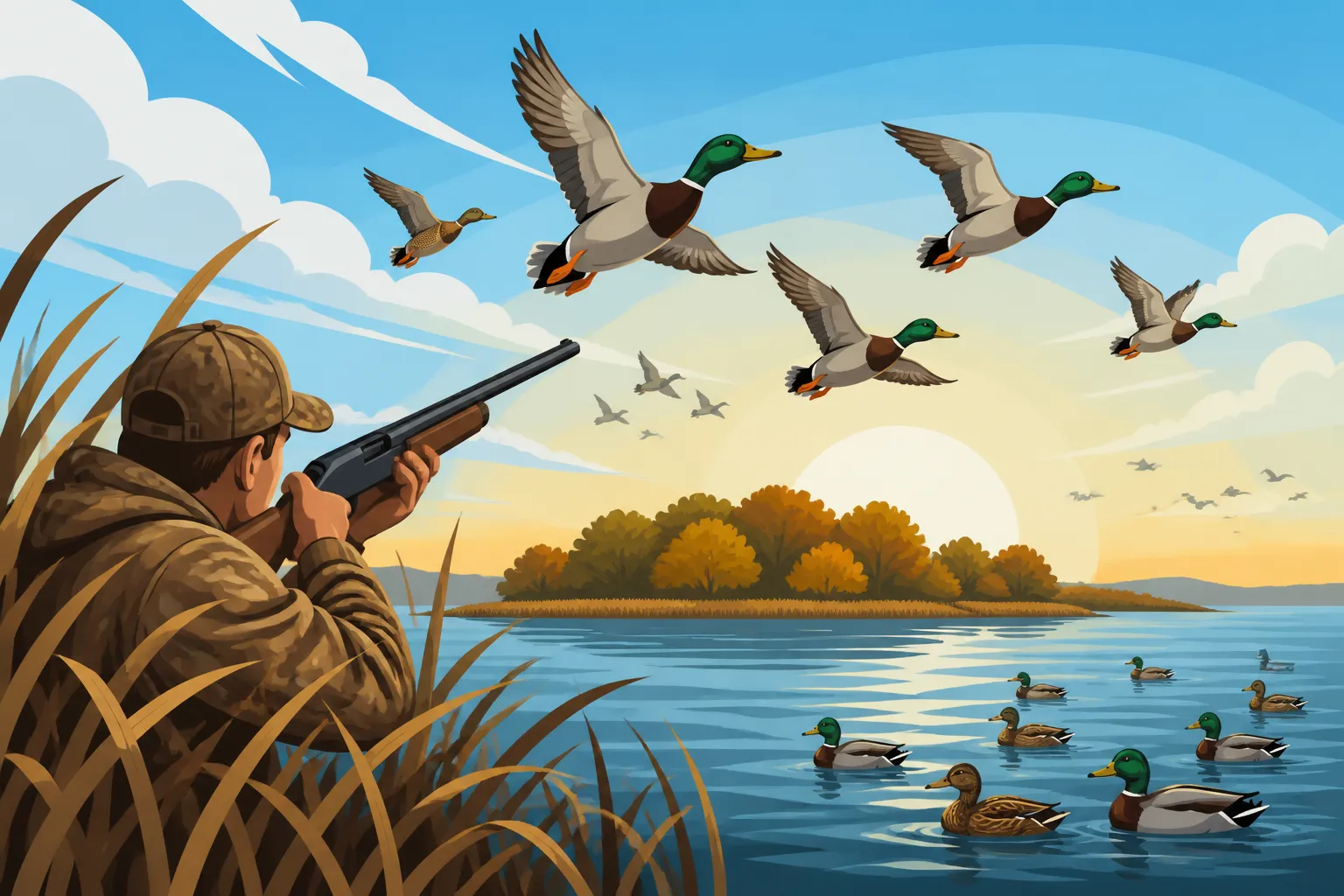
When you think of a classic duck hunt, often you're picturing dabbling ducks – the ones that land on the water, bob their heads, and tip up their tails to feed. Lake St. Clair's extensive marshlands, bayous, and shallow edges provide the perfect environment for these species. Mallards, with their iconic green heads, are plentiful, as are the stunning Wood Ducks, the speedy Pintails, and both Green-winged and Blue-winged Teal.
These ducks thrive on the diverse food found in the shallower, marshier areas. They're not just eating submerged vegetation; they're also feasting on insects, snails, and various seeds found in the muddy bottoms and along the vegetated edges. The complex network of cattails, phragmites, and other emergent vegetation offers crucial cover from predators and wind, creating a safe and sheltered environment for these birds to feed and rest. It’s a dynamic, ever-changing landscape that truly caters to their specific biological needs.
Divers' Paradise: Deep Water Foragers
While the shallow marshes might be heaven for dabblers, Lake St. Clair also holds significant appeal for diving ducks. Even though the lake is generally shallow, it still has deeper channels, expansive open water, and areas with unique bottom compositions that divers love. Species like the regal Canvasback, the striking Redhead, various Scaup (Greater and Lesser), and Ring-necked Ducks flock to these areas.
Diving ducks are powerful swimmers, capable of submerging themselves completely to forage for food on the lake bottom. In Lake St. Clair, this means access to those deeper beds of wild celery and other SAV that even dabblers can't reach. Many diving ducks also have a taste for small mollusks and aquatic insects, which are abundant in certain areas of the lake. It's no secret that some of the largest concentrations of Canvasbacks, often referred to as "King of the Ducks," can be found here during migration. This is precisely Where Canvasbacks Raft in Ontario, with vast rafts of these majestic birds sometimes numbering in the tens of thousands. The open water provides them safety from shore-based predators, while the rich, deep-water food sources keep them well-fed and ready for their long journey.
The Human Element: Conservation and Management
While natural factors are certainly paramount, the human role in protecting and managing Lake St. Clair's waterfowl resources cannot be overlooked. This area has a rich history, and current efforts are vital to its continued success.
Historical Significance and Ongoing Efforts
Lake St. Clair has been a significant area for waterfowl for centuries, even long before modern hunting regulations. Its bounty was well-known to Indigenous peoples and early settlers alike. Unfortunately, like many productive waterfowl areas, it also saw periods of intense market hunting that significantly impacted populations. However, lessons were learned, and today, Lake St. Clair benefits from robust conservation and management efforts.
Various conservation organizations, often working in conjunction with government agencies, are actively involved in wetland restoration and protection projects around the lake. This includes projects to combat invasive species like phragmites that can choke out native vegetation, and efforts to improve water quality, which directly benefits the growth of crucial SAV. Private landowners with riparian properties and local conservation authorities also play a crucial role, often managing their lands to provide additional habitat, refuge, and food sources for migrating birds. These collective efforts ensure that Lake St. Clair remains a vibrant ecosystem capable of supporting millions of migratory birds.
Hunter Pressure and Management Zones
It's only natural that such a productive area would attract a significant number of waterfowl hunters. Lake St. Clair sees considerable hunting pressure, particularly during peak migration periods. This isn't necessarily a bad thing, as hunters are often some of the most ardent conservationists, but it does necessitate careful management to ensure sustainable harvests and minimize disturbance to the birds.
Specific areas of Lake St. Clair may have different regulations or management zones. For instance, some sections might be designated as waterfowl refuges where hunting is prohibited, providing undisturbed resting areas for birds. Other areas might have restrictions on motor size, hunting methods, or shooting hours. Hunters often use specialized tools, like the mapping features on GoHunt, to help navigate these complex regulations and identify public hunting access points while respecting private property. Understanding these nuances is crucial for any hunter looking to enjoy the vast opportunities Lake St. Clair presents, and for ensuring the resource remains healthy for future generations. For example, knowing the specific rules for Layout Hunting on Lake St. Clair is essential to staying legal and safe.
Tips for Hunting Lake St. Clair
If you're planning a trip to this incredible waterfowl destination, a little preparation goes a long way. The sheer size and diversity of Lake St. Clair can be intimidating, but with the right approach, it can be an unforgettable experience.
Scouting and Preparation
Effective scouting is absolutely paramount for a successful Lake St. Clair hunt. This isn't your average farm pond; it's an inland sea. You can't just show up on opening day and expect to find birds. Pre-season work is key. Take time to observe bird movements, identify common flight paths, and note where birds are feeding and resting. Pay close attention to current water levels, as even small fluctuations can drastically alter where ducks choose to be.
Utilizing modern mapping and scouting tools, such as the detailed satellite imagery and property boundaries found on GoHunt, can be a game-changer. You can virtually scout for shallow flats, hidden marsh pockets, and potential access points from the comfort of your home. Identify likely feeding areas, note prevailing wind directions for potential setups, and understand boat launch locations. Also, ensure your boat is up to the task. Lake St. Clair can get rough very quickly, so a sturdy boat suitable for big water, with all required safety gear, is essential. Understanding the best practices for Scouting Fields for Ontario Waterfowl will give you a significant advantage, even when applied to a large body of water like this.
Decoy Spreads and Calling Strategies
Given the vastness of Lake St. Clair, your decoy spread needs to command attention. For dabblers in the marshier areas, a spread of 3-4 dozen decoys is often a good starting point, focusing on species like mallards, pintails, and wigeon. For divers in open water, bigger is often better. Spreads of 50-100 diver decoys are not uncommon, often set in long lines or J-hook patterns to guide birds into your shooting zone. Motion decoys, like spinning-wing decoys or jerk strings, can add crucial realism, especially on calm days. Always set up your spread to account for the prevailing wind, ensuring incoming birds have a clear landing zone into your decoys.
Calling on Lake St. Clair can be a mixed bag. Early in the season, enthusiastic calling for mallards and geese can be effective. As the season progresses and birds become more call-shy, subtle clucks, feed calls, and single quacks may be more productive. For divers, less is often more. The 'burr' call of a Canvasback or a gentle purr can sometimes entice them, but often a well-placed spread in a feeding area is all you need. Always adapt your calling to the birds' response and the conditions of the day.
| Duck Species | Primary Feeding Habit | Preferred Lake St. Clair Habitat | Key Food Sources |
|---|---|---|---|
| Mallard | Dabbler (tips up) | Shallow marshes, vegetated edges, bayous | Seeds, aquatic insects, tubers, grains |
| Wood Duck | Dabbler (tips up) | Sheltered backwaters, wooded swamp edges | Acorns, seeds, aquatic insects |
| Northern Pintail | Dabbler (tips up) | Open shallow flats, flooded fields | Seeds, tubers, aquatic invertebrates |
| Green-winged Teal | Dabbler (tips up) | Very shallow marsh puddles, mud flats | Small seeds, aquatic insects, snails |
| Canvasback | Diver (submerges) | Open water, deeper channels, large flats | Wild celery tubers, other submerged plants |
| Redhead | Diver (submerges) | Open water with extensive SAV beds | Submerged plants, some aquatic insects |
| Greater/Lesser Scaup | Diver (submerges) | Deeper open water, extensive mudflats | Mussels, snails, aquatic insects, some plants |
| Ring-necked Duck | Diver (submerges) | Marsh edges, small open ponds, channels | Seeds, tubers, aquatic insects |
Disclaimer
This article is for general informational purposes only and does not constitute professional advice. Laws, prices and regulations vary by location and change over time. Consult a qualified professional for guidance on your specific situation.