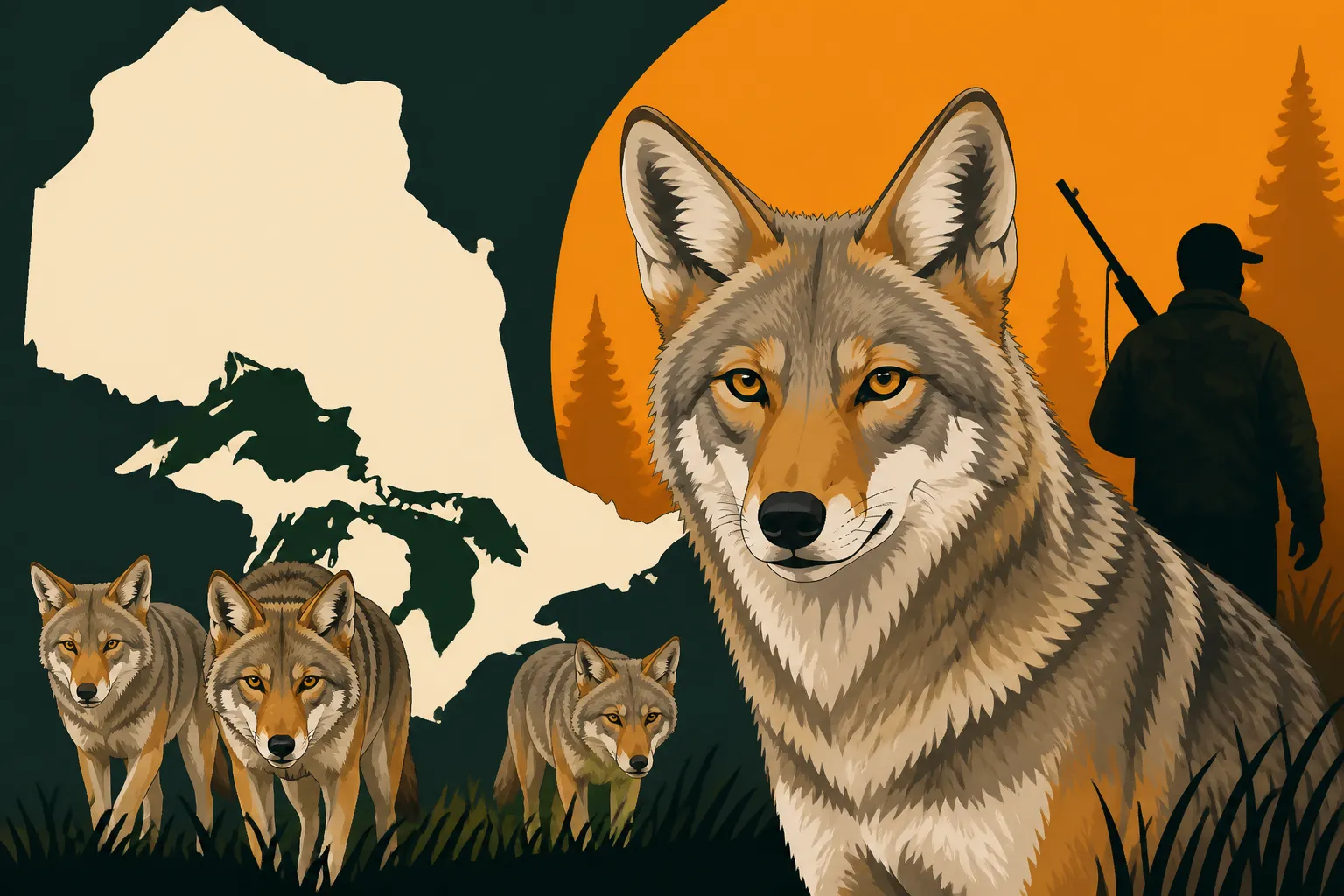
Why Ontario Has So Many Coyotes
It’s a scenario many of us in Ontario have encountered: you're out scouting a promising bush lot, maybe even sitting in a stand, and suddenly you hear that unmistakable chorus of yips, howls, and barks. Or worse, you spot them, brazenly trotting across a field in broad daylight. You might find yourself wondering, "Why does it feel like Ontario has so many coyotes?" This isn't just a feeling; it's a reality rooted in their incredible adaptability and a unique combination of environmental factors. This guide will dive into the reasons behind Ontario's thriving coyote population, addressing why they've become such a common fixture in our landscapes and what that means for hunters and wildlife alike.
The Ubiquitous Coyote: A Familiar Presence Across Ontario
Coyotes weren't always the widespread presence they are today in Ontario. Historically, their range was more concentrated in western North America. However, over the last century or so, as human settlement expanded and altered landscapes, and as larger predators like wolves were pushed back, coyotes found an open invitation to move eastward. They took that invitation and ran with it, adapting to almost every corner of our province with remarkable success.
From Farmland Edges to Deep Bush
Whether you're hunting in the agricultural heartland of Southern Ontario, trying your luck in the sprawling mixed forests of the central region, or even venturing into the fringes of the Boreal Forest up north, you're likely to encounter coyotes. They’ve proven incredibly adept at existing alongside human activity. You'll find them skulking along fencerows, using woodlots adjacent to active farms as cover, and even making their homes in suburban green spaces. I've spent countless hours Hunting Deer in Southern Ontario Farmland and Hunting an Ontario Bush Edge, and the presence of coyotes is a constant factor in both these environments. Their tracks are as common as deer tracks in some areas, a testament to their pervasive reach.
Why Their Numbers Seem to Keep Growing
The perception that coyote numbers are always increasing isn't entirely unfounded. While populations naturally fluctuate, coyotes possess several biological and behavioural traits that allow them to rebound quickly from pressures, even hunting and trapping. This resilience is a key part of their success story. When populations are low, they tend to have larger litter sizes, ensuring a rapid recovery. They also have an incredible ability to disperse into new areas, quickly filling any vacant niches. This constant ebb and flow, often with an upward trend over the long term, contributes to the feeling that they are a perpetually growing force in our wild spaces.
Understanding the Coyote's Adaptability and Diet
The secret to the coyote's success in Ontario lies in its extraordinary adaptability. They are not specialists; they are generalists in the truest sense, capable of thriving in a vast array of habitats and surviving on an incredibly diverse diet. This flexibility is what has allowed them to colonize new territories and maintain robust populations.
Masters of Opportunism
Unlike wolves, which typically prefer large, intact wilderness areas and primarily hunt big game, coyotes are far more opportunistic. They don't need pristine forests to survive. In fact, they often thrive in fragmented landscapes, utilizing the edges of development, agricultural fields, and brushy transitional zones. This is where prey is often abundant and varied, and where human activity might deter larger predators. They are incredibly intelligent animals, quickly learning to avoid danger and exploit new food sources. I’ve seen them use drainage ditches in farm country and dense willow thickets along Hunting a Beaver Meadow Crossing – always finding the path of least resistance and greatest opportunity.
A Varied Palate Sustains Them Anywhere
Ask any hunter or farmer, and they'll tell you coyotes eat just about anything, and they'd be right! Their diet is incredibly varied, allowing them to adjust to seasonal changes and local food availability. In spring and summer, their diet will often consist of small mammals like mice, voles, rabbits, and groundhogs, along with insects, berries, and even carrion. As fall and winter approach, they might switch to larger prey, often targeting deer fawns, weak or injured adult deer, or scavenging on deer left by other predators or roadkill. They are truly masters of making a meal out of whatever is available. This dietary flexibility is crucial to their ability to survive in environments as different as a suburban woodlot and the northern bush.
Let’s take a look at how adaptable their diet truly is:
| Season | Primary Food Sources | Opportunistic Food Sources |
|---|---|---|
| Spring | Small mammals (mice, voles), fawns, bird eggs, insects | Garden produce, pet food, garbage, carrion |
| Summer | Berries, fruits, insects, small mammals, groundhogs | Pet food, fruit fallen from trees, unsecured garbage |
| Fall | Rabbits, hares, rodents, carrion, berries, apples | Roadkill, unsecured livestock feed, discarded game carcasses |
| Winter | Rabbits, hares, deer (fawns, sick/injured), carrion, rodents | Scavenged deer carcasses, winter kill |
The Role of Human Influence
We, as humans, inadvertently play a significant role in supporting Ontario’s coyote population. Our expansive agricultural practices create ideal habitats with abundant small game. The presence of deer herds, often concentrated in farmland or accessible bush, provides a substantial food source, especially for What Coyotes Do to Fawn Survival. Furthermore, our waste management practices, or lack thereof, can also provide easy meals. Unsecured garbage, compost piles, and even outdoor pet food can become regular feeding stations for these clever canids, drawing them closer to human settlements. When you're out looking for a spot to hunt, using a tool like GoHunt can help you identify areas where human activity might inadvertently be creating prime coyote habitat, like fields bordering dense cover, which often hold abundant small game.
Factors Contributing to Ontario's Healthy Coyote Population
Several ecological and behavioural factors converge to create the perfect conditions for coyotes to thrive across Ontario. It's a complex interplay of environmental conditions, lack of competition, and their inherent biological advantages.
Lack of Natural Predators (for adults)
While coyote pups might be vulnerable to predation from owls, eagles, or even larger coyotes, adult coyotes face very few natural threats in most of Ontario. Wolves, their primary natural competitor and predator, exist in significant numbers mainly in the northern, more wilderness-heavy parts of the province. In much of Southern and Central Ontario, where wolves are either absent or very scarce, coyotes effectively become the top canine predator. This absence of a natural check allows their populations to expand without much pushback from the ecosystem itself. Hunting Wolves in Ontario's North is a very different game than trying to call a coyote in the southern farmlands. This dynamic allows coyotes to flourish, cementing their place as a dominant predator.
Habitat Generalists Thrive in Fragmented Landscapes
Ontario's landscape, particularly in the south and central regions, is a mosaic of forests, agricultural fields, suburban developments, and rural properties. This fragmented landscape, often seen as a challenge for many species, is a paradise for coyotes. They don't need vast, unbroken tracts of wilderness. Instead, they master the art of living on the edges. Woodlots, overgrown fencerows, river valleys, and even unkempt industrial lands offer them cover, travel corridors, and hunting grounds. This ability to adapt to human-modified environments, where other predators might struggle, is a cornerstone of their widespread success. When you're Scouting a Wildlife Management Unit with an app, you'll quickly see how much of Ontario is exactly this kind of edge habitat, perfect for coyotes.
High Reproductive Rates and Survival
Coyotes are incredibly efficient breeders. A typical litter can range from 4 to 8 pups, though under ideal conditions with abundant food and low population density, they can produce even larger litters, sometimes up to 12 or more. This phenomenon is known as "compensatory reproduction." When coyote populations are reduced through hunting or trapping, the remaining females respond by breeding at a younger age and having larger litters, quickly replenishing numbers.
Furthermore, these pups have a relatively high survival rate compared to many other wild canids, especially in areas with fewer large predators. They mature quickly, often becoming independent within a few months, and can breed in their first year. This combination of large litters and good survival rates ensures a robust and resilient population that can bounce back from challenges with impressive speed. This is a critical factor in understanding Ontario's Predators and Furbearers.
Impact on Other Game Species and Hunter Concerns
While coyotes are a fascinating example of wildlife adaptability, their prolific presence in Ontario certainly comes with implications, particularly for other game species and for hunters who pursue them. It’s a topic often discussed around hunt camp fires, and for good reason.
Pressure on Whitetail Fawns and Small Game
One of the biggest concerns for hunters is the impact coyotes have on deer populations, especially on vulnerable fawns. Studies have shown that coyotes can be a significant predator of fawns, particularly in their first few weeks of life. While a healthy deer population can often sustain some level of coyote predation, an overabundance of coyotes, coupled with other stressors like severe winters or habitat loss, can certainly put pressure on deer numbers. This dynamic is a key part of understanding White-Tailed Deer Across Ontario.
Beyond deer, coyotes also prey heavily on small game species like rabbits, hares, and ground-nesting birds. For those who enjoy Small Game Hunting in Ontario, a high coyote population might mean fewer opportunities for certain species. It's a natural part of the predator-prey relationship, but it's one that hunters often feel directly in their harvest success. This can be especially true if you are Running Beagles on Ontario Snowshoe Hare in an area with a dense coyote presence.
Hunter Strategies for Managing Coyote Encounters
For many hunters, understanding coyote behaviour isn't just academic; it's a practical necessity. Some hunters actively pursue coyotes, not only for sport but also as a form of population management to potentially reduce predation pressure on other game. This might involve strategies like Calling Coyotes at First Light or using various techniques to bring them into range. The popularity of coyote hunting has certainly grown as their numbers have increased, with dedicated seasons and specific rules to follow, as detailed in Ontario Wolf and Coyote Season Rules.
Understanding their movement patterns, especially in areas where you hunt deer, can also inform your stand placement and hunting times. Knowing that coyotes might move through a Hunting a Beaver Dam Crossing or along a Hunting a Fencerow Between Two Fields at certain times can help you adjust your strategy. Moreover, being able to distinguish them from other canids, especially given the range overlap, is crucial. For instance, Telling a Coyote From a Wolf is an important skill, as wolves are protected in some areas. Ultimately, while coyotes present challenges, they also offer unique hunting opportunities and add another layer to the complex tapestry of Ontario's wildlife. Using a mapping platform like GoHunt can help you identify high-traffic coyote areas based on terrain features, enabling you to better plan your hunts.
Disclaimer
This article is for general informational purposes only and does not constitute professional advice. Laws, prices and regulations vary by location and change over time. Consult a qualified professional for guidance on your specific situation.