Whether Ontario Has Mule Deer
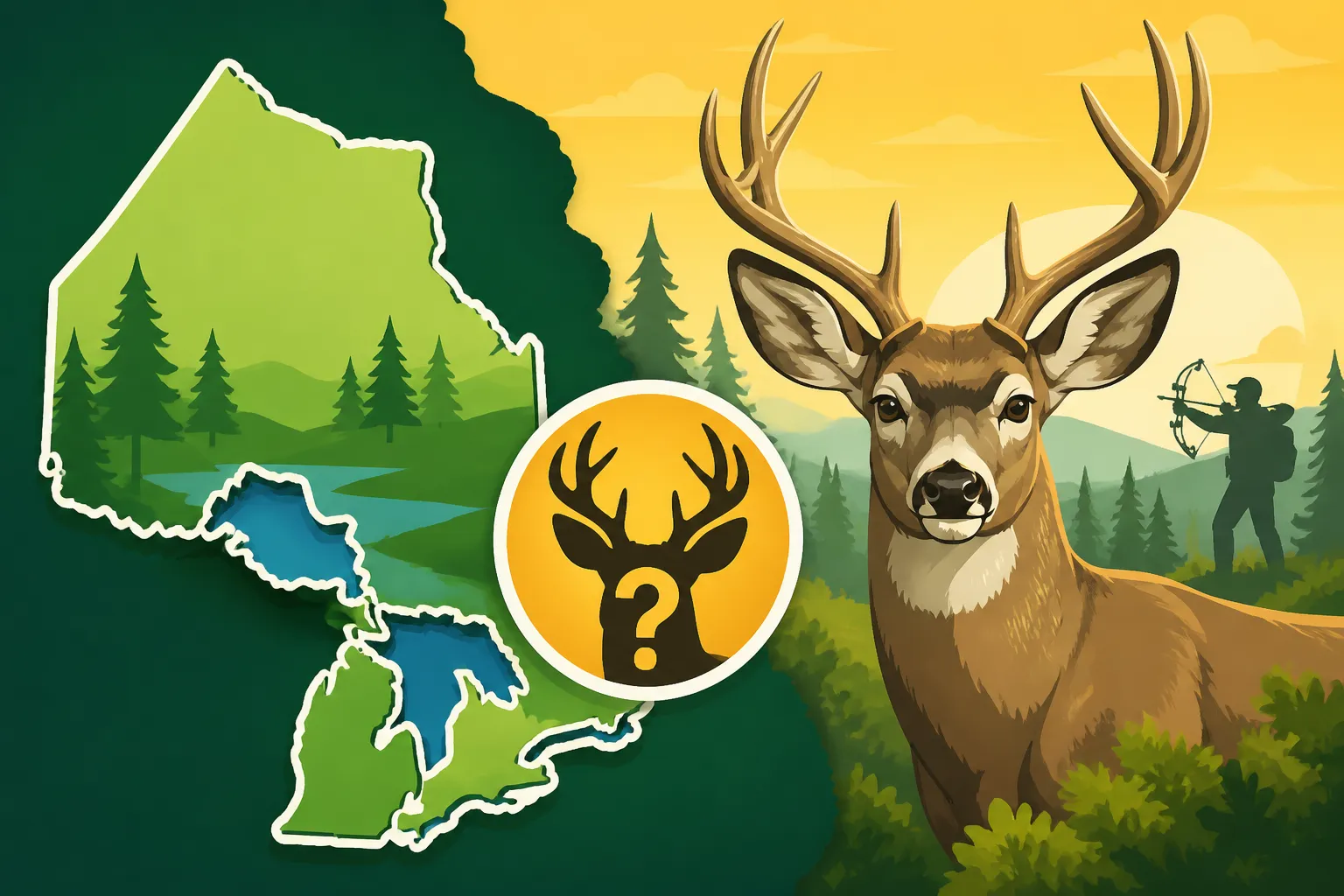
It's a question many hunters new to Ontario, or even some seasoned folks, ponder when they hear whispers of different deer species: "Do we have mule deer here?" The dream of spotting those distinctive, wide-racked bucks with their big ears is certainly enticing, and it’s easy to imagine our vast northern forests holding such a treasure. However, the reality is that while Ontario boasts a thriving deer population, mule deer are not a native resident species in our province. This guide will put that question to rest, explain why this misconception might arise, and focus on the incredible deer species that truly call Ontario home.
The Short Answer: No Mule Deer in Ontario
Let's get straight to it: no, Ontario does not have a naturally established, free-ranging population of mule deer. While the idea might spark excitement, these majestic deer are fundamentally creatures of western North America, with their core range stretching from the Great Plains westward through the Rocky Mountains and into the Pacific coastal states and provinces. Ontario simply doesn't fall within their historical or current native distribution.
Now, I know what some of you might be thinking: "But I heard of someone who saw one!" Anecdotal sightings do pop up from time to time, and they can certainly fuel the rumour mill. These isolated instances are almost always a case of misidentification – perhaps a very large, healthy whitetail buck, or one with an unusually shaped rack, being mistaken for a mule deer. Very rarely, it could even be an escaped animal from a private collection or zoo, but such occurrences are incredibly rare and do not signify a wild population. These deer are not roaming our wilderness in sustainable numbers, nor are they breeding here in the wild.
Understanding Ontario's Native Deer Species
So, if not mule deer, then what deer species does Ontario have in abundance? Our province is home to one of North America's most adaptable and widespread cervids, a species that offers fantastic hunting opportunities right across its diverse landscapes.
The Ubiquitous Whitetail
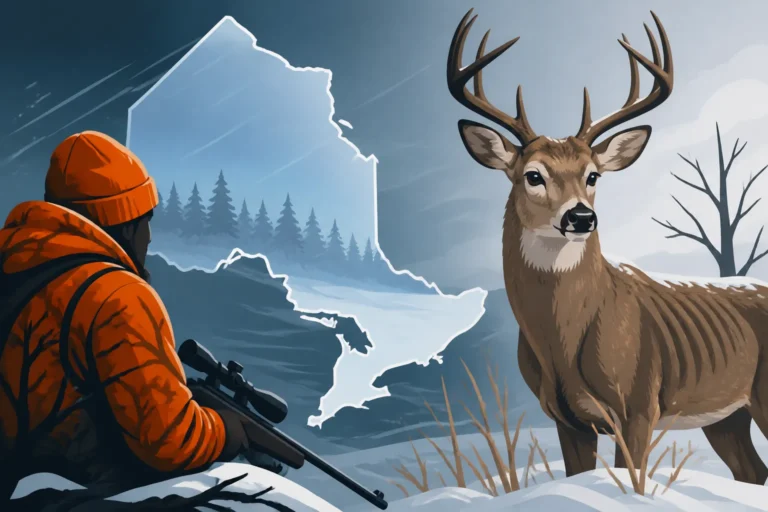
When we talk about deer in Ontario, we are almost exclusively talking about the White-Tailed Deer Across Ontario. These beautiful and resilient animals are the kings of our bush, marshes, and farmlands, and they are the species you'll be pursuing during our deer seasons. Whitetails are incredibly versatile, thriving everywhere from the dense forests of the Canadian Shield to the fertile agricultural lands of Southern Ontario. They are distinguished by their reddish-brown coat in summer, turning to a grayish-brown in winter, and most famously, their broad, flag-like tail with a pure white underside, which they flash as they bound away when alarmed.
A whitetail buck's antlers typically grow forward from a main beam, with individual tines branching off this main beam. This distinct antler growth pattern is one of the key identifiers that separate them from their mule deer cousins. Our whitetails vary in size, with deer in the more productive agricultural regions often growing larger bodies and impressive racks due. If you're wondering Why Southern Ontario Grows Heavy Bucks, it often comes down to better nutrition from agricultural crops. These deer are a testament to successful wildlife management and habitat diversity across the province.
Other North American Deer Species
It's worth noting that North America is home to a few other deer species besides the whitetail and mule deer. For example, the black-tailed deer is a subspecies often found along the Pacific coast, closely related to the mule deer but with its own distinct characteristics and geographical range. Understanding these distinctions reinforces the fact that each species occupies specific ecological niches and geographical areas. The important takeaway for Ontario hunters is that our focus remains squarely on the whitetail, and understanding their behaviour and habitat is key to a successful hunt.
Why the Confusion? Distinguishing Whitetails from Muleys
The persistent question about mule deer often comes from an honest place – sometimes, a whitetail can present itself in a way that sparks confusion. Let's break down the key differences to help you confidently identify the deer you encounter in the Ontario bush.
Key Physical Differences
While both whitetails and mule deer are stunning creatures, they have several distinct features. Learning these can help clarify any doubts.
| Feature | White-Tailed Deer (Ontario) | Mule Deer (Western North America) |
|---|---|---|
| Antlers | Main beam sweeps forward; tines (points) branch off the main beam. | Typically bifurcated (forked); tines fork again off each branch. |
| Ears | Relatively smaller, proportional to head. | Very large, prominent ears, like a mule's. |
| Tail | Broad, flat, usually reddish-brown on top, pure white underneath; flags it high when alarmed. | Rope-like, round, often yellowish or whitish with a black tip; held low. |
| Colour | Reddish-brown in summer, grayish-brown in winter. | Typically lighter brown/gray, with distinct white rump patch. |
| Gait | Runs, leaps, and bounds, especially when escaping. | Distinctive "stotting" or "bounding" gait, where all four feet hit the ground simultaneously. |
| Size | Generally smaller body size, but can be quite substantial in prime habitats. | Generally larger, stockier build. |
If you're ever questioning a deer's features, a quick check against a comprehensive species guide, perhaps available through a hunting resource like GoHunt, can quickly clear up any doubts. Pay particular attention to the ears and tail—these are usually the most obvious distinguishing factors even at a distance.
Misidentification and Hybrid Scenarios
It's easy to see how a particularly robust whitetail buck, especially one from an area with abundant food sources like the agricultural regions of southwestern Ontario, could be mistaken for something different. Their antlers can sometimes grow in unusual patterns, or their sheer body size might cause a moment of pause. However, even the biggest Ontario whitetail is still a whitetail.
The topic of whitetail-mule deer hybrids does come up in regions where their ranges overlap, typically in parts of the Great Plains and Rocky Mountains. These hybrids, often colloquially called "whitetail-muley crosses," can exhibit a mix of characteristics from both species, making identification even trickier. However, these are extremely rare and localized phenomena, occurring at the fringes of their respective native ranges. Since Ontario is well outside the native range of mule deer, the likelihood of encountering a true whitetail-mule deer hybrid here is virtually non-existent. Any deer showing unusual characteristics would almost certainly be an anomaly within the whitetail population rather than a hybrid with a non-native species. Understanding these subtle distinctions is crucial for proper identification, and resources like GoHunt often provide excellent visual aids and descriptive comparisons to help hunters in the field.
What This Means for Ontario Hunters
For those of us who hunt in Ontario, the absence of mule deer simply means we get to focus our passion on the magnificent white-tailed deer. And let me tell you, chasing whitetails in Ontario offers plenty of challenge, reward, and sheer enjoyment.
Focus on Ethical Whitetail Hunting
Hunting in Ontario is a rich and rewarding experience, centered on our robust whitetail populations. This means that your scouting, your strategies, and your understanding of deer behaviour will always revolve around the whitetail. Whether you're trying Rattling and Calling Ontario Whitetails during the rut, or figuring out Hunting the Rut in Early to Mid November, all your knowledge will be applied to the species we have in spades.
Focus on learning about whitetail movement patterns, their preferred forage, and how they use different types of cover. This deep understanding is what makes for a truly successful hunter. Platforms like GoHunt can be invaluable for scouting and understanding local terrain and habitat nuances, which are critical for any whitetail enthusiast. From deciphering Reading Whitetail Sign in Ontario Hardwoods to understanding deer movement around a Hunting a Cedar Swamp Edge, it’s all about becoming a whitetail expert. Always remember that proper identification of your target species is a fundamental part of ethical hunting and adhering to regulations outlined in the Ontario Deer Season Dates and Tags.
Conservation and Management
Ontario's wildlife management efforts are, understandably, tailored to the species that thrive here. Our Ministry of Natural Resources and Forestry (MNRF) carefully monitors White-Tailed Deer Across Ontario populations, sets seasons, and manages licenses to ensure sustainable hunting for generations to come. This also includes vigilance against diseases like Chronic Wasting Disease (CWD), a neurological disease that affects cervids, including whitetail and mule deer. Ontario maintains a proactive Ontario's CWD Surveillance Program to protect our wild deer herds. While CWD is a concern for all cervids, management here is specifically focused on our whitetail population.
Should you ever encounter a deer in Ontario that genuinely puzzles you or seems to defy identification as a whitetail, the best course of action is to observe from a distance, take notes or photos if possible, and report it to the Ministry of Natural Resources and Forestry. They are the experts who can investigate unusual sightings and ensure the health and integrity of Ontario's native wildlife populations. For those looking to deepen their understanding of whitetail habits and habitats, online platforms such as GoHunt can offer valuable insights and community forums where hunters share knowledge and experiences, all geared towards the deer that truly roam our magnificent province.
Disclaimer
This article is for general informational purposes only and does not constitute professional advice. Laws, prices and regulations vary by location and change over time. Consult a qualified professional for guidance on your specific situation.