Telling a Jake From a Longbeard
It’s a moment every spring turkey hunter dreams of: a gobbler, fanned out and strutting, finally steps into view. But then the questions flood your mind: is that the mature longbeard you’ve been patiently calling, or a younger, less-experienced jake? Making the right identification can be incredibly challenging, especially when adrenaline is high and the bird is moving. This guide aims to clear up that confusion, offering clear, actionable tips to confidently distinguish between a jake and a longbeard in the Ontario bush.
Why Knowing the Difference is Critical for Your Hunt
For many hunters, especially those new to the exciting world of spring turkey hunting in Ontario, the sheer thrill of seeing a fanned-out tom can make identification difficult. However, understanding the distinctions between a jake and a longbeard is more than just about bragging rights; it's fundamental to legal compliance, ethical hunting, and ultimately, your overall hunting experience.
Legal and Ethical Considerations
In Ontario, while often both jakes and longbeards are legal to harvest during the spring season, there are often bag limits and sometimes specific regulations that might influence your decision. For instance, some hunters prefer to pass on jakes to allow them to mature, contributing to a healthier and more robust turkey population for future seasons. Ethically, understanding what you’re shooting ensures you're aligning with your personal hunting values and the conservation principles that guide responsible hunters. You’re making an informed choice, rather than a rushed one, which adds another layer of respect to the game you pursue. It’s also important to be absolutely certain of your target before taking a shot, and clear identification is a huge part of that. Understanding Ontario Wild Turkey Licences and Tags is a good first step to knowing your regulations.
Enhancing Your Hunting Experience
Beyond the legalities and ethics, there’s immense satisfaction in successfully outsmarting a mature longbeard. These older birds are often warier, more experienced, and require a higher level of skill and patience to bring in. The challenge of decoding their calls, anticipating their movements, and executing a flawless setup is what many hunters live for. Being able to confidently identify a longbeard not only validates your efforts but also deepens your connection to the hunt. It means you’re truly engaged in the chess match, not just pulling the trigger on the first fanned bird that appears. This pursuit of a mature bird can transform a simple outing into a memorable quest, honing your skills for every future hunt.
Unmistakable Physical Hallmarks of a Gobbler
When a turkey is standing in front of you, the best way to tell if it's a jake or a longbeard is by carefully observing its physical attributes. These are the most reliable indicators, and with a bit of practice, they become second nature.
Tail Fan: The Primary Visual Cue
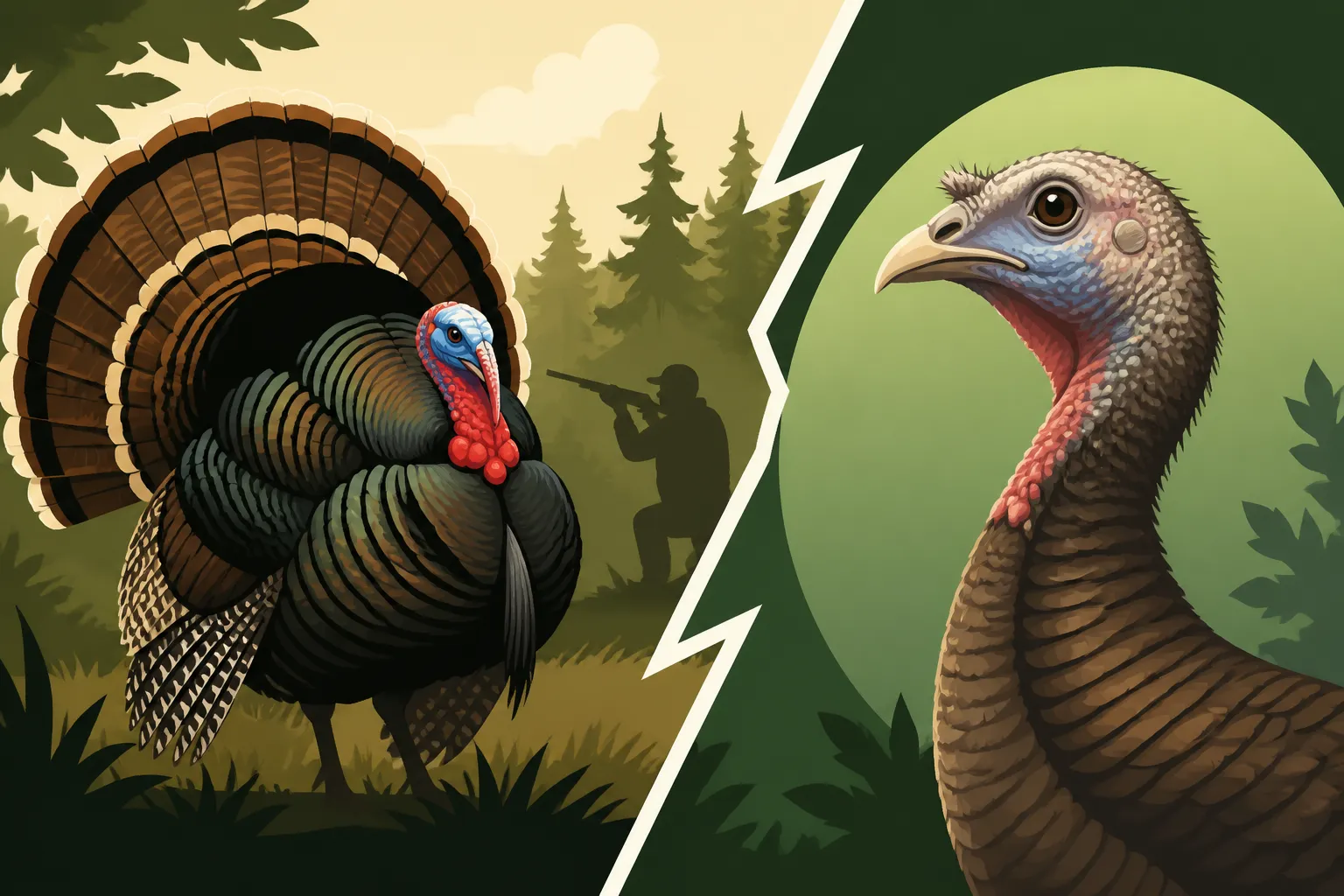
The tail fan is perhaps the most obvious difference. A longbeard, a mature tom typically two years old or older, will have a full, rounded, symmetrical fan. All the tail feathers will be roughly the same length, creating a perfect semicircle when fully fanned. This uniform appearance is a clear sign of maturity.
In contrast, a jake, which is a young male turkey in its first spring, will have a tail fan that resembles a "palm tree" or an uneven fan. The central tail feathers will be noticeably longer than the outer feathers, giving it an irregular, fan-shaped appearance rather than a perfectly rounded one. This is because these central feathers grew in earlier than the others. If you see an otherwise impressive-looking bird but its tail isn't a perfect circle, you're likely looking at a jake.
Beard Length and Thickness
The beard is another critical indicator, though it can sometimes be tricky. A jake's beard will typically be shorter and thinner, often only a few inches long, sometimes looking a bit wispy or even braided. These beards are still growing and haven't reached their full potential.
A longbeard, on the other hand, will boast a much longer, thicker, and more robust beard, often six to ten inches or more. It will appear dense and full, sometimes even dragging on the ground when the bird is walking. While beard length can vary, a truly impressive, thick beard is almost always a sign of a mature tom. Be aware that sometimes a jake can have a surprisingly long beard if he's an early hatch or exceptionally healthy, but it usually won't have the same robust thickness as a longbeard's.
Spur Development
Spurs are the bony, sharp protrusions found on the back of a gobbler's legs, just above the foot. This is one of the most definitive ways to differentiate, but it often requires a clear view of the bird's legs, which isn't always possible in thick cover.
Jakes will have very short, blunt, or barely visible spurs, sometimes only bumps. They are usually less than half an inch and feel rubbery. Longbeards, however, will have distinct, sharp, and often curved spurs that can range from half an inch to over an inch in length. These spurs become harder and sharper with age, often darkening to a black or deep grey. Older, dominant longbeards might have spurs over an inch long, earning them the nickname "hookers" among seasoned hunters.
Head Coloration and Size
A gobbler's head can offer additional clues, though it's less definitive than the tail, beard, or spurs. During the spring breeding season, a longbeard’s head will typically display more vibrant and dramatic color changes. It can shift rapidly from white to blue to red, often a fiery red, especially when he's excited, strutting, or gobbling. The head and neck skin might also appear more warty or textured.
Jakes, while still showing some colour, often have less intense and more muted head colours. Their heads might appear pinkish or a duller red, with less rapid fluctuation in colour. Their heads also tend to be noticeably smaller in proportion to their body than a mature tom's, which has had more time to grow.
Body Size and Proportions
While body weight and size can be deceptive, especially with distance, general proportions can offer some insight. Longbeards are, as the name implies, generally larger and heavier birds. They have fully developed musculature and a more robust frame, giving them a more imposing presence in the field.
Jakes, being younger, tend to look ganglier or more slender. Their bodies are still filling out, and they might appear taller and lankier relative to their chest size compared to a longbeard. When they strut, a longbeard will often appear to have a larger, more pronounced "puff" of feathers, showcasing its full maturity.
Here’s a quick comparison table to help you keep these distinctions straight:
| Feature | Jake (First Spring) | Longbeard (Two+ Years Old) |
|---|---|---|
| Tail Fan | Uneven, "palm tree" shape; central feathers longer | Full, perfectly rounded, symmetrical; all feathers same length |
| Beard | Short (1-4 inches), thin, sometimes wispy | Long (6-12+ inches), thick, dense |
| Spurs | Short (0-0.5 inches), blunt, rubbery | Long (0.5-1.5+ inches), sharp, often curved, hard |
| Head | Smaller, less intense color changes, duller pink/red | Larger, vibrant, rapid color changes (red, white, blue) |
| Body Size | Smaller, lankier, less robust | Larger, heavier, more muscular, imposing |
Decoding Gobbler Behavior and Social Cues
Beyond the physical markers, the way a turkey acts can provide valuable clues about its age and maturity. Observing their behaviour can be incredibly enlightening, especially when physical features are obscured.
Strutting Patterns and Confidence
Both jakes and longbeards will strut, especially during the spring breeding season. However, there's a noticeable difference in their confidence and overall presentation. A longbeard typically struts with authority and purpose. He'll often hold his strut longer, in more open areas, and his puffing and drumming will feel more deliberate, aimed at attracting hens and dominating his territory. When he cuts his strut, he does so with a certain swagger. These mature birds are the ones that really hold the attention of the hens. Using a scouting app like GoHunt to understand typical strutting areas can help you anticipate their movements.
Jakes, on the other hand, often strut with a bit less conviction. They might strut intermittently, sometimes even "half-strutting" or quickly breaking their display. They tend to be more nervous, looking around frequently, and might only strut when a hen is very close or when trying to mimic a dominant tom. You might see several jakes strutting together, often jockeying for position and showing less individual confidence than a single mature longbeard. They are often observing and learning from the older birds, trying to fit in and find their place in the pecking order.
Gobbling and Vocalizations
The gobble is the quintessential sound of spring turkey hunting, and while both jakes and longbeards gobble, there are subtle differences in their vocalizations and how they respond to calls. Longbeards often have a deeper, more resonant gobble that carries further. They tend to gobble more consistently, especially from the roost at dawn and throughout the morning as they search for hens. Their gobbling can be a defiant challenge to other toms, or a persistent plea to potential mates. Learning Calling a Gobbler Off an Ontario Roost is all about understanding these patterns.
Jakes will gobble, but their gobble often sounds higher-pitched, less powerful, and sometimes a bit raspy or broken. They might gobble less frequently, and often only in response to a close call or another tom’s gobble, rather than initiating it themselves with the same authority as a longbeard. They are still developing their full vocal range. Pay attention not just to if they gobble, but how they gobble, and how often.
Social Dynamics and Interactions
Observing how gobblers interact with other turkeys can be a dead giveaway. Longbeards, particularly dominant ones, will often be seen with a harem of hens, or at least attempting to gather them. They will actively chase off other toms and jakes, asserting their dominance. You might see them sparring or posturing, clearly establishing their position at the top of the pecking order.
Jakes, being lower in the social hierarchy, often travel in small bachelor groups and tend to stick together. They are less likely to have hens with them and will usually defer to a longbeard, often giving him a wide berth. If you see a group of two or three smaller gobblers, all strutting awkwardly and not aggressively pursuing hens, chances are you’re looking at jakes. They might try to sneak in on a longbeard's hens, but they rarely succeed in holding them. This kind of interaction can be crucial when you’re Setting Up Against a Big Maple and watching the woods unfold around you.
Field Strategies for Making the Right Call
Even with a clear understanding of the differences, it can still be tricky in the heat of the moment. Employing smart field strategies can give you the advantage needed to make a confident identification.
Patience is Your Best Friend
Perhaps the most important piece of advice is to be patient. Far too many hunters rush the shot, only to realize later they took a jake when they were holding out for a longbeard. When a bird comes in, resist the urge to immediately raise your gun. Take a breath, observe its entire body, and look for those key identifying features. Wait for the bird to turn, giving you a clear view of its tail fan, beard, and ideally, its legs for spurs.
Often, waiting just a few extra seconds will give the bird a chance to fully fan out, walk a few steps, or even gobble again, confirming its maturity. If you're using decoys, a bird might circle your setup, offering multiple angles for observation. Don't let "turkey fever" cloud your judgment. Remember, a good hunt isn't about the speed of the shot, but the quality of the experience and the confidence in your decision. When it comes to Decoy Placement for Pressured Ontario Gobblers, ensuring you have ample time to identify your bird is key.
Utilize Optics for Clearer Views
Binoculars are an invaluable tool for turkey hunting, not just for spotting birds from a distance but also for close-range identification. When a bird is within range but you're unsure, use your binoculars to get a magnified view of its features. This can make all the difference in clearly seeing the length and symmetry of the tail fan, the thickness and length of the beard, and the development of the spurs.
Even a good scope on your shotgun, used carefully and safely, can aid in identification once the bird is close and you're preparing for a shot. Never use your scope to initially locate or identify game that is not within a safe shooting lane, but once the bird is in position, it can provide that final confirmation you need. Always know your target and what's beyond it. Sometimes, a detailed map from a service like GoHunt can help you pick out observation points before you even arrive.
Consider the Time of Season and Habitat
The time of year and the habitat you're hunting can also offer context. Early in the Ontario Spring Turkey Season Dates, longbeards are often more active and responsive, driven by the intense desire to breed. As the season progresses, especially in late May When Ontario Gobblers Go Quiet in Late May, gobbling might decrease, and birds might be more scattered, making any gobbler a welcome sight.
Habitat plays a role too. In areas with high turkey populations and good food sources, you might encounter more jakes in bachelor groups. In areas with less pressure or more rugged terrain, mature longbeards might be more elusive but can be more rewarding to find. Thinking about the overall turkey population in your Wildlife Management Unit (WMU) can sometimes inform your expectations, though direct observation remains paramount. Tools that provide an overview of your Ontario's Wildlife Management Unit System can offer valuable pre-hunt intelligence.
Disclaimer
This article is for general informational purposes only and does not constitute professional advice. Laws, prices and regulations vary by location and change over time. Consult a qualified professional for guidance on your specific situation.