Filling an Antlerless Tag in Ontario
You've finally secured that antlerless deer tag for an Ontario hunt, and while it's exciting, there's often a unique kind of pressure that comes with it. Maybe you've put in for the draw year after year, or perhaps it's your first time focusing specifically on a doe. Many hunters feel that targeting an antlerless deer can sometimes be just as, if not more, challenging than pursuing a buck, especially when you're trying to figure out their specific patterns. This comprehensive guide is here to strip away the guesswork, offering practical, on-the-ground advice for successfully filling your antlerless tag, ensuring you make the most of your hunting opportunity and contribute positively to herd management.
Understanding Ontario's Antlerless Deer Tags and the Draw System
Acquiring an antlerless deer tag in Ontario isn't always as simple as picking up a general deer licence. It often involves navigating a specific draw system designed to manage deer populations within individual Wildlife Management Units (WMUs). This process can sometimes feel like a bit of a lottery, and the frustration of not drawing a tag in your preferred unit is something many of us have experienced. However, understanding the system and why these tags are issued is the first crucial step toward success.
The Importance of Antlerless Harvest for Herd Health
First off, let's talk about why these tags exist. Antlerless harvest isn't just about putting more meat in the freezer (though that's a fantastic bonus!). It's a cornerstone of responsible wildlife management. Removing antlerless deer, primarily does, is vital for controlling population growth, preventing overbrowsing of habitat, and maintaining a healthy buck-to-doe ratio. When deer populations become too dense, it can lead to increased disease transmission, reduced fawn survival rates, and smaller, less healthy deer across the board due to limited food resources. By participating in antlerless harvests, you're directly contributing to the long-term health and sustainability of Ontario's deer herd, which is something every ethical hunter can be proud of. It’s a proactive step that ensures future generations of deer and hunters alike.
How to Acquire an Antlerless Tag in Ontario
The process for acquiring an antlerless tag in Ontario typically involves applying through a controlled deer hunt draw or specific antlerless quotas within certain WMUs. Most areas of Ontario don't allow hunters to simply purchase an antlerless tag over the counter. You usually need to apply for Ontario Antlerless Deer Draws during specific application periods, often months before the season opens. The specific availability depends heavily on the WMU you're hunting in, as deer populations vary dramatically across the province. Some northern WMUs might have ample antlerless tags due to higher deer numbers, while more pressured southern units might have fewer, making them highly sought after.
It's absolutely essential to stay on top of application deadlines and check your Ontario Controlled Deer Hunt Validations status regularly. Missing a deadline can mean missing out on a season, which is a real bummer when you've been looking forward to a hunt. Once you've successfully drawn an antlerless tag, it will typically be valid for specific season dates and within the WMU for which it was issued. Always double-check your licence and the official hunting regulations summary for the most up-to-date information for your chosen area. Apps like GoHunt can be incredibly helpful for keeping track of these WMU-specific regulations and ensuring you're compliant.
Pinpointing Prime Locations and Timing for Antlerless Deer
Successfully filling an antlerless tag often boils down to being in the right place at the right time, and that means understanding deer behaviour, habitat preferences, and how season dates influence their patterns. Unlike bucks that might wander widely during the rut, does often have more predictable movements centered around food, water, and cover, especially when they have fawns with them.
Identifying Productive Habitat
When you’re specifically targeting antlerless deer, especially does, you need to shift your focus slightly from prime buck-holding areas. Does, particularly those with fawns, tend to favour thicker, denser cover closer to reliable food and water sources. They are often more cautious and less prone to venturing into wide-open spaces during daylight hours, preferring the security of dense brush, cedar swamps, or young regenerating clearcuts. Think about areas offering easy escape routes and plenty of browse.
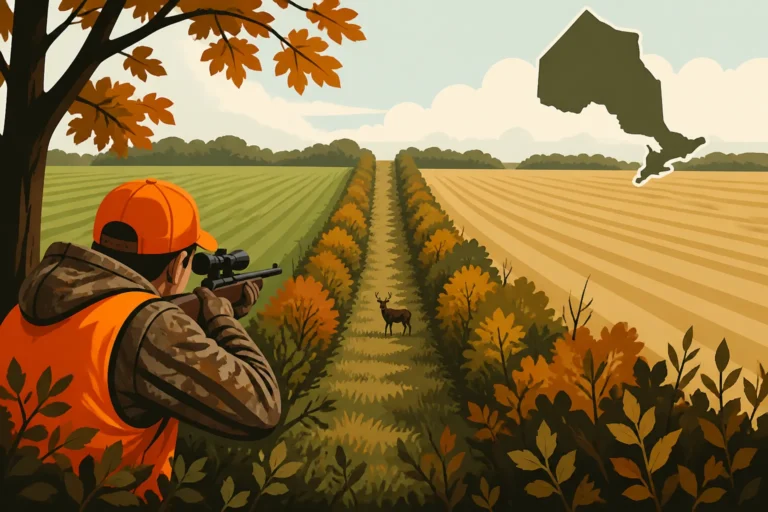
In agricultural areas, this might mean focusing on Hunting a Standing Corn Field Edge or the thick bush lines bordering Hunting a Soybean Field at Dusk. If you're in an area with a lot of timber, consider Hunting a Cedar Swamp Edge or exploring recent logging cuts where new growth provides both food and security. Does need constant nutrition, so areas with diverse food sources – acorns, soft mast, agricultural crops, or abundant natural browse – are always good bets. Using mapping tools, including satellite imagery from GoHunt, can really help you pinpoint these thicker, often overlooked pockets of cover adjacent to food sources.
Leveraging Season Dates and Conditions
Ontario's deer seasons offer a variety of opportunities, from When Ontario's Bow Season Runs to gun and muzzleloader periods. While a general deer licence in many WMUs allows you to take an antlered deer, an antlerless tag will specify when and where you can harvest a doe or fawn. Always check the Ontario Deer Season Dates and Tags for your specific WMU.
Early archery seasons in September can be fantastic for antlerless deer, as does are still often in family groups and haven't experienced much hunting pressure. The challenge, of course, is the warmer weather, which means Field Dressing in Warm Ontario Weather and Meat Care in Ontario's Warm Early Seasons become even more critical to prevent spoilage. As the season progresses into late fall, deer movements become more influenced by the upcoming rut and then by winter preparations. In late November and December, especially with snowfall, does might begin to yard up in dense conifer stands, making them more concentrated but also more difficult to access without disturbing them. Look for the transition periods when deer are moving between bedding and feeding areas, especially around dawn and dusk.
Strategic Approaches to Filling Your Antlerless Tag
Hunting antlerless deer requires a nuanced approach, often prioritizing stealth, patience, and a deep understanding of local deer movements. It's less about rattling in a dominant buck and more about quietly observing and intercepting deer going about their daily routines.
Scouting for Success
Effective scouting is paramount when you're specifically aiming to fill an antlerless tag. This isn't just about finding big rubs or scrapes; it's about identifying the subtle signs of daily deer activity. Start your scouting long before the season opens. Look for well-used trails connecting bedding areas (thick cover) to feeding areas (fields, clearcuts, natural browse patches) and water sources. Pay close attention to fresh tracks, droppings, and signs of browsing.
One of the most valuable things you can do is Scouting a Wildlife Management Unit using satellite maps and then boots on the ground. Look for pinch points – narrow strips of cover, fencerows, or creek bottoms that deer are funnelled through. Does often prefer these secure travel corridors. Don't be afraid to walk slowly through potential bedding areas outside of hunting hours, paying close attention to escape routes. You can learn a lot by Reading Whitetail Sign in Ontario Hardwoods, but remember to interpret it in the context of doe behaviour. A heavy trail leading into a dense cedar thicket is often a better bet for a doe than a massive rub line out in the open.
Stand Placement and Still-Hunting Tactics
When it comes to stand placement for antlerless deer, think about security and routine. Instead of just setting up on a field edge, consider moving your stand 50-100 yards into the bush, on a well-used trail leading to the field. Does will often stage in these wooded areas, nibbling on browse, before stepping out into the open at dusk. Funnels, saddles, and creek crossings within thick cover are also excellent spots. A good rule of thumb is to look for areas where deer feel comfortable moving during daylight.
If you prefer to be on the move, still-hunting can be incredibly effective, especially in dense bush or regenerating clearcuts. This method involves moving extremely slowly, taking a few steps, then pausing for several minutes to observe and listen. Use binoculars to pick apart the cover ahead of you. Does often bed down in these thickets, and a slow, silent approach might give you the opportunity to spot one before she busts out. Remember, you're not trying to spook deer; you're trying to integrate into their environment without being detected.
Group Hunting and Drives for Antlerless Deer
In some situations, particularly later in the season when deer are more concentrated in thick cover, a small, well-planned deer drive can be an effective way to fill an antlerless tag. This isn't about haphazardly running through the bush. A successful drive requires careful planning, communication, and above all, safety. You'll typically need at least three or four hunters, with some acting as "drivers" and others as "posters" or "standers."
The goal of a drive is to gently push deer out of dense bedding areas towards hunters positioned in strategic locations where deer are likely to travel. Think about natural funnels, clearings, or old logging roads. The drivers should move slowly and deliberately, making just enough noise to encourage deer to walk, not run, out of the cover. Posters need to be positioned safely and discreetly, anticipating where the deer will emerge. Always wear appropriate blaze orange and have a clear understanding of shooting lanes and boundaries. For more details on this, you might look into Deer Drives With Three or Four Hunters or Posting a Drive Around a Bush Lot as a strategy. GoHunt maps can be invaluable for planning these drives, showing property lines, topography, and dense cover.
Post-Harvest: Care, Reporting, and What Comes Next
Successfully harvesting an antlerless deer is a fantastic achievement, but the work isn't over yet. Proper post-harvest care is crucial for the quality of your meat, and adhering to reporting requirements is a legal and ethical responsibility.
Field Dressing and Meat Care for Quality
The moment your deer is down, the clock starts ticking, especially if it's an early season hunt when temperatures are still mild. Prompt Field Dressing in Warm Ontario Weather is absolutely essential. Remove the internal organs quickly to allow the carcass to cool down as fast as possible. This prevents bacterial growth and improves the taste and tenderness of the meat. If you're far from your vehicle, consider splitting the sternum and pelvic bone to facilitate further cooling and potentially quartering the animal for easier removal.
Once the deer is field-dressed, get it out of the elements and into a cooler environment. If temperatures are above freezing, ice is your best friend. Pack the cavity with ice, ensuring it drains properly. For longer transport, especially if you're making a multi-day trip, a good cooler filled with ice is non-negotiable. If you're fortunate enough to hunt in cooler weather, hanging the deer in a shaded, well-ventilated area can work, but always monitor the temperature. Thorough Meat Care in Ontario's Warm Early Seasons ensures that your hard-earned venison is a delicious reward that lasts.
The Importance of Reporting Your Harvest
In Ontario, Reporting Your Ontario Harvest is not just a suggestion; it's a mandatory legal requirement for certain species, including deer. Once you've successfully harvested an antlerless deer, you must report it according to the specific instructions provided with your licence or in the provincial hunting regulations summary. This usually involves reporting online through the Fish and Wildlife Licensing Service or via phone.
This reporting data is incredibly important for wildlife managers. It provides crucial information on harvest rates, helps assess population health, and informs future tag allocations and season structures. Without accurate reporting, the Ministry of Natural Resources and Forestry (MNRF) would have a much harder time making informed decisions to manage our valuable deer resource. Think of it as your final, vital contribution to conservation. It completes the cycle of a responsible hunt, ensuring the health of the herd for generations to come.
Antlered vs. Antlerless Hunting Strategies Comparison
Here's a quick look at how strategies might differ when specifically targeting antlerless deer compared to typical buck hunting:
| Feature/Strategy | Antlerless Deer Hunting | Antlered Deer (Buck) Hunting |
|---|---|---|
| Primary Goal | Population management, meat harvest | Trophy pursuit, meat harvest |
| Focus in Scouting | Food sources, dense cover, water, subtle trails | Rubs, scrapes, major travel corridors, sign of dominant bucks |
| Habitat Preference | Thicker, more secure cover; family group areas | More open travel routes; areas with diverse escape cover |
| Movement Patterns | Often more predictable, focused on daily routines | Can be erratic, especially during rut |
| Stand Placement | Pinch points in dense cover, trails leading to food, staging areas | Funnels, oak ridges, rut travel corridors, cruising lanes |
| Calling Tactics | Fawn bleats, doe bleats (less common, but can work) | Grunts, rattling, snort-wheezes (aggressive) |
| Patience Level | High; often requires long waits in less visible areas | Moderate; bucks can appear quickly, especially during rut |
| Group Hunting | Often effective (drives) in appropriate scenarios | Less common for trophy bucks; useful for pushing deer generally |
| Observation | Focus on subtle movements, multiple deer, family groups | Identifying specific antler characteristics, solo movement |
Disclaimer
Hunting is a regulated activity. Always consult the most current Ontario hunting regulations summary published by the Ontario Ministry of Natural Resources and Forestry (MNRF) before heading afield. This guide provides general information and recommendations but is not a substitute for official regulations or professional instruction. Ensure you have all required licences, tags, and safety certifications, and always prioritize safety and ethical hunting practices.