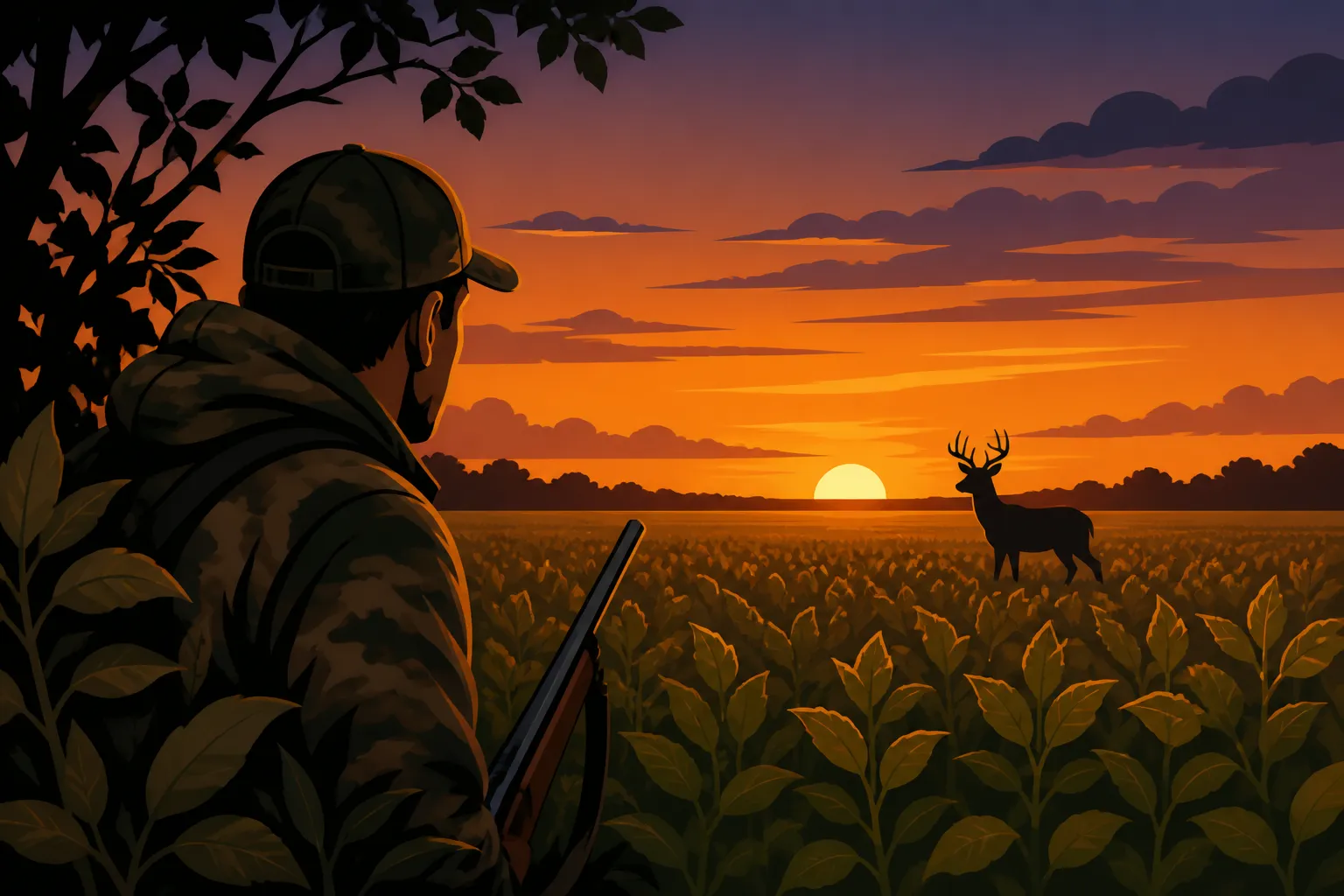
Hunting a Soybean Field at Dusk
Staring out at a seemingly endless Ontario soybean field as the sun begins to dip below the horizon, it's easy to feel a mix of excitement and apprehension. Deer often seem to materialize out of nowhere in these expansive agricultural landscapes, offering fleeting opportunities that are incredibly hard to capitalize on. This guide is dedicated to unravelling the mysteries of effectively hunting a soybean field at dusk, giving you the practical strategies to turn those challenging last light encounters into successful ones.
Understanding Deer Behavior in Soybean Fields
Soybean fields are absolute magnets for deer throughout much of Ontario, especially as the plants mature through summer and into the fall hunting seasons. They offer a unique combination of nutrition and security that whitetails simply can't resist.
Why Soybeans are a Deer Magnet
It’s not just the sheer volume of food, though that’s certainly a huge draw. Soybeans provide a highly digestible, protein-rich forage that is crucial for antler growth in bucks and overall health for does and fawns. When deer browse on soybean plants, they're taking in a concentrated source of energy and nutrients that isn't always available in the natural bush. This makes them a prime destination, particularly in agricultural regions of Southern Ontario where food sources might be more varied, but soybeans offer an irresistible buffet.
Beyond the nutrition, soybeans offer an incredible amount of cover. As the plants grow taller, they create a dense, protective canopy that deer can bed down in virtually undetected during the day. Imagine a mature soybean field in late August or early September – those plants can easily be waist to chest high, providing complete concealment from human eyes. This means deer can spend their entire day in the middle of a field, feeling perfectly safe, only to emerge at optimal times.
This combination of abundant, high-quality food and excellent thermal and visual cover makes soybean fields a preferred habitat, especially after the initial flush of spring greens fades and before the acorns start dropping in earnest. It’s a crucial pit stop in their daily and seasonal routines, and understanding this fundamental attraction is your first step towards figuring out how to hunt them.
The Dusk Difference: Why They Emerge
Deer, being crepuscular creatures, are most active during dawn and dusk, and this behavior is heavily amplified in open soybean fields. During the bright daylight hours, the open nature of the field, despite the cover from the plants themselves, exposes them to potential predators and human disturbance. They are inherently cautious, and that instinct tells them to stay hidden when visibility is at its peak.
As dusk approaches, several factors converge to encourage deer to emerge from the dense cover. First, the ambient light begins to fade, offering them an increased sense of security. Their vision is highly adapted to low-light conditions, giving them a significant advantage over human hunters. Second, temperatures start to cool, making movement more comfortable, especially after a warm day spent bedded down. You’ll often notice a marked increase in activity as the heat of the day subsides.
Another critical aspect is hunting pressure. In areas where deer are heavily hunted, they become even more nocturnal or crepuscular, delaying their movements until the very last sliver of light. This means your hunting strategy for Hunting a Soybean Field at Dusk needs to be finely tuned to those brief, golden hours when they feel safe enough to move. They might travel from a nearby woodlot or pop up from a hidden bed right within the beans, but it’s almost always during those magical moments before darkness fully envelops the landscape.
Reading Sign on the Field Edge
Before you even think about setting up a stand or blind, you absolutely need to become a detective on the edges of that soybean field. Deer rarely just pop out anywhere; they have preferred entry and exit routes, and finding these is paramount to success. Look for clear, well-worn trails leading from the surrounding bush or woodlots directly into the bean field. These trails will often be funnelled by natural terrain features like creek bottoms, fencelines, or even slight rises in the ground.
Keep your eyes peeled for fresh tracks in the soft soil, particularly after a rain. Bigger tracks could indicate a mature buck moving in or out. Scat piles along these trails are also a dead giveaway of recent activity. The fresher the sign, the more active the trail. While you might be used to Reading Whitetail Sign in Ontario Hardwoods, the sign in agricultural settings has its own nuances, often concentrating on edges rather than throughout the field itself.
Don't forget to look for rubs and scrapes, especially on the trees or fence posts along the bush line adjacent to the field. While deer might not rub directly in the beans, bucks will often leave their calling cards on the transition from timber to field. This tells you bucks are actively using that particular travel corridor. Identifying these patterns helps you narrow down vast stretches of field edge to a few high-percentage locations for your setup.
Strategic Scouting for Dusk Hunts
Effective scouting is the backbone of any successful hunt, and when it comes to soybean fields at dusk, it’s even more critical. You need to understand not just where the deer are, but how they’re using the landscape as day turns to night.
Using Technology for Pre-Season Scouting
Long before you step foot near the field, leverage modern technology to gain an advantage. Satellite imagery, available through mapping apps like GoHunt, is an incredibly powerful tool. You can sit at home, sipping your coffee, and virtually scout hundreds of acres. Look for obvious patterns: where are the timber blocks adjacent to the soybeans? Are there any small, isolated woodlots within the field itself? These small islands of cover are often overlooked sanctuaries.
Pay close attention to topographical features. Even a subtle ditch, a slight elevation change, or a low spot can funnel deer movement. Identify pinch points where deer are forced to travel through a narrow corridor between the beans and thicker cover, or between two fields. These are high-traffic areas during transition times. A good mapping app will also show you property lines, which is crucial for knowing where you can and cannot legally hunt, and helps in obtaining permission if it's private land. Remember, understanding the big picture from above can save you countless hours of unproductive walking. You might even spot old Hunting an Abandoned Farmstead nearby that offers additional cover and food.
Boots-on-the-Ground Reconnaissance
While satellite imagery is fantastic for big-picture planning, there's absolutely no substitute for getting your boots on the ground. This is where you confirm your theories and find the subtle details that technology can miss. Walk the edges of the soybean field, but be incredibly mindful of your scent and disturbance, especially closer to the hunting season. You don’t want to blow out deer from their preferred feeding or bedding areas before you even hunt them.
Focus your efforts on identifying primary entry and exit points. Look for where those satellite-identified pinch points meet real-world trails. Pay attention to wind direction during your scouting trips – this helps you understand prevailing winds and how deer will approach or depart the field. Setting up trail cameras on these established trails can provide invaluable intelligence. You’ll learn exactly when deer are moving, which deer (bucks, does, fawns), and from which direction. Placing a cellular camera can provide real-time updates without having to continually disturb the area.
This ground-level scouting is about validating your initial hunches and pinpointing the exact trees or cover you might use for a stand or blind. It’s a critical step, allowing you to observe specific deer behavior, like how they react to different wind conditions or how they skirt open areas.
Identifying Key Entry and Exit Routes
Deer are creatures of habit, and their paths into and out of a soybean field, especially at dusk, are usually quite consistent. They’ll often use the path of least resistance or the one that offers the most security. Look for natural funnels such as brush lines, creek beds, drainage ditches, or even a subtle dip in the terrain that creates a concealed travel corridor. These funnels concentrate deer movement, making them ideal ambush points.
Consider the layout of the surrounding cover. Is there a dense cedar swamp, a thick regenerating cutover, or a mature hardwood ridge nearby? Deer will often stage in these thicker areas just before dark, waiting for optimal conditions to step into the beans. The trails leading from these bedding or staging areas directly to the field edge are your golden tickets. They might also utilize a Hunting a Fencerow Between Two Fields as a linear cover system to approach the open beans.
Don't just look for main trails; sometimes a solitary mature buck will use a less obvious, more discreet route, especially if he's pressured. These might be faint trails that skirt the very edge of the bush, just out of sight. A meticulous scout, combined with the intel from your trail cameras, will help you differentiate between general deer activity and the specific travel patterns you need to exploit for a successful dusk hunt.
Setting Up for Success: Stands and Blinds
Once you’ve done your homework and identified those key locations, it’s time to decide on your ambush strategy. Choosing the right setup is crucial for remaining undetected and getting a shot opportunity during those precious minutes of dusk.
Choosing the Right Stand Location
The most critical factor in choosing a stand location for a soybean field hunt at dusk is the wind. Always, always play the wind. Your scent is your biggest enemy, and deer approaching a field at last light are on high alert. Position your stand or blind so that your scent cone is blowing away from any expected deer travel routes and from the field itself. This often means placing your stand on the downwind side of a known entry point.
Look for a tree on the edge of the field that offers natural cover and breaks up your silhouette. A gnarly oak with heavy branches, a clump of evergreens, or even a fence post with thick brush can provide the concealment you need. Think about your shot lanes. Will you have clear shooting opportunities into the field and along the trails leading to it? You need enough visibility to identify your target and make an ethical shot, but not so much that you’re exposed. Consider a setup for Hanging a Stand on an Ontario Bush Edge which is a common strategy here.
Sometimes, a strategic bottleneck in the terrain—like a narrow strip of woods between two large fields—can be a killer spot. The deer funnel through these areas to access the beans. Even if you're hunting private land, make sure you have solid permission and understand any local ordinances regarding stand placement. Remember, the deer are likely coming from thicker cover to the field, so focusing your attention on the transition zone is often more productive than trying to get too far out into the open field itself. This is especially true if you are Hunting Deer in Southern Ontario Farmland where woodlots can be small but important.
Ground Blinds vs. Treestands for Soybeans
Both ground blinds and treestands have their place when hunting soybean fields at dusk, and the best choice often depends on the specific scenario, available cover, and your personal hunting style.
Ground Blinds:
- Pros: Excellent concealment, especially when tucked into a bush line or a small patch of weeds; provides shelter from elements; allows for more movement; great for youth or new hunters. Can be highly effective when deer are emerging right into the field within bow range.
- Cons: Limited visibility over tall crops; scent control is more challenging as you’re at ground level; requires careful setup to avoid being silhouetted.
- Best Use: Tucking into a thick fenceline, a brushy corner of the field, or against a natural break in terrain.
Treestands:
- Pros: Elevated position offers better visibility over tall soybeans; aids in scent dispersion (your scent blows over deer); provides a wider field of view for spotting deer movements further out.
- Cons: Requires a suitable tree; can be more challenging to get into quietly; less mobile than a ground blind if deer patterns shift.
- Best Use: Along a timber edge where deer are entering the field, or overlooking a natural funnel where they travel before entering the main feed.
The key with either option is to ensure it blends seamlessly with the environment and offers you the best chance to remain undetected. Consider bringing a rangefinder and practice shooting from your chosen position, especially if you’re bowhunting, as distances can be deceiving in open fields at last light.
| Feature | Ground Blind Advantages | Ground Blind Disadvantages | Treestand Advantages | Treestand Disadvantages |
|---|---|---|---|---|
| Concealment | Excellent when brushed in; total visual obstruction. | Can be seen if not perfectly camouflaged/placed. | Elevated position breaks up human silhouette. | Exposed on approach/exit; less mobile for cover. |
| Visibility | Limited over tall crops; must peek through small windows. | Can be difficult to see distant deer or their full body. | Clear view over soybeans; wider field of vision. | Can miss close-range action directly below. |
| Scent Control | More challenging; scent cone at deer level. | Requires meticulous scent elimination practices. | Scent dispersed higher, often over deer. | Wind swirls can still carry scent downwards. |
| Flexibility | Fairly portable; quick to set up/take down in new spots. | Still some effort to move; can be noisy to adjust. | Fixed location; requires suitable trees. | Not easily moved if deer patterns shift during hunt. |
| Comfort/Weather | Offers shelter from wind, rain, and cold. | Can get stuffy; limited space. | Exposed to elements; less forgiving for movement. | Can be cold; rain/snow impact comfort. |
| Safety | Very stable, low risk of falls. | Can be exposed to wildlife at ground level. | Requires safety harness; risk of falls. | Need to be proficient with climbing/harness. |
| Shot Angle | Horizontal shot, may hit tall soybeans or thick brush. | Shot can be obstructed by ground cover. | Downward angle, cleaner shot opportunity into vitals. | Steep angles can be challenging for some hunters. |
The Importance of a Low-Impact Approach
Hunting a soybean field at dusk demands an incredibly low-impact approach. Deer in these environments are acutely aware of their surroundings, and any undue pressure or disturbance will quickly push them into a more nocturnal pattern or send them to a different field altogether. This means being meticulous about scent control. Shower with unscented soap, use scent-eliminating sprays on your clothing and gear, and store your hunting clothes in airtight containers. Avoid walking through areas where deer are likely to be bedded or feeding, especially on your way to and from your stand.
Your entry and exit routes are just as important as your stand placement. Plan a path that minimizes human scent and visual disturbance. Often, this means using a hedgerow, a ditch, or the furthest edge of a woodlot to get to your stand. Arrive at least an hour or two before you expect deer to start moving, allowing the woods to settle and your scent to dissipate. When leaving, wait until it is completely dark and use a quiet approach to avoid spooking deer that may still be in the field. This disciplined approach is what separates consistently successful hunters from those who struggle to see deer in open fields.
Executing Your Dusk Hunt
The moment of truth arrives as the sun begins its descent. All your scouting, planning, and careful setup culminate in these critical minutes.
Timing Your Entry and Exit
Patience is not just a virtue in hunting; it's a necessity, especially when Hunting a Soybean Field at Dusk. You absolutely must get to your stand or blind well before the deer start moving. I recommend being settled in at least 90 minutes to two hours before official sunset. This allows the sounds of your approach to fade, for your scent to dissipate, and for the woods to settle back down. If you rush in too close to prime time, you risk bumping deer that are already staging in the cover nearby, or worse, alerting deer already in the field.
Similarly, don't be in a hurry to leave. Many hunters make the mistake of climbing down or packing up just as legal shooting light ends. Often, the biggest bucks will wait until the very last minute, sometimes even after legal shooting light, to emerge into the open. If you can safely wait until it’s truly dark, or well after shooting light, to exit, you stand a better chance of not spooking deer that are still feeding in the field. Use a small flashlight with a red lens (which doesn’t disrupt night vision as much) for your exit. A quiet, stealthy exit is paramount to keeping that hunting spot productive for future sits. Remember, deer are highly sensitive to disturbance, so a calm approach to your destination is critical. This is a common challenge, whether you are Hunting a Cedar Swamp Edge or a wide-open field.
Reading the Wind and Thermals
We've talked about the wind already, but it bears repeating: it's your absolute best friend or your worst enemy. Before every sit, check the wind direction and velocity. If the wind isn't favorable for your chosen stand, be prepared to move, or choose another spot. Hunting a less-than-ideal wind guarantees a blown hunt. Deer will almost always circle downwind of a suspected threat before committing to an open area, so you must anticipate this.
Thermals also play a significant role, especially during those transition periods at dusk. As the ground cools, the warm air rises and cool air sinks. This means that if you're set up on an elevated position (like a ridge or a treestand), your scent might rise with the warm air for a bit, then sink as the air cools, carrying it downhill into areas deer might be approaching from. Conversely, if you're in a low-lying area, your scent might pool and travel along the ground. Understanding these subtle shifts in air current is critical. Observe grass and leaves to see how the air is truly moving, not just what the forecast says.
This constant vigilance of wind and thermals will inform not only your stand choice but also how you approach and depart your hunting location. It's a key element that can make or break your Hunting an Ontario Bush Edge setup adjacent to the field.
Shot Opportunities and Patience
Once you're in your stand or blind, the hardest part for many hunters is often just waiting. Deer won't always appear exactly where or when you expect them. They might pick at the edges, disappear back into cover, or slowly work their way towards you from a distance. Resist the urge to fidget, check your phone, or make unnecessary movements. Those last 30 minutes of legal shooting light are often the most action-packed.
When a deer finally presents itself, take your time. Identify the animal clearly, assess its sex (especially if you're trying to fill an antlerless tag as part of Hunting a Controlled Deer Hunt Validation), and wait for an ethical shot opportunity. In the fading light, distances can be deceiving, so use your rangefinder to confirm before you draw or shoulder your firearm. A clear, broadside shot at a relaxed animal is what you're looking for. Don't rush a shot just because it's last light; a poor shot in low light conditions often leads to a long, difficult, and sometimes unsuccessful tracking job in the dark.
Remember, the goal is a clean, ethical harvest. If you don't get the shot you want, there's always tomorrow, or the next evening. Patience and discipline will pay off far more than impatience and hurried decisions. This focused approach, combined with the rich nutritional benefits of these agricultural crops, is why you often hear stories about Why Southern Ontario Grows Heavy Bucks.
Disclaimer
Hunting is a challenging and potentially dangerous activity. This guide provides general information and should not replace professional instruction, local hunting regulations, or personal judgment. Always prioritize safety, adhere to all local, provincial, and federal hunting laws, and ensure you have the necessary licenses and permits before engaging in any hunting activity. The author and publisher are not responsible for any accidents, injuries, or legal issues that may arise from using the information presented here.