How Waterfowl Guides Scout Fields Daily
The frustration of trying to consistently find waterfowl can be immense. One day, the geese are piled into a field, and the next, it's barren. The ducks are working a certain marsh, then they vanish. It makes you wonder how some hunters always seem to be in the right place at the right time. Well, for professional waterfowl guides in Ontario, it's not luck; it's an intense, daily commitment to scouting, and this guide will pull back the curtain on how they achieve that consistent success.
The Relentless Pursuit: Why Daily Scouting is Non-Negotiable for Waterfowl Guides
For a waterfowl guide, standing still is akin to failing. The birds they pursue – whether it's the massive flocks of Canada geese that descend on cut stubble fields, or the wary mallards and pintails working smaller potholes and marshes – are constantly on the move. They are driven by instinct, weather, and perhaps most significantly, by the very presence of hunters. This means that what was a hot spot yesterday can be a ghost town today, and without diligent, daily scouting, a guide is essentially flying blind.
Understanding Waterfowl Behavior and Patterns
Waterfowl are, at their core, creatures of habit, but those habits are incredibly fluid. They'll establish preferred roosting areas where they spend the night, fly out to specific feeding grounds at dawn and dusk, and utilize loafing areas during the mid-day. These patterns can be predictable for a short while, but even minor shifts in weather, crop rotations, or water levels can throw everything into disarray. A guide needs to understand the subtle cues that indicate a change is coming or has already happened.
Imagine a flock of several hundred Canada geese that has been consistently using a particular cut cornfield for three mornings straight. A novice hunter might assume this is a permanent fixture. A seasoned Ontario waterfowl guide, however, knows better. They've learned that one cold snap or a shift in the predominant wind direction could send those birds looking for a new, sheltered feeding area, or even push them to different Ontario Goose Season Dates by District. If the guide isn't out there observing those potential changes, their clients could be sitting in an empty field come morning. It's about recognizing that "habit" doesn't mean "static," and constantly verifying those patterns.
The Pressure Cooker: Adapting to Hunting Pressure
Waterfowl are incredibly intelligent and quickly learn to associate certain fields, marshes, or flight paths with danger. When an area gets hunted, especially if a shot is fired or birds are flared, they can become "educated" almost immediately. This isn't just about avoiding the exact spot where they were shot at; it's about shifting their entire routine to more secluded, safer locations. This is why a successful hunt one day almost guarantees that the birds will be somewhere else the next.
Consider a popular municipal marsh along the Great Lakes flyway. On opening day, it might be teeming with ducks. But after a weekend of heavy pressure from multiple hunters in various blinds, those ducks will likely abandon the most accessible areas. They'll move into thicker cover, smaller, harder-to-reach pockets of water, or even shift their entire feeding patterns to distant agricultural fields that see less immediate pressure. A guide's job isn't just to find birds; it's to find unpressured birds, or at least birds that haven't been pressured in the exact spot they plan to set up. This constant cat-and-mouse game requires relentless scouting to find those fresh, unmolested feeding and roosting sites, often miles from where they were found the day before.
Tools of the Trade: What Waterfowl Guides Use for Scouting
You can't effectively scout by just driving by and hoping to see something. Professional waterfowl guides employ a combination of optics, technology, and sheer determination to gather the intelligence needed for a successful hunt. These tools extend their reach, allowing them to observe without disturbing the birds and cover vast amounts of ground efficiently.
Binoculars, Spotting Scopes, and Drones: Eyes in the Sky (and on the Ground)
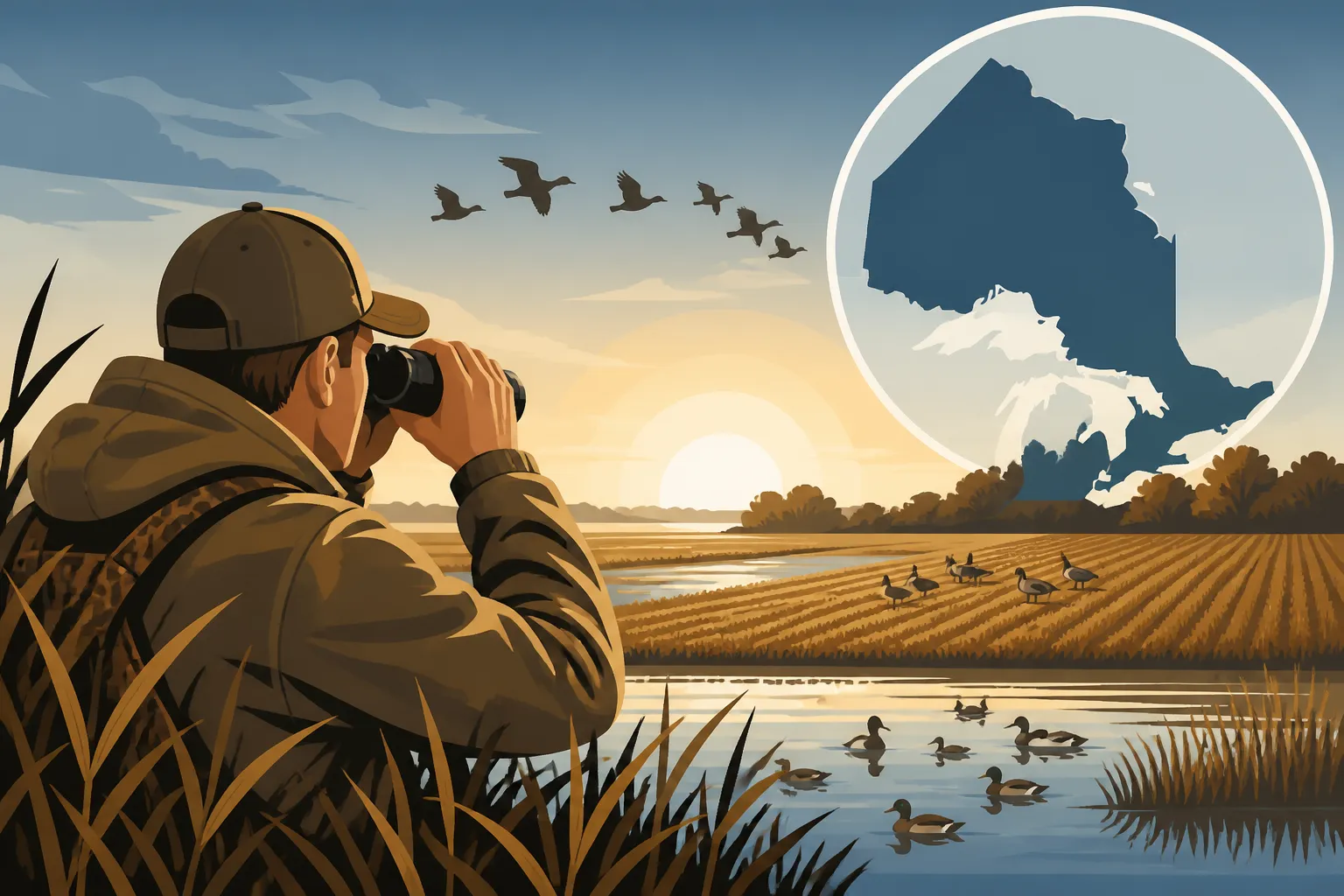
The most fundamental tools in a waterfowl scout's arsenal are high-quality optics. Binoculars are essential for scanning broad areas, picking out distant flocks, and identifying species. A good pair of 10×42 or 12×50 binoculars can reveal subtle movements and concentrations of birds from a considerable distance. For even greater detail and positive identification from far away, a powerful spotting scope (20-60x magnification) is invaluable. Guides often set up their scopes on tripods at strategic vantage points – a hilltop overlooking a valley, a roadside pull-off, or the edge of a large field. This allows them to watch birds undisturbed, noting their exact flight paths, entry and exit points in fields, and feeding behaviour.
In recent years, drones have become another tool in some guides' kits, though their use requires careful consideration of regulations and ethics. A drone can quickly survey a large marsh or field, helping to locate concentrations of birds that might be hidden from ground-level observation. However, guides must ensure they operate drones legally, avoiding harassment of wildlife and respecting privacy. The key is to use them for reconnaissance, not to "herd" or intentionally disturb birds. A guide might use a drone early in the morning, high above a vast tract of farmland, to spot flocks of geese feeding on a distant Hunting a Field of Standing Corn or Hunting a Winter Wheat Field before ever stepping foot in the area. This allows them to narrow down their physical scouting efforts.
Mapping and Technology: Digital Eyes on the Landscape
Modern technology has revolutionized the way waterfowl guides scout. Gone are the days of relying solely on paper maps and hand-drawn notes. Today, GPS units and advanced mapping applications are indispensable. Apps like GoHunt or even the mapping features found on platforms like BookYourHunt allow guides to overlay satellite imagery with property lines, topography, and even public access points. This is critical for knowing where they can legally hunt and scout, especially when dealing with a patchwork of private and Hunting Ontario's Crown Land.
A guide might spend hours before the season even begins digitally "scouting" an entire Wildlife Management Unit (WMU). They'll identify potential feeding areas – large agricultural fields, particularly those with corn, wheat, or soy stubble. They'll mark potential roosting locations – large bodies of water, secluded marsh systems, or even open sections of rivers. Then, as the season progresses, they use these apps to mark actual bird sightings, flight paths, and even previous hunt setups. This creates a detailed, living map of bird activity throughout their hunting territory. For instance, if a guide observes geese consistently flying over a particular treeline to get to a field, they'll mark that flight corridor in their app. This digital record-keeping is vital for long-term pattern recognition and helps them respond quickly to changes.
Good Old-Fashioned Legwork: Boots on the Ground (or Boat in the Water)
While optics and digital maps are powerful, there's absolutely no substitute for getting out there and seeing things with your own eyes. This "boots on the ground" approach is the backbone of truly effective waterfowl scouting. Guides spend countless hours driving rural backroads, often at dawn and dusk, looking for birds flying, feeding, or loafing. They'll pull over, glass fields, and listen for the tell-tale honks or quacks that betray a flock's presence.
This also extends to physical inspection of fields. It's one thing to see birds in a field from a distance; it's another to actually walk the edges (with permission, of course) and examine the evidence they leave behind. Fresh droppings, plucked stubble, and tracks tell a story about the species, numbers, and how recently they were present. For marsh hunting, "boat in the water" is equally important. Guides will quietly motor or paddle through wetlands, observing ducks, identifying active areas, and noting water depths and suitable spots for decoy spreads or blinds. This hands-on, immersive scouting is crucial for verifying what they see from a distance and understanding the nuances of how the birds are using the landscape. For example, a guide planning a layout hunt in a cut bean field might drive to the field, then walk a portion of it, checking for low spots that collect water after a rain, or areas where the stubble is thickest to provide better concealment for their spread. Scouting Fields for Ontario Waterfowl is a constant, physical commitment.
The Daily Scouting Ritual: A Step-by-Step Breakdown
Scouting for waterfowl isn't a random endeavor; it's a systematic, almost ritualistic process that guides follow to ensure they have the most up-to-date information. It involves specific efforts at different times of the day, each designed to answer particular questions about bird movement and behavior.
Pre-Dawn Reconnaissance: Observing Flight Patterns
One of the most critical times for waterfowl scouting is the hour or two before legal shooting light. This pre-dawn period is when ducks and geese leave their nighttime roosting areas and head towards their primary feeding grounds. A guide positioned strategically along common flight corridors can observe these movements, gaining invaluable insight into where the birds are heading for their morning meal.
Imagine a guide bundled up in their truck, parked discreetly on a gravel road that borders a large tract of farmland, maybe near the Trent River. It's still dark, but the eastern sky is just beginning to lighten. They're listening intently, binoculars at the ready. Suddenly, they hear the distant murmur of geese, growing louder. Soon, silhouetted against the paling sky, V-formations of Canada geese begin to appear, heading purposefully towards a particular block of fields. The guide notes their altitude, direction, and the exact fields they settle into. This observation tells them precisely where the birds want to be that morning, which is the most crucial piece of information for planning a successful hunt. It’s an immediate, real-time update on the birds’ intentions. This kind of observation is far more reliable than relying on reports from yesterday, especially during peak migration or after a major weather event. This early morning ritual helps them decide exactly where to be for Field Hunting Geese in Ontario Stubble.
Mid-Day Investigation: Locating New Feeding Areas
While mornings are about observing where birds go to feed, the middle of the day is often used for proactive investigation – finding where they might feed next, or confirming where they have been. After the morning flight, waterfowl typically loaf on water or in secure areas before potentially moving to secondary feeding sites or returning to main feeding grounds in the late afternoon. This mid-day lull gives guides a window to conduct thorough ground checks without disturbing active birds.
During this time, a guide might drive miles of backroads, specifically looking for new concentrations of birds in fields that haven't been active previously. They'll also stop and walk the edges of potential fields, looking for fresh sign. Are there new droppings in a recently cut soybean field? Is the stubble in a particular cornfield freshly "clipped" by feeding geese? These subtle clues indicate recent activity and signal that birds are now using this area. It's also a prime time to knock on doors and ask for landowner permission for newly discovered hot spots, leveraging local relationships. If a guide spotted a large raft of ducks resting on a remote lake earlier, they might use the mid-day to drive to the nearest access point and observe whether those ducks eventually peel off towards smaller, hidden potholes or marshes in the surrounding bush. This is also when they can check in on areas further afield that are part of Waterfowl Hunting Across Ontario.
Evening Roosting Spot Tracking: Predicting Tomorrow's Movement
Just as crucial as the morning flight is the evening return to the roost. Waterfowl typically fly from their feeding grounds back to a safe body of water – a large lake, a secluded marsh, or a wide river – to spend the night. Observing this evening flight helps guides predict where the birds will originate from the next morning. It completes the picture of their daily routine.
As the sun begins to set, a guide might position themselves near a known large roosting lake or marsh. They'll watch the skies for incoming flocks, noting the direction they're flying from. If hundreds of geese are streaming in from the west, it tells the guide that their feeding grounds for the day were somewhere to the west of the roost. This information, combined with their morning observations and mid-day checks, allows them to piece together the full daily cycle of the birds. It's like solving a puzzle; each piece of observation from dawn, noon, and dusk fits together to show the complete picture of bird movement. Knowing where the birds are roosting helps the guide plan their approach and setup for the next morning, ensuring they are positioned correctly to intercept the outgoing flight. This might involve setting up a large spread of decoys in a field, knowing exactly where the birds are coming from to reach their Setting a Goose Spread in Cut Corn.
The Art of Interpretation: Reading the Signs
Beyond simply observing where birds are, a truly skilled waterfowl guide possesses the art of interpretation. They don't just see a field with geese; they understand why the geese are there, what they're doing, and how external factors might influence their behavior. This deep understanding turns raw observations into actionable hunting strategies.
Droppings, Feathers, and Tracks: The Story on the Ground
When a guide walks a field, they're not just looking for birds; they're looking for evidence of birds. Fresh droppings are perhaps the most telling sign. The size and shape can help identify the species (large, green-brown smears for geese; smaller, dark for ducks), and the moisture content indicates how recently the birds were present. Plentiful, fresh droppings in a particular section of a cut cornfield mean the birds have been actively feeding there, and likely in large numbers.
Similarly, plucked stubble – corn kernels or grain heads cleanly stripped from their stalks – clearly indicates recent feeding activity. Finding a concentration of plucked stubble mixed with fresh droppings is a prime indicator of a current hot feeding area. Feathers can also provide clues, especially during molting season. Tracks in mud or soft ground around water sources can tell a guide about bird traffic and species. For example, finding numerous mallard tracks leading into a secluded pothole with fresh droppings suggests it's an active feeding and loafing spot. A guide might note that a specific ditch line within a Hunting a Soybean Field at Dusk consistently holds more droppings, indicating it's a preferred flyway or feeding lane within that larger field. These tangible signs confirm what the optics might suggest from a distance and help fine-tune a setup.
Weather and Wind: The Unseen Influencers
Perhaps no other type of hunting is as profoundly impacted by weather as waterfowl hunting. Wind, temperature, precipitation, and major fronts dictate bird movement, feeding intensity, and flight patterns. A good guide doesn't just check the forecast; they understand how various weather conditions influence their quarry.
- Wind: Wind direction is critical for decoy spreads, as birds almost always land into the wind. Guides need to know the prevailing wind for the next day to orient their decoys correctly and position their blinds for concealment. Strong winds can also push birds lower and make them fly faster, affecting shot placement. If the wind suddenly shifts 180 degrees, a well-placed spread from yesterday will be entirely wrong today.
- Temperature: Drops in temperature, especially sharp cold fronts, often trigger mass migrations, bringing new birds into the area. Conversely, unseasonably warm spells can make birds lazy and less active. A guide will monitor these temperature shifts, knowing when to expect new waves of Ontario's Ducks and Geese by Flyway to arrive.
- Precipitation: Rain, snow, or fog can ground birds or alter their flight paths. Heavy rain can cause birds to seek shelter, while light rain might make them more active. Snow can make fields more attractive as food sources become exposed, while also making it easier to spot birds against a white backdrop.
- Fronts: Major weather fronts can dramatically change bird distribution. A strong northern cold front, for instance, might push a new influx of ducks and geese south into Ontario, requiring guides to scout for entirely new birds that have just arrived. Conversely, a warm front might signal a movement out of the area. A guide might observe that during a heavy fog, ducks are flying lower and closer to the marsh edge, providing different shooting opportunities than on a clear day for Marsh Hunting Ducks on the Great Lakes. Understanding these atmospheric influences allows guides to anticipate shifts and adjust their scouting efforts accordingly.
The Art of Adaptation: Adjusting Strategies on the Fly
Even with meticulous daily scouting, waterfowl hunting rarely goes exactly as planned. Birds are wild animals, and their behavior can be unpredictable. This is where a guide's ability to adapt, to pivot their strategy based on real-time observations, truly shines. It's about having a Plan B, C, and D, and the experience to know when to implement each one.
Decoy Spreads and Blind Placement: The Subtle Science
Scouting tells a guide where the birds are, but successful hunting also depends on how you present yourself to those birds. This involves the subtle science of decoy spreads and blind placement. A guide doesn't just throw out a dozen decoys; they arrange them in specific patterns that mimic natural feeding or resting birds, taking into account wind direction, sun angle, and the birds' observed flight patterns.
For instance, if daily scouting reveals that geese are consistently landing at the far end of a cut cornfield, a guide will set up their spread to funnel birds into that preferred landing zone, ensuring the kill hole is right in front of the blind. If birds are wary and circling high, a larger, more realistic spread might be deployed. If the wind shifts mid-morning, a guide might even re-orient a portion of their spread to maintain its effectiveness. Similarly, blind placement is crucial for concealment. Guides learn to read the terrain, using natural features like brush lines, fencerows, or depressions in a field to hide hunters effectively. They might use a layout blind in an open stubble field, or build a natural blind from surrounding vegetation along a marsh edge. The scout's knowledge of the exact field contours is vital for this. Hunting Canada Geese on Ontario Farmland demands this level of precision.
Calling Sequences and Flagging: Speaking the Birds' Language
Good scouting gets birds close, but effective calling and flagging often seal the deal. Waterfowl guides spend countless hours practicing their calling, perfecting the range of honks, clucks, quacks, and growls that mimic real birds. Daily observations during scouting inform their calling strategy. Are the birds responding to aggressive calling, or are they more receptive to softer, contented feeding calls?
Similarly, flagging – using a large, dark flag to simulate a landing bird – can be incredibly effective, especially for geese. Guides use flagging to catch the attention of distant birds, turn them, and draw them closer. The timing and intensity of both calling and flagging are adjusted based on how the birds are reacting. If incoming geese are shying away from aggressive calls, a guide will quickly shift to softer, more subtle sounds. If birds are ignoring a flag, they might try a different rhythm or movement. It's a constant dialogue with the birds, informed by what was observed during the dawn, mid-day, and evening scouting trips. This dynamic interplay between observed bird behavior and hunter technique is a hallmark of successful guided Waterfowl Hunting Across Ontario.
Deciding When to Pull the Plug: Knowing When to Move
Perhaps one of the hardest but most important decisions a guide makes, often directly informed by scouting, is knowing when to abandon a spot and move to another. It's easy to get attached to a specific field or marsh, especially if it was productive in the past. However, if daily scouting shows that the birds have completely abandoned an area, or if they are simply not responding to the setup, a good guide will make the tough call to pull up stakes and relocate.
This might happen if unexpected hunting pressure pushes birds out of a planned field, or if a sudden weather change makes a particular marsh unappealing. Having alternative spots identified through diligent scouting is paramount here. A guide might have three or four potential fields or water bodies identified as "Plan A," "Plan B," etc., all based on recent bird activity. If Plan A isn't working, they don't waste precious hunting time; they swiftly move to Plan B. This adaptability, this willingness to shift strategies on the fly, is often the difference between a tough day and a successful one, and it's entirely predicated on having up-to-date, accurate scouting information. It allows guides to ensure their clients have the best possible chance, whether Hunting Ducks in an Ontario Cattail Marsh or Diver Hunting Ontario's Big Water.
Disclaimer
This article is for general informational purposes only and does not constitute professional advice. Laws, prices and regulations vary by location and change over time. Consult a qualified professional for guidance on your specific situation.