Booking Around Ontario’s Rut Weeks
Trying to time your deer hunt in Ontario perfectly around the elusive rut can feel like chasing a ghost, can't it? We all dream of those magical few weeks when bucks are on the move, chasing does, and seemingly throwing caution to the wind. But the reality of planning a trip, especially with an outfitter, often means locking in dates months or even a year in advance, long before nature decides precisely when the action will heat up. This guide is here to walk you through the nuances of booking your Ontario deer hunt to maximize your chances during the most exciting time of the season, understanding the factors at play, and how to best communicate with outfitters to make that dream a reality.
Understanding the Rut in Ontario
The rut is a phenomenon that every deer hunter obsesses over, and for good reason. It's that annual period when white-tailed deer are actively breeding, leading to a dramatic shift in their behaviour. For hunters, it represents a golden window of opportunity, but it's crucial to understand what the rut actually entails and how it plays out in Ontario's diverse landscapes.
What is the Rut and Why Does it Matter to Hunters?
At its heart, the rut is the deer breeding season. It's driven by a complex interplay of hormones, daylight hours, and environmental factors. For bucks, this means an intense period of seeking out does, establishing dominance, and breeding. They become significantly more active, often moving during daylight hours they'd typically reserve for the cover of darkness. This increased movement is precisely why it's such a critical time for hunters. Bucks, normally elusive and wary, might expose themselves more frequently as they tirelessly search for receptive does.
You'll notice changes even before the actual breeding kicks off. Bucks will start scraping the ground and rubbing their antlers on trees, leaving behind scent markers and visual cues to declare their presence and dominance. These visible signs are like a flashing billboard telling other deer (and you!) that the main event is just around the corner. When the primary chasing phase begins, it's common to see bucks trotting with their nose to the ground, trailing does, or even engaging in dramatic chases right through open areas. This heightened activity makes them more vulnerable and more responsive to calls, rattling, and decoys, turning a quiet hunt into a potentially adrenaline-pumping experience. For many, Hunting the Rut in Early to Mid November is the absolute peak.
Regional Variations and the Rut Calendar
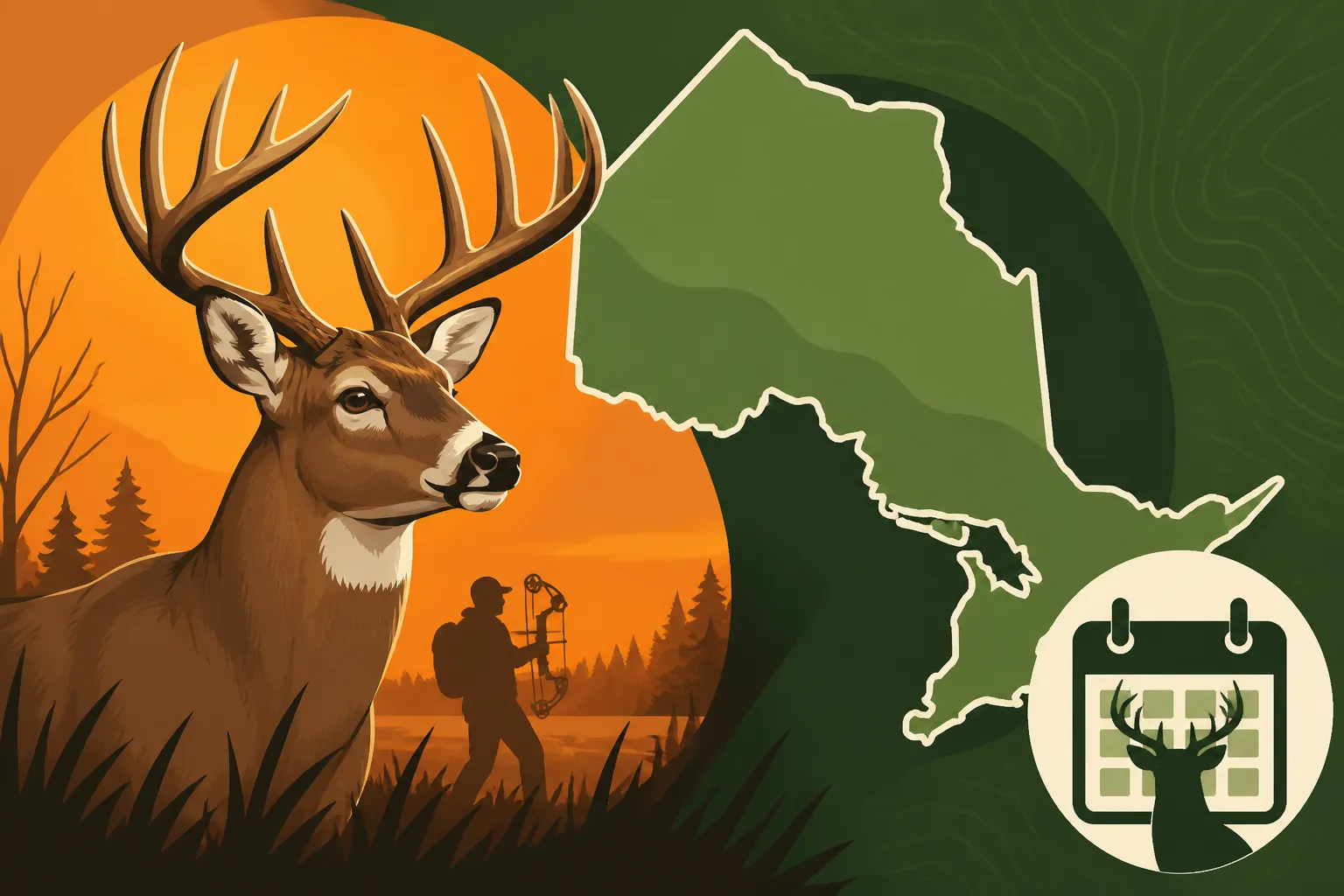
While we talk about "the rut" as a singular event, it's actually a bit more nuanced in a province as vast as Ontario. The peak breeding activity, when the majority of does come into estrus, tends to be remarkably consistent year to year, typically falling within a window in early to mid-November across much of the province. However, there can be slight geographical shifts. In the far northern reaches of Ontario, where winter arrives earlier and the deer population might face tougher conditions, the rut can sometimes kick off a touch earlier, perhaps in late October, though this is less pronounced than in other regions of North America. Conversely, in the milder climates of Southern Ontario's agricultural belt, the peak might lean a bit more towards mid-November.
What truly varies more than the peak breeding dates themselves is the intensity and visibility of rut activity. In areas with higher deer densities, like parts of southwestern Ontario, the signs of the rut, such as scrapes and rubs, can be more abundant, and the chasing more obvious simply because there are more deer interacting. In sparser, big-woods environments, you might have to work harder to find those signs, even if the breeding is happening at the same time. The timing of When Ontario's Whitetail Rut Peaks is a hot topic among hunters, and local knowledge is key.
Signs of the Approaching Rut
Paying attention to the subtle (and not-so-subtle) cues deer leave behind can help you predict when the rut is about to ignite, even if you’ve booked your hunt months in advance. One of the earliest and most exciting signs is the sudden appearance of fresh scrapes. These are areas where a buck paws away leaf litter, urinates on the exposed dirt, and often rubs the overhanging branch with his forehead glands. They're communication hubs, telling other deer in the area who's around and who's ready to breed. Finding a cluster of fresh scrapes can indicate a buck's home range and an imminent increase in activity.
Another clear indicator is fresh rubs on trees. Bucks rub their antlers on saplings and small trees, not just to remove velvet but also to deposit scent from glands on their forehead and preorbital area. A network of fresh rubs along a travel corridor or near a bedding area signals a buck's presence and his readiness to engage. As the rut progresses, you'll also start seeing more chasing behaviour, where a buck actively pursues a doe, often with his nose to the ground, trying to pin her down for breeding. Sometimes, you'll hear grunts and snorts, or even the telltale crash of antlers as bucks spar for dominance. Being attuned to these signs will make your time in the field, whether self-guided or with an outfitter, far more productive.
The Challenges of Timing Your Hunt to the Rut
Ah, the rut! It's the holy grail for deer hunters, that magical time when bucks throw caution to the wind and movement explodes. But actually booking a hunt to coincide with this often fleeting period is a whole different ballgame. It's not as simple as picking a calendar week; there are so many variables that can make it feel like you're trying to hit a moving target.
Unpredictability of Nature
One of the biggest frustrations is that nature doesn't operate on a fixed schedule. While the biological peak of the rut, the estrus cycle of the does, tends to be fairly consistent year after year (usually the first couple of weeks of November in Ontario), the visible activity can vary wildly. This is where the unpredictability really kicks in. A sudden cold snap can trigger more daytime movement, making bucks more visible. A warm, sunny week, however, might keep them more nocturnal or in thicker cover, even if the does are receptive.
Then there's the moon phase. Some hunters swear by the full moon, others prefer the dark of the moon. While scientific evidence on its direct impact on rut activity is debated, it definitely affects when deer move. A bright full moon can mean more nighttime activity, making daylight hunting tougher. Heavy rainfall or even early snowstorms can also affect deer movement patterns, pushing them into sheltered areas or making them less eager to travel widely. So, even if you've picked the perfect week on paper, Mother Nature always has the final say, and that's a truth every hunter eventually learns.
Booking Constraints and Outfitter Availability
This is where the rubber meets the road, especially if you're planning a guided hunt. Everyone, and I mean everyone, wants to hunt those prime rut weeks. Outfitters know this, and those weeks are often the first to be booked, sometimes a year or even two in advance. Imagine trying to get a reservation at the hottest restaurant in town on Valentine's Day – it's a similar level of demand! This means if you're just starting to look for a rut hunt a few months before the season, your options will be severely limited, or you might find yourself settling for less-than-ideal dates.
Outfitters often structure their packages around these peak times, and their availability is finite. They have a certain number of stands, a certain number of guides, and a certain capacity for hunters. Once those spots are filled, they're gone. This scarcity drives up demand and means you need to be proactive and decisive. If you're using a resource like BookYourHunt to browse potential outfitters, you'll quickly see that prime rut dates are often marked as "unavailable" surprisingly early in the planning process. Don't be discouraged, but be prepared to plan far, far ahead.
Balancing Rut Timing with Other Priorities
Let's be real, most of us aren't professional hunters. We have jobs, families, and other commitments that dictate when we can actually take time off. Trying to align your vacation days, your spouse's schedule, and the kids' school holidays with the perfectly timed rut week can be a logistical nightmare. Sometimes, even if an outfitter does have a spot open during the peak, you simply can't make it work with your personal life.
The financial aspect also plays a role. Guided hunts, especially during prime times, represent a significant investment. You might have to save up for months or even years. This long-term financial commitment requires careful planning, and sometimes, the perfect rut week clashes with other major expenses or financial obligations. It's a constant juggling act, and sometimes you just have to accept that "good enough" dates are better than no hunt at all. Recognizing these real-world constraints is essential for setting realistic expectations for your Ontario hunting adventure.
Strategies for Booking During Peak Rut Weeks
So, you're convinced that hunting during the rut is where it's at, and you're ready to tackle the challenge of securing those coveted dates. It’s certainly achievable, but it requires a proactive and strategic approach. Think of it less like a last-minute shopping trip and more like planning a major expedition.
Early Planning and Commitment
This is arguably the most critical piece of advice for anyone hoping to hunt during Ontario's peak rut. Outfitters often book their prime weeks a year, sometimes even two or three years, in advance. As soon as you decide that a rut hunt is on your radar, start your research. Look into potential outfitters, explore their offerings, and don't hesitate to reach out to them to inquire about availability for future seasons. Many outfitters operate on a first-come, first-served basis for their most popular slots.
Being able to commit early means you get your pick of dates. If an outfitter offers a "rut week" package, these are the ones that vanish quickest. Be prepared to put down a deposit well in advance to secure your spot. It feels like a big commitment to plan so far ahead, but it's the reality of hunting the most sought-after periods. Consider calling outfitters shortly after the current season ends to get on their list for the next year or the year after. This foresight is your best friend when trying to hit that sweet spot of deer activity. When looking at outfitters, consider asking about Booking a Father and Child Hunt or Guided Hunts for a First-Time Hunter if you're bringing along new hunters, as availability might differ for these special packages.
Leveraging Outfitter Knowledge and Experience
Ontario outfitters, especially those who have been operating in the same area for decades, are an invaluable resource for understanding the local rut. They spend countless hours in the woods, not just during hunting season but throughout the year, observing deer movement, checking trail cameras, and monitoring breeding cycles. They often have a deep, almost intuitive, understanding of when the true peak of visible rut activity tends to occur in their specific Wildlife Management Unit (WMU).
When you speak with a potential outfitter, don't just ask "When is your rut week?" Instead, engage them in a conversation. Ask them about their historical success rates during specific weeks of November over the past several years. Inquire about how they adjust their hunting strategies based on early or late rut activity. A good outfitter will be transparent and share their insights. They might even suggest a week that isn't their "official" rut week but that they've found to be incredibly productive due to local conditions or a slight shift in the breeding cycle. Resources like GoHunt can help you research different regions and outfitters, providing some background to inform your questions. Ultimately, Choosing the Right Ontario Outfitter involves trusting their expertise.
Exploring Different Hunt Structures
Not all guided hunts are created equal, and understanding the different structures can give you more flexibility when booking around the rut.
- Fully Guided Hunts: These are often the most structured and thus the hardest to book during peak rut. You'll typically have a dedicated guide, prepared meals, and pre-scouted stands. The advantage is a highly organized experience, but the disadvantage is limited availability during peak times.
- Semi-Guided Hunts: This is a fantastic middle-ground. The outfitter usually provides accommodation, general area knowledge, maps, and perhaps access to some pre-scouted spots, but you do more of the actual hunting, tracking, and recovery yourself. These can offer a bit more flexibility in booking, as the outfitter isn't dedicating a guide purely to you for the entire duration. They might have more capacity during the fringes of the rut.
- Drop Camps: For the more adventurous and self-reliant hunter, a drop camp might be an option. An outfitter or air service simply transports you and your gear to a remote location, often on Crown Land, and picks you up at a pre-arranged date. You are entirely on your own for the hunt. While less common for whitetail rut hunts in Ontario compared to, say, moose or bear, some outfitters might offer a version of this. The ultimate flexibility is with you, but so is all the responsibility. This structure might open up possibilities if other options are fully booked, especially if you're keen on Hunting Ontario's Crown Land during the rut.
By being open to different hunt types, you increase your chances of finding an available slot, even if it's not the exact traditional "fully guided" package during the absolute peak.
Alternative Approaches When Peak Rut Weeks Are Booked
It’s a common scenario: you’ve got your heart set on an Ontario rut hunt, but those prime November weeks are fully booked, perhaps a year or two out. Don't despair! While the peak of the rut is undeniably exciting, there are fantastic opportunities to be had just outside that narrow window. Smart hunters know that the "shoulder seasons" around the rut can be incredibly productive, often with less competition and more available bookings.
Hunting the Pre-Rut and Post-Rut
The pre-rut, typically spanning late October into early November, can be absolutely thrilling. During this phase, bucks are feeling the hormonal surge and are starting to actively seek out the first does coming into estrus. They are busy laying down scrapes and rubs, establishing dominance, and covering ground looking for receptive females. While you might not see the frantic chasing of the peak rut, you’ll witness intense buck sign and often catch mature bucks on their feet during daylight hours as they scent-check travel corridors and bedding areas. There's less pressure from other hunters, and bucks are often still on somewhat predictable patterns related to food and cover, which makes them easier to pattern. The air is crisp, the leaves are falling, and the woods are alive with anticipation.
The post-rut, usually the latter half of November and into December, is another underrated gem. By this point, most of the does have been bred, but there will always be a few stragglers who come into estrus later. Bucks, exhausted from the intensity of the peak rut, are still cruising, sometimes desperate to find any remaining receptive does. Crucially, they are also focused on rebuilding their body mass before winter sets in. This means they'll be hitting prime food sources hard. Often, the weather is colder, and deer might move more during the day to feed. While the aggressive chasing might have subsided, a tired, hungry buck can be just as vulnerable, especially if you understand their need to feed. These weeks often see fewer hunters in the woods, making for a quieter and often more relaxed experience. You might even catch the tail end of Hunting Ontario's November Gun Season.
Focusing on Specific Habitat and Food Sources
When the peak chasing of the rut isn't in full swing, deer behaviour shifts, and successful hunting means shifting your strategy too. Instead of relying solely on random buck movement, you need to key in on their fundamental needs: food, water, and cover. During the pre-rut, bucks are still relatively focused on putting on weight. Identify prime food sources in your area – whether it's acorns in a hardwood ridge, browse in a regenerating clearcut, or agricultural fields like standing corn or soybeans in Southern Ontario. Bucks will be visiting these areas, especially at dawn and dusk. Setting up on travel corridors leading to and from these food sources can be highly effective.
Similarly, during the post-rut, bucks become even more food-driven. They need to recover from the physical toll of breeding. Concentrate your efforts around the most nutritious and readily available food. Look for late-season brassicas if available, browse in cedar swamps where deer often Where Ontario Whitetails Yard in Deep Snow, or hidden pockets of acorns. Understanding how deer utilize their habitat in relation to their caloric needs will guide you to where the deer are, even if they aren't actively chasing. This means scouting for fresh sign like droppings and feeding activity rather than just scrapes and rubs.
Being Flexible with Your Dates
If you're dead set on hunting around the rut but those prime peak weeks are perpetually booked, flexibility with your dates is your greatest asset. Instead of rigidly aiming for "November 7th to 14th," expand your window. Can you go a week earlier into late October? Or perhaps a week or two later into the middle or end of November? Often, even moving your hunt by a few days can open up availability with an outfitter.
Talk to the outfitter about their calendar. They might have cancellation spots open up, or perhaps they have a unique setup that allows them to accommodate hunters during slightly less popular times. Being able to say, "I can come any week between October 25th and November 20th," gives them far more options to fit you in. Remember, even during the "off-peak" rut weeks, there will still be deer activity. Not every doe comes into estrus on the same day, and not every buck is done breeding. A flexible hunter with a good strategy can often find just as much success as someone who rigidly clings to the "peak" dates.
What to Discuss with Your Outfitter About the Rut
Booking a guided hunt during or around the rut is a significant investment, both in time and money. To ensure you're setting yourself up for the best possible experience, it's vital to have clear and in-depth conversations with your potential outfitter. Don't be afraid to ask detailed questions; a reputable outfitter will appreciate your thoroughness and be happy to provide answers.
Asking About Historical Success Rates During Specific Weeks
When talking to an outfitter, it's easy to get caught up in generalities like "our rut hunts are great!" To get a more realistic picture, dig a little deeper. Ask for specific success rates or observations for particular weeks of the season over the past few years. For example, instead of just asking about "November," ask, "What was the success rate like during the first week of November last year, compared to the second or third week?"
A good outfitter should be able to provide this kind of detail, or at least speak to their observations. They keep records, or at the very least, vivid memories of what happened during different phases of the rut. This information helps you understand their actual experience and how reliable their "rut window" truly is. If they can show you that the second week of November consistently sees a higher harvest rate for mature bucks, that's valuable insight for your booking decision. It's about managing expectations and understanding the reality of What an Ontario Guided Deer Hunt Costs versus the potential return.
Understanding Their Rut Strategy
Every outfitter has a philosophy and a strategy for how they approach hunting during the rut. It's crucial that their approach aligns with your expectations and hunting style. Ask them:
- What methods do you primarily use during the rut? Do they rely heavily on pre-set stand sites over scrapes? Do they incorporate rattling and calling? Do they do drives in certain scenarios?
- How do you adjust for different phases of the rut? Do they have a plan for the early seeking phase, the peak chasing, and the late post-rut cruising? For example, during the peak chasing, stands near doe bedding areas might be hot, while in the post-rut, targeting food sources becomes paramount.
- What kind of terrain do you focus on? Are they hunting dense bush, mixed forest, or open farmland? Different terrain dictates different strategies. For instance, Rattling Volume in Thick Bush will be different than in open hardwoods.
Understanding their strategy helps you visualize the hunt and ensures you're comfortable with their approach. It also helps you prepare yourself in terms of what gear to bring and what skills you might need to practice beforehand.
Confirming Hunt Party Size and Pressure
Hunting during the rut, especially on private land or specific outfitter leases, is often about managing pressure. Too many hunters in a small area can quickly make deer nocturnal or push them off the property entirely. Ask your outfitter:
- How many hunters do you typically take during a specific rut week?
- What is the hunter-to-guide ratio? (One-on-one guiding usually offers a more personalized experience but might be more expensive, while two-on-one or three-on-one is common.)
- What is the size of the hunting area? Understanding the acreage available per hunter helps gauge the potential for over-pressuring the deer.
- How are stands rotated? A good outfitter will have a system for rotating stands to avoid burning out prime locations and to keep deer guessing.
Getting these details will give you a clear picture of what the hunting experience will be like. A more private, less pressured hunt often leads to better opportunities for mature bucks, particularly during the intense period of the rut. It's also worth clarifying if they operate a "group tag" system for moose or other species, as Ontario Group Moose Tag Rules can impact hunter numbers in different ways.
| Rut Phase | Typical Dates (Ontario) | Buck Behaviour | Hunter Strategy | Booking Considerations |
|---|---|---|---|---|
| Pre-Rut | Late October – Early November | Laying down scrapes/rubs, aggressive sparring, seeking first receptive does. | Hunt travel corridors between bedding/feeding, mock scrapes, calling/rattling. | Often easier to book, less competition. Good value. |
| Peak Rut | Early – Mid November | Intense chasing of does, little caution, covering lots of ground. | Focus on doe bedding areas, pinch points, funnels. Aggressive calling/rattling. | Highest demand, booked earliest. Expect higher prices. |
| Post-Rut | Mid – Late November (into Dec.) | Still cruising for late-estrus does, recovering energy, highly food-driven. | Target prime food sources (acorns, brassicas), thick cover near food, still-hunting. | Easier to book, good for patient hunters. Less visible chasing. |
Making the Most of Any Rut Period
Even if you’ve meticulously planned your trip during what you believe to be the absolute peak of the rut, or if you end up hunting the shoulder seasons, success is rarely guaranteed. Deer hunting, especially for elusive whitetails, is a game of skill, patience, and adaptability. Here’s how you can make the absolute most of whatever rut period you find yourself in.
Scouting and Pre-Season Preparation
Even if you’re booking a fully guided hunt, don’t underestimate the value of your own scouting and preparation. While your outfitter will have done the heavy lifting, knowing the lay of the land, understanding deer movement patterns, and recognizing fresh sign can significantly boost your confidence and effectiveness. If you have the opportunity to arrive a day or two early to walk some of the non-hunting areas with your guide, take it. Just observing the general terrain, locating potential funnels, or spotting recent rubs from the truck can give you a better feel for the property.
For those planning a semi-guided or self-guided hunt on public land, pre-season scouting is paramount. Use maps and satellite imagery to identify potential bedding areas, food sources, and travel corridors. Look for natural pinch points, creek crossings, or old logging roads that deer might use. Consider putting out trail cameras in the weeks leading up to your hunt to get an idea of what bucks are in the area and when they’re moving. Even on Crown Land, taking the time for Scouting a Wildlife Management Unit will yield dividends. The more you understand the specific area, the better equipped you'll be to adapt to real-time conditions during the hunt.
Adaptability in the Field
The rut, as we've discussed, is unpredictable. One day might be scorching hot, the next a frigid gale. Deer activity can be explosive one morning and eerily quiet the next. A successful hunter isn’t rigid; they're adaptable. If the morning stand isn't producing, perhaps a mid-day still-hunt through a bedding area is in order. If the wind shifts unexpectedly, being able to quickly adjust your position or move to an alternative stand is critical.
Listen to your outfitter’s advice, but also trust your own instincts. If you’re seeing fresh sign in an area they hadn’t highlighted, mention it. A good guide will appreciate your observations and might adjust the plan. Carry extra layers of clothing for fluctuating temperatures, and always have a few different calling strategies in your pocket – grunts, bleats, rattling antlers – to see what the deer are responding to on a given day. The deer won't always follow the script, so you shouldn't either.
Persistence and Patience
Hunting during the rut is often portrayed as non-stop action, but the reality is that there can still be long periods of quiet. Bucks might be nocturnal for a few days, or simply be locked down with a doe in thick cover. Don't let a slow morning or a couple of uneventful days break your spirit. Persistence is key. That big buck could walk by at any moment, and if you’re not in your stand or actively hunting, you’ll miss the opportunity.
Patience goes hand-in-hand with persistence. Instead of bouncing from stand to stand, sometimes the best strategy is to sit quietly and let the woods come alive around you. Bucks on the move might circle downwind, or take their time approaching a calling sequence. If you're constantly fidgeting or moving too much, you'll spook them. Embrace the stillness, observe your surroundings, and be ready when the moment finally arrives. Remember, the rut isn't a guarantee of a harvest, but rather an increased opportunity. It rewards those who put in the time, stay focused, and remain patient, waiting for that one chance.
Disclaimer
This article is for general informational purposes only and does not constitute professional advice. Laws, prices and regulations vary by location and change over time. Consult a qualified professional for guidance on your specific situation.