Elk Hunting Ontario’s Bancroft Herd
For many Ontario hunters, the dream of pursuing elk is a relatively new and exciting prospect, born from successful conservation efforts. However, drawing one of those coveted tags, especially for the unique Bancroft herd, and then navigating the challenging terrain and elusive nature of these magnificent animals can feel like winning the lottery twice over. This comprehensive guide is dedicated to helping you understand the intricacies of elk hunting in Ontario, focusing specifically on strategies and insights for a successful hunt in the Bancroft region.
Understanding Ontario's Elk Restoration Story
Before we dive into the nitty-gritty of hunting, it's really important to appreciate the journey Ontario's elk population has taken. It wasn't that long ago that elk were virtually non-existent in our province, having been extirpated around the turn of the 20th century due to overhunting and habitat loss. The fact that we even have a chance to hunt them today is a testament to dedicated conservation efforts and the resilience of these animals.
A Brief History of the Bancroft Herd
The Bancroft elk herd, one of Ontario's most significant, isn't something that just appeared overnight. Its origins trace back to a reintroduction program initiated in the early 1990s. Elk were brought in from Alberta and released into areas that once supported them, primarily within the eastern and central regions of the province. The Bancroft area, with its mix of suitable habitat including large tracts of mixed forest, agricultural lands, and relatively low human population density in some zones, proved to be an ideal location for these animals to take root. It wasn't just a matter of dropping them off; intensive monitoring, habitat management, and public education campaigns were crucial for their survival and eventual growth. The early years were tough, but with careful management, the herd slowly started to expand its range and population. You can dive deeper into the full story of Ontario's Restored Elk Herd to grasp the scale of this achievement.
Why Elk Numbers Fluctuate
Like any wild population, the Bancroft elk herd experiences natural fluctuations in numbers. Several factors contribute to these shifts. Habitat quality and availability are paramount; changes due to logging, development, or natural events like severe weather can impact their food sources and cover. Predation, primarily from wolves and black bears, also plays a role, especially on calves. Disease, though less prevalent, can also cause localized impacts. Furthermore, annual hunting pressure, limited as it is, is carefully managed to ensure sustainable growth. The Ministry of Natural Resources and Forestry (MNRF) monitors these factors closely, conducting aerial surveys and collecting harvest data to inform management decisions. A harsh winter with deep snow can sometimes lead to increased winter kill, impacting the following year's calf survival and overall herd health. It's a delicate balance, and understanding these dynamics helps you appreciate why securing an elk tag is such a privilege.
The Unique Challenges of an Established Herd
Hunting an established herd like Bancroft's presents its own set of challenges, distinct from hunting in areas with vast, untouched wilderness. While the elk are wild, they are often in proximity to human activity, meaning they can be more wary and nocturnal. This is especially true as the season progresses and they've been pressured. They learn quickly, becoming masters of disappearing into the thickest cover at the slightest hint of danger. Furthermore, the Bancroft region, while wild in many parts, is also crisscrossed by private land, making access a critical component of any hunt. Knowing where you can and cannot hunt, and respecting property boundaries, is absolutely essential. This means a lot more door-knocking, map studying, and careful scouting than you might expect for a "wilderness" hunt. These elk aren't necessarily walking mile after mile in open country; they often stick to dense pockets of cover, only venturing out into fields or clearings under the cloak of darkness or during low-pressure periods.
Navigating the Ontario Elk Draw System
If you're dreaming of an Ontario elk hunt, the first hurdle, and arguably the biggest, is getting your hands on a tag. Unlike deer or bear, elk tags are extremely limited and allocated through a highly competitive draw system. It's not just about showing up with a licence; it's about playing the long game and understanding the application process.
Who Can Apply for an Elk Tag
The good news, and something that makes the Ontario elk hunt truly special, is that it is currently designated as a resident-only draw. This means that only Canadian residents who hold a valid Outdoors Card and the appropriate hunting license eligibility can apply for an elk tag. Non-residents, unfortunately, are not eligible. This decision helps to manage pressure on the nascent herd and prioritizes opportunities for Ontario's hunting community. To be eligible, you generally need to be at least 16 years of age and have successfully completed the Ontario Hunter Education Requirements. It's not just about having the card; you need to be in good standing, without any previous hunting violations that might revoke your privileges. This focus on resident hunters also fosters a stronger sense of local stewardship for the herd. For all the specifics, refer to the detailed guide on Ontario's Resident-Only Elk Draw.
The Application Process and Deadlines
The application process for an Ontario elk tag typically runs annually, usually opening in the spring and closing in early summer. It's managed through the provincial hunting license portal, where you'll select the specific Wildlife Management Unit (WMU) you wish to apply for, along with the desired tag type (bull, cow, or calf, if available). It’s crucial to mark these dates on your calendar because missing a deadline means missing out for the entire year. The application itself is fairly straightforward online, but making an informed choice about your WMU requires significant research into herd numbers, success rates, and available access. Many hunters use tools like GoHunt or the MNRF's own resources to scrutinize past draw results and herd data. Remember, you're competing against thousands of other hopeful hunters, so every bit of research helps.
Understanding Draw Odds and WMUs
The draw odds for an Ontario elk tag can be incredibly low, often in the single-digit percentages, especially for bull tags in prime WMUs. This is where understanding the system truly comes into play. Ontario's elk are primarily found in a few key WMUs, most notably those surrounding the Bancroft region. Each WMU has a limited number of tags allocated, based on population estimates and management goals. Some WMUs will have higher tag quotas, while others might offer a better chance at a particular type of animal (e.g., cow tags often have slightly better odds than bull tags, though still very competitive). There isn't a complex points system like some other jurisdictions; it's generally a random draw each year. This means every applicant, regardless of how many times they've applied, has an equal chance once their eligibility is confirmed. However, historical data can give you an idea of which WMUs are most popular and therefore have the toughest odds. A good starting point for your research would be the comprehensive article on Hunting Elk Around Bancroft, which delves into the specific WMUs and their characteristics.
Ontario Elk Draw Statistics (Example, hypothetical data)
| WMU | Primary Species Focus | Avg. Bull Tags Allocated (Annual) | Avg. Cow/Calf Tags (Annual) | Approx. % Success Rate (Draw) | Typical Terrain |
|---|---|---|---|---|---|
| 54 | Bull | 5 | 3 | 1.2% | Mixed forest, rocky terrain |
| 55 | Bull/Cow | 7 | 5 | 1.5% | Farmland fringe, dense bush |
| 57 | Cow/Calf | 2 | 8 | 2.0% | Rolling hills, scattered clearings |
| 58 | Bull | 4 | 2 | 0.8% | Remote boreal, extensive wetlands |
| 59 | Bull/Cow | 6 | 4 | 1.0% | Woodlots, private land dominant |
Note: These numbers are illustrative and do not reflect current official MNRF statistics, which can vary year to year. Always consult the most recent Ontario Hunting Regulations Summary for accurate information.
Key Hunting Strategies for Bancroft Elk
Once you've beaten the odds and drawn an elk tag, the real work begins. Hunting elk in Ontario, especially in the Bancroft area, is a challenging but incredibly rewarding experience. These animals are smart, powerful, and live in some dense, unforgiving country. Success hinges on thorough preparation and smart hunting tactics.
Scouting and Pre-Season Preparation
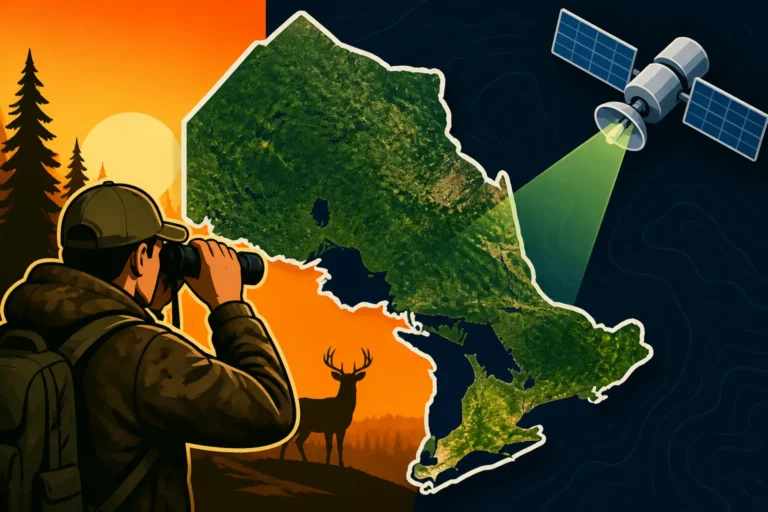
This is where your hunt truly begins, long before opening day. The Bancroft region is a mix of thick bush, agricultural fields, and private property, making scouting absolutely crucial. Start by familiarizing yourself with your chosen WMU using detailed topographic maps and satellite imagery. Tools like GoHunt can overlay public land boundaries and topographical features, helping you identify potential bedding areas, feeding zones, and travel corridors. Look for signs of elk activity: rubs on trees, fresh droppings, and well-used trails. Pay close attention to water sources, especially during dry periods.
Pre-season scouting also means understanding the lay of the land on the ground. Walk those potential travel routes, paying attention to wind currents and prevailing thermal drafts. Figure out access points and potential pinch points where elk might funnel. If you have any opportunity to hike in August or early September, you might even catch a bull still in velvet, giving you an idea of what kind of animals are in the area. This kind of intimate knowledge of your hunting grounds is invaluable when the season opens and the pressure builds. It’s not just about finding elk; it’s about understanding their patterns within specific patches of cover. Don't underestimate the benefit of Scouting a Wildlife Management Unit well in advance.
Calling Techniques for Ontario Elk
Calling can be incredibly effective for elk, especially during the rut, which typically peaks in late September and early October for Ontario's herds. However, it's not a "one size fits all" approach. Bulls respond to cow calls, chirps, and even bugles, but knowing when and how to use them is key. Early in the season, subtle cow calls or mews might entice a curious bull. As the rut intensifies, aggressive bugling can challenge a dominant bull or attract a satellite bull looking for an opportunity. However, in heavily pressured areas, over-calling or using overly aggressive tactics can spook wary elk.
Consider the environment you're hunting in. In dense Ontario bush, sounds don't travel as far, and pinpointing an exact location can be tricky. Use terrain features to your advantage, calling from high points or natural clearings where sound can project. Be prepared for a quick shot if an elk comes in silently. Sometimes, a "cow party" scenario, where you mimic a group of cows feeding, can be more effective than a solo bugle, as it sounds less threatening. And always, always be aware of other hunters who might also be calling. While distinct from moose, there are some valuable lessons to be learned from Calling a Bull Moose in the Rut regarding sound projection and animal response in our dense Canadian forests.
Understanding Elk Movement and Habitat Use
Elk are creatures of habit, but their habits are dictated by food, water, cover, and pressure. In the Bancroft area, you'll find elk utilizing a variety of habitats. They'll often bed down in thick conifer stands, especially cedar swamps or dense pine plantations, for security. These areas provide excellent thermal cover in cooler weather and escape routes. They will move to feeding areas, which can include clear-cuts with regenerating browse, agricultural fields (corn, alfalfa, winter wheat), or natural hardwood ridges where acorns or other mast might be dropping. Understanding their daily routine – from bedding to feeding and back – is paramount.
During the rut, bulls will be more focused on breeding, often covering significant ground searching for cows. Post-rut, they often become more reclusive, recovering from the exertion of the breeding season. The presence of water, such as beaver ponds or small creeks, can be a magnet for elk, especially in dry conditions. Look for these transition areas where different habitat types meet, like an Hunting a Cedar Swamp Edge or a Hunting a Hardwood Ridge for Whitetails, as these are natural travel corridors. When pressured, elk will often move to the most inaccessible, thickest cover available, making those areas prime spots to focus your efforts. GoHunt's mapping features are particularly useful here for identifying these key habitat types and transition zones.
Essential Gear for an Ontario Elk Hunt
Hunting elk in Ontario requires reliable gear that can stand up to the elements and the demanding nature of the hunt. This isn't a walk in the park; you'll likely be covering challenging terrain in potentially unpredictable weather. Being well-equipped can make the difference between a successful hunt and a frustrating, or even dangerous, experience.
Firearms and Ammunition Considerations
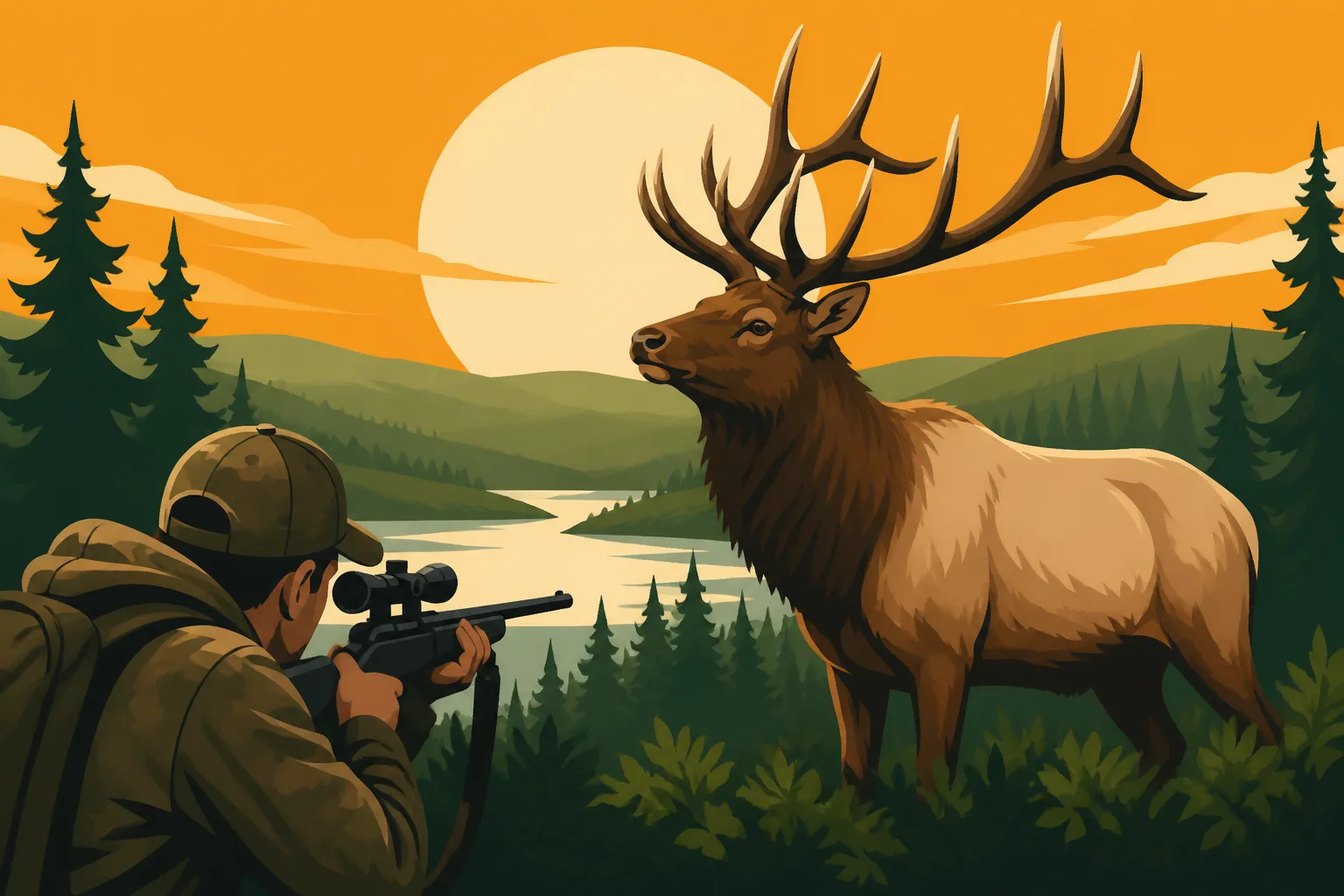
When it comes to firearms for elk, power and accuracy are key. Elk are large, tough animals, and a clean, ethical kill is always the goal. While many calibers can be effective, popular choices for elk in Ontario often include .30-06 Springfield, .300 Winchester Magnum, 7mm Remington Magnum, or even larger options like the .338 Winchester Magnum. The most important factor is bullet construction; choose a premium, heavy-for-caliber bullet designed for deep penetration and controlled expansion. This isn't the time for light, frangible bullets.
Shot placement is paramount, but having a caliber that delivers sufficient energy at range provides a margin of error. Rifles should be sighted in meticulously, and you should practice shooting from various field positions to ensure you're comfortable and accurate. For specific regulations on what you can use, always check the current Ontario Hunting Regulations Summary or consult a guide like Legal Firearms and Bows for Big Game. Remember, a powerful rifle is only as good as the shooter behind it.
Optics, Clothing, and Navigation Tools
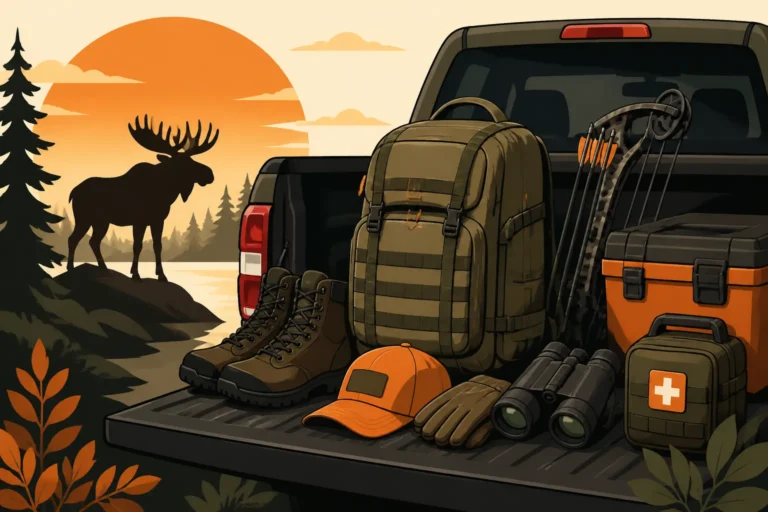
Good optics are absolutely non-negotiable for elk hunting. A high-quality binocular (10×42 or 10×50) will be your most used tool for spotting elk in dense cover or across clearings. A spotting scope might be useful if you're glassing large tracts from a distance, but in the thick bush of Bancroft, binoculars are primary. A rangefinder is also essential for accurate shot placement.
Clothing needs to be layered, durable, and appropriate for the late September/October weather in Ontario, which can range from warm, sunny days to cold, rainy, or even snowy conditions. Waterproof and windproof outer layers are critical. Blaze orange requirements apply for gun seasons, so ensure you have enough to be visible. Comfortable, waterproof, and supportive boots are perhaps the single most important piece of clothing; you'll be covering miles on uneven ground.
For navigation, a GPS unit or a reliable hunting app on your phone (like GoHunt) with downloaded offline maps is a must. Cell service can be spotty to non-existent in many parts of the Bancroft WMUs, so don't rely solely on your phone. A compass and paper map are excellent backups. Knowing where you are at all times, especially in dense bush or unfamiliar territory, is vital for safety and for tracking animals.
Packing for Success: Food, Water, and Emergency Supplies
Even for a day hunt, you need to be prepared for the unexpected. Always carry more water than you think you'll need, especially if you're hiking hard. High-energy snacks (nuts, jerky, granola bars) will keep you fueled. For emergency supplies, a small first-aid kit, a headlamp or flashlight with extra batteries, fire-starting materials, a whistle, and an emergency shelter (even a large orange garbage bag can work) are crucial.
Consider a small game bag or sturdy contractor bag for meat if you're successful. A sharp knife and a bone saw will be necessary for field dressing. If you're venturing deep into the bush, a game cart or even a small sled might be useful for extraction, though the terrain often makes these challenging. Think about the worst-case scenario and pack accordingly. Being prepared physically and with the right gear instills confidence and allows you to focus on the hunt.
Locating and Accessing Prime Elk Habitat
Finding elk is one thing; getting to them and being able to hunt them effectively is another. The Bancroft area presents a unique mosaic of public and private lands, and successfully navigating this landscape is key to your hunt.
Utilizing Crown Land and Private Property
Ontario's Crown Land offers vast expanses for hunting, and parts of the Bancroft area fall into this category. However, identifying and accessing huntable Crown Land, especially land that holds elk, requires diligent research. You'll need detailed maps (like those offered by GoHunt or the official Crown Land use policy maps) to pinpoint public access points and ensure you're not inadvertently trespassing. Remember that just because land is Crown Land doesn't mean it's easily accessible; logging roads may be gated, and many areas are only reachable by foot, ATV (where legal), or boat. Understanding the rules for Hunting Ontario's Crown Land is paramount, including regulations on vehicle use, camping, and stand placement.
Private land is also a significant component of the Bancroft landscape. Many elk will frequent agricultural fields or woodlots on private holdings. Gaining permission to hunt these lands can be a game-changer. This means knocking on doors, introducing yourself, and demonstrating respect for the landowner and their property. A polite, well-prepared approach, perhaps offering to help with chores or sharing some wild game meat, can go a long way. Always be crystal clear about where you intend to hunt and what you're targeting. Ignoring Ontario Trespass and Landowner Law can quickly sour relationships and jeopardize future hunting opportunities for everyone.
Topographical Features and Food Sources
Elk, like most big game, are drawn to areas that offer a combination of food, water, and cover. In the Bancroft region, this means looking for specific topographical features. South-facing slopes, especially those with hardwood stands, can be good feeding areas, warming up earlier in the day and often holding mast crops like acorns. North-facing slopes or thick conifer stands provide cooler bedding areas during warmer parts of the season or essential thermal cover in colder weather.
Water is always a draw; look for creeks, beaver ponds, or small lakes. Elk will drink regularly and often use these areas as travel corridors. Food sources can vary dramatically with the season. Early season might see them browsing on lush vegetation in clear-cuts or forest edges. As fall progresses, agricultural crops like corn or alfalfa become highly attractive. Don't overlook old apple orchards or areas with wild berries, as these can be high-energy food sources. A good tactic is to find areas where these elements converge – a hardwood ridge with acorns, adjacent to a thick cedar swamp, with a small creek running through it, all leading to a farmer's field. That's elk country.
Navigating the Bancroft Area's Terrain
The Bancroft area is characterized by the rugged Canadian Shield in some parts, transitioning into more rolling mixed forests and agricultural lands. This means hunters can encounter everything from rocky outcrops and steep ridges to dense, impenetrable swamps and open fields. Navigating this diverse terrain requires physical fitness and careful planning.
In the thicker, shield-like areas, movement can be slow and noisy. Focus on natural funnels, saddles, and bench cuts that elk will use to traverse difficult ground. If you're Hunting an Ontario Bush Edge, pay attention to how the terrain affects wind direction. In more agricultural zones, elk might use small woodlots and fencerows as cover to move between fields. The key is to adapt your strategy to the specific micro-terrain you're in. Be prepared for mud, slippery rocks, dense undergrowth, and varying elevations. A comfortable backpack that allows you to carry essential gear while remaining agile is crucial.
Post-Harvest Considerations and Regulations
Drawing an elk tag and successfully harvesting an animal is a massive accomplishment, but the work isn't over yet. Responsible post-harvest care is crucial for meat quality and to comply with provincial regulations. This is often the most physically demanding part of the hunt, especially with an animal as large as an elk.
Field Dressing and Meat Care in the Bush
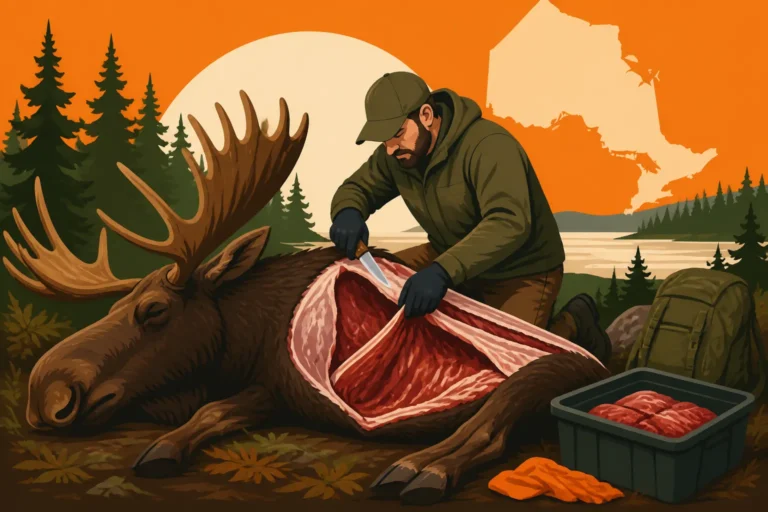
Elk are enormous animals, and prompt field dressing is essential, particularly in Ontario's early fall temperatures which can still be quite warm. The goal is to cool the carcass as quickly as possible to prevent spoilage. This typically involves gutting the animal where it falls. Have a sharp, sturdy knife and be prepared for a significant amount of internal organs. Once gutted, open the body cavity to allow air circulation. If possible, elevate the carcass off the ground to further promote cooling.
Depending on how far you are from an access point, quartering the elk in the field is often the only practical way to get it out. This involves breaking the animal down into manageable pieces – usually four quarters, the backstraps, tenderloins, neck meat, and sometimes ribs. Specialized game bags are excellent for keeping the meat clean and protecting it from insects during transport. If you're hunting remotely, plan for this process by carrying enough bags, a sturdy bone saw, and plenty of water for cleaning. For detailed steps and considerations, the guide on Field Dressing in Warm Ontario Weather offers excellent advice applicable to larger game.
Reporting Your Harvest and Tagging Rules
Ontario has strict regulations regarding reporting your harvest and tagging. Immediately after harvesting an elk, you must validate your tag by notching it correctly according to the instructions on the tag. This usually involves noting the date and time of harvest. The tag must then be securely affixed to the carcass, typically to an ear or antler, and remain with the animal until it is processed.
You are also required to report your harvest to the MNRF within a specific timeframe, usually within 24-48 hours. This can typically be done online or by phone. Accurate reporting is vital for wildlife management, as it provides crucial data on harvest rates, success rates, and population health. Failure to tag properly or report your harvest can result in significant fines and loss of hunting privileges, so take these rules very seriously. Always keep the evidence of sex attached to the carcass as required until it is processed.
Transporting Meat and Antlers
Transporting an elk out of the bush and then home requires significant logistical planning. If you've quartered the animal, you'll need sturdy game bags and potentially multiple trips if you're hunting alone. Backpack frames designed for hauling meat are invaluable. Remember that all parts of the animal, including the head (if you're keeping the antlers) and hide, must be accounted for and legally transported.
For antlers, especially if you're taking them to a taxidermist, ensure they are clean and properly tagged with your hunting licence information. If you're crossing provincial or international borders, there are additional regulations for transporting game meat and trophies. Always check with the relevant authorities well in advance to avoid any issues. The substantial size of an elk means you'll need ample cooler space, or ideally, access to a walk-in cooler or a butcher shop soon after the hunt to ensure the meat is properly aged and processed. Consider the guide What an Ontario Bull Elk Weighs to truly appreciate the sheer mass you'll be dealing with.
Ethical Hunting Practices and Safety
Ethical hunting and safety are the cornerstones of responsible hunting. When pursuing a magnificent animal like an elk, it's even more important to uphold these principles, ensuring a positive experience for yourself and contributing to the conservation legacy.
Respecting Wildlife and the Land
Ethical hunting is about more than just following the law; it's about respecting the animals you pursue and the environment they call home. This means taking only clean, ethical shots to ensure a quick, humane kill. Pass on shots that are too far, obstructed, or that you're not confident in. Spend time practicing with your firearm or bow so you know your effective range. After the shot, track the animal diligently and recover it efficiently. Leaving wounded game in the bush is unacceptable.
Respect for the land also involves leaving no trace. Pack out everything you pack in, and perhaps even a little extra litter you find. Avoid damaging vegetation unnecessarily, and leave the landscape as pristine as you found it. If you're hunting on private land, treat it with the utmost care, as if it were your own property. Your actions reflect on the entire hunting community, so always strive to be an excellent ambassador for our sport.
Hunter Safety and First Aid
Safety should always be your top priority. Hunting, especially for large game in rugged terrain, carries inherent risks. Always tell someone where you're going and when you expect to return. Carry reliable communication devices, but also be prepared for situations where cell service is unavailable. A comprehensive first aid kit is essential, and knowing basic first aid, including how to treat severe bleeding, sprains, or hypothermia, could be life-saving.
When hunting with a firearm, practice proper gun safety at all times: treat every firearm as if it's loaded, always control the muzzle direction, keep your finger off the trigger until ready to shoot, and be sure of your target and what's beyond it. Wearing blaze orange during gun seasons isn't just a legal requirement; it's a critical safety measure to ensure you're visible to other hunters. Staying hydrated, nourished, and aware of your surroundings helps prevent accidents and allows you to enjoy the hunt safely. Even for seasoned hunters, a refresher on Ontario Hunter Education Requirements can't hurt.
Understanding Local Regulations and Bylaws
Ontario's hunting regulations are comprehensive and can vary by WMU, species, and season. Before you even step foot in the bush, you must thoroughly review the current Ontario Hunting Regulations Summary. This document outlines season dates, bag limits, permitted firearms, tagging requirements, and other critical rules. There's no excuse for not knowing the law.
Beyond provincial regulations, sometimes local bylaws (municipal or conservation authority rules) can affect hunting access or practices, especially on specific public lands. It's your responsibility to be aware of these. For instance, some areas might have restrictions on ATV use, overnight camping, or even specific hunting methods. Ignorance of the law is not a defense, and violations can lead to severe penalties, including fines, equipment seizure, and hunting license suspension. Staying informed and compliant ensures you're hunting legally and responsibly.
Disclaimer
This guide is intended for informational purposes only and does not supersede official Ontario hunting regulations. All hunters are responsible for reviewing and adhering to the most current Ontario Hunting Regulations Summary published by the Ministry of Natural Resources and Forestry (MNRF) before participating in any hunting activities. Regulations, season dates, and tag allocations can change annually. Always prioritize safety, ethical practices, and compliance with all applicable laws.