Sitting a Bear Bait From a Ground Blind
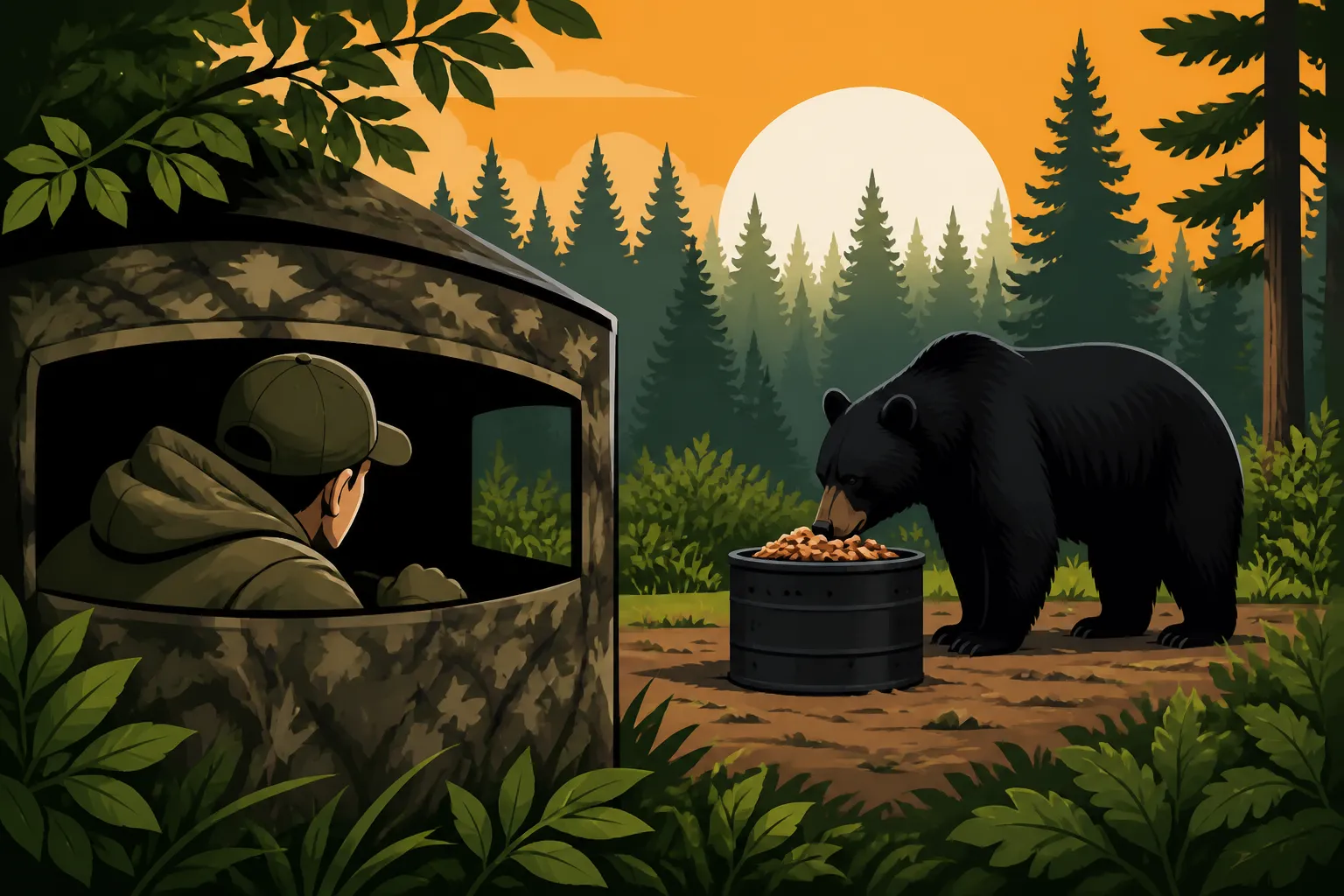
There's nothing quite like the anticipation of a bear hunt, especially when you're tucked into a ground blind over a well-maintained bait site. It's a method that offers a unique blend of comfort and intense close-quarters action, but many hunters struggle with the precise setup and strategy required to make it successful. This guide will walk you through everything you need to know about effectively hunting bear over bait from a ground blind in Ontario, from choosing your blind to recovering your trophy.
The Strategic Advantage of a Ground Blind for Bear Hunting
When you picture bear hunting over bait, many people immediately think of a treestand. While treestands certainly have their place, the humble ground blind offers a host of benefits that can often make it the superior choice, especially for the patient hunter looking for a unique experience. Bears are incredibly intelligent and wary creatures, and any advantage you can gain in concealment and scent control is a huge step towards success.
Enhanced Concealment and Reduced Movement Detection
One of the biggest struggles in a treestand, especially if you're like me and can't sit absolutely still for hours on end, is movement. A quick twitch, adjusting your rifle, or even brushing a mosquito away can be enough to send a wary bear into the bush. Ground blinds, particularly the pop-up hub style, excel at hiding movement. The solid fabric walls and dark interior create a complete barrier, allowing you to shift, stretch, or even check your phone (quietly, of course!) without alerting that big boar that's been circling the bait for twenty minutes. This is a game-changer for long sits, which are often necessary on a bear bait.
Beyond just movement, a well-placed ground blind can offer superior visual concealment. Bears often approach bait cautiously, circling downwind, and their eyes are surprisingly sharp. A blind, especially when properly brushed in with natural vegetation, breaks up your silhouette entirely. It looks like just another clump of bush, something a bear is accustomed to seeing. In contrast, a treestand, no matter how well camouflaged, can still present an unnatural outline against the sky or forest canopy, particularly to a bear looking up from below.
Superior Scent Control and Weather Protection
Let's be honest, Ontario's weather can be unpredictable, especially during the Spring Bear Hunting in Ontario or even Hunting a Fall Bear Bait in September. One minute it's sunny and calm, the next a squall rolls in, or the wind shifts dramatically. A ground blind offers much-needed protection from the elements. Staying dry and comfortable not only makes your hunt more enjoyable but also allows you to stay on stand longer, increasing your odds. There's nothing worse than being chilled to the bone or soaked through, knowing you still have hours to go.
More critically, ground blinds provide an extra layer of scent control. While a treestand gets you off the ground, scent still drifts and swirls. The enclosed nature of a ground blind, especially a well-sealed one, can help contain some of your human scent, directing it through specific vents or openings rather than allowing it to dissipate freely in all directions. This doesn't mean you can ignore scent control – you still need to shower with scent-free soap, use clean clothes, and be mindful of what you touch – but it does add another defensive layer. Pairing a good blind with proper scent elimination techniques, like those you'd use for Whitetail Hunting in Ontario, can significantly reduce your footprint.
Accessibility and Stability for a Precise Shot
For some hunters, mobility can be an issue, making treestands difficult or unsafe. Ground blinds offer excellent accessibility. They're easy to set up, get in and out of, and provide a stable, level platform. This stability is a huge advantage when it comes to shot placement. You can comfortably set up your shooting sticks, bipod, or even lean your rifle against a window sill, ensuring a rock-solid rest. This precision is vital when aiming for the small, critical kill zone on a bear, especially when adrenaline is pumping.
I've also found that the confined space of a blind encourages a more focused approach. You're not distracted by the vastness of the forest around you; your world shrinks to the bait site and the immediate area. This focus, combined with the comfortable setup, often leads to more ethical, well-placed shots. You're less likely to rush or make a careless move when you feel secure and have a solid rest.
Optimal Blind Placement and Setup for a Bear Bait
Setting up your ground blind isn't just about throwing it down next to the bait. It's a strategic chess match against a cunning opponent. Every detail, from the exact spot you choose to how you brush it in, plays a crucial role in your success. Think of yourself as part of the forest, observing unseen.
Strategic Location: Wind, Access, and Escape Routes
The most critical factor in blind placement is wind direction. Bears have an incredible sense of smell, arguably their most potent defense. You must position your blind so that your scent blows away from the most likely approach routes to the bait. This usually means setting up downwind of the bait, anticipating the prevailing winds. However, wind can swirl, especially in thick bush, so a good understanding of micro-currents is vital. Spend time at your bait site checking the wind at different times of the day. Using a wind checker puff bottle is indispensable here.
Beyond wind, consider bear approach and escape routes. Bears are creatures of habit and will often follow natural corridors – old logging roads, game trails, or thick cover edges – to access the bait. Place your blind where you can observe these approaches, but not so close that you are directly in their path, which could spook them. Ensure you have a clear shooting lane to the bait, but also consider lanes for bears approaching from different angles.
Your own access to and from the blind is also paramount. You need a quiet, concealed way to get in and out without disturbing the area or leaving excessive scent trails near the bait. Try to use existing trails or natural features to guide your path. Always approach and depart with the wind in your face or crosswind to avoid blowing your scent towards the bait. This goes for when you're Setting a Bear Bait Site in Ontario too; always be mindful of your approach. If you're using an outfitter, they'll likely have these paths established, but if you're doing it yourself, this planning stage is vital.
Finally, think about the sun's position. You don't want to be staring directly into the sun at prime hunting time (dawn and dusk), as it will hinder your visibility and potentially silhouette you. Position your blind so the sun is at your back or to your side during your primary hunting hours.
Concealment and Brushing In Your Blind
A ground blind, fresh out of the box, is an unnatural object in the bush. To make it effective, you need to make it disappear. This is where brushing in comes into play. Collect local vegetation – branches, leaves, grasses, small saplings – and strategically attach them to the exterior of your blind. Break up the hard lines and camouflage pattern with natural textures. The goal is for the blind to blend seamlessly with its surroundings, looking like just another clump of bush.
Think three-dimensional. Don't just lay branches flat; make them stick out naturally. Pay close attention to the roofline and corners, as these are often the most tell-tale signs of an artificial structure. If you can, set up your blind a week or two before your hunt starts. This allows game, including bears, to become accustomed to its presence and view it as part of the natural landscape. I've often seen outfitters do this in prime bear country, giving the bears ample time to become comfortable before a hunter arrives.
Inside the blind, consider adding a dark fabric or mesh to the windows you're not actively using. This prevents any light from escaping and highlighting your silhouette. Ensure your interior is as dark as possible to maximize the concealment of your movements.
Establishing Clear Shooting Lanes and Shooting Rests
Once your blind is in place and brushed in, it's time to fine-tune your shooting lanes. You want clear, unobstructed views of the bait site and any likely approach routes. This might involve carefully trimming small branches or clearing brush. Always clear enough to ensure a clean shot, but don't overdo it and make your blind obvious. Remember the "less is more" principle – just enough to shoot through.
When clearing lanes, consider different shot angles and distances. A bear might approach from the left or right, or stand broadside or quartering away. Practice shooting from various positions within your blind. This is particularly important for archery hunters who need even more precise clearances.
Equally important is establishing a stable shooting rest. As mentioned, the stability of a ground blind is a huge advantage. Bring a good set of shooting sticks or a bipod. Some blinds even have built-in window sills that can be used. Practice setting up your rest quickly and quietly so that when that bear steps out, you're ready. I always bring a small, comfortable stool or chair to ensure a steady shooting platform and to maintain comfort during those long waits. For planning a comprehensive hunt, especially if you're a non-resident, resources like GoHunt or BookYourHunt can provide insight into outfitters who often handle these meticulous setups for their clients, ensuring optimal shot opportunities.
The Waiting Game: Patience and Observation
You've done the work, you've set up your bait, and your blind is perfectly nestled in the bush. Now comes the most challenging, yet most rewarding, part of bear hunting: the wait. Sitting in a ground blind demands patience, keen observation, and an understanding of bear behaviour.
Understanding Bear Behavior and Activity Patterns
Bears are largely crepuscular, meaning they are most active during dawn and dusk. However, they can show up at any time, especially during the peak feeding times around a bait site. Pay attention to signs around your bait: tracks, droppings, and how the bait is being consumed. A knowledgeable outfitter can often tell you if a big boar is hitting the bait, and roughly when. This information can help you strategize your sit times.
When a bear does arrive, it will almost certainly be cautious. It will often circle downwind, using its incredible nose to test the air for danger. It might stop, stand on its hind legs to get a better view, or disappear for minutes at a time only to reappear in a different spot. This is where your patience is truly tested. Don't make a move until the bear is comfortable and committed to the bait, and you have a clear, ethical shot. Don't be surprised if the first bear to show up is a smaller one, or even a sow with cubs. Remember, Why You Cannot Shoot a Sow With Cubs is a critical rule for ethical hunting.
Observe their body language. A confident bear will often approach the bait directly. A nervous bear might be constantly looking around, ears swivelling, and might bolt at the slightest disturbance. Learn to differentiate these signals. Every bear has its own personality, and spending time observing them, even if you don't take a shot, is an invaluable learning experience.
Staying Patient, Silent, and Always Aware
Sitting still for hours in a confined space is tough, but it's non-negotiable for bear hunting. Any noise, scent, or movement can blow your opportunity.
- Silence is Golden: Every single item you bring into the blind should be silently accessible. Quieten zippers, tape anything that rattles, and ensure your clothing doesn't make swishing noises. Practice drawing your weapon or raising your camera without making a sound.
- Minimal Movement: While the blind conceals movement well, sudden, large movements can still be detected. Try to move slowly and deliberately. When scanning the area, move your eyes, not your head.
- Constant Awareness: Don't get lost in your phone or a book. Your eyes and ears need to be engaged constantly. Bears can appear silently and quickly. Scan your shooting lanes regularly. Use your binoculars to check shadowed areas and thick cover. Hunting an Ontario Bush Edge or where a Hunting a Beaver Meadow Crossing might occur are prime spots to watch.
- Scent Discipline: Even within the blind, minimize human scent. Avoid strong-smelling foods, don't smoke, and if you need to relieve yourself, do so far away from your blind and bait, preferably covering your scent.
This table provides a quick checklist for your bear blind sit:
| Aspect | Key Considerations | Why it Matters |
|---|---|---|
| Wind Direction | Position downwind of bait and likely approaches | Bears rely heavily on scent; your odor can ruin the hunt |
| Concealment | Brush in blind with natural vegetation; dark interior | Breaks up silhouette, makes the blind blend in, hides movement |
| Access/Egress | Quiet, scent-free path to and from blind | Avoids disturbing the area or leaving human scent trails |
| Shooting Lanes | Clear view of bait and approach routes; practice angles | Ensures ethical shot placement and quick target acquisition |
| Silence | Quieten gear; slow, deliberate movements | Bears have excellent hearing; minimal noise prevents spooking |
| Patience | Expect long waits; observe before acting | Bears are wary; rushing a shot or movement will likely spook them |
| Weather Preparedness | Dress in layers; bring rain gear and bug spray | Comfort allows longer sits; reduces distractions |
| Hydration/Snacks | Quiet, easy-to-access, scent-neutral items | Maintains energy and focus during extended waits |
| Post-Shot Plan | Know tracking strategy, safety protocols, meat care | Essential for ethical recovery and preserving the harvest |
After the Shot: Tracking, Recovery, and Meat Care
The shot is taken. The bear reacts. What you do in the moments and hours following is just as critical as the hunt itself. Bear hunting from a ground blind, often over bait, usually means a shorter recovery distance due to the close range, but vigilance is still key.
Tracking and Recovery: Safety First
Firstly, wait. Give the bear time. Unlike deer, which often flee in a panic, a bear might run a short distance and then bed down, especially if it's mortally wounded. Pushing it too soon can make the recovery much harder, as a wounded bear can travel far or become defensive. A good rule of thumb is to wait at least 30-60 minutes for a gut shot, or 15-30 minutes for a well-placed lung/heart shot. If you are uncertain about the shot placement, err on the side of caution and wait longer, maybe even a few hours.
Before you begin tracking, mark the spot where the bear was standing when you shot it, and also the last place you saw it. These reference points are invaluable for establishing a blood trail. When you do start tracking, move slowly and deliberately. Look for blood, broken branches, disturbed leaves, and tracks. Bears can leave surprisingly little blood, especially if the wound is high, so pay attention to every detail.
Safety is paramount. A wounded bear can be incredibly dangerous. Always approach with extreme caution, especially in thick cover. If you're hunting alone, seriously consider waiting for a buddy before entering heavy cover after a wounded bear. Carry your rifle ready, and be prepared for a follow-up shot. Make noise as you approach to potentially get the bear to react, giving you its location.
If you are on an organized trip, your outfitter will guide you through this process, and they often have dogs trained for tracking if necessary. If you've booked a trip through a service like BookYourHunt, they typically vet outfitters for responsible practices, including ethical recovery protocols.
Field Dressing and Meat Care in Ontario's Warm Seasons
Once you've located your bear, the work truly begins. Bears are large animals, and their meat can spoil quickly, particularly during the warmer parts of Ontario's Black Bear Rules season. Rapid field dressing is essential. Get the hide off and the guts out as quickly as possible to allow the carcass to cool. Bears have a thick layer of fat, which acts as insulation and holds heat, accelerating spoilage.
If you plan on getting a rug, take care when skinning the bear. If you're unsure, watch some videos beforehand or ask your outfitter for guidance. Skinning a Bear for a Rug is a specific skill. After gutting, if you can, elevate the carcass to allow air circulation. In remote areas, this might mean hanging it from a sturdy branch. In a more accessible location, get it onto a tarp or in the bed of a truck and head straight to a processor or a cooler.
You'll want to check the bear for Ticks and Parasites in Big Game, as this is always a consideration. Given that the meat needs to be cooled quickly, many hunters use large coolers filled with ice to transport the hide and meat. If you're far from home, finding a local butcher is crucial. Outfitters often have arrangements with local processors, which simplifies the process. Remember, proper meat care ensures that none of that hard-earned protein goes to waste, honouring the animal and providing delicious meals.
Disclaimer
This article is for general informational purposes only and does not constitute professional advice. Laws, prices and regulations vary by location and change over time. Consult a qualified professional for guidance on your specific situation.