Ontario Bush Road and Winter Access
One of the biggest hurdles for any hunter venturing into Ontario's vast wilderness, especially in the northern reaches, isn't finding game so much as it is simply getting there. Those seemingly endless bush roads, carved out by logging operations or leading to remote cabins, can be a hunter's best friend or worst nightmare, particularly when the snow starts to fly. This guide is all about helping you understand, navigate, and ultimately conquer the challenge of Ontario bush road and winter access, ensuring your hunt starts on the right foot – or tire, as it were.
Understanding Ontario's Bush Road Network
Ontario is an enormous province, and a huge chunk of it is covered in forests, wetlands, and the Canadian Shield. To access these remote areas, a complex network of bush roads has been created over decades. Knowing the difference between these roads and understanding who maintains them is crucial for safe and legal hunting access.
The Labyrinth of Logging Roads and Crown Land Access
When you look at a map of northern Ontario, or even some of the more rugged areas of central Ontario, you'll see what looks like an intricate spiderweb of roads leading into seemingly nowhere. Many of these are active or inactive logging roads, created by timber companies to access harvesting blocks. Others are older access routes, sometimes built for mining exploration, hydro lines, or just leading to remote lakes and private camps. For the hunter, these roads are a gateway to immense tracts of Crown Land – land owned by the provincial government and generally open for public use, including hunting, assuming you follow the regulations.
However, calling them "roads" can sometimes be a generous term. What might start as a well-graded gravel road can quickly devolve into a two-track ATV trail, or even just a faint trace through the bush. They often have unmarked turns, sudden washouts, and can be overgrown in sections, making travel slow and challenging. The sheer scale of these networks means you can drive for hours without seeing another soul, which is part of their appeal for hunters seeking solitude and undisturbed game. Understanding Hunting Ontario's Crown Land is fundamental to making the most of these opportunities. Remember, while the land is public, the roads traversing it can vary wildly in terms of maintenance and accessibility.
Public vs. Private Bush Roads: What You Need to Know
This is where things can get a little tricky, and it's a critical distinction to make. Not all bush roads are created equal when it comes to public access. Many logging roads are indeed built on Crown Land and are generally open to the public, though they might have active logging operations on them, requiring extreme caution or even temporary closures for safety. However, some industrial roads, even if they appear to lead through Crown Land, might actually be privately owned and maintained by a timber company or other resource industry, or they might pass through a mix of private land parcels. These private industrial roads might have gates, signage indicating restricted access, or even security patrols. Ignoring these signs can lead to serious legal trouble for trespassing.
Similarly, many bush roads might start as public access, but then transition onto private property further in, especially if they lead to an unassumed subdivision, a private camp, or a large private landholding. It's imperative to consult maps, look for signage, and when in doubt, assume it's private until you confirm it's public. Relying on digital mapping tools like onX Hunt or GoHunt can be incredibly helpful here, as they often have layers showing land ownership, helping you identify public versus private boundaries. Without these tools, or if you're not sure, it's always best to err on the side of caution and seek alternative access. Knowing Ontario Trespass Law for Hunters is your responsibility before you even consider entering a questionable area.
Navigating Ontario's Roads in the Snow
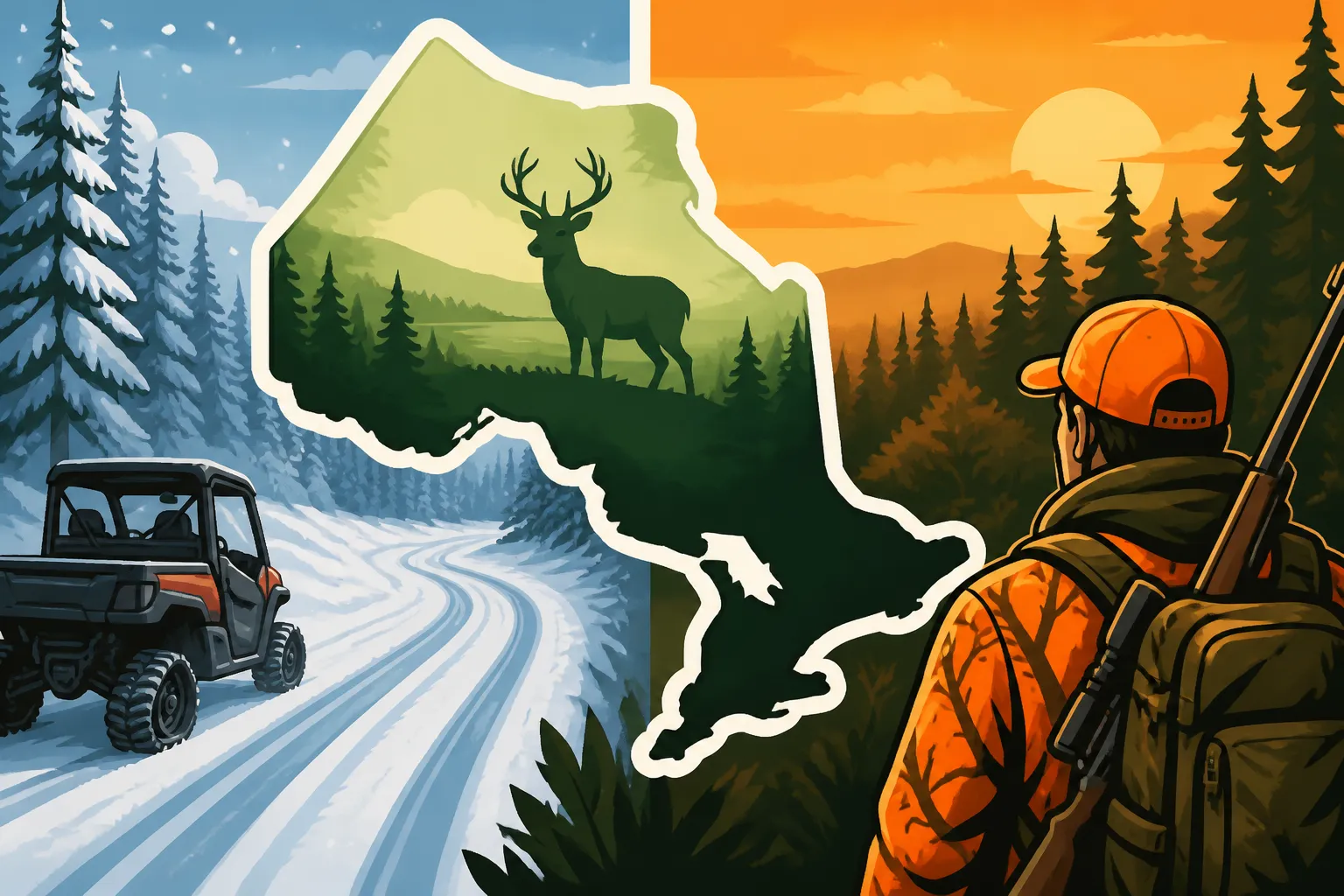
Once the leaves fall and the first flurries begin, the game changes entirely when it comes to bush road access. What was a passable gravel track in September can become an impassable snowdrift in November, or a slick sheet of ice in December. Winter hunting demands a completely different approach to access.
Winter Conditions and Vehicle Requirements
Ontario winters are no joke. Temperatures can plummet, snowfall can be immense, and conditions can change rapidly. A light dusting of snow overnight can turn a smooth road into a treacherous slide, while deeper snow can hide massive potholes, rocks, or even fallen trees. Your everyday two-wheel-drive vehicle, while perhaps adequate for dry summer bush roads, will likely leave you stranded and utterly frustrated in winter.
When planning a winter hunt that involves bush road access, a reliable 4×4 vehicle is almost non-negotiable. This means a truck or SUV with genuine four-wheel-drive capability, good ground clearance, and most importantly, aggressive winter tires or even studded tires if conditions are severe. Chains can also be a lifesaver in deep snow or icy inclines, though they take time to put on and remove. Beyond the vehicle itself, consider carrying essential recovery gear: a shovel, traction mats, a tow strap, and a powerful winch are not luxuries but necessities if you're venturing far from paved roads. Remember, cell service is often non-existent on many of these remote bush roads, so getting stuck can quickly become a dangerous situation. Think about the specific needs for a Truck Kit for a Northern Ontario Hunt – it's more than just spare tires.
Preparing for a Cold Weather Hunt
Beyond the vehicle, your personal preparation for a winter access hunt is paramount. The colder temperatures mean that if you do get stuck and have to walk out, or wait for help, the risks of hypothermia or frostbite are very real. Always dress in layers, with good quality insulated outerwear, waterproof boots, and plenty of extra hats, gloves, and socks. A well-stocked emergency kit in your vehicle is crucial, including extra food, water, a first-aid kit, a heat source (like a small propane heater with ventilation, or a reliable fire-starting kit), and a fully charged satellite communication device (like a Garmin inReach or a SPOT device).
When you're dealing with Hunting Ontario's November Gun Season or Hunting Ontario's December Muzzleloader Days, snow cover is often significant. This can make walking easier in some ways, as it might cover rough ground, but it also hides hazards and makes travel off the main tracks more arduous. Plan your foot travel routes carefully, considering snow depth and potential drifts. A quality pair of snowshoes or cross-country skis can be invaluable for reaching those prime hunting spots beyond where your vehicle can safely take you. Always inform someone reliable of your exact route and expected return time, and stick to that plan.
Legalities and Responsibilities of Access
Navigating Ontario's bush roads isn't just about driving skills and vehicle readiness; it's also about understanding the rules of the road, and of the land itself. Disregarding regulations can lead to fines, legal issues, and even jeopardize future access for all hunters.
Respecting Closures and Restrictions
Just because a bush road exists doesn't mean it's always open for travel. Logging companies frequently close roads during active operations for safety reasons. These closures are usually marked with signs, gates, or berms. Respecting these closures is non-negotiable. Driving past a "Road Closed" sign, especially if a gate is present, is not only dangerous but illegal. In winter, roads might also be closed due to extreme snow, washouts, or simply because they are not maintained during the colder months.
Furthermore, certain areas of Crown Land, or specific roads, might have seasonal restrictions or even permanent closures to motorized vehicles. This could be to protect sensitive wildlife habitat, prevent erosion, or manage user conflict. It's your responsibility to check with the local Ministry of Natural Resources and Forestry (MNRF) office for current conditions and any specific restrictions in the Wildlife Management Unit (WMU) you plan to hunt. Online resources from the provincial government often provide maps and notices of closures. Remember that ATV Rules on Ontario Crown Land can also vary, so don't assume your ATV has access everywhere your truck does.
The Importance of Communication and Contingency Planning
When you're heading deep into the bush on unmaintained roads, communication and contingency planning become paramount. As mentioned, cell service is spotty at best and often non-existent in remote areas. This means you need a backup plan for communication and emergencies. A satellite messenger device is an absolute must-have. These devices allow you to send and receive text messages, share your location, and trigger an SOS signal in a true emergency, even when you're miles from any cellular signal.
Before you leave, create a detailed trip plan that includes your exact route, expected travel times, and planned hunting areas. Share this plan with a trusted person who is not on the hunt with you. Establish a check-in schedule, and if you miss a check-in, your contact knows to initiate your contingency plan. Your contingency plan should also include knowing how far the nearest town, gas station, or rescue point is, and having enough fuel, food, and emergency supplies to survive for an extended period if necessary. Think about scenarios like a major vehicle breakdown, getting lost on foot after leaving your vehicle, or even an unexpected injury. Being prepared for these possibilities is key to a safe and successful hunt. If you happen to get turned around in the vastness of the bush, having a plan and emergency gear can literally save your life.
Tools and Technology for Remote Access
Gone are the days when a paper map and a compass were your only navigational aids. While those tools are still incredibly valuable, modern technology has revolutionized how we access and navigate Ontario's hunting grounds.
Mapping Apps and Satellite Imagery
Today's mapping apps, especially those designed for outdoor recreation, are powerful tools for pre-trip planning and in-the-field navigation. Applications like onX Hunt and GoHunt allow you to download detailed topographic maps and satellite imagery directly to your phone or tablet, so they work even when you're out of cell range. These apps often include layers showing land ownership (public vs. private), WMU boundaries, potential access roads, trails, and even historical satellite imagery that can reveal old logging cuts or timber stands that might not be visible on current maps.
Before your hunt, use these apps to meticulously scout your chosen WMU. Look for logging roads that lead into promising areas, identify potential parking spots, and map out foot travel routes. Pay close attention to terrain features that might indicate difficult travel, such as steep hills, swamps, or dense stands of timber. You can mark waypoints for gates, river crossings, or areas of interest. In the field, these apps allow you to track your exact position, ensuring you know where you are at all times and can navigate confidently, even in unfamiliar territory. Scouting With Satellite Imagery in Ontario is no longer a luxury, but a common and effective practice.
Essential Gear for Winter Bush Travel
Beyond your hunting essentials, there's specific gear that can make or break your winter bush access experience. Starting with navigation, always have a backup to your electronic devices. A laminated paper map of the area and a reliable compass are absolute musts, and make sure you know how to use them without relying on GPS.
For personal comfort and safety in winter, layering is key. Wool or synthetic base layers, fleece mid-layers, and a waterproof/windproof outer shell are standard. Don't forget extra gloves, a warm hat, and a neck gaiter. Headlamps with spare batteries are vital for early morning starts or late evening returns. For extended foot travel in snow, consider snowshoes or cross-country skis. For safety, a robust first-aid kit, fire starters, a signaling mirror, and bear spray (even in winter, though bears are denned, other predators might be active) should always be with you. A small, lightweight camp shovel is useful for digging out a stuck vehicle or even clearing a spot for a fire. Remember, the deeper you go, the more self-sufficient you need to be.
Strategic Planning for Winter Hunting Access
Successful winter hunting access isn't just about having the right gear; it's about smart planning and adapting to the conditions. You can't just drive where you want and expect it to work out in the snow.
Scouting and Pre-Season Reconnaissance
Your planning should start long before the snow flies. In fact, summer and fall are ideal times for physical scouting of bush roads you intend to use in winter. Drive or walk these roads to get a feel for their condition, identify potential problem areas like deep ruts, washouts, or particularly rocky sections. Note where gates are, observe signage for private property, and assess the overall density of the bush along the access routes. This reconnaissance will help you gauge how far your vehicle can realistically go in winter and where you'll need to transition to foot travel.
Beyond simply observing the roads, pay attention to the surrounding habitat. Are there areas that would make for good wintering grounds for deer, such as thick cedar swamps where they yard up? Are there natural funnels or pinch points that will become more obvious with snow on the ground? Reading an Ontario WMU Map Before You Go and then checking it against actual ground conditions will give you an invaluable advantage. Understanding the lay of the land now will save you countless hours and potential headaches once the snow makes everything look different.
Foot Travel and Alternative Access Methods
Even with a top-of-the-line 4×4, there will be times when the snow is simply too deep, or the road too treacherous, to continue driving. This is where foot travel, snowshoes, or skis become your primary mode of transportation. Embrace it as part of the hunt! Often, the best hunting spots are exactly where the roads become impassable for vehicles, as this is where other hunters might be deterred.
Plan your foot travel carefully. Consider how far you can realistically go in deep snow while carrying your gear and potentially dragging an animal back. If you're venturing deep, think about Canoe-In Hunting on Ontario Crown Land during the shoulder seasons, or how a snowmobile (where permitted) could become an alternative to a truck on specific trails or frozen lakes. For Hunting a Beaver Flowage in the Bush or Hunting an Old Logging Road in the North, foot power might be your only reliable option. Always factor in extra time for travel in winter conditions, and remember that retrieving a downed animal from a remote, snow-covered area will be significantly harder and more time-consuming than in warmer months.
Safety First: Avoiding Common Winter Access Pitfalls
The allure of Ontario's remote winter hunting can be strong, but it comes with inherent risks. Being aware of the common pitfalls and taking proactive steps to mitigate them is crucial for a safe and enjoyable experience.
Emergency Preparedness in Remote Areas
The biggest danger in remote winter access is underestimating the environment. Getting stuck in your vehicle miles from anywhere, or getting lost on foot, can quickly turn into a life-threatening situation when temperatures are below freezing. Your emergency kit should be comprehensive and accessible. This means not just in your vehicle, but a smaller, critical kit on your person at all times, including fire-starting tools, a knife, a space blanket, and emergency rations.
Consider taking a wilderness first-aid course. Knowing how to deal with injuries, hypothermia, or frostbite when professional medical help is hours away is invaluable. A reliable method of communication, as discussed, is paramount. This isn't just for calling for help if something goes wrong, but also for checking in with loved ones. It alleviates their worry and provides them with your location if you don't return as planned. Remember, Winter Road Access in Northern Ontario means you're often truly on your own.
When to Turn Back and Rethink
Perhaps the most important safety rule is knowing when to call it quits. Hunter's ambition can often override good judgment, but pushing too far into questionable conditions is a recipe for disaster. If the snow is deeper than you anticipated, if the road looks more treacherous than your vehicle can handle, or if the weather takes a sudden turn for the worse, it's okay – and smart – to turn back. There will always be another day to hunt, but you only have one life.
This also applies to your physical condition. If you're feeling exhausted, cold, or disoriented, it's time to re-evaluate. Hunting in winter can be incredibly physically demanding, especially when navigating difficult terrain. Listen to your body and your intuition. A successful hunt isn't solely defined by a filled tag, but by returning home safely, ready for the next adventure. Whether you're Hunting an Ontario WMU in Deep Snow or Hunting Ontario Late When Cold Sets In, wise decision-making is your best asset.
| Vehicle Type | Typical Use Case (Bush Roads) | Winter Suitability (with modifications) | Key Considerations for Winter Access |
|---|---|---|---|
| 2WD Passenger Car | Paved roads, well-maintained gravel. | Poor (avoid for bush roads) | Zero ground clearance, no traction in snow/ice. High risk of getting stuck. |
| AWD Crossover/SUV | Well-groomed gravel, light duty trails. | Fair (light snow, good tires a must) | Better traction than 2WD, but limited ground clearance. Not for deep snow or serious off-road. |
| 4×4 Truck/SUV | Logging roads, rough trails, off-roading. | Excellent (with winter tires, recovery gear) | High ground clearance, true 4WD. Essential for deep snow, ice, and rough terrain. Recovery gear critical. |
| ATV/Side-by-Side | Dedicated trails, very rough bush. | Good (where legal and equipped) | Excellent off-road capability. Can navigate very narrow/rough trails. Limited cargo, exposure to elements. |
| Snowmobile | Snow-covered trails, frozen lakes. | Excellent (dedicated winter access) | Unparalleled speed and access over snow. Requires dedicated snow trails. Not for bare ground or shallow snow. |
Disclaimer
This article is for general informational purposes only and does not constitute professional advice. Laws, prices and regulations vary by location and change over time. Consult a qualified professional for guidance on your specific situation.