Hunting Ontario Late When Cold Sets In
The Ontario late season, when the mercury truly plummets and a blanket of white covers the landscape, can feel like a completely different hunting experience. Many hunters pack it in, figuring the deer and moose are all locked down, making success impossible. But for those of us willing to brave the bone-chilling cold, these deep winter days offer unique opportunities and challenges that, with the right approach, can lead to incredible rewards. This guide is all about equipping you with the knowledge and strategies to thrive, not just survive, when hunting Ontario late in the season, even when the cold truly sets in.
The Deep Freeze: Understanding Ontario's Late-Season Winter Landscape
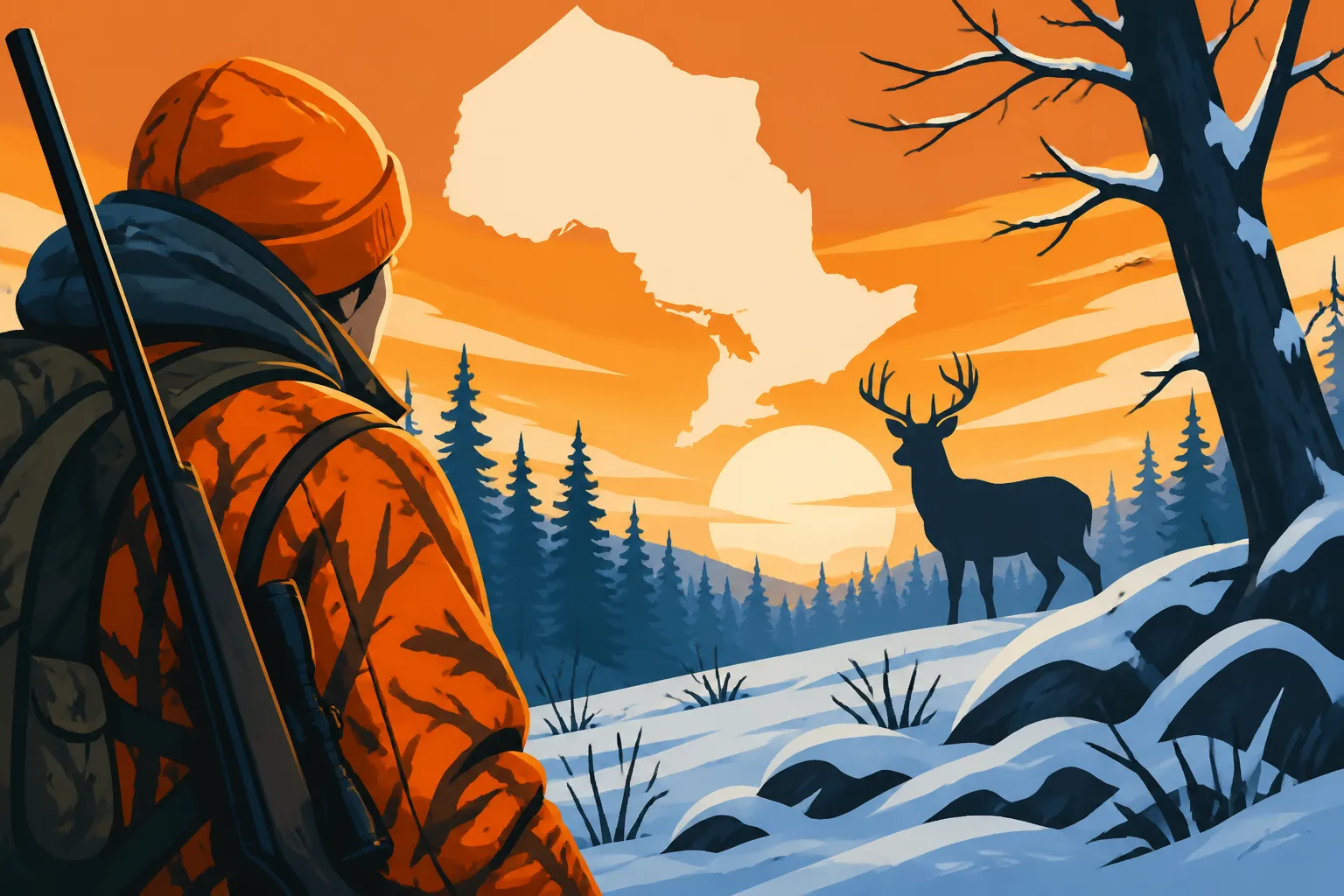
When late season hits Ontario, often in December and into January for certain species or zones, the landscape utterly transforms. We're not talking about a crisp November morning anymore; we're talking about bitter cold, often heavy snow, and sometimes even ice. This isn't just a pretty backdrop; these conditions fundamentally alter how game animals live and move, and understanding this shift is your first step to success.
How Cold Impacts Game Movement and Patterns
The biggest change you'll notice is how temperature and snow depth dictate everything. Whitetail deer, moose, and other game animals become hyper-focused on survival. Energy conservation is paramount. They're not going to expend precious calories running around unnecessarily. This means their daily routines shrink dramatically. Instead of wide-ranging movements, you'll see more concentrated activity between bedding areas and food sources. They'll use the path of least resistance, often following established deer trails or even old logging roads that offer easier travel. How Deep Snow Shapes Ontario Game is a critical factor, forcing them into specific areas where movement is less taxing.
Their metabolism slows, and they seek thermal cover more aggressively. A stand of dense conifers, like a thick cedar swamp or a pine plantation, becomes a five-star hotel. They'll bed down in these areas for warmth and shelter from the wind, moving only when absolutely necessary to feed. If you've been hunting open hardwoods all fall, you need to completely rethink your approach, because the animals certainly have.
Food Sources and Cover in a Frozen World
As the ground freezes and snow accumulates, the buffet line for deer and moose drastically changes. Tender green browse disappears under the snow. What's left becomes vital. For whitetails, this often means browsing on woody stems, evergreen shrubs, and any remaining mast crops, like acorns or beechnuts, that might be exposed or easily dug through shallow snow. Agriculture fields, especially those with standing corn or forgotten soybeans, can be absolute magnets, offering both food and some level of cover. Hunting a Standing Corn Field Edge or Hunting a Soybean Field at Dusk are classic late-season tactics for a reason.
Moose, on the other hand, will shift their browsing habits to fir, willow, and aspen, seeking out high-energy twigs and bark. Beaver ponds, with their regrowth of willow and aspen along the edges, can be surprisingly productive.
Crucially, thermal cover isn't just a convenience; it's a necessity. Think dense evergreens – cedar swamps, spruce thickets, or mature pine stands. These areas block the wind and trap what little warmth there is, offering crucial respite. Look for southern-facing slopes that catch more sunlight, providing slightly warmer conditions for bedding. Hunting a Cedar Swamp Edge becomes a primary strategy when the temperatures plummet and the snow piles up.
Adapting Your Tactics for Frigid Whitetails and Moose
Hunting when the cold sets in demands a tactical shift. What worked in October or November might be completely ineffective now. You need to become a cold-weather detective, focusing on those survival instincts.
Targeting Winter Bedding and Travel Corridors
Your strategy should revolve around finding where animals are bedding to conserve energy and how they're moving between those beds and their limited food sources. Often, these travel corridors will be short, direct lines. Think bottlenecks: a narrow strip of timber connecting two cedar swamps, a thick fencerow leading from a field to a bush lot, or a small saddle in a ridge line that offers the easiest path.
This is where detailed mapping applications like onX Hunt truly shine. You can zoom in and identify dense cover, potential food sources, and topographic features that might funnel animals. Look for those dark green blobs on your map, then scan for thinner lines of cover leading to agricultural fields or other browse areas. Scouting With Satellite Imagery in Ontario can save you countless cold hours walking, helping you pinpoint these crucial areas before you even step foot in the woods. Once you're on the ground, confirm with fresh tracks and sign.
Still Hunting and Slow Drives in Snow
The deep snow can make traditional stand hunting a frigid affair, and animals are often less active during daylight. This makes still-hunting an incredibly effective technique. With snow on the ground, you can move almost silently, covering ground slowly, stopping frequently to observe and listen. Focus on those dense thermal cover areas, creeping through them at a snail's pace. Look for bedded deer or moose. When the snow is fresh, Reading Sign After a Fresh Snow becomes your most powerful tool. You can literally follow tracks right to bedded animals if you're skilled and patient.
For whitetails, small, slow deer drives can also be highly effective, especially with a fresh dusting of snow. Instead of large, noisy pushes, think of two or three hunters moving very quietly through a thick stand of evergreens, while one or two standers wait on known escape routes or pinch points. The goal isn't to blast deer out of the cover, but to gently nudge them, making them walk out into shooting lanes. Deer Drives With Three or Four Hunters can be a great way to put venison in the freezer when other tactics fail, especially when you understand how the deer will instinctively try to stay in cover.
The Art of Tracking in Fresh Snow
There's nothing quite like fresh snow to turn you into a master tracker. Every step an animal takes leaves a story. You're not just looking for tracks; you're reading the depth of the print, the stride length, and how fresh the snow is around the edges of the track. A deep, wide track with a long stride might indicate a buck on a mission, while a shorter, more ambling gait could be a deer feeding leisurely.
When tracking, pay attention to rubs and scrapes, which although less active in the deep cold, can still give clues to an animal's travel history. More importantly, look for fresh droppings or chewed browse, which tell you the animal is actively using the area. As you follow a track, anticipate where the animal might pause to feed, or where it might bed down in dense cover. This skill takes practice, but it's an indispensable asset for Whitetail Hunting in Ontario during the late season. General hunting knowledge platforms like GoHunt, while often focused on specific regions, provide excellent resources and articles on universal tracking principles and animal behaviour that can be adapted to Ontario's conditions.
Essential Gear and Safety for Ontario's Winter Wilderness
Hunting in sub-zero temperatures isn't just uncomfortable; it can be dangerous if you're not properly prepared. Your gear choices are paramount to your success and, more importantly, your safety.
Layering for Extreme Cold and Staying Dry
The golden rule for cold weather hunting is layering, and staying dry. Forget bulky, single-layer coats. You need a system that allows you to add or subtract insulation as your activity level changes.
- Base Layer: Start with a moisture-wicking base layer (merino wool or synthetic, never cotton!) that pulls sweat away from your skin. If your base layer gets wet, you'll be cold very quickly.
- Mid-Layers: Add one or two insulating layers, like a fleece jacket, a puffy synthetic vest, or a wool sweater. These trap warm air close to your body.
- Outer Layer: Your final layer should be windproof and waterproof (or at least highly water-resistant). This protects you from the elements. Consider a shell jacket and bibs or pants.
Don't forget your extremities! A warm hat that covers your ears is essential, as you lose a lot of heat through your head. Insulated, waterproof gloves or mittens (with hand warmers inside!) are a must, as are warm, waterproof boots rated for extreme cold. Always pack an extra pair of dry socks. Dressing for Ontario's November Cold covers many of these principles, but double down on the insulation for deeper winter.
| Item | Purpose | Material Suggestions | Key Considerations |
|---|---|---|---|
| Base Layer | Wicks moisture, light insulation | Merino Wool, Synthetic | Avoid cotton; snug fit for wicking |
| Mid-Layers | Insulation, traps body heat | Fleece, Puffy Synthetic | Multiple thin layers are better than one thick one |
| Outer Shell | Windproof, waterproof, breathable | GORE-TEX, eVent, proprietary | Must protect from snow, wind, and freezing rain |
| Headwear | Heat retention, ear protection | Wool, Fleece, Insulated | Balaclava for extreme cold; multiple options |
| Handwear | Dexterity vs. warmth | Insulated Gloves, Mittens | Mitten with finger slots for shooting; hand warmers |
| Footwear | Warmth, waterproofing, traction | Insulated Boots | Rated for sub-zero; large enough for thick socks |
| Socks | Wicking, cushioning, warmth | Merino Wool, Synthetic | Multiple pairs; avoid cotton |
Cold Weather Survival Kit Essentials
Beyond your hunting gear, a well-stocked survival kit is non-negotiable for late-season hunts. Temperatures can drop unexpectedly, and an injury or getting turned around can quickly become life-threatening.
Your kit should include:
- Fire Starting: Waterproof matches, lighter, fire starter cubes.
- Navigation: GPS device (like your phone with onX Hunt maps downloaded offline), compass, and a physical map. Even if you have cell service, batteries die fast in the cold.
- First Aid: Comprehensive kit for cuts, sprains, and hypothermia treatment.
- Emergency Shelter: A lightweight tarp or emergency blanket.
- Hydration/Nutrition: High-energy snacks (nuts, granola bars) and a thermos of hot tea or coffee. Insulated water bottles are crucial to prevent freezing.
- Lighting: Headlamp with extra batteries.
- Signaling: Whistle, signal mirror.
Always let someone know exactly where you're going and when you expect to return. This simple step can literally save your life. For longer trips, a Truck Kit for a Northern Ontario Hunt offers further essentials.
Navigating and Communicating in Remote, Cold Conditions
Ontario's vastness, especially in the north, means you can quickly find yourself in truly remote country with no cell service. Even in more accessible areas, winter conditions can make familiar landmarks disappear under snow, and reduced daylight hours mean you can get lost quickly.
Utilize GPS mapping apps on your phone or dedicated GPS units. Download offline maps for areas you'll be hunting. Mark your vehicle's location and any key features like trails or waterways. A device like the Garmin inReach or a similar satellite messenger is an excellent investment for deep wilderness hunts, allowing two-way communication and SOS capabilities even without cell signal. Remember that batteries drain faster in the cold, so carry power banks and keep electronics close to your body heat. What to Do If You Get Turned Around is excellent advice, no matter how experienced you are, and it's even more critical in winter.
Field Care and Recovery in the Snow
Harvesting an animal in the deep cold brings a new set of challenges, particularly around field care and recovery. While the cold is great for preserving meat, it makes the work itself much harder.
Swift Field Dressing and Meat Cooling Challenges
The upside of cold weather is that meat cools quickly, minimizing spoilage. The downside is that working with cold, stiff hands to field dress an animal in freezing temperatures is no fun. Be prepared to work fast and efficiently. Wear thin gloves under your heavier insulated gloves to maintain some dexterity for the delicate work. Having a sharp, reliable knife is more important than ever.
While rapid cooling is good, don't let the meat freeze solid before you've quartered or moved it, as this makes processing much more difficult later. Once field-dressed, get the animal out of the elements as much as possible, perhaps covered with a tarp, to protect it from scavengers like coyotes or wolves and to prevent direct snow or ice accumulation on the meat. If temperatures are consistently well below freezing, you have a bit more time than in warmer seasons, but don't delay the actual processing. Meat Care in Ontario's Warm Early Seasons gives insights into the opposite problem, highlighting how the cold can be an advantage for preservation.
Extracting Game from Deep Snow and Difficult Terrain
Dragging a deer through knee-deep snow is a monumental task, let alone a moose. Even a smaller whitetail can feel like a ton of bricks. If you're fortunate enough to have snowmobiles or ATVs (where legal and permissible on Crown Land), they can be invaluable for game retrieval. However, often you'll be relying on brute strength and smart techniques.
Consider a deer sled or a specialized game cart designed for snow. If you're alone, quartering the animal is often the only realistic option for moving it out of thick bush, especially a large whitetail or any moose. This involves breaking the animal down into manageable pieces that can be backpacked out. This is a lot of work, but infinitely more feasible than trying to drag a whole animal through deep snow over long distances or difficult terrain. Dragging a Deer Out of a Swamp offers strategies for tough recoveries that become even more challenging in winter. Always prioritize safety and don't try to move an animal alone if it puts you at risk of injury or exhaustion, especially in remote, cold environments.
Hunting Ontario in the deep cold isn't for the faint of heart, but it's an incredibly rewarding experience for those who embrace the challenge. By understanding how game animals adapt, adjusting your tactics, prioritizing your gear and safety, and being prepared for the realities of field care in winter, you can find success and make memories that will warm you for years to come.
Disclaimer
This article is for general informational purposes only and does not constitute professional advice. Laws, prices and regulations vary by location and change over time. Consult a qualified professional for guidance on your specific situation.