Hunting the Nipigon Country
The Nipigon country. Just hearing those words conjures images of endless boreal forest, rugged Canadian Shield, and the promise of truly wild hunting. But for many, the sheer scale and remoteness of this legendary region around Lake Nipigon and north of Lake Superior can feel overwhelming, making it tough to even begin planning a hunt. This guide aims to pull back the curtain on hunting in the Nipigon country, offering insights into its unique challenges and incredible opportunities.
Understanding the Nipigon Country: Geography and Ecosystem
The Nipigon country isn't just a point on a map; it's a vast expanse of Northwestern Ontario defined by its rugged beauty and untamed wilderness. This region, centred around Lake Nipigon, the largest lake entirely within Ontario, stretches north from the shores of Lake Superior, encompassing an incredible mosaic of Canadian Shield rock, dense boreal forest, and countless lakes, rivers, and wetlands. It's a land where human presence is sparse, and nature truly dictates the rhythm of life.
The geography here plays a huge role in shaping hunting experiences. You're dealing with immense tracts of Crown Land, punctuated by ancient rock formations, towering spruce and pine, and boggy muskeg that can swallow a boot whole. The rugged terrain means that while there's abundant game, accessing it often requires significant effort, whether by boat, ATV, or sheer determination on foot. Hunters need to appreciate that a hunt in Nipigon is as much about navigating the landscape as it is about tracking game. It’s a place where you truly learn what it means to be self-sufficient in the wild.
The ecosystem is predominantly boreal forest, characterized by black spruce, jack pine, balsam fir, and poplar stands, especially in regenerating cutovers. This habitat provides critical cover and browse for large mammals like moose and black bear. The presence of so much water – from the massive Lake Nipigon itself to innumerable smaller lakes, rivers, and beaver ponds – creates diverse microhabitats that support a rich variety of wildlife. For those dreaming of a wilderness experience, the Nipigon country offers an authentic taste of the untamed north, a stark contrast to the more accessible hunting grounds further south.
Primary Big Game Opportunities: Moose and Black Bear
When hunters speak of the Nipigon country, moose and black bear are almost always the first species that come to mind. This region is renowned for healthy populations of both, offering some of the most challenging and rewarding hunts in the province. However, the sheer size of the area and the density of the bush mean that success here is earned, not given.
Pursuing Ontario Moose in Nipigon's Bush
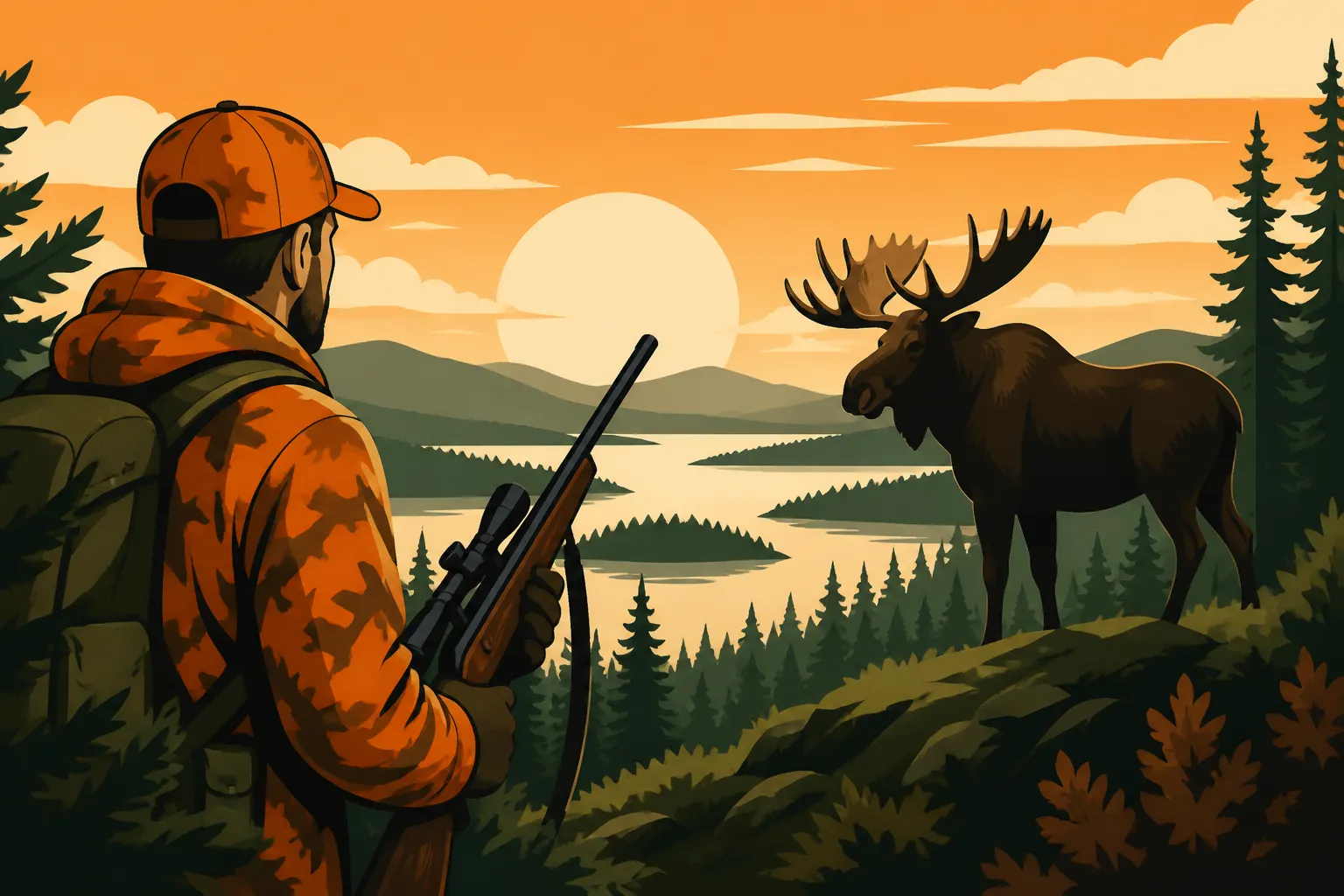
Moose hunting in the Nipigon area is, for many, the ultimate Northern Ontario experience. These magnificent animals thrive in the mix of mature forest and regenerating clearcuts found throughout the region. The extensive network of lakes and rivers also means that moose are often found near water, browsing on aquatic vegetation. Hunters often employ a combination of still-hunting through thick cover, calling during the rut, and sometimes utilizing watercraft to access remote areas. Calling a Bull Moose in the Rut is a classic strategy that can be incredibly effective when executed properly, mimicking the sounds of a cow or a challenging bull to draw an animal in.
Access to prime moose habitat can be a significant challenge. Many hunters rely on old logging roads, which can be rough and sometimes impassable without a capable 4×4 or ATV. Others take to the water, using canoes or boats to navigate rivers and lakes, setting up spike camps in truly isolated locations. This type of hunting demands a high level of preparedness and physical fitness. You're not just hunting an animal; you're immersing yourself in the wilderness, facing weather, rugged terrain, and the possibility of long hauls to get your game out. Proper scouting, often using satellite imagery from tools like onX Hunt to identify potential browse areas and travel corridors, is absolutely critical.
Black Bear Hunting in Remote Nipigon
The Nipigon country is also prime black bear territory, boasting a robust population of these intelligent and powerful animals. Bear hunts here are often conducted over bait, especially during the spring and fall seasons. Setting up a bait site requires dedication, patience, and a deep understanding of bear behaviour, as well as strict adherence to Ontario's baiting regulations. You're looking for areas with good cover, proximity to water, and away from human disturbance. Setting a Bear Bait Site in Ontario is a science in itself, involving consistent replenishment and careful scent management.
Beyond baiting, some hunters prefer spot-and-stalk methods, particularly in areas with recent logging activity where berries and other food sources are abundant. Others might still-hunt or track bears through dense bush. Regardless of the method, bear hunting in Nipigon demands vigilance and respect for the animal. These bears can be large and elusive, making every encounter thrilling. The remoteness of the region also means that careful planning for meat care and hide preservation is paramount, especially in warmer early fall conditions.
Small Game and Upland Birds: A Different Kind of Adventure
While moose and bear dominate the conversation, the Nipigon country also offers fantastic opportunities for small game and upland bird hunters. These pursuits can provide a more relaxed pace, or serve as a great way to fill time during a big game hunt, adding another layer to your wilderness experience.
Ruffed Grouse and Spruce Grouse in the Boreal Forest
The vast boreal forests around Nipigon are a haven for ruffed grouse and spruce grouse. For those who enjoy walking, calling, or working a pointing dog, this region offers endless cover. Ruffed grouse, with their explosive flushes, are typically found along old logging roads, bush edges, and creek bottoms where there's a mix of aspen, birch, and conifer. Hunting Ruffed Grouse on an Ontario Bush Road is a classic approach, combining a leisurely drive with frequent stops to walk cover. Spruce grouse, often less wary, prefer denser conifer stands and can sometimes be found foraging on the ground.
Hunting these birds is an immersive experience. You're constantly scanning the forest floor, listening for the tell-tale thrum of a drumming ruffed grouse, or watching for movement in the thick undergrowth. It’s a great way to explore the varied terrain and appreciate the subtle beauty of the northern bush. Many hunters will bring a shotgun along on a moose or bear trip specifically for these opportunities, turning a potentially slow afternoon into a productive one.
Waterfowl and Other Small Game
While not as widely known for waterfowl as some of Southern Ontario's hotspots, the Nipigon country does offer localized opportunities for ducks and geese, particularly around smaller lakes, marshes, and river systems. Scouting is key here, looking for wetlands that hold birds moving through or resident populations. Jump-shooting smaller ponds or setting up blinds along remote shorelines can be effective. This is definitely more of a niche pursuit in Nipigon, requiring specific knowledge of local hotspots.
Beyond grouse, small game like snowshoe hare also inhabit the thick coniferous forests. Rabbit and Hare Hunting in Ontario with beagles can be an exciting, high-energy chase through dense cover, especially after the first snow. The changing seasons dictate much of this activity, with different species becoming more active or accessible at various times. For any of these pursuits, having detailed maps, perhaps using a platform like onX Hunt to mark potential areas, is invaluable given the expansive nature of the territory.
Navigating the Wild: Access, Logistics, and Essential Planning
Hunting in the Nipigon country is an endeavour that rewards meticulous planning and a healthy respect for the wilderness. This isn't a quick day trip; it's often a multi-day or multi-week commitment to the remote Canadian bush.
Accessing Nipigon's Hunting Grounds
Getting into the Nipigon country is the first hurdle. While highways like the Trans-Canada (Highway 11/17) provide a backbone of access, much of the prime hunting ground lies off the beaten path, requiring travel on gravel, logging, or even unmaintained bush roads. Some areas are only accessible by boat via Lake Nipigon or other large lake systems, or by float plane to truly remote fly-in camps. This remoteness can be both a blessing and a curse: it means less pressure, but also greater logistical challenges and increased safety considerations. Hunting Moose From a Boat or Canoe can open up vast tracts of country otherwise inaccessible.
Before you go, it's crucial to research road conditions, especially if venturing into areas used by logging operations. These roads can be active, or they can be washed out and overgrown. Having a reliable vehicle, spare tires, and recovery gear is not just a good idea, it's essential. For boat access, knowing your vessel's capabilities and being proficient in navigation is paramount on large, often unpredictable northern lakes. Many hunters will invest in high-quality GPS units and satellite communication devices, as cell service quickly becomes non-existent outside of towns.
Essential Gear and Safety Considerations
Given the remote nature of Nipigon, your gear list will be more extensive than for a typical hunt. Beyond your hunting equipment, you'll need robust camping gear suitable for potentially harsh weather, comprehensive first-aid supplies, emergency communication devices (satellite phone or inReach), and plenty of food, water, and fuel. Understanding What to Do If You Get Turned Around in the bush is a critical skill, and carrying a compass and map, and knowing how to use them, is non-negotiable, even if you rely heavily on digital tools like onX Hunt.
| Species Targeted | Typical Habitat in Nipigon | Common Access Method | Recommended Gear |
|---|---|---|---|
| Moose | regenerating cuts, beaver ponds, lake edges, river bottoms | ATV, boat (canoe/motor), logging roads, foot | powerful rifle/bow, calling gear, heavy pack, navigation tools |
| Black Bear | dense forest, berry patches, clearcuts, swamps | logging roads, foot, bait site setup | rifle/bow, baiting supplies (if applicable), scent control |
| Ruffed Grouse | old logging roads, bush edges, mixed forest | walking roads, foot with dog | shotgun, bird vest, comfortable boots |
| Spruce Grouse | dense conifer stands, boreal forest | walking, foot | shotgun, bird vest |
| Snowshoe Hare | thick conifer stands, dense brush | foot with beagles (optional) | shotgun or small calibre rifle, appropriate footwear |
Beyond gear, safety is paramount. Let someone know your detailed float plan or hunting area, expected return time, and contingency plans. Be aware of local wildlife, especially bears, and carry bear spray. Understand weather patterns, as conditions can change rapidly on large bodies of water or in the exposed bush. This isn't the kind of place to cut corners on preparation; the wilderness demands respect and readiness. Planning resources like GoHunt, while often US-focused, can offer general frameworks for trip planning and gear lists applicable to any remote hunt.
Ethical Hunting and Conservation in Nipigon
Hunting in the Nipigon country isn't just about the harvest; it's about connecting with the land and contributing to responsible wildlife management. With vast tracts of wilderness and significant wildlife populations, hunters play a vital role in ensuring the health of the ecosystem for future generations.
Respecting the Resource and the Land
Ethical hunting practices are especially important in remote areas like Nipigon. This means making clean shots, recovering all game, and minimizing your impact on the environment. Pack out everything you pack in, and leave no trace of your presence. It also means understanding and adhering strictly to all provincial regulations, including season dates, bag limits, and specific rules for Wildlife Management Units (WMUs) that cover the Nipigon region. Checking Ontario's Wildlife Management Units before your trip is essential to ensure you're compliant.
The remoteness also presents unique challenges for game recovery and meat care. If you are fortunate enough to harvest a moose or bear, you might be hours, or even days, from the nearest road or boat launch. Proper field dressing, quartering, and cooling of the animal, often in challenging conditions, is crucial to preserving the meat. Meat Care in Ontario's Warm Early Seasons can be a major factor to consider for early fall hunts, where temperatures can still be quite mild. Having a solid plan for extraction, whether with game carts, ATVs, or by carrying quarters out, is as important as the hunt itself.
The Role of Conservation
Every hunter in Ontario contributes to conservation through licence fees and participation in harvest reporting. In regions like Nipigon, where large game populations are vital, accurate reporting helps wildlife managers monitor populations and make informed decisions. Understanding the dynamics of these populations, such as Why Ontario Moose Numbers Fell in some areas and what conservation efforts are in place, adds to the richness of the hunting experience.
The Nipigon country is a true wilderness gem, offering unparalleled opportunities for those willing to embrace its challenges. It calls to those who seek solitude, a deep connection with nature, and the thrill of a hard-earned harvest. By preparing thoroughly, hunting ethically, and respecting the land, you can experience a truly unforgettable adventure in one of Ontario's most iconic hunting destinations.
Disclaimer
This article is for general informational purposes only and does not constitute professional advice. Laws, prices and regulations vary by location and change over time. Consult a qualified professional for guidance on your specific situation.