Cell Service at an Ontario Bush Camp
One of the biggest anxieties many of us face when planning an Ontario hunting trip, especially to a remote bush camp, isn't just about bagging that trophy or filling the freezer. It's the thought of being completely cut off, unable to reach family or handle an emergency. Navigating the world of cell service, or the lack thereof, in Ontario's vast wilderness can feel like trying to track a ghost, but this guide will help you set realistic expectations and plan for staying connected when it matters most.
The Reality of Cell Service in Ontario's Bush Camps
Let's face it, Ontario is a massive province, and a huge chunk of it is rugged wilderness, far removed from bustling towns and cities. While our urban centres boast excellent cellular infrastructure, the moment you venture north, into the Shield country or the boreal forest, that reliable signal often evaporates like mist in the morning sun. It's a common frustration, especially when you're used to being constantly connected in your daily life. The expectation of having cell service everywhere, even in the deep woods, is just not realistic, and understanding why is the first step to planning effectively.
Why Service is Spotty or Non-Existent
The primary reason for poor or absent cell service in Ontario's bush camps boils down to geography and economics. Cell towers, those tall structures broadcasting signals, need a clear line of sight to your phone. In the north, you're dealing with vast forests, rolling hills, rocky outcrops, and sometimes even significant elevation changes. Each one of these natural features can block or severely weaken a cell signal. It's not like the flat, open farmland of southern Ontario where a single tower can cover miles and miles with ease.
Beyond the physical landscape, there's the sheer cost and practical challenge of building and maintaining infrastructure in remote areas. Telecommunication companies invest where there's population density to justify the expense. A hunting camp with a handful of visitors a few months a year simply doesn't offer the return on investment needed to erect and power a full-service cell tower. This means that many of those fantastic, secluded camps you find through platforms like BookYourHunt or discover while Scouting a Wildlife Management Unit are, by their very nature, off the grid when it comes to traditional cell signals.
The "Bubble" Effect: Where You Might Get a Signal
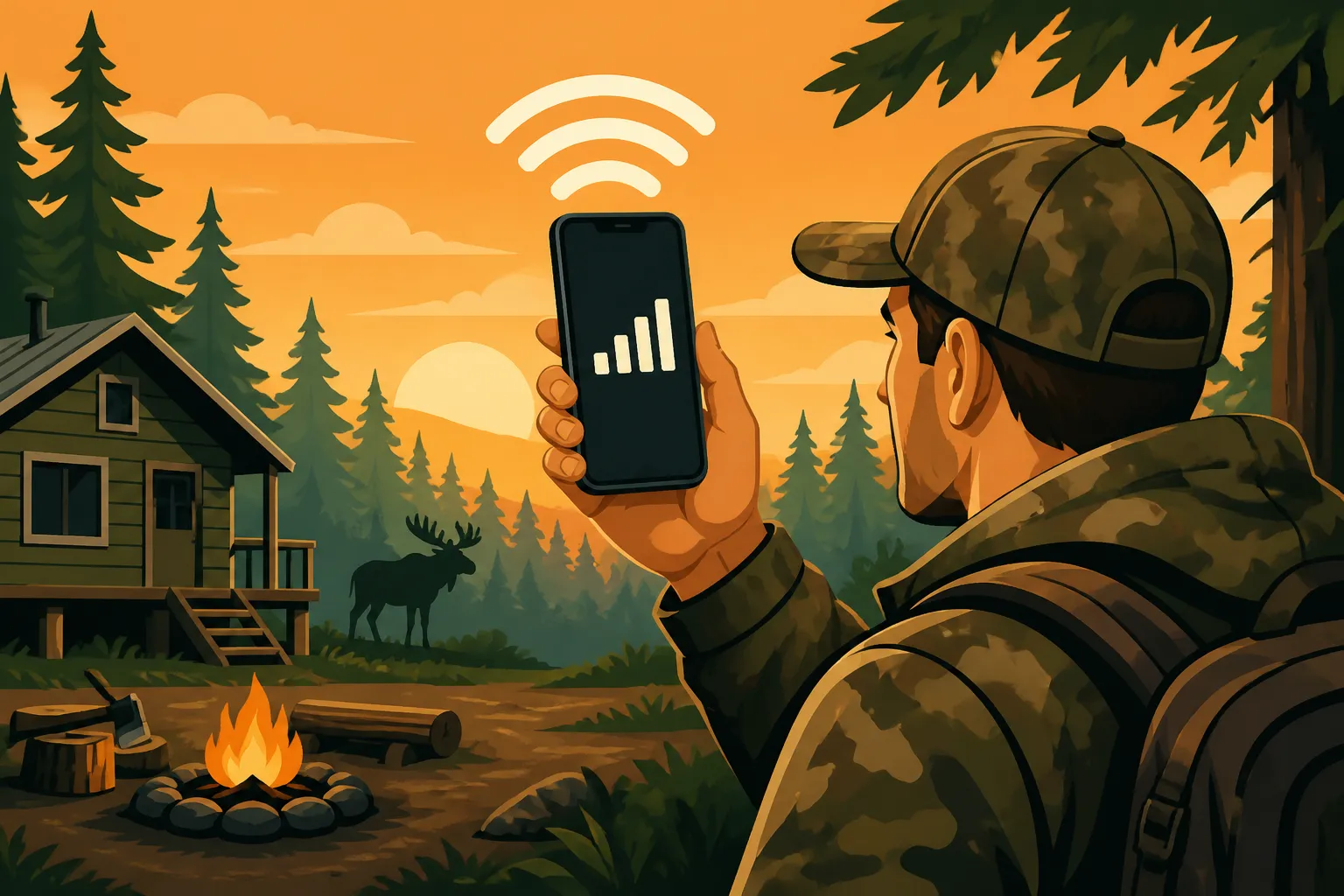
Despite the general lack of service, it's not always a complete blackout. Sometimes, you'll encounter what I like to call the "bubble" effect. This is where, due to a specific quirk of topography or proximity to a very distant, low-power tower, you might find a faint, intermittent signal in a very particular spot. I've heard stories of hunters having to stand on a specific rock, climb a certain tree, or walk to the end of a dock just to get one bar. It's often enough for a quick text or a crackly voice call, but rarely reliable for browsing or video.
These "bubbles" are often found at higher elevations, along major highways or infrastructure corridors (like an old logging road or hydro line), or occasionally near larger bodies of water where signals might bounce. It's never something you can count on, but it's always worth asking your outfitter if there's a known "hot spot" at camp or nearby. Don't be surprised if that spot is twenty minutes away by boat or ATV, often on top of a bluff that provides that ever-elusive line of sight. It's a testament to how far many of us will go just for a fleeting moment of connection.
Strategies for Staying Connected (or Disconnected!)
Given the realities of patchy service, relying solely on your smartphone for communication in a remote Ontario bush camp is a recipe for frustration, and potentially, a safety hazard. Instead, thinking proactively about communication means exploring alternatives and, perhaps most importantly, embracing the unique opportunity to truly disconnect. Many hunters cherish that escape from constant notifications, but preparedness is still key.
Satellite Communication Devices: Your Lifeline
For serious peace of mind, especially if you're venturing deep into the backcountry, a satellite communication device is your absolute best friend. These devices don't rely on cell towers; they connect directly to satellites orbiting Earth, providing coverage in even the most remote locations. There are a few main types, each with its own advantages:
- Satellite Messengers (e.g., Garmin inReach, Zoleo): These are compact devices that allow you to send and receive text messages, share your GPS location, and, crucially, trigger an SOS alert to a 24/7 monitoring centre in an emergency. They work practically anywhere with a clear view of the sky and are relatively affordable to rent or purchase, with subscription plans varying based on usage. For many, the ability to send pre-programmed "I'm OK" messages to family back home is worth its weight in gold. When you're Hunting Ontario's Crown Land far from any roads, this kind of device can literally be a lifesaver.
- Satellite Phones: These offer full voice call capabilities, much like a regular cell phone, but via satellite. They are more expensive than messengers, both to buy and to operate, but provide the most robust form of communication when traditional cell service is non-existent. They're often favoured by larger groups, guides, or those undertaking truly extended, off-grid expeditions.
Before you go, make sure you're familiar with how to use your chosen device. Practice sending messages, understand how to activate the SOS feature, and ensure it's fully charged and has a clear view of the sky when you need it. Remember, these devices require a subscription, so activate it before you leave for camp.
Wi-Fi and Landlines: Rare but Possible
While certainly not the norm, some bush camps, especially those that are slightly less remote or have invested in specialized infrastructure, might offer Wi-Fi or even a traditional landline.
- Wi-Fi: If a camp offers Wi-Fi, it's usually via a satellite internet connection (like Starlink, which is becoming more prevalent, or older VSAT systems). This can be a game-changer, allowing for more regular communication, but be prepared for it to be slower and less reliable than what you're used to at home. Bandwidth is often limited, and many camps will prioritize essential communication or may charge an extra fee for usage. Don't expect to stream movies; think email and basic messaging.
- Landlines: A rare sight in truly remote camps these days, a traditional landline might still exist in some long-established lodges or outfitters' main offices. This would typically be a shared phone for emergencies or quick check-ins, not for extended personal calls. Always ask your outfitter specifically about their communication options when booking, perhaps through a reputable platform like GoHunt, which often lists amenities.
It's crucial to clarify these options with your outfitter well in advance. Don't just assume. A quick call or email asking about their exact setup will save you a lot of guesswork and potential disappointment.
Managing Expectations and Embracing the Disconnect
Perhaps the most important strategy for dealing with limited cell service is to adjust your mindset. Going into a remote bush camp with the expectation of constant connectivity will only lead to frustration. Instead, view it as an opportunity.
The wilderness, particularly in Ontario's vast northern stretches, is a place to get away from it all. To truly immerse yourself in the hunt, the crackle of the campfire, the sounds of the forest. Without the constant hum of notifications, you might find yourself more present, more aware of your surroundings, and more deeply engaged with your hunting companions. This mental detox can be incredibly refreshing.
Before you leave, have open conversations with your family and friends. Let them know where you're going, that cell service will be limited or non-existent, and when they can expect to hear from you next (e.g., when you return to a town with service, or via a satellite messenger at specific times). Provide them with the outfitter's emergency contact information. This upfront communication can alleviate anxiety on both ends. Embrace the quiet; it's a part of the Ontario wilderness experience.
Planning for Communication Before You Go
A successful hunting trip, especially to a remote camp, is built on solid planning. Communication, or the lack thereof, should be a significant part of that preparation. Don't wait until you're already in the depths of the bush to realize you have no way to connect. Being proactive will ensure your trip is not only enjoyable but also safe.
Researching Your Specific Camp's Connectivity
Before you even pack your bags, make connectivity a key question when you're looking at various outfitters or camps. Whether you're planning a full Moose Hunting Ontario's Northern Bush expedition or a Spring Bear Hunting in Ontario trip, inquire directly with the outfitter. Don't just rely on website claims that might be outdated or vague. Ask specific questions like:
- "Do you have cell service at the camp?" (Not just "in the area".)
- "Which carrier (Bell, Telus, Rogers) has the best chance of a signal, if any?"
- "Is there a landline or satellite phone available for emergencies?"
- "Do you offer Wi-Fi, and if so, what's the speed and cost?"
- "Is there a specific spot nearby where I might get a signal?"
An honest outfitter will give you a realistic picture. They understand the frustration of spotty service and often have established routines for client communication or emergency contact. Some might even have a dedicated radio system. Use resources like BookYourHunt or GoHunt to compare outfitters, and always read reviews for mentions of communication facilities or lack thereof.
Emergency Protocols and Backup Plans
This is perhaps the most critical aspect of planning for limited cell service. What happens if there's a medical emergency, a lost hunter, or a critical piece of equipment fails? Your group needs a clear plan.
- Designate a contact person: At home, have one reliable person who knows your itinerary, the outfitter's contact info, and when they should expect to hear from you. This prevents multiple panicked calls if you're delayed.
- Satellite Device: As mentioned, a satellite messenger or phone is a wise investment for remote trips. Ensure at least one person in your group carries one and knows how to use it. Make sure it's linked to an emergency contact list.
- Outfitter's Role: Understand the outfitter's emergency procedures. Do they have a radio? Do they have staff that can drive or boat to a location with service? How quickly can they respond to a crisis? When Hunting a Group Moose Tag Together, having these protocols in place for everyone is vital.
- First Aid and Survival Skills: Beyond communication, ensuring your group has basic first aid knowledge and some wilderness survival skills (like fire-starting or shelter building) can buy critical time while waiting for help if a communication device can't be used or fails. Consider taking a wilderness first aid course before tackling truly remote areas.
A backup plan isn't about expecting the worst, it's about being prepared for anything. In the wilderness, things can change quickly, from weather conditions to an unforeseen accident.
Letting Loved Ones Know What to Expect
The fear of the unknown is often worse than the reality. Before you head off into the beautiful, yet disconnected, Ontario wilderness, have an honest chat with your family and close friends. Explain that you might be out of touch for extended periods.
- Set Expectations: Tell them explicitly that you likely won't have cell service, and calls or texts will be rare, if at all.
- Provide an Itinerary: Share your travel dates, the name and location of your camp, and the outfitter's contact information.
- Establish Check-in Times (if possible): If you do have a satellite messenger, establish specific times you'll send an "I'm OK" message. For example, every evening at 7 PM. This gives them a concrete window and reduces worry.
- Explain the Emergency Plan: Reassure them that you have a plan in place for emergencies, whether it's through a satellite device or the outfitter's protocols.
- Focus on the Experience: Remind them that part of the adventure is the disconnection, the chance to truly unplug and immerse yourself in nature. This often helps ease their minds about your prolonged silence.
By being transparent and proactive, you can manage their concerns, allowing them to relax while you focus on enjoying your hard-earned time in the bush. Whether you're going for Black Bear Hunting in Ontario or Whitetail Hunting in Ontario, a clear communication strategy with those at home is as important as your hunting strategy in the field.
Communication Device Comparison
| Feature | Cell Phone (Remote) | Satellite Messenger | Satellite Phone | Camp Wi-Fi (Satellite) | Landline (at camp) |
|---|---|---|---|---|---|
| Availability | Extremely limited/none | High (global) | High (global) | Rare, camp-dependent | Very rare, camp-dependent |
| Cost (Device) | Already owned | Moderate | High | N/A (camp provides) | N/A (camp provides) |
| Cost (Service) | Included in plan | Monthly/Annual sub. | Per minute/sub. | Usually extra fee | Usually free for calls |
| Functionality | Calls, texts, data | Two-way text, SOS, GPS | Voice calls, SOS | Browsing, email, apps | Voice calls (local/long) |
| Reliability | Very low | High (clear sky needed) | High (clear sky needed) | Variable, can be slow | High (if operational) |
| Emergency Use | Unreliable | Excellent (SOS feature) | Excellent | Potentially, if working | Excellent |
| Best For | Quick checks near towns | Safety, periodic updates | High-stakes comms | Basic connectivity | Critical emergencies |
Disclaimer
This article is for general informational purposes only and does not constitute professional advice. Laws, prices and regulations vary by location and change over time. Consult a qualified professional for guidance on your specific situation.