What Makes Southern Ontario So Productive
It's easy to fall into the trap of thinking that truly productive hunting in Ontario means heading way up north, deep into the boreal forest or the expansive Crown Land. Many hunters, especially those new to the province or visiting from elsewhere, picture vast wilderness when they think of Ontario hunting. But here's a secret that many seasoned local hunters already know: Southern Ontario, with its seemingly endless patchwork of farms and woodlots, is actually incredibly productive for a wide range of game, offering some fantastic opportunities if you know where to look and how to approach it. This guide will peel back the curtain on why this region, despite its population density, truly shines as a hunting destination, helping you understand its unique advantages.
The Abundance of Resources: Why Southern Ontario is a Buffet for Wildlife
One of the biggest factors contributing to Southern Ontario's productivity for game species is the sheer abundance and diversity of food and cover. Unlike the often nutrient-poor soils of the Canadian Shield further north, Southern Ontario boasts some of the richest agricultural land in the country. This means a consistent, high-energy food supply that allows animals to thrive, grow larger, and reproduce more successfully.
Rich Farmland and Diverse Agriculture
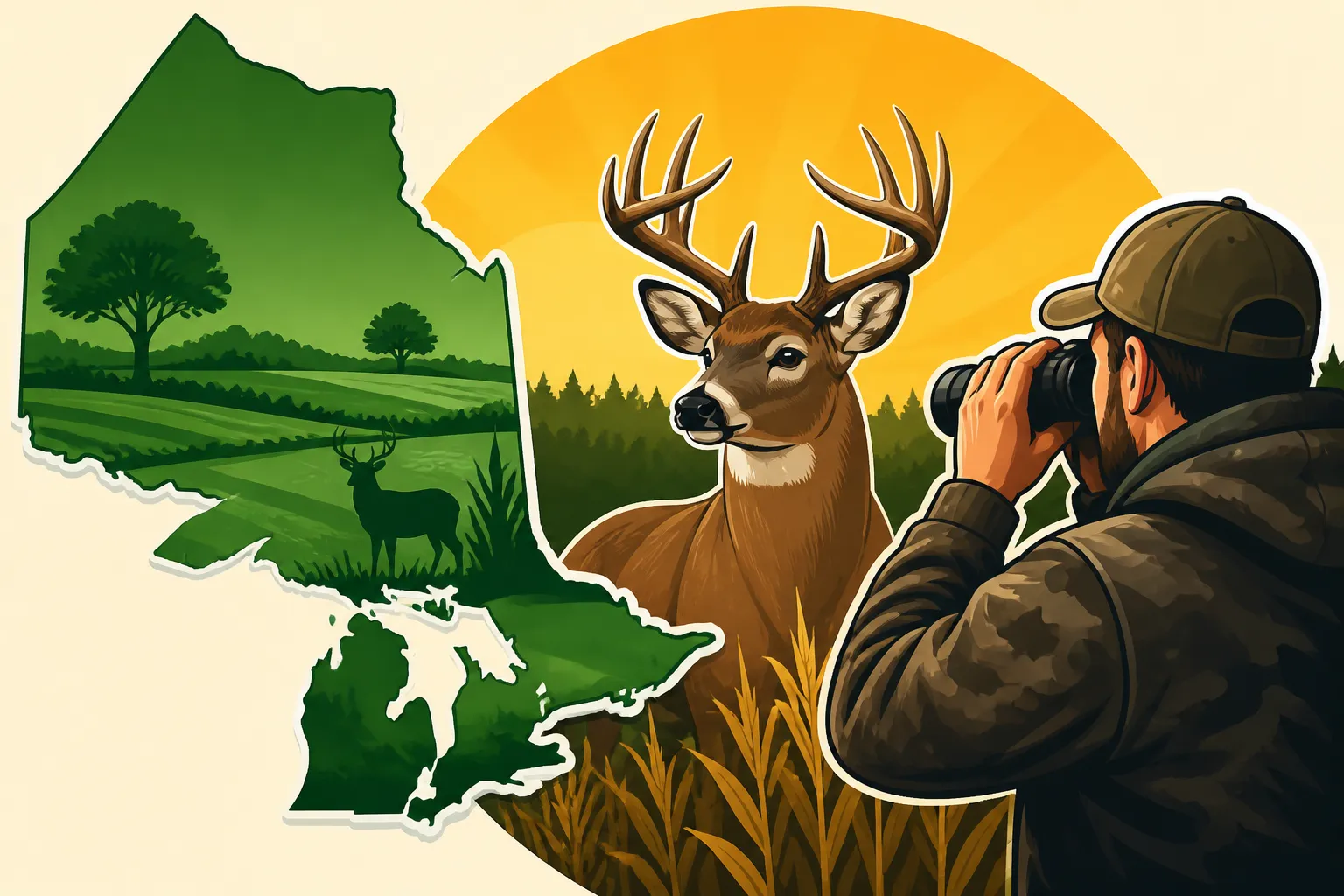
Picture the rolling fields of corn, soybeans, winter wheat, and hay that stretch across much of Southern Ontario. These aren't just pretty landscapes; they are massive buffet lines for wildlife. Whitetail deer, in particular, absolutely gorge themselves on these crops, especially in the late summer and fall. Corn provides incredible energy to bulk up for winter, and soybeans offer a protein boost for antler growth and fawn development. Even after harvest, the waste grain left behind can sustain deer and wild turkeys for weeks or even months.
Think about a standing corn field in October. It's not just food; it's dense, impenetrable cover that can hold multiple deer. Hunters often overlook these areas, assuming deer are just "passing through," but the reality is they often live and breed right within these agricultural havens. Similarly, a cut soybean field can draw in deer at dusk like a magnet, offering easy foraging. Turkeys, too, benefit immensely, scratching through stubble fields for leftover grains and insects. This constant, high-quality food source is a game-changer compared to areas relying solely on natural browse, which can fluctuate wildly year to year based on weather and forest health. The edge where these fields meet a woodlot creates a perfect transition zone, allowing animals to feed securely and quickly retreat to cover. It's a key reason why you might consider Hunting a Field of Standing Corn or Hunting a Winter Wheat Field.
Varied Habitat Pockets and Transition Zones
While Northern Ontario offers expansive, unbroken wilderness, Southern Ontario offers something arguably just as valuable for game: a mosaic of diverse, broken-up habitat. We're talking about small woodlots, thick fencerows, winding creek bottoms, cattail marshes, and even abandoned homesteads. These seemingly small pockets, when connected by even a thin strip of cover, create incredibly rich and secure environments.
Deer don't need hundreds of square miles of contiguous forest if they have everything they need within a few square miles. These small, often overlooked bush lots or swamp edges provide dense bedding cover, security from human disturbance, and access to food sources without having to travel far. A thick fencerow, for example, might seem insignificant, but it's a vital travel corridor for deer moving between a bedding swamp and a cornfield. A small creek bottom, even if dry, offers a natural funnel and often holds dense brush for hiding. These transition zones, where two different habitat types meet, are always hotspots for wildlife activity. They allow animals to use different resources throughout the day and year, adapting to changing conditions and hunting pressure. You'll find deer navigating these spaces, making a Hunting a Fencerow Between Two Fields strategy incredibly effective, or utilizing a dense Hunting a Swamp Edge for Whitetails for both cover and browse.
Milder Winters and Shorter Deep Snow Periods
One of the most underestimated advantages of Southern Ontario's geography is its generally milder winters compared to the province's northern reaches. This isn't just about hunter comfort; it has profound impacts on game populations, particularly whitetail deer and wild turkeys.
Reduced Winter Stress for Deer and Turkeys
Think about the brutal cold snaps and deep, persistent snow that can characterize winters in places like the Canadian Shield. While deer in the north are adapted to yard up in cedar swamps to conserve energy, even they face immense stress. In Southern Ontario, though, winters are often shorter, with less sustained deep snow. This means less energy expenditure for deer to move around and find food. They can continue to access waste grains in fields, browse on available woody vegetation, and simply move more freely without sinking chest-deep in snow for months on end.
The direct result of this reduced winter stress is higher survival rates, especially for fawns and older does, which means more deer in the herd each spring. Bucks also benefit; instead of burning critical fat reserves just to survive, they can maintain better body condition, which contributes to overall health and, yes, better antler growth in the following season. You can really see the difference in What Whitetails Eat Through a Hard Winter depending on how harsh that winter truly is, and How Deep Snow Shapes Ontario Game is a much larger factor north of Highway 7. Wild turkeys, too, struggle less to find food under lighter snow cover, leading to better overwinter survival and stronger breeding populations come spring.
Extended Growing Seasons and Forage Availability
The milder climate in Southern Ontario also translates to a longer growing season. This might sound obvious, but its impact on wildlife is significant. A longer growing season means natural vegetation – grasses, forbs, and woody browse – is available for a greater portion of the year. This extended period of natural forage complements the agricultural abundance perfectly.
For deer, more time for green browse means they can maintain a healthier diet for longer. For bucks, a sustained intake of nutrient-rich forage throughout the spring and summer directly supports optimal antler development. More feed, for a longer period, simply leads to bigger, healthier animals. Think about the flush of spring growth in a woodlot or the mast crops like acorns and beechnuts dropping in the fall. These become reliable, high-energy food sources for a longer stretch. It's a cyclical benefit: healthier does produce healthier fawns, who then have an ample food supply to grow strong before their first winter. GoHunt subscribers often use satellite imagery to identify areas with good mast crops like oaks when planning their fall hunts, a strategy that pays dividends in these productive southern regions.
Lower Predator Pressure and Human Influence (The Right Kind)
While it might seem counterintuitive given the higher human population density, Southern Ontario often experiences a different, and in some ways more beneficial, set of predator dynamics for key game species like deer and turkey. Furthermore, the nature of human land use plays a significant role in creating productive hunting grounds.
Balanced Predator-Prey Dynamics
When we talk about "predator pressure," in the deeper wilderness of Northern Ontario, you're looking at robust populations of timber wolves and black bears, both of which can significantly impact deer and moose populations, particularly calves and fawns. While black bears are certainly present in many parts of Southern Ontario, their populations tend to be more localized and often associated with larger contiguous blocks of forest. Larger predators like wolves are generally absent from most of the heavily farmed south.
This doesn't mean there are no predators. Coyotes are absolutely ubiquitous across Southern Ontario's farm country, and they certainly take their toll on fawns and turkeys. However, the sheer abundance of food and cover in the south often allows deer and turkey populations to out-reproduce the coyote pressure. The deer herd can absorb those losses more effectively than a deer population facing both coyotes and wolves in a less productive habitat. Understanding What Coyotes Do to Fawn Survival is crucial, but it's often a manageable factor in the south's robust game populations.
Strategic Land Use and Conservation Efforts
The majority of Southern Ontario is privately owned, but this isn't necessarily a bad thing for hunting. Many landowners, whether farmers or rural residents, practice various forms of land management that directly benefit wildlife. This might include planting food plots, leaving standing crops unharvested along field edges, maintaining woodlots, or simply reducing disturbance during critical breeding and fawning periods.
Additionally, many conservation authorities and private land trusts actively manage properties for ecological health, often creating ideal habitat that benefits game species. While access to these lands can be restricted, the presence of well-managed parcels creates anchor points for wildlife, from which animals can disperse. The challenge for hunters, of course, is gaining access to these private parcels. This is where solid landowner relations come into play. Building trust and rapport with property owners is paramount, and many hunters find their most consistent success on private land where they've secured permission. Getting Private Land Permission in Ontario is often the name of the game down here, and services like GoHunt can help hunters identify potential areas and understand land features before they even knock on a door.
Access and Opportunity: Beyond Just Crown Land
One of the unique aspects of hunting in Southern Ontario is the different kind of "access" you gain compared to the vast Crown Land in the north. While it requires a different approach, the opportunities can be incredibly rewarding and often closer to home.
Proximity to Population Centers and Hunter Access
It's an interesting paradox: Southern Ontario is home to the vast majority of the province's population, yet it also offers substantial hunting opportunities that are often just a short drive from major urban centers. This means less travel time and expense for many hunters, making regular scouting and shorter hunts more feasible. Instead of a multi-day expedition to the remote north, a hunter might be able to head out for an evening sit after work or a morning hunt on a Saturday, returning home by lunch.
This proximity means that more hunters are indeed active in the region. However, it also means that many smaller, isolated pockets of habitat often go overlooked simply because they don't look like traditional "big woods" hunting grounds. A diligent hunter who is willing to put in the legwork to scout these smaller parcels – perhaps a dense thicket between two subdivisions, a forgotten woodlot behind an industrial park, or a swampy area on the edge of a rural town – can find fantastic hunting without traveling hundreds of kilometres. Areas around cities like Toronto or London might seem daunting, but even in these regions, focused effort can lead to success. Learning about Hunting Access Near London or even Hunting Access Near Toronto might surprise you with the hidden gems they offer.
The Role of Property Owners and Management
In Southern Ontario, private landowners are the gatekeepers to much of the best hunting. As we've discussed, their land use practices directly influence game populations. A farmer who rotates crops, leaves cover strips, or manages a woodlot for timber will inadvertently (or intentionally) create prime habitat. This makes developing strong relationships with landowners absolutely critical. It's not just about getting permission once; it's about building a long-term connection based on respect, communication, and often, offering a helping hand with farm chores or game management.
Many of these private lands benefit from limited hunting pressure due to restricted access, allowing deer and other game to reach older age classes and express their full genetic potential. For instance, a secluded woodlot behind a farmer's field might hold a mature buck for years, simply because no one else is hunting it. This is why Southern Ontario consistently produces some of the biggest whitetail bucks in the province, often carrying impressive racks and significant body mass, a true testament to its productive nature. When exploring new hunting areas, understanding property boundaries, and identifying potential private land opportunities is key, and tools like GoHunt can provide invaluable insights into land ownership patterns and topographic features.
Here's a quick comparison of some general hunting characteristics between Southern and Northern Ontario:
| Feature | Southern Ontario | Northern Ontario |
|---|---|---|
| Primary Game | Whitetail Deer, Wild Turkey, Waterfowl, Small Game | Moose, Black Bear, Whitetail Deer (Northwest), Grouse |
| Habitat Type | Agricultural, Mixed Forest Pockets, Wetlands | Boreal Forest, Canadian Shield, Crown Land |
| Food Sources | Abundant Ag Crops (corn, soy), Natural Mast/Browse | Primarily Natural Browse, Mast (seasonal) |
| Winter Severity | Generally Milder, Less Deep/Persistent Snow | Often Harsh, Deep/Persistent Snow |
| Predator Pressure | Coyotes, Black Bears (localized) | Wolves, Black Bears, Coyotes |
| Land Access | Predominantly Private Land (permission crucial) | Vast Crown Land, Remote Outfitter Access |
| Hunter Density | Higher local density, but concentrated in accessible areas | Lower density, but can be concentrated near roads |
| Trophy Potential | High for Whitetail Deer, Turkeys | High for Moose, Bear, sometimes Northern Whitetails |
This article is for general informational purposes only and does not constitute professional advice. Laws, prices and regulations vary by location and change over time. Consult a qualified professional for guidance on your specific situation.