What Acorn Crops Do to Ontario Deer
If you've spent any time chasing whitetails in Ontario, you know how frustrating it can be when your tried-and-true spots suddenly go cold. One year, deer are everywhere; the next, it feels like they've vanished into thin air. Often, the hidden hand at play is the annual acorn crop, which can drastically alter deer patterns, making or breaking your hunting season. This guide will dive deep into how these humble nuts impact Ontario deer, helping you understand their behaviour and refine your hunting strategies.
The Nutritional Powerhouse of Acorns for Deer
For many deer in Ontario's hardwood forests, acorns are the gold standard of natural food sources. They’re not just a snack; they're a vital part of a deer's diet, especially leading into the harsh winter months. Understanding why they're so important helps us appreciate the ripple effect a good or poor acorn crop can have.
Why Acorns are a Deer's Best Friend
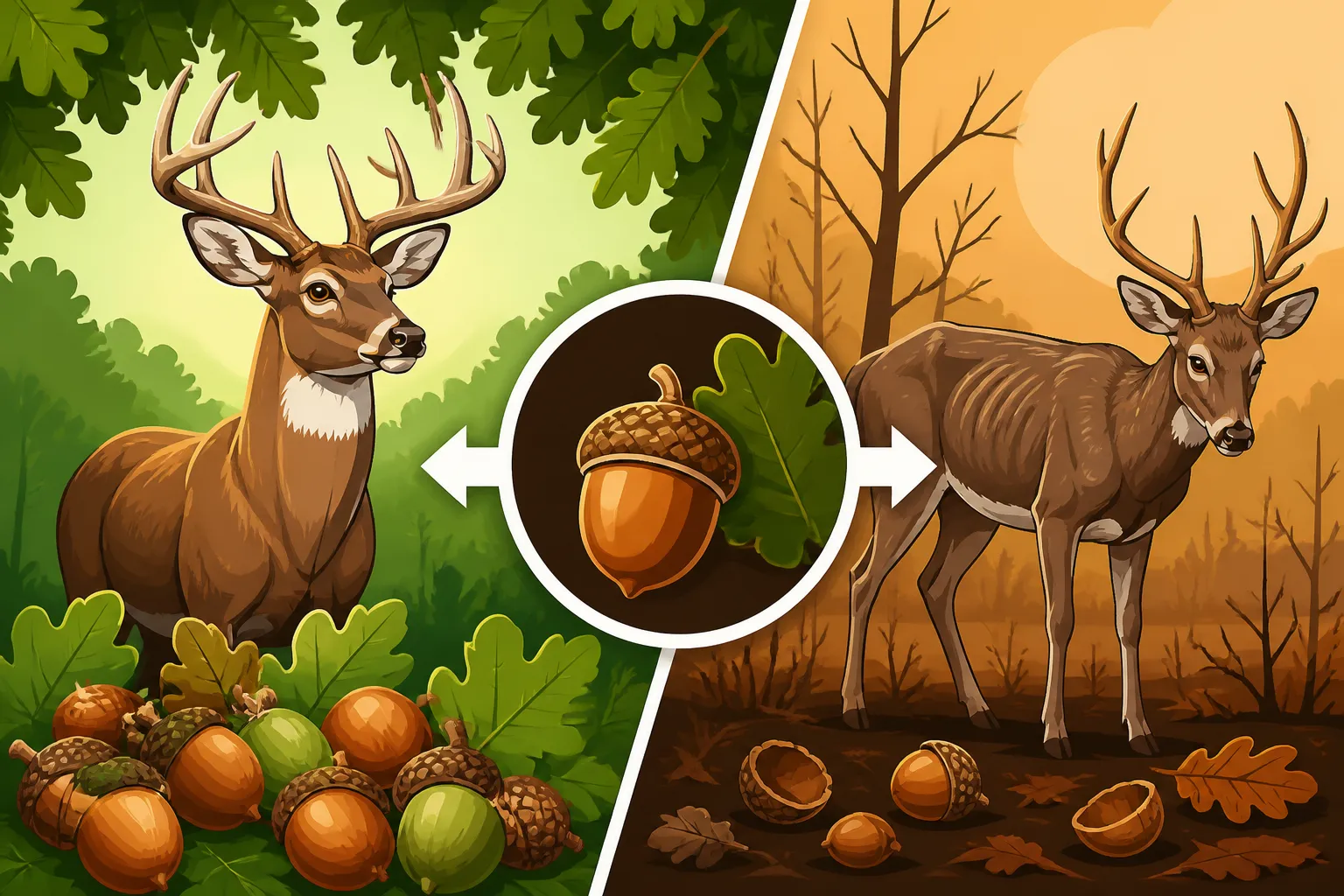
Acorns are incredibly calorie-dense, packed with carbohydrates, fats, and a decent amount of protein. Think of it like a hunter stocking up on a hearty meal before a long day in the bush – deer do the same with acorns. Unlike woody browse, which requires more digestive effort and offers less energy, acorns deliver a quick, powerful energy boost. This high-fat, high-carb content is crucial for deer to build up fat reserves, which are absolutely essential for surviving the cold Ontario winter. A deer with strong fat reserves is better equipped to withstand deep snows and freezing temperatures, improving its overall health and resilience.
What makes acorns truly stand out is their digestibility and energy value compared to many other natural foods. While deer will browse on twigs, leaves, and other vegetation, these typically have lower nutritional value per bite. Acorns, especially the sweeter white oak varieties, are highly palatable and easy to digest, meaning deer can consume a large amount of vital energy quickly. This makes them incredibly attractive to deer, often causing them to abandon other food sources when acorns are plentiful. A robust acorn crop directly translates to healthier deer going into winter, which can also influence fawn survival rates in the following spring.
Different Oak Species and Their Appeal
Ontario's forests feature a mix of oak species, and it's not a one-size-fits-all situation when it comes to deer preference. Red oaks and white oaks are the two main players, and they have distinct characteristics that affect deer feeding habits. White oak acorns tend to be sweeter and have lower tannin content, making them immediately palatable to deer. They drop earlier in the fall, often from late August through September and early October. This makes them a prime target for deer in the early archery season. Deer will gorge on white oak acorns, sometimes to the exclusion of almost all other foods, which can make hunting challenging if you're not set up near a productive white oak stand.
Red oak acorns, on the other hand, contain higher levels of tannins, giving them a more bitter taste. This means deer typically prefer white oak acorns first. However, red oak acorns drop later in the fall, usually from mid-October into November, and they have a longer shelf life on the forest floor, often remaining edible well into winter. When white oak acorns are exhausted or a poor year occurs, deer will readily switch to red oaks. This makes red oak stands crucial later in the season, especially during the peak of the rut and into the gun season. Understanding this natural progression – white oaks first, then red oaks – is a key piece of the puzzle for timing your hunts.
How Acorn Availability Influences Deer Behavior and Movement
The abundance or scarcity of acorns can cause dramatic shifts in deer behaviour, essentially dictating where they spend their time and energy. This isn't just a minor adjustment; it's a fundamental change in their daily routines and travel patterns, with significant implications for hunters.
Concentrating Deer vs. Dispersing Them
In years with a bumper acorn crop, deer will gravitate towards oak-heavy areas like magnets. Instead of having to travel far and wide to find food, they can find everything they need in a relatively small area. This phenomenon concentrates deer, often drawing them out of dense cover or agricultural fields into the hardwoods. If you can locate a productive oak flat or ridge during such a year, you're likely to see increased deer activity. This concentration effect can make hunting easier, as deer become more predictable, focusing their movements within these acorn-rich zones. However, it also means that areas without acorns will be largely devoid of deer, frustrating hunters who aren't on top of their scouting game.
Conversely, a poor acorn year can scatter deer far and wide. Without a concentrated, high-value food source, deer are forced to diversify their diets, seeking out other forms of browse, forbs, and any available agricultural crops. This can make them much harder to pattern, as their movements become more spread out and less predictable. They might spend more time in thick cover, foraging on secondary food sources, or venturing into fields they wouldn't normally frequent during an acorn year. Hunters need to adjust their scouting and strategy accordingly, focusing on other food sources and pinch points when acorns are scarce. Satellite imagery, which you might use with a tool like GoHunt, can help identify different forest types and potential alternative food sources if the oak woods are barren.
Impact on Rut Behavior and Travel Corridors
Acorn availability also plays a surprisingly strong role in how deer, especially bucks, behave during the rut. In a year with abundant acorns, deer are well-fed and healthy. Bucks might not need to travel as extensively to find does, as the does are already concentrated in the oak woods, taking advantage of the easy food. This can sometimes lead to a "lazy rut," where deer movements are more localized, but the overall health of the herd can mean more intense breeding activity within those concentrated areas. Bucks will cruise through the oak flats, checking scrapes and scent-checking does that are already there.
In a lean acorn year, the situation changes. Does are more dispersed, searching for whatever food they can find. This forces bucks to cover more ground, travelling further and wider to locate receptive does. They might be more willing to move through open areas or less secure cover as they relentlessly search. This can lead to what some hunters describe as a "hotter" rut, with more visible daytime movement from bucks as they crisscross the landscape. Understanding this can inform your stand placement; in a good acorn year, you might focus on oak ridges, while in a poor year, hunting traditional travel corridors or funnels between diverse food sources might be more productive. Hunting the Rut in Early to Mid November is heavily influenced by these factors.
Acorns, Hunter Strategy, and Season-Long Impact
For the savvy Ontario hunter, understanding acorn crops isn't just academic; it's a critical component of successful hunting strategy. Ignoring the acorn report is like trying to navigate without a compass – you might get lucky, but you're probably going to be wandering aimlessly.
Scouting for the Acorn Crop
Pre-season scouting is always important, but in areas with oak stands, it's absolutely paramount to assess the acorn crop. You need to hit the woods in late summer and early fall to see what's happening. Look for acorns on the ground, but also scan the canopies of oak trees. Are they laden with nuts? Are they just beginning to fall? Are squirrels and turkeys already feasting on them? This early reconnaissance will give you a vital heads-up on deer movement patterns for the upcoming season.
Using binoculars, you can often spot acorns still on the branches, or look for signs of heavy feeding on the ground – disturbed leaves, fresh deer tracks, and droppings filled with acorn fragments. It's also worth distinguishing between white oaks and red oaks at this stage, as their dropping times and deer preference vary. Scouting With Satellite Imagery in Ontario can help you identify oak stands before you even step foot in the woods, allowing you to prioritize your ground scouting efforts. If GoHunt shows a good mix of hardwoods, you know exactly where to start looking for those valuable nuts.
Stand Placement and Adjusting Your Hunt
Your stand placement should be a direct reflection of the acorn crop. In a banner acorn year, your best bet is often right in the middle of a productive oak flat or along a major deer trail leading into one. Deer will be spending a lot of time feeding there, so setting up downwind on a trail leading to or from these areas, or even overlooking a dense concentration of falling acorns, can be highly effective. Consider the wind carefully, as deer will be less tolerant of human scent when they are relaxed and feeding.
However, if the acorn crop is a bust, you need to pivot. Instead of oak woods, focus on other available food sources: agricultural fields like soybeans or corn, natural browse in clearcuts, or even thick cedar swamps where deer might be finding alternative sustenance. Travel corridors connecting these alternative food sources become much more important. Hanging a Stand on an Ontario Bush Edge might be more effective when deer are moving between different habitat types to find food. Don't be afraid to move your stands or even hunt from the ground if your primary acorn spots are unproductive.
Long-Term Impacts on Deer Health
Beyond individual season success, acorn crops have a profound long-term impact on the overall health and population dynamics of Ontario's deer herd. Consistent strong acorn crops lead to healthier deer that are better able to survive winter stress, especially in more northern regions where winters can be exceptionally harsh. Healthier does typically conceive more fawns, and those fawns are born with better body condition, improving their chances of survival. This contributes to a robust and productive deer population.
Conversely, several consecutive years of poor acorn crops can take a toll. Deer go into winter with lower fat reserves, making them more susceptible to disease, predation, and starvation. This can lead to a decline in overall herd health, lower fawn recruitment, and a reduction in deer numbers. What Whitetails Eat Through a Hard Winter is heavily influenced by their fall foraging success. This is why agencies like the Ministry of Natural Resources and Forestry (MNRF) monitor mast crops as part of their broader wildlife management strategies, understanding that it's a key indicator of future deer health.
Comparing Acorn Crop Scenarios for Hunters
To really solidify how different acorn crop years affect your hunt, let's break down the common scenarios and what they mean for your strategy.
| Acorn Crop Scenario | Deer Behavior Impact | Hunter Strategy | Key Takeaway |
|---|---|---|---|
| Bumper Crop | Deer highly concentrated in oak stands; localized movement. | Focus scouting and stands on oak flats, ridges, and connecting trails. Look for fresh sign. | Hunt the acorns! Deer are predictable and concentrated here. |
| Moderate Crop | Deer still use acorns but supplement with other foods. | Hunt acorns, but also scout secondary food sources and transition areas. More dispersed movement. | Balance acorn hunting with awareness of alternative foods. |
| Poor Crop | Deer widely dispersed, seeking diverse food sources. | Abandon oak stands; focus on agricultural fields, browse, cedar swamps, and travel corridors. | Adapt quickly; deer will be harder to pattern. |
Beyond the Acorn: Other Influences on Ontario Deer
While acorns are undeniably a major player in shaping Ontario deer movements and health, they are part of a larger ecological puzzle. Understanding these other factors helps to round out your overall hunting knowledge and adapt when the acorns aren't falling.
The Role of Other Natural Food Sources
Ontario's diverse landscape offers deer a variety of food sources beyond just acorns. In regions without significant oak stands, or during lean acorn years, deer rely heavily on woody browse – the twigs and buds of various shrubs and trees. Species like dogwood, maple, cherry, and aspen are common browse foods. Clear-cuts and regenerating forests provide excellent browse, as the young growth is within reach and nutrient-rich. Forbs (broad-leafed plants) also provide important nutrients, especially in spring and summer.
Agricultural crops, particularly in southern Ontario's farmland regions, are another massive draw. Deer will often frequent fields of standing corn, soybeans, and winter wheat, especially if acorns are scarce. Hunting a Standing Corn Field Edge or Hunting a Soybean Field at Dusk becomes a primary strategy in these areas. The availability of these alternative food sources can buffer the impact of a poor acorn year, providing deer with necessary calories, though perhaps not with the same fat-building efficiency as a heavy acorn crop.
Winter Impact and Habitat Quality
The severity of winter in Ontario has a direct and often brutal impact on deer populations, regardless of the previous fall's acorn crop. A long, cold winter with deep snows forces deer to yard up in dense thermal cover, typically cedar swamps or conifer stands. Here, they rely on remaining fat reserves and whatever sparse browse they can reach. Even after a good acorn year, an exceptionally harsh winter can deplete their energy stores, leading to increased mortality, especially among fawns and older deer.
Habitat quality extends beyond just food; it also includes secure cover for bedding, escape, and thermal regulation. A landscape with a healthy mix of food sources (including acorns), bedding areas, and travel corridors will support a more robust deer population year-round. This balance allows deer to adapt to fluctuating food availability and weather conditions. Understanding Reading an Ontario WMU Map Before You Go can help you identify these diverse habitat components, giving you a comprehensive view of deer potential in a given area. When you use tools like GoHunt to analyze land features, remember to look for these multi-faceted habitat elements, not just the oak trees.
Predation and Human Pressure
Finally, it's important to remember that deer populations are also influenced by predation and human pressure. Predators like wolves and coyotes, particularly in northern Ontario, exert constant pressure on deer. While healthy deer are more resilient, a deer weakened by a poor acorn year or a tough winter is more vulnerable. What Coyotes Do to Fawn Survival is a significant factor in many areas.
Human hunting pressure is another variable. In areas with high hunting pressure, deer may become more nocturnal or move into thicker cover, regardless of food availability. Conversely, in areas with less pressure, deer might be more visible during daylight hours, even in a year with dispersed food sources. All these factors interact, creating the complex and ever-changing dynamics of Ontario's whitetail population.
Disclaimer
This article is for general informational purposes only and does not constitute professional advice. Laws, prices and regulations vary by location and change over time. Consult a qualified professional for guidance on your specific situation.