Why Burned Ground Grows Big Bulls
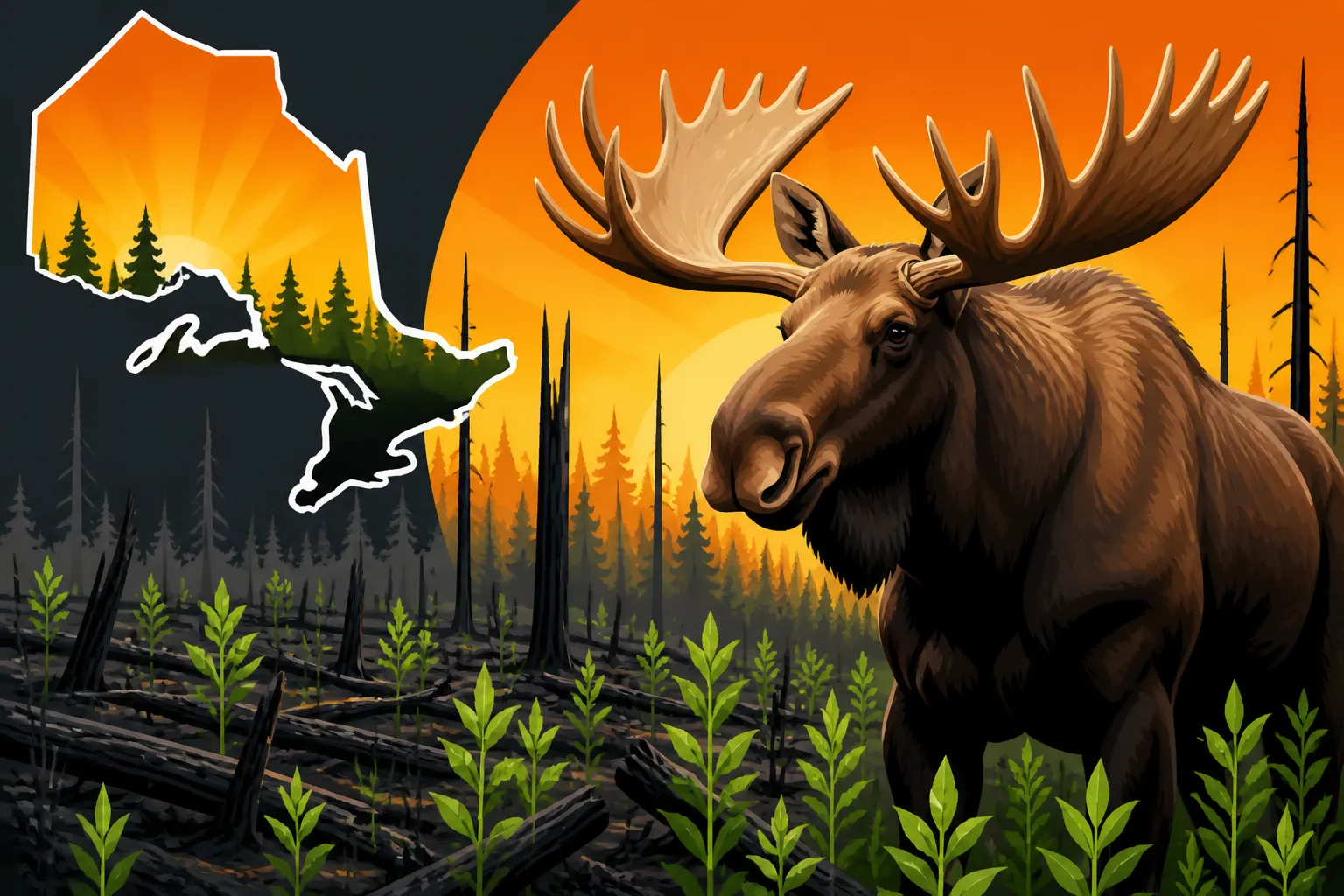
Finding truly massive bull moose in Ontario can sometimes feel like chasing a ghost, especially if you're hitting the same old spots year after year and wondering why the giants seem to be elsewhere. But what if there was a predictable pattern, a kind of natural secret, to where those biggest bulls often come from? This guide is going to peel back the layers on how forest fires, as destructive as they seem, actually create an incredible boom for moose, explaining exactly why burned ground often grows those truly impressive, heavy-antlered bulls that hunters dream about.
The Phoenix Effect: How Fire Transforms Habitat for Moose
It might seem counterintuitive to think of a raging forest fire as a benefit for wildlife, especially when you see the scorched earth and bare trees left behind. However, in the vast boreal forests of Northern Ontario, fire is a natural, essential process that acts as a reset button for the ecosystem. Instead of a purely destructive force, it's a powerful agent of renewal, especially for a large browser like the moose. The immediate aftermath is certainly stark, but what follows is a burst of life that profoundly impacts the quality and quantity of forage available.
When a fire sweeps through, it does more than just burn trees. It clears out old, dense growth that often provides poor browse, exposes the mineral-rich soil to sunlight, and releases nutrients back into the ground. This clearing of the canopy is crucial because it allows sunlight to finally reach the forest floor, stimulating the growth of an entirely new suite of vegetation. Think of it as Mother Nature hitting the refresh button, paving the way for a lush, diverse, and highly nutritious buffet for moose, directly influencing their health and antler development.
A Feast of New Growth: Why Moose Love Burned Areas
Once the smoke clears, the forest floor, now bathed in sunlight and enriched by ash, becomes a vibrant nursery. The first plants to colonize these areas are often fast-growing, highly palatable species that moose absolutely adore. We're talking about a sudden explosion of willow, aspen, birch, and fireweed – all prime moose browse. These aren't just any plants; they are the equivalent of superfoods for a moose, packed with the nutrients they need to not only survive but thrive.
Unlike mature forest understories where browse might be sparse or out of reach, burned areas provide an abundance of young, tender shoots at an accessible height. Imagine a moose walking into a dense thicket of regenerating aspen, where every few steps offers another delicious, energy-rich bite. This dense, readily available forage means moose don't have to expend as much energy searching for food, allowing them to put more into body condition and, for the bulls, into growing those impressive racks. The sheer volume of this high-quality browse can support a much higher density of moose than an equivalent area of mature forest, making these zones hotspots for wildlife.
Nutritional Goldmine: Fueling Antler Growth
The connection between this rich, post-fire vegetation and big bull moose isn't just anecdotal; it's rooted in biology. Antler growth is incredibly energy-intensive, requiring a massive amount of protein, calcium, phosphorus, and other minerals. A bull moose needs to be in peak physical condition and have access to an exceptional diet to produce a large, dense rack. This is where burned ground truly shines as a nutritional goldmine.
The diversity and nutrient density of the plants that flourish after a fire provide exactly what a bull needs. Young browse, stimulated by full sunlight and mineral-rich ash, often contains higher levels of protein and digestible energy compared to older, tougher vegetation. This superior nutrition during the critical antler-growing months (typically spring and summer) directly translates into faster growth, greater mass, and wider spreads. Additionally, with the forest floor exposed, moose can access mineral licks or areas where minerals have been brought to the surface, further aiding in strong antler development. It's a clear equation: better food equals healthier moose, and healthier moose, particularly bulls, mean larger antlers.
The Timeline of Abundance: When Burned Areas Peak for Moose
While burned ground is generally excellent habitat, it's not a static condition. The forest evolves after a fire, and with it, the quality of the habitat for moose changes. Knowing this timeline is crucial for hunters trying to identify the most productive areas. You can't just hunt any burned area and expect immediate results; there's a "sweet spot" in the regeneration cycle where the habitat reaches its prime for supporting large moose, especially those big bulls.
The post-fire landscape goes through distinct stages. Initially, it's a scramble of pioneer species. Then, a period of intense browse production occurs, followed by a gradual decline as the forest canopy closes in and shades out the understory. Understanding these stages allows you to target your scouting and hunting efforts more effectively. Using tools like satellite imagery, perhaps through platforms like GoHunt, can help you not only identify burn perimeters but also estimate their age, guiding you to areas in their peak productive years.
Early Recovery: The First Few Years Post-Fire
In the immediate aftermath of a fire, say within the first one to two years, the landscape is often a mix of charred remnants and vibrant, fast-growing herbaceous plants. Fireweed is a classic example, painting vast areas purple. While these early colonizers offer some forage, and moose might start to explore these newly opened spaces, the woody browse that forms the cornerstone of their diet hasn't yet reached its full potential. The ground cover might be good, but the dense thickets of young saplings that provide both food and security cover are still developing.
Moose will certainly utilize these areas, sometimes for the easy pickings of pioneer plants or simply to travel through more open terrain. However, the consistent, high-volume, high-quality woody browse needed to truly pack on condition and fuel massive antler growth isn't quite there yet. Think of it as an appetizer course; it's promising, but the main feast is still a few years off. Still, it’s worth noting these early burns, as they are a preview of future potential and can offer good visibility for spotting.
The Golden Window: Peak Productivity for Big Bulls
The true magic for moose, and especially for hunters seeking large bulls, typically occurs in the "golden window" of approximately three to fifteen years post-fire. This is when the forest is in its most dynamic and productive stage for moose. Young aspen, birch, and willow saplings are now thriving, forming dense, multi-stemmed thickets that are chest-high to a moose, and sometimes even taller. This creates an almost impenetrable wall of prime browse, perfectly suited for their feeding habits.
During this period, the sheer biomass of nutritious forage is astounding. Moose can browse constantly, moving from one preferred species to another without expending much energy. This sustained availability of high-quality feed during their formative years and breeding age allows bulls to reach their genetic potential for antler growth. They have ample protein and minerals to build impressive racks year after year. As the canopy has not yet fully closed, sunlight still reaches the understory, continually stimulating fresh growth. This is the habitat type that truly helps grow the kind of Why Northern Bucks Carry More Body Mass and massive antlers Ontario is known for. Many experienced hunters use satellite imagery on platforms like GoHunt to pinpoint burns in this age range when planning their hunts, knowing that these areas offer the best odds for finding substantial animals. This is also a prime time for Calling a Bull Moose in the Rut as the dense cover and abundant food concentrate animals.
| Post-Fire Stage | Typical Years Post-Burn | Moose Habitat Quality | Browse Characteristics | Antler Growth Potential |
|---|---|---|---|---|
| Immediate | 0-2 years | Low to Moderate | Herbaceous plants, early pioneers (fireweed), limited woody browse | Developing |
| Early Recovery | 3-7 years | High | Dense, regenerating woody browse (aspen, willow, birch) at ideal height | Good to Excellent |
| Peak Productivity | 8-15 years | Excellent | Abundant, mature woody browse, diverse and nutrient-rich | Excellent, best for trophy bulls |
| Maturing | 16-25 years | Moderate to Low | Canopy closing, browse getting taller and sparser | Declining |
| Mature Forest | 25+ years | Low | Dense canopy, very little understory browse available | Poor |
Strategies for Hunting Burned Ground in Ontario
Hunting burned ground in Ontario offers a unique set of challenges and rewards. The landscape is often dramatically different from what you might be used to, and adapting your tactics is key to success. With moose often concentrated in these areas, understanding how to effectively locate them and move through the terrain becomes paramount. It's not just about finding a burn; it's about understanding how moose use it and how you can approach it strategically.
Preparation is key, both in terms of scouting before your hunt and having the right gear once you're on the ground. These areas can be remote, difficult to navigate, and full of obstacles. But for those willing to put in the effort, the potential to find a truly exceptional bull is very real. You'll need to think differently about how you scout and hunt compared to traditional mature forest settings. For information on where to find these areas, reading an Ontario WMU Map Before You Go can provide a crucial starting point.
Locating and Accessing Burned Areas
The first step to hunting burned ground is, naturally, finding it. Historical burn maps are often available through provincial forestry departments or online mapping portals. Many advanced hunters use platforms like GoHunt, which integrate various land layers including past wildfires, allowing them to overlay burn data with topographical maps and satellite imagery. This is essential for identifying burns within the optimal 3-15 year window and assessing their size and proximity to water or existing roads.
Once you've identified a promising burn, the next challenge is access. Some burns might be near existing logging roads or major travel corridors, while others can be incredibly remote, requiring significant effort to reach. You might find yourself bushwhacking through dense new growth, navigating around massive blowdowns, or even needing to utilize a canoe or ATV to get deep into the area. Always confirm ATV Rules on Ontario Crown Land before you go, as regulations vary. Remember that many large burns occur on Hunting Ontario's Crown Land, which means public access, but often comes with primitive conditions. Understanding the lay of the land, including contours and potential pinch points, is critical before you set foot in these areas.
Hunting Techniques for Burned Over Country
Hunting burned ground requires a shift in tactics. In the first few years after a fire, the area can be quite open, allowing for longer visibility and spot-and-stalk opportunities, particularly in open ridges or clearings. However, as the browse regenerates and forms dense thickets, these areas become incredibly thick, often making traditional still-hunting or stalking difficult. This dense cover, while providing excellent food and security for moose, can make them incredibly hard to see.
For areas with dense regeneration, focusing on edges where the burn meets mature timber, or along old logging roads and creek bottoms within the burn, can be productive. Moose will often use these transitions to move between feeding and bedding areas. Calling can be exceptionally effective in thick burns. The dense cover allows a moose to feel secure approaching a call, and the sound carries well across the regenerating landscape. Patience is key, as moose might be moving slowly through the dense cover. Be prepared to sit and listen, letting the moose come to you, or make slow, methodical movements. Your Truck Kit for a Northern Ontario Hunt should always include robust navigation tools, as familiar landmarks can be completely gone.
Challenges and Considerations When Hunting Burns
While burned ground undeniably offers exceptional opportunities for harvesting big bulls, it's not without its unique set of challenges. These landscapes, born of fire, are rugged and demand a different kind of preparation and mindset from the hunter. Understanding these difficulties beforehand isn't about discouraging you, but about ensuring you're well-equipped and safe when venturing into these productive but demanding areas.
From treacherous terrain to the potential for getting disoriented, hunting a post-fire landscape requires careful planning and a heightened awareness of your surroundings. It's a truly wild environment, often remote, and requires respect for both its bounty and its inherent dangers. Preparing for these specific hurdles will make your hunt not only safer but also more enjoyable and potentially more successful.
Navigation and Safety in Post-Fire Landscapes
One of the biggest challenges in hunting burned ground is navigation. The fire fundamentally alters the landscape, often obliterating familiar trails, roads, and natural landmarks. What was once a recognizable ridge line or creek bed might now be obscured by deadfall, new growth, or erosion. Moving through these areas can be incredibly demanding, with uneven footing, hidden holes, and a constant maze of downed timber ("jackstrawed" trees) that force you to climb over, under, or around. Snags – dead standing trees – are also a significant hazard, prone to falling without warning, especially on windy days.
The dense, regenerating cover, while great for moose, can also make it incredibly easy for a hunter to become disoriented. Visibility can be limited to just a few yards in places, making it hard to maintain a bearing. This is where reliable navigation tools become absolutely critical. A high-quality GPS unit with pre-loaded maps, a compass, and a physical map are not optional – they are essential. Always have a plan for What to Do If You Get Turned Around, and consider carrying a satellite communication device, especially in remote areas where cell service is non-existent. These are often vast, remote sections of Hunting Northwestern Ontario's Big Bush.
Moose Population Dynamics and Fire Ecology
While fire is a boon for moose habitat in the medium term, it's important to remember that moose population dynamics are complex and influenced by many factors. A single large fire creates an incredible burst of browse, but it's part of a larger ecological cycle. Over time, as the forest matures, the habitat quality will decline again. This highlights the ongoing, dynamic relationship between fire, forest succession, and moose populations.
Beyond habitat, other factors such as predation (wolves and bears), winter severity, and disease (like brainworm, which can affect moose in Ontario) also play significant roles in moose numbers. While a large burn might temporarily create a localized hotspot for moose, the overall health of Ontario's moose population is influenced by these broader ecological forces. Understanding How Wildfire Changes Northern Game Range is crucial, and it's also worth noting that factors like Why Ontario Moose Numbers Fell often involve multiple interconnected elements, not just habitat changes. So, while you're targeting that big bull in a burn, remember that you're hunting within a vast, living system that is constantly adapting and changing.
Disclaimer
This article is for general informational purposes only and does not constitute professional advice. Laws, prices and regulations vary by location and change over time. Consult a qualified professional for guidance on your specific situation.