Ontario Shooting Hours for Big Game
It's an age-old question that keeps many of us Ontario hunters scratching our heads, especially as the days get shorter or we travel across our vast province: exactly when can you legally start pulling the trigger on that big game animal, and when do you have to pack it in? Trying to navigate the sunrise and sunset times, factoring in the "half-hour rule," and then layering on top of that the nuances of daylight saving changes or moving between Wildlife Management Units (WMUs) can feel like a mind-bending puzzle. This guide is here to untangle all that confusion, making sure you're always on the right side of the law and, more importantly, hunting safely and ethically.
Understanding the Fundamental Legal Shooting Hours for Big Game
When you're out in the Ontario bush, whether it's for deer, moose, or bear, the rules around legal shooting hours are quite specific and they apply across the board for all big game species. It's not a guideline; it's a strict regulation designed for safety, fair chase, and to prevent accidental misidentification in low light. Getting this wrong isn't just a minor infraction; it can have serious consequences, including fines and even the loss of your hunting privileges.
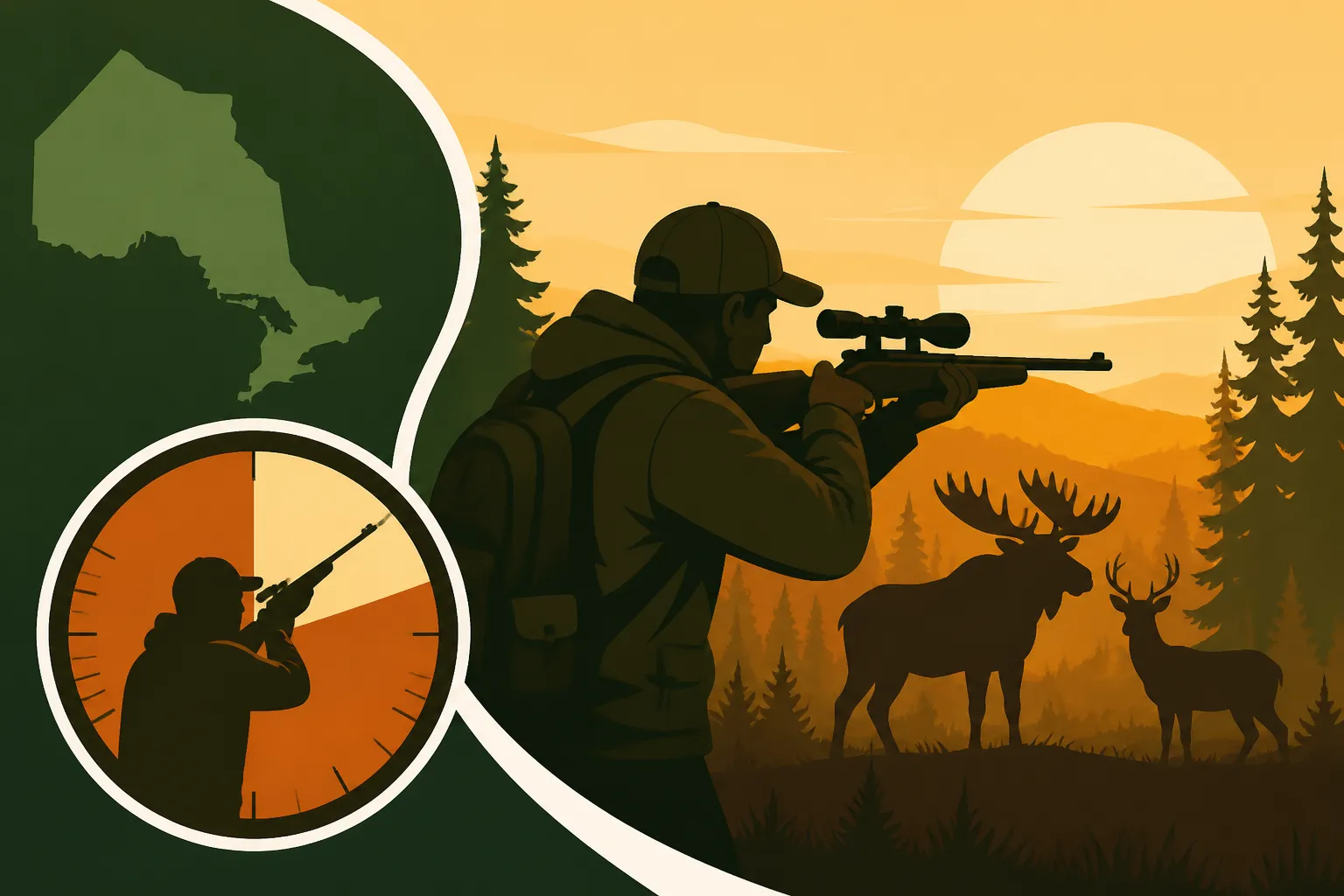
The core rule is straightforward: you can hunt big game from half an hour before sunrise until half an hour after sunset. This "half-hour rule" is what often trips people up, as it requires you to know the exact sunrise and sunset times for your specific location on that particular day. It's not just a general dawn-to-dusk idea; it's precisely defined by official astronomical times.
The provincial government defines sunrise as the moment the upper edge of the sun appears on the horizon, and sunset as the moment the upper edge of the sun disappears below the horizon. These times are constantly shifting, not just throughout the season, but even day by day. This means that if you're planning an all-day sit in a stand or a long still-hunt, you need to be acutely aware of these precise windows. Hunting outside these times can blur the line between ethical hunting and poaching, something no responsible hunter wants to be associated with.
Why These Specific Times Are Non-Negotiable
The strict adherence to shooting hours isn't about making your life harder; it's deeply rooted in the principles of safety and fair chase. Imagine trying to positively identify an animal, its sex, or its rack in the murky light of true dawn or twilight. It’s incredibly difficult, and that ambiguity is where mistakes happen. You might misidentify a cow moose as a bull, an antlerless deer as a buck, or, in the worst-case scenario, even mistake another hunter for game.
Beyond safety, there's the ethical dimension. The "half-hour" window ensures that animals are hunted during periods of natural light when they are most active and visible, aligning with the concept of fair chase. It prevents hunters from exploiting extreme low light conditions where an animal might be disadvantaged. It also plays a critical role in conservation efforts, as adherence to these rules is part of maintaining the integrity of hunting as a regulated activity. Conservation officers take these regulations very seriously, and for good reason, as they are foundational to responsible hunting practices in Ontario.
Official Sources for Sunrise and Sunset Information
While many modern tools are available, when it comes to legal compliance, the most authoritative source for sunrise and sunset times will always be the official Ontario Hunting Regulations Summary, often available online from the provincial government. This summary will usually provide tables or direct you to a reliable source for daily times, often broken down by specific locations or WMUs, though general tables are common.
However, let's be real – flipping through pages or squinting at tiny tables in the field isn't always practical. This is where modern technology really shines. Many hunters rely on digital tools, and apps like GoHunt have become indispensable for easily tracking legal shooting light right on your smartphone. These apps often integrate local weather, GPS, and other crucial hunting data, making them incredibly convenient. They can calculate the precise half-hour before sunrise and after sunset for your exact location, which is a massive help when you’re deep in the bush and away from a reliable internet connection for official government websites. Just remember, while these apps are fantastic for convenience, always consult the official summary to understand the general rules.
Calculating Your Specific Hunting Hours for Big Game
Ontario is a huge province, spanning thousands of kilometers from east to west. Because of this vastness, sunrise and sunset times vary significantly depending on where you are hunting. What might be legal shooting light in Ottawa might still be pitch black an hour later in Kenora, or vice-versa. Understanding this geographical variation and knowing how to accurately determine the times for your specific location on your hunting day is absolutely critical. It’s not a one-size-fits-all schedule.
For instance, on a given day in early November, legal shooting light in Windsor might begin significantly earlier than it does in Thunder Bay, due to their respective longitudes. This means relying on a general sunrise chart for "Ontario" won't cut it. You need to dial it in for your exact coordinates. This also applies to different times of year; the half-hour before sunrise in September will be much earlier in the morning than in December.
The provincial government’s hunting regulations summary includes details on how to determine these times or provides links to accurate resources. Often, these resources are based on standard astronomical data for major cities or geographical zones, allowing you to extrapolate for your specific WMU.
The Impact of Daylight Saving Time
Daylight Saving Time (DST) adds another layer of complexity that can really throw a wrench into your planning if you’re not careful. When the clocks "fall back" or "spring forward," it essentially shifts our perception of time by an hour. However, the sun doesn't care about our clocks. The actual astronomical sunrise and sunset times remain the same.
The beauty of the "half-hour before sunrise and after sunset" rule is that it automatically adjusts with the change in DST. So, if sunrise is at 7:00 AM standard time, legal shooting starts at 6:30 AM. When DST ends and clocks fall back an hour, that same astronomical sunrise time might now be observed at 6:00 AM on your clock, meaning legal shooting starts at 5:30 AM. It’s the actual position of the sun, not the number on your watch, that dictates the legal shooting period. Still, it’s a mental adjustment for hunters, and miscalculations often occur around these time changes. Always double-check your local, real-time sunrise/sunset after any DST change.
Utilizing Technology for Precision
While official summaries are the legal authority, modern technology, particularly well-designed hunting apps, can be your best friend for precise, on-the-spot calculations. Tools like GoHunt can be incredibly helpful for quickly referencing these times on the go. These apps use your phone's GPS to pinpoint your exact location and then use astronomical algorithms to provide accurate sunrise, sunset, and thus, legal shooting times for that specific spot.
This level of precision is invaluable when you're hunting in remote areas, or if you're travelling between different parts of a large WMU where times might subtly differ. Before you even head out, a quick check on a reliable platform or app, like GoHunt, can save you a lot of headache and ensure you're setting up or heading out of the woods within legal limits. Just make sure your chosen app is regularly updated and uses accurate data. Remember, a dead phone battery is no excuse, so always have a backup plan or a good old-fashioned printed chart. You can often find detailed information on how these times affect your hunt in specific areas by checking out resources like Hunting Ontario's November Gun Season or Hunting Ontario's Late September Archery Opener.
Specific Big Game Species and the Shooting Hour Rules
One of the comforting things about hunting big game in Ontario is that the general legal shooting hours remain consistent across all regulated species. Whether you’re chasing a trophy whitetail, trying to call in a bull moose, or patiently waiting on a black bear bait, the rule of half an hour before sunrise to half an hour after sunset applies universally. This consistency helps simplify planning, as you don't need to learn a different set of rules for each species.
This uniformity covers white-tailed deer, moose, black bears, and even Ontario's very limited elk hunts. The regulations are designed to provide a clear, unambiguous framework for when a hunter can legally discharge a firearm or bow for big game. This means that if you're planning a multi-species hunt or if your focus shifts from one big game animal to another within a season, you won't be caught off guard by differing shooting hour requirements. The main variable will be the season dates themselves and specific tag allocations.
Big Game Species Covered by the General Rule
Let's break down the main big game species in Ontario and confirm that they all fall under this general shooting hour rule:
- White-Tailed Deer: From the thick forests of the north to the farmlands of the south, deer are Ontario's most popular big game species. Whether you're hunting during the early archery season or the late muzzleloader days, your legal shooting window for deer will always be based on the local sunrise and sunset. This includes specific controlled hunts or when using either an antlerless tag or a regular deer licence. Understanding Ontario Deer Season Dates and Tags is critical in conjunction with these shooting hours.
- Moose: A majestic and highly sought-after species, moose hunting in Ontario often takes place in vast, remote areas. Given the challenges of navigating dense bush and often low light conditions, strict adherence to shooting hours is paramount for safety. The "half-hour" rule applies whether you're hunting a bull, cow, or calf under a group tag or individual licence. For more on how tags are acquired, you can look at Ontario's Moose Tag Allocation Process.
- Black Bear: Ontario offers both spring and fall black bear hunting opportunities. Often, these hunts involve sitting over a bait site, which can mean long hours in a stand. Knowing the precise legal shooting window is crucial, especially in the evening when bears are often most active. You need to be sure you can positively identify your target and ensure a clean shot within the legal light. Remember to review Ontario's Black Bear Rules for all other regulations related to bear hunting.
- Elk: While elk hunting opportunities are extremely limited in Ontario and only available to residents through a draw, the same shooting hour principles apply. If you're fortunate enough to draw an elk tag, you'll still be bound by the half-hour before sunrise and after sunset rule.
How WMU-Specific Season Dates Integrate
While the shooting hour rule is consistent across species, the when of your hunt – meaning the specific season dates – is highly localized to individual Wildlife Management Units (WMUs). You might have legal shooting hours for deer starting earlier in WMU 50 than in WMU 10. However, if the deer season isn't open in WMU 10 on that day, the shooting hours are irrelevant. It's a two-part equation: the species must be in season in your specific WMU, and then you apply the universal shooting hour rule for that particular day and location.
For this reason, always consult the official hunting regulations for your chosen WMU to confirm the season dates for the big game species you intend to hunt. This information is readily available in the Ontario Hunting Regulations Summary and is often broken down into tables that specify archery, gun, and muzzleloader seasons for each WMU. Remember, just because you have a valid licence doesn't mean you can hunt anywhere at any time; your hunt must fall within both the legal season dates and the legal shooting hours for your specific area. Familiarizing yourself with Ontario's Wildlife Management Units is a fundamental part of planning any hunt in the province.
Practical Strategies for Adhering to Shooting Hours
Adhering to legal shooting hours is more than just knowing the rule; it's about incorporating that knowledge into your daily hunting routine and making it a habit. A responsible hunter leaves nothing to chance, especially when it comes to legal compliance and safety. Getting caught outside of legal shooting hours can lead to significant penalties, including fines, confiscation of equipment, and loss of hunting privileges, so it's worth taking the time to be precise.
The vastness of Ontario's hunting landscape means that what works in one area might be slightly off in another. From the dense woods of Algonquin to the agricultural fields of Southern Ontario, conditions can vary wildly, but the need for accurate timekeeping remains constant.
Essential Pre-Hunt Preparation
Before you even step foot in the woods, or certainly before you settle into your stand for the day, make precise time-checking a part of your routine. Here’s how:
- Official Sources: Always start with the official Ontario Hunting Regulations Summary. It will clarify any specific nuances or direct you to the most accurate, government-approved source for sunrise/sunset tables. This is your primary reference for legal standing.
- Reliable Apps: Use a reputable hunting app, like GoHunt, that calculates sunrise and sunset based on your exact GPS coordinates. This is often the most convenient and precise tool for real-time information. Double-check its accuracy occasionally against official sources to ensure it's up-to-date. Ensure your phone is fully charged, or consider carrying a portable power bank, as a dead battery can leave you guessing.
- Backup Method: Never rely solely on a single source. A traditional, reliable watch set to the correct local time, along with a printed sunrise/sunset chart for your WMU, serves as an excellent backup. Keep it laminated and in your pack.
- Pre-dawn/Post-dusk Buffer: Factor in travel time to and from your stand or hunting spot. If legal shooting starts at 6:30 AM, you shouldn't be rushing to get to your stand at 6:25 AM. Give yourself ample time to quietly get into position and settle in without disturbing game, and certainly without handling your loaded firearm or bow outside the legal light. Similarly, at the end of the day, allow time to safely unload your weapon, pack up, and walk out.
- Know Your Area: Be aware of the terrain. If you're in incredibly dense cover, or in a deep valley, the natural light might be significantly dimmer than what the official "open sky" sunrise/sunset suggests. This isn't a legal loophole; it means you need to exercise extra caution to ensure positive identification.
Ethical Considerations and Enforcement
Adhering to legal shooting hours is not just about avoiding penalties; it's about being an ethical hunter. Shooting in low light greatly increases the risk of a poor shot placement, leading to a wounded animal that may suffer and be lost. It also makes positive identification difficult, which could lead to harvesting the wrong sex or species, or even mistaking another hunter for game, which is a horrifying thought.
Conservation officers in Ontario are diligently patrolling our hunting areas, and they take legal shooting hours very seriously. They use their knowledge, technology, and often early morning or late evening patrols to ensure compliance. Ignorance of the law is never an excuse, and officers will not hesitate to enforce regulations. Penalties can range from significant fines to having your hunting licence suspended or revoked, and even confiscation of your firearm, bow, or harvested game.
Always carry your valid Ontario Hunting Licences and What They Cost and any required tags, and be prepared to present them to a conservation officer. Understanding other regulations such as Legal Firearms and Bows for Big Game and Ontario Blaze Orange Requirements further demonstrates your commitment to safe and legal hunting. By making legal shooting hours a cornerstone of your hunting practice, you contribute to a positive public image of hunters and help ensure the future of our cherished outdoor traditions in Ontario.
Disclaimer
The information provided in this guide is for general informational purposes only and does not constitute legal advice. While we strive to keep the information up-to-date and correct, hunting regulations can change. It is the responsibility of every hunter to consult the official Ontario Hunting Regulations Summary annually and understand all applicable federal, provincial, and local laws before hunting. Reliance on any information provided in this guide is solely at your own risk.