Sitting All Day in an Ontario Blind
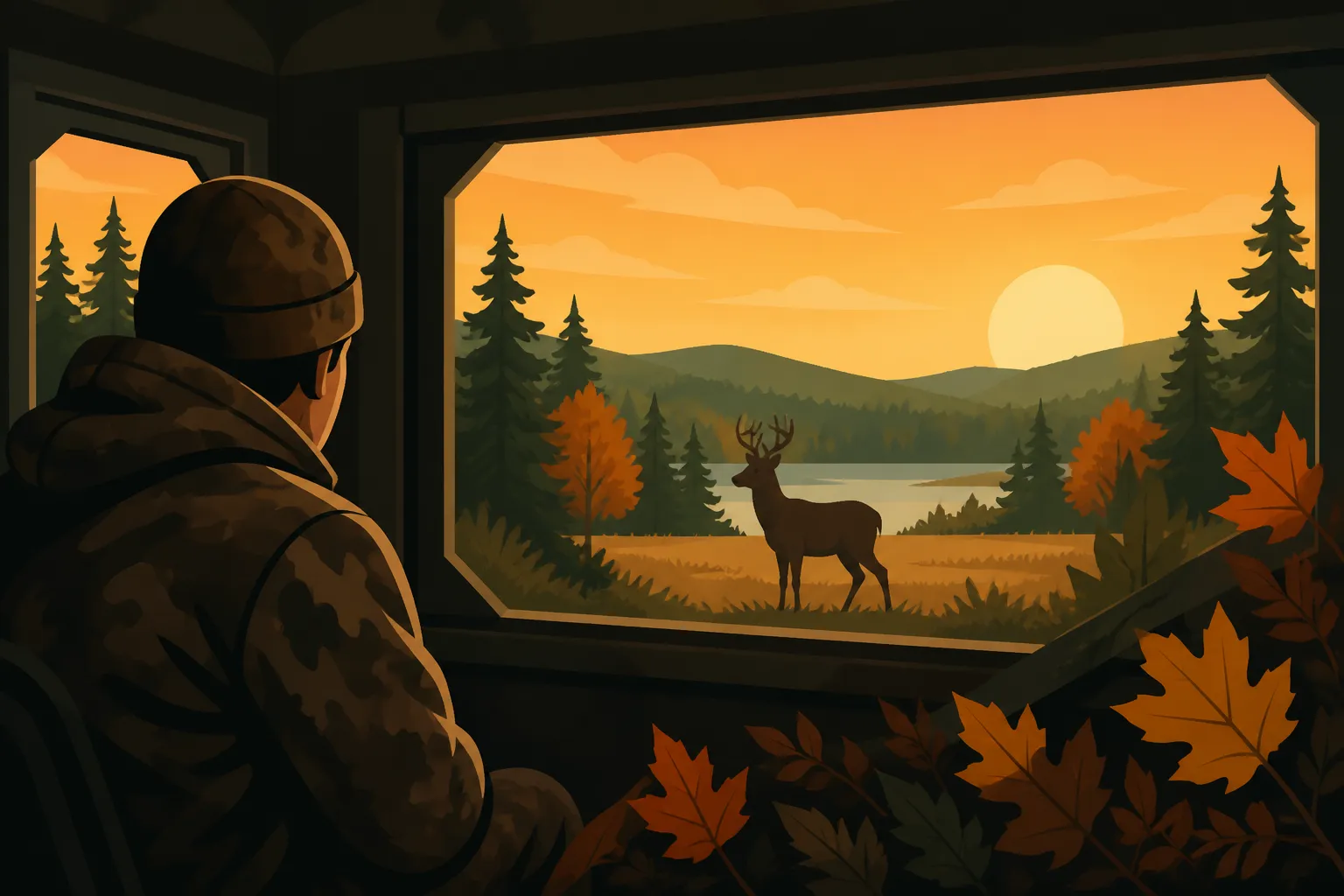
There’s nothing quite like the crisp, silent air of an Ontario morning in the blind, full of anticipation. But as the hours tick by, that initial excitement can quickly turn into uncomfortable stillness, gnawing boredom, and the ever-present question: "Is it even worth staying out here?" Many hunters grapple with the mental and physical challenges of committing to a full day in the blind, especially when the action seems non-existent. This guide is all about equipping you with the strategies, gear, and mindset to conquer the all-day sit, transforming a potential struggle into a highly effective hunting method right here in Ontario’s diverse landscapes.
Why the All-Day Sit is a Game Changer in Ontario
The thought of spending eight, ten, or even twelve hours cooped up in a blind might sound grueling to some, but for many seasoned Ontario hunters, it’s a non-negotiable strategy. It’s about being present when the unpredictable happens, and capitalizing on those brief windows of opportunity that shorter hunts often miss.
Maximizing Opportunity During Peak Movement
Game animals, especially whitetail deer, aren't on a strict 9-to-5 schedule. While dawn and dusk are undeniably prime times for activity, there's a significant amount of movement that occurs throughout the midday hours. This is particularly true during the rut in November when bucks are tirelessly cruising for does, often covering vast distances. A short two-hour morning hunt, followed by a break and an evening sit, can easily miss a mature buck making his rounds at 11 AM or 2 PM.
In Ontario, with its varying terrain from dense boreal forests to sprawling agricultural lands, deer, moose, and even bears can move at any point. Consider a large woodlot bordered by fields; deer might bed down deep within during midday, only to get up for a stretch or a quick browse before the evening rush. By staying put, you increase your odds dramatically. This continuous presence in the hunting area means you're there for those critical, unpredicted moments when an animal decides to step out, offering you the shot you’ve been patiently waiting for. It’s about playing the long game and outlasting the competition, both other hunters and the unpredictable nature of the wild.
Adapting to Pressure and Changing Conditions
Ontario's hunting seasons often overlap with varying weather patterns, from early fall warmth to late-season snow and bitter cold. Game animals, particularly those in more pressured areas, quickly learn to adapt their movements. During peak gun season, for instance, deer become far more nocturnal or will move through thick cover during midday to avoid human activity. An all-day sit positions you to intercept these animals when they feel safest moving, which is often when other hunters have packed up for lunch or a warm-up.
Moreover, changing weather conditions, like a sudden cold front or a brief period of calm after a storm, can trigger unexpected bursts of animal activity. If you're only out for a few hours, you might miss these critical shifts entirely. Being in your blind all day allows you to observe these subtle changes and be ready. For example, a sudden drop in temperature might get deer up and feeding in the middle of the day to fuel their metabolism. Similarly, if you’re Hunting Black Bear in Ontario over a bait, a change in wind or a brief lull in human activity might be just what an wary bear needs to feel comfortable stepping out. It's about being the constant, patient presence in a dynamic environment, ready to react when conditions align in your favour.
Preparing for Comfort and Endurance in Your Blind
Successfully sitting all day isn't just about mental toughness; it's heavily reliant on physical comfort and proper preparation. An uncomfortable hunter is a restless hunter, and restlessness equals movement, noise, and ultimately, busted opportunities.
Layering Clothing for Ontario's Temperature Swings
Ontario weather can be famously fickle, especially during hunting season. A morning that starts below freezing can warm up significantly by noon, only to plunge back down as the sun sets. The key to staying comfortable during an all-day sit is a comprehensive layering system that allows you to add or shed clothes as needed without disrupting your hunt.
Start with a good base layer that wicks moisture away from your skin, even if you’re just sitting. Merino wool or synthetic blends are excellent choices. Avoid cotton next to your skin, as it retains moisture and will make you cold. Your mid-layers should provide insulation – think fleece jackets or down vests. Multiple thinner mid-layers are often better than one thick one, as they allow for more precise temperature regulation. Finally, your outer layer needs to be quiet, windproof, and waterproof. Brands like Sitka or Kuiu offer excellent systems, but even more affordable options can work if chosen carefully. Don't forget extremities: a warm hat, neck gaiter, and insulated gloves or mittens are crucial. Keep an extra pair of warm, dry socks and hand warmers in your pack. Remember, if you’re Hunting Ontario's November Gun Season, blaze orange requirements will apply, so ensure your outer layers meet the visibility standards.
| Layer Type | Purpose | Material Examples |
|---|---|---|
| Base Layer | Wicks moisture, light insulation | Merino wool, synthetic blends |
| Mid Layer | Primary insulation, warmth | Fleece, down, synthetic fill |
| Outer Layer | Windproof, waterproof, quiet, camouflage | Gore-Tex, brushed polyester |
| Extremities | Head, hands, feet protection | Insulated hats, gloves/mittens, wool socks |
Essential Gear for Sustenance and Activity
Beyond clothing, a well-packed blind bag can make or break your all-day sit. You need to consider sustenance, hydration, and small items to keep you alert and occupied without making excessive noise or movement.
For food, think non-perishable, easy-to-eat snacks that provide sustained energy. Sandwiches, trail mix, energy bars, and fruit are great options. Avoid anything that crinkles loudly or needs extensive preparation. Hydration is vital; a good insulated water bottle with a wide mouth (so it doesn't freeze in colder temps) is a must. A thermos of hot coffee, tea, or soup can be a morale booster when the cold really sets in. Many hunters use mapping apps like GoHunt to scout and pinpoint ideal blind locations before the season, and having a portable charger for your phone (for these apps, or emergencies) is smart. Bring a small book or e-reader, but set strict limits on its use to avoid distraction. Binoculars are your best friend for scanning cover and distant edges without moving your head too much. A rangefinder is also crucial for quickly confirming distances. Don't forget a small flashlight or headlamp for setting up in the dark or packing out.
Mental Fortitude and Strategic Patience
The greatest challenge of an all-day sit often isn’t the cold or hunger, but the mental battle against boredom, doubt, and the urge to move. Cultivating mental fortitude and strategic patience is just as important as your physical preparations. Remind yourself why you're out there: to maximize your chances, to observe the woods, and to connect with the hunt on a deeper level.
One effective technique is to break the day into smaller, manageable segments. Instead of thinking about "10 more hours," focus on "I'll sit until noon, then have my lunch," or "I'll focus on scanning that Hunting an Ontario Bush Edge for the next hour." Set small goals. Practice mindfulness: pay attention to the sounds of the forest, the changing light, the subtle shifts in wind direction. Use your binoculars to thoroughly pick apart distant cover, looking for flickers of ears or the subtle sway of a branch. If you find yourself drifting, take a few deep breaths and re-focus on your surroundings. The more engaged you are with the environment, the less likely boredom will set in, and the more likely you are to spot that fleeting opportunity when it finally presents itself.
Strategic Considerations for an All-Day Blind Hunt
An all-day sit isn't just about enduring; it's about being strategically positioned and ready for anything the day throws at you. The success of your prolonged efforts hinges on careful planning and execution of your setup.
Optimal Blind Placement and Scent Control
The location of your blind is paramount for an all-day sit. You need to be where game will be, not just at dawn or dusk, but throughout the entire day. This means scouting extensively for natural travel corridors, food sources (like acorn flats or Hunting a Standing Corn Field Edge), water, and bedding areas. A blind overlooking a pinch point between bedding and feeding, or a major trail along a Hunting a Hardwood Ridge for Whitetails, can be deadly. Consider potential sun angles throughout the day; you don't want the sun in your eyes for hours, or casting harsh shadows that reveal your presence.
Scent control becomes even more critical during an extended sit. The longer you're in the woods, the more human odor you potentially put out. Use scent-eliminating sprays on your clothing and gear. Play the wind, always. Check the forecast for wind direction changes and try to position your blind where a shifting wind won't blow your scent directly into a game-rich area. While no system is foolproof, minimizing your scent signature gives you a significant advantage, especially for wary animals that may cross your path midday.
Understanding Game Movement Patterns Throughout the Day
Animals don't move randomly; their patterns are influenced by time of day, weather, pressure, and the availability of resources. For an all-day sit, you need to anticipate these shifts. In the early morning, deer might be finishing up their nocturnal feeding. As the sun rises, they'll often head towards bedding areas, which could be a thick Hunting a Cedar Swamp Edge or a dense pine plantation. However, they might linger along the edges or make detours to browse.
Midday can see more localized movement, such as a buck getting up for a stretch or a quick snack, or a doe leading her fawns from one thicket to another. In the late afternoon, movement picks up again as animals head back to primary feeding grounds. Your blind location should ideally intercept these various movements. If you're on a transition area, you have a chance to see animals throughout all these phases. Use your scouting tools, like the satellite imagery on GoHunt, to analyze terrain, cover, and potential travel routes. Observe how shadows fall, how light penetrates the canopy, and how these factors might influence game movement at different hours.
Staying Focused and Patient Through the Long Hours
The biggest hurdle in an all-day sit is often the mental game. It’s easy to get distracted, impatient, or discouraged, but maintaining focus and patience is where true success lies.
Managing Boredom and Distraction
Boredom is the enemy of the all-day sit. When your mind wanders, your vigilance drops, and you might miss that subtle movement or sound that signals an approaching animal. While a small book or phone for emergencies is okay, minimize their use. Your primary focus must remain on the hunt.
One strategy is active observation. Instead of just staring, actively look for things. Pick out individual branches, study the bark of trees, or search for fresh Reading Whitetail Sign in Ontario Hardwoods. Listen intently to every sound: the rustle of leaves, the distant call of a crow, the chirp of a squirrel. Try to identify what made each sound. This keeps your senses engaged and sharp. Periodically scan your entire field of view slowly, from left to right, high to low, leaving no stone unturned. Think about how deer or moose might approach from different directions. Maintaining this active engagement will significantly reduce boredom and increase your chances of spotting game before it spots you.
Minimizing Movement and Noise
After hours of stillness, the temptation to stretch, adjust your position, or grab a snack can be overwhelming. However, excessive movement and noise are the quickest ways to blow your hunt. Game animals have incredible senses, and even a slight, unnatural movement or sound can send them bolting.
Before you even enter the blind, make sure everything you need is within arm's reach. Your binoculars, rangefinder, release (if bowhunting), calls, and snacks should be easily accessible with minimal fuss. Plan your movements. If you absolutely must stretch, do it slowly and deliberately, using the blind's walls as cover. Wait for a gust of wind, the sound of a passing train, or the moment a group of crows flies overhead to mask any subtle noises. Practice drawing your bow or raising your rifle slowly and quietly before the season starts, so it becomes second nature. Remember that the woods are full of sounds, but an out-of-place human noise stands out like a sore thumb. A successful all-day sit demands extreme discipline in staying still and silent.
Adapting Your Strategy for Different Ontario Game
While the core principles of an all-day sit remain consistent, applying them effectively means tailoring your approach to the specific game you're pursuing in Ontario. Each species has unique habits that influence the best time and place for an extended vigil.
Whitetail Deer in Southern and Central Ontario
Whitetail deer are perhaps the most common target for all-day sits in Ontario, particularly during the archery and gun seasons that span fall. In Southern Ontario farmland, where deer often use smaller woodlots for cover, an all-day sit in a blind overlooking a key travel corridor or a field edge can be incredibly productive. During the rut, typically in early to mid-November, bucks are constantly on the move, scent-checking scrapes, cruising for does, and often traveling significant distances even at midday. This is when Hunting the Rut in Early to Mid November from dawn till dusk really pays off.
In Central Ontario's mixed forests, deer density can be lower, and their movements more subtle. Here, an all-day sit needs to be strategically placed near known bedding areas, pinch points in the terrain, or along trails connecting different habitat types. Consider setting up near a beaver pond crossing or a well-used logging road if you are Hunting Whitetails on Ontario Crown Land. A good quality ground blind, offering scent containment and full concealment, becomes a critical piece of gear in these scenarios. Patience is key, as deer might not appear for hours, but when they do, it could be a mature buck making his quiet move.
Black Bears Over Bait in Northern Ontario
For black bear hunters, especially those Baiting Black Bear in Ontario, an all-day sit can be a crucial strategy. While bears often visit baits in the evening, they are opportunistic and will show up anytime they feel secure. This means a midday visit is entirely possible, particularly if the bait is heavily used or if there's less human pressure on a given day. Northern Ontario's vast bush country, often accessed by ATV or foot, offers many remote baiting opportunities.
Setting up your blind for a bear hunt requires careful consideration of prevailing winds, as bears have an incredible sense of smell. You might sit for hours with no activity, then suddenly a bear appears, seemingly out of nowhere. GoHunt's mapping system can help you visualize the terrain around your bait site, identifying potential approach routes for the bear and optimizing your blind's position for the best shot angle while maintaining scent advantage. This type of hunting is a true test of patience, as you might spend many long, quiet hours waiting for that one special opportunity.
Other Game and Special Considerations
While less common, an all-day sit can also be beneficial for other Ontario game species. For instance, Moose Hunting Ontario's Northern Bush can sometimes benefit from an extended vigil in strategic locations, especially during the rut when bulls are more vocal and on the move. Sitting quietly in a blind overlooking a cutover or a known feeding area could pay off. Similarly, late-season coyote hunting, where the animals are often educated and wary, might require longer periods of stillness in a well-camouflaged blind.
Regardless of the species, the core principles apply: be prepared for comfort, manage your scent, stay absolutely still, and cultivate unwavering patience. The rewards for an all-day sit often come to those who simply refuse to quit, outlasting the elements and the game itself.
Disclaimer
Hunting is an inherently dangerous activity. Always prioritize safety, adhere to all provincial and federal hunting regulations, and ensure you have the appropriate licenses and tags. Consult the official Ontario Hunting Regulations Summary for the most current rules and season dates. This guide is for informational purposes only and does not substitute for professional training or firsthand experience.