Calling Coyotes in Ontario Farm Country
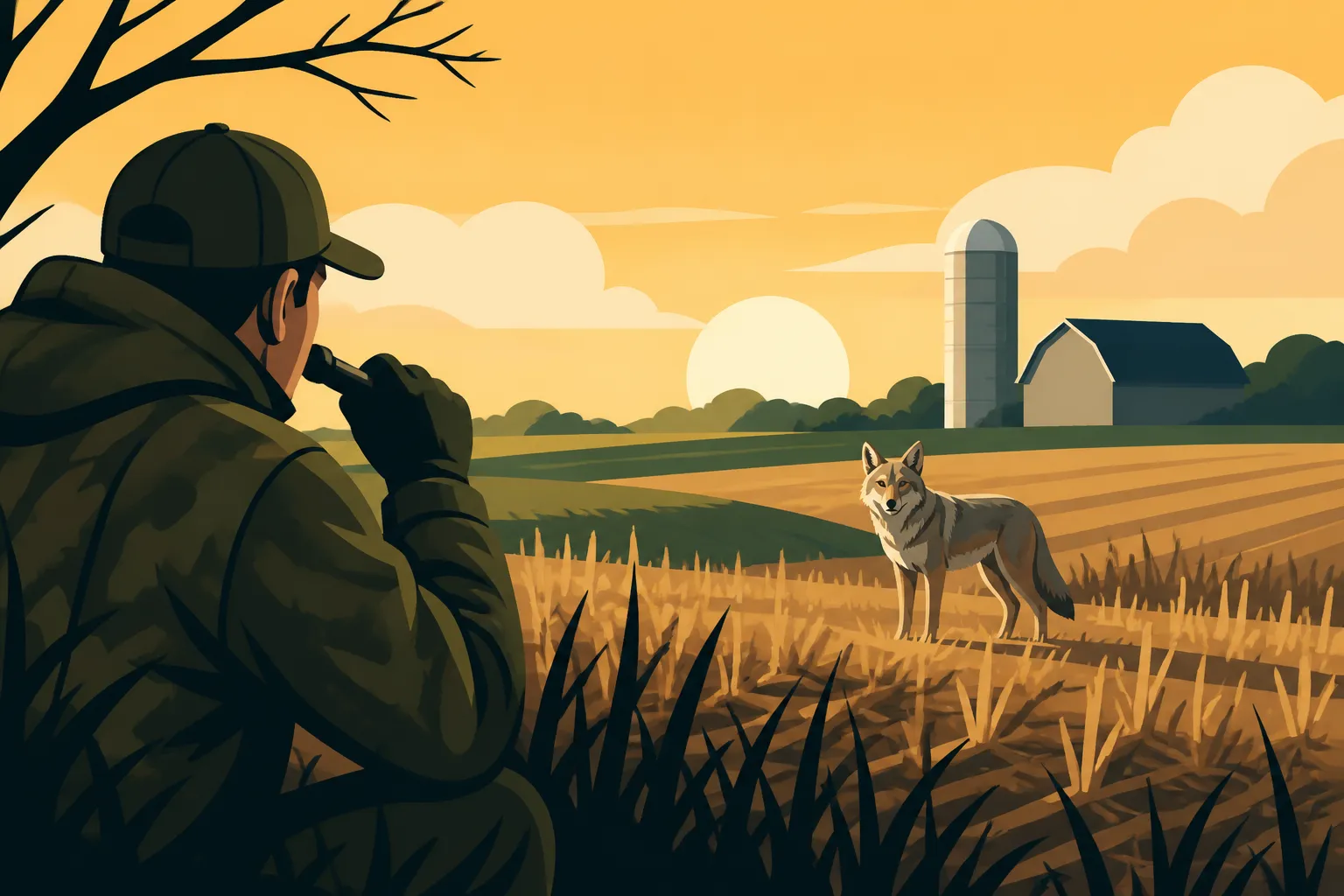
The sound of a coyote howling across an Ontario farm field at dusk can be thrilling for a hunter, but for a farmer, it often signals a fresh wave of frustration and potential livestock losses. Dealing with these incredibly intelligent and adaptable predators requires more than just luck; it demands a deep understanding of their behaviour and proven calling techniques. This guide will walk you through everything you need to know to effectively call coyotes in Ontario's diverse farm country, from understanding their habits to mastering various calling strategies and essential gear.
Understanding the Coyote in Ontario's Farmland
Before you even think about setting up a call, it's absolutely crucial to understand the animal you're pursuing. Coyotes in Ontario's farm country are not the same as those in the deep bush; they've adapted to a human-influenced landscape, making them exceptionally cunning and often wary.
Coyote Behaviour and Habitat in Agricultural Areas
Ontario's farmland offers a veritable smorgasbord for coyotes. Think about it: endless fields of corn, soybeans, and winter wheat provide not just cover, but also a rich supply of small rodents, rabbits, and even deer fawns. These areas are interspersed with woodlots, fencerows, and drainage ditches that serve as perfect travel corridors and denning sites. Unlike their deep-woods cousins, farm country coyotes are constantly interacting with human activity. They see tractors, hear dogs, and often encounter people going about their daily lives. This constant exposure makes them exceptionally tuned in to their surroundings.
They learn quickly to associate certain sights and sounds with danger. A truck driving down a concession road might be ignored, but one that stops suddenly, especially near a bush lot or field edge, could send them scattering. You'll often find them using the thick cover of standing corn or tall grass to move undetected during the day, becoming more active as twilight approaches. Look for their scat along field edges or paths, often containing fur and bone fragments, indicating their varied diet. You might also spot their tracks in mud or snow along fencerows, drainage culverts, or game trails leading into woodlots. These subtle signs are invaluable clues to their presence and travel patterns.
Why Coyotes Thrive in Farm Country
Coyotes are masters of adaptation, and Ontario's agricultural landscapes are practically tailor-made for them. The abundance of food is a primary factor. While they're opportunistic predators, farm areas provide an ample supply of mice, voles, rabbits, and hares. These small game animals often find refuge and food in the same field edges, hedgerows, and woodlots that coyotes frequent. Beyond small game, coyotes in farm country are also known to prey on deer fawns in the spring and early summer, taking advantage of the vulnerability of young deer. This is particularly noticeable in regions where deer densities are high, and does often drop their fawns in the thick cover of agricultural fields or adjacent woodlots.
Furthermore, the fragmented nature of farmland, with its mix of open fields, small woodlots, and thick brush, provides excellent cover for both hunting and evading detection. Unlike large, unbroken tracts of forest, farm country offers a mosaic of habitats, allowing coyotes to move between different food sources and denning sites with relative ease. They exploit every topographical feature, from a slight rise in a field to a winding creek bed, to gain an advantage or remain unseen. Their ability to adapt their diet, use diverse cover, and learn from human interaction allows them to maintain healthy populations, even in areas with significant hunting pressure. It's a testament to their intelligence and resilience, which is precisely what makes them such a challenging and rewarding animal to hunt. For a deeper dive into their impact, check out What Coyotes Do to Fawn Survival.
Essential Gear for Calling Coyotes
Just like any specialized hunting pursuit, calling coyotes effectively requires the right tools. It’s not just about having a call; it’s about having a system that works together to give you the edge against these wary predators.
Calls: Electronic Versus Mouth Calls
When it comes to coyote calls, you generally have two main categories: electronic calls and mouth calls. Both have their advantages and disadvantages, and many experienced callers carry a selection of both.
Electronic Calls: These are incredibly versatile and have revolutionized coyote calling. They can produce a vast array of realistic sounds, from distress calls of rabbits, hares, and fawns, to various coyote vocalizations like howls, barks, and challenges. Brands like Foxpro or Primos often lead the pack in terms of sound quality and programmable options. An electronic call allows you to place the sound source away from your position, drawing the coyote's attention away from you and focusing it on the sound. This can be a huge advantage, especially with pressured farm country coyotes who are often looking for the source of a sound with intense scrutiny. Many units come with remote controls, allowing you to change sounds and adjust volume without moving, minimizing the risk of spooking an incoming animal. However, they require batteries, can be pricey, and if not used correctly, the sheer volume of sounds can sometimes overwhelm a cautious coyote.
Mouth Calls: These are the traditional choice and still incredibly effective. They include various types: open-reed, closed-reed, and diaphragm calls. Open-reed calls are fantastic for producing a wide range of rabbit and rodent distress sounds, often with more nuanced control over pitch and volume. Closed-reed calls are generally easier for beginners to master, offering consistent sounds. Diaphragm calls, often used for turkey hunting, can also be adapted for coyote vocalizations like howls and barks, allowing hands-free operation. Mouth calls are lightweight, battery-free, and relatively inexpensive. They demand more practice to master, but the ability to produce subtle, natural sounds can be irresistible to a coyote that's heard every electronic trick in the book. A combination of a good electronic call for varied sounds and a few reliable mouth calls for backup or specific scenarios is often the most effective approach.
Optics, Camouflage, and Scent Control
Beyond the calls themselves, the rest of your kit needs to be dialed in for success in farm country.
Optics: Good binoculars are indispensable. You need to be able to scan open fields, fencerows, and distant woodlot edges for incoming coyotes long before they get close. A 8×42 or 10×42 pair will give you enough magnification and light-gathering capability for dawn and dusk calling sessions. A rangefinder is also extremely useful, especially when shooting across open fields where judging distance can be tricky. Even if you've got a fantastic hunting app like GoHunt on your phone, you still need to verify ranges in real-time. Knowing your precise shooting distance prevents missed shots and ensures ethical harvesting.
Camouflage: Farm country presents a unique challenge for concealment. The landscape changes rapidly from open fields to dense brush, and sometimes you're dealing with bare dirt or snow. A versatile camouflage pattern that blends with various natural elements is key. Full head-to-toe camo, including gloves and a facemask, is essential to break up your human outline. Don't forget your rifle or shotgun; wrapping it in camo tape or using a camo sling can help prevent it from glinting in the sun. A small, portable blind or even just a natural backstop like a large tree or hay bale can provide crucial cover. Remember, coyotes have incredible eyesight, especially for movement.
Scent Control: This is perhaps the most overlooked, yet critical, aspect of coyote hunting. Coyotes possess an unparalleled sense of smell, far superior to deer. If they catch a whiff of human odour, your hunt is over before it begins. This is doubly true in farm country, where thermals and winds can swirl unexpectedly around fields and woodlots. Shower with scent-eliminating soap, wash your hunting clothes in scent-free detergent, and store them in airtight bags or containers. Sprays can help, but they are not a substitute for meticulous cleanliness. Pay particular attention to your boots and the bottom of your pants, as these will pick up ground scent that coyotes are adept at trailing. Avoiding strong-smelling foods or scents like coffee, tobacco, or bug spray on the morning of your hunt can make a significant difference.
Strategies for Successful Coyote Calling
Calling coyotes in Ontario's farm country isn't just about blowing a call; it's a chess match against an incredibly smart opponent. You need a well-thought-out strategy for every aspect of the hunt, from approach to execution.
Locating and Approaching a Setup
Finding the right spot is half the battle. In farm country, coyotes are often concentrated around areas that offer a mix of cover, food, and water. This could be a cluster of small woodlots bordered by fields, a long fencerow with thick brush, or even an abandoned farmstead with overgrown buildings. Scouting is paramount. Drive or walk the backroads, looking for tracks in the mud or snow, scat, and any sign of coyote activity. Talk to local farmers; they are often the best source of real-time information about where coyotes are causing problems. A great resource for landowners and hunters alike is Knocking on Doors in Southern Ontario to gain permission and insights.
Once you've identified a promising area, your approach needs to be stealthy and well-planned. Park your vehicle well out of sight and sound of your intended calling location. Walk into your setup, staying downwind and out of sight as much as possible. Use natural cover like tree lines, drainage ditches, or the back side of hills to mask your movement. Avoid silhouetting yourself against the skyline. Remember, farm country coyotes are used to seeing and hearing vehicles and people, so any sudden, unnatural movement or sound will immediately raise their suspicion. Your goal is to arrive at your setup unseen and unheard, becoming part of the landscape before you even think about starting your call sequence.
Calling Sequences and Sounds
The art of calling coyotes lies in knowing what sounds to make and when. The most common and often effective sounds mimic prey in distress: rabbit, hare, or fawn distress calls are universally appealing to coyotes looking for an easy meal.
Consider the time of year and the natural prey base. In late spring and early summer, a fawn distress call can be incredibly potent, as coyotes are actively seeking out young deer. During the colder months, rabbit and hare calls are often more effective, especially in areas where these small game animals are prevalent.
A typical calling sequence might go something like this:
- Start with loud, attention-grabbing sounds: A series of frantic rabbit screams or a high-pitched fawn bleat for 30-60 seconds to grab any coyote's attention in the area. This is often called "the shock and awe."
- Pause and listen: Give it a minute or two. Coyotes might respond with a howl or appear silently.
- Soften the calls: Transition to more subtle, drawn-out distress calls, mimicking a dying animal. This encourages a cautious coyote to commit.
- Incorporate coyote vocalizations (optional): If you suspect coyotes are in the area but not responding to distress, a few coyote howls or a challenge bark can sometimes pique their curiosity or territorial instincts. This works especially well during the breeding season (late winter to early spring).
- Vary the volume and intensity: Don't just blast calls continuously. Mimic a struggling animal; its cries would fade and intensify.
- Patience is key: A calling sequence can last anywhere from 15 to 30 minutes, sometimes longer. Coyotes often approach cautiously, circling downwind. Be ready for them to appear from any direction at any time.
Always keep your head on a swivel. Coyotes rarely come in on a string; they often circle downwind to scent-check the source of the sound, so be prepared for a shot from any angle. For more insights on calling, consider reading Rattling and Calling Ontario Whitetails (though for deer, the principles of sound and timing still apply).
Reading the Wind and Terrain
The wind is your best friend and worst enemy when calling coyotes. They rely heavily on their sense of smell, and they will almost always try to approach a call from downwind to get a scent check. This means you absolutely must position yourself so the wind is blowing from the direction you expect the coyote to approach, directly towards you, then past you, and finally towards the call source (if you're using an e-caller positioned out front). This forces the coyote to expose itself before it can scent you.
Here’s how to plan your setup:
- Determine the prevailing wind direction: Use a wind checker (a small squeeze bottle with powder) frequently.
- Identify potential travel corridors: Look for fencerows, drainage ditches, low spots, and the edges of woodlots or fields. Coyotes use these for cover and easy travel. For example, knowing how to hunt Hunting a Fencerow Between Two Fields can put you in a prime ambush spot.
- Set up crosswind or with the wind at your back, blowing towards open ground: This means the coyote must cross open ground to get downwind of you, giving you an ethical shot opportunity. If the wind is blowing into thick cover where you can't see, that's a bad setup, as they'll likely scent you without ever being seen.
- Elevate your position if possible: A slight rise, a treestand, or even sitting on a hay bale can give you a better vantage point, allowing you to spot incoming coyotes earlier.
- Consider the sun: Try to position yourself with the sun at your back, putting the coyote looking into the glare. This makes it harder for them to spot you.
The terrain plays a huge role in how coyotes approach. A coyote skirting a field edge will often stick to the darkest shadows or the lowest dips. If there’s a small rise, they’ll likely use it to peek over before committing. Observing these nuances of the landscape and anticipating how a coyote might use them is a skill honed through experience, but always plan your setup as if the coyote is smarter than you (because they often are!).
Common Challenges and Troubleshooting
Calling coyotes in Ontario's farm country isn't always straightforward. These animals face constant pressure and are incredibly intelligent, leading to specific challenges that can frustrate even seasoned hunters.
Dealing with Educated Coyotes
One of the biggest hurdles you'll face is "educated" coyotes. These are individuals that have been called before, perhaps even shot at, and have learned to associate certain sounds with danger. They become incredibly wary, often approaching from extreme distances, staying just out of sight, or circling wide to try and get downwind without exposing themselves. They might stop just shy of a good shooting lane, peer intently, and then vanish if they detect anything amiss.
Strategies for educated coyotes:
- Go silent: Sometimes, the best call is no call at all. Set up in an area you know holds coyotes and simply wait for an hour or two, observing. This can surprise a coyote expecting a sound.
- Change your sounds: If they've heard every rabbit squeal in the book, try something different. Experiment with bird distress calls, squirrel distress, or even fawn bleats if it's the right time of year. A pup distress or submissive howl can sometimes draw in a dominant female or male.
- Be patient and stealthy: Your setup needs to be absolutely flawless. Minimize movement, ensure perfect camouflage, and be fanatical about scent control. Remember, they will try to circle downwind.
- Use longer pauses: Instead of a rapid-fire sequence, use longer pauses between calls, sometimes up to 3-5 minutes, creating the illusion that the prey animal is weakening or moving.
- Decoys: A simple motion decoy, like a small piece of fur on a stick that twitches, can be incredibly effective. It gives the coyote something visual to focus on, diverting their attention from your position and adding to the realism of the distress call. Placing the decoy a little further out from your position, perhaps 50-75 yards, can help draw them into a comfortable shooting range.
- Increase your effective range: For these ultra-wary coyotes, having a rifle capable of reaching out to 200-300 yards accurately becomes an advantage. This allows you to engage them before they get close enough to detect you.
Remember, every time you encounter an educated coyote and it leaves unharmed, it becomes even more educated. Your goal is to outsmart them on the first encounter.
Weather and Its Impact on Calling
Weather plays a huge role in coyote activity and calling success. Ignoring it can lead to frustrating, unproductive hunts.
Wind: As discussed, wind is critical. High winds can make calling incredibly difficult. It carries your scent further, muffles your calls, and makes it harder for you to hear subtle coyote responses. On very windy days, try to hunt areas with more natural windbreaks like dense woodlots, deep ravines, or river bottoms. You'll need to increase your call volume significantly to cut through the wind. Calm days are often excellent, but again, scent control is paramount.
Temperature:
- Cold Weather: Coyotes are often more active in cold weather, especially when snow cover makes hunting small game harder. They're looking for easy calories. Your calls might be more effective. However, very deep snow can limit their movement, pushing them to specific travel corridors like packed trails or roads.
- Warm Weather: In warmer weather, coyotes might be less active during the heat of the day, preferring to hunt at dawn and dusk. Calls might need to be more urgent or aggressive to grab their attention.
Precipitation:
- Rain/Snow: Light rain or snow can actually be beneficial. It dampens sounds (including yours) and can wash away some scent. Coyotes might also be more focused on hunting in these conditions. However, heavy rain or snow can make travel difficult for both you and the coyotes, and it can also interfere with your equipment (especially electronics).
- Clear, Bluebird Days: These can be tough. Coyotes often feel exposed, and their senses are at their peak. You'll need extra stealth and patience.
Always check the forecast and adjust your plans accordingly. A crisp, clear morning after a light snowfall, with minimal wind, often presents ideal conditions for Calling Coyotes at First Light as they are on the prowl for food.
Safety and Ethical Considerations
Hunting coyotes, especially in agricultural areas, carries unique responsibilities. It’s not just about the hunt itself, but about being a responsible, respectful member of the hunting community and a good neighbour to rural residents.
Hunting Near Livestock and Rural Homes
This is arguably the most critical aspect of hunting coyotes in farm country. Rural Ontario is a patchwork of farms, homes, and private properties, often in close proximity. You have an absolute obligation to know your surroundings, your backstop, and the direction of every shot.
- Positive Identification: Always be 100% certain of your target. Coyotes can look similar to some domestic dogs, especially at a distance or in low light. Never shoot at sound or movement alone.
- Backstops: Every shot must have a safe and reliable backstop. A slight rise in the field, a dense woodlot, or a hill can serve this purpose. Never shoot towards farm buildings, roads, power lines, or residential areas. A bullet can travel much further than you think, and ricochets are always a risk.
- Communication with Landowners: This ties directly back to getting permission. When you secure permission to hunt on private land, discuss specific areas where you can and cannot shoot. Ask about livestock locations (cattle, sheep, horses) and any concerns they might have about noise or activity near their home or barns. Some landowners might have specific preferences, like not hunting a particular field during certain times of day. Respect these wishes without question.
- Noise: While calling involves sound, be mindful of excessive noise from vehicles or loud conversations, especially at early hours or late at night. Respect the peace of rural living.
The safety of people, pets, and livestock must be your absolute top priority. Any incident due to negligence can severely damage the reputation of all hunters and make it harder for others to gain access to private land. Always assume there are hidden dangers and unexpected variables.
Respecting Landowners and Local Regulations
Beyond safety, demonstrating respect for landowners and adhering to local and provincial regulations is paramount for ethical hunting in Ontario's farm country. This is especially true given the close-knit nature of many rural communities.
- Permission is Not a Blanket Right: Just because you have permission for one field doesn't mean you can hunt another adjacent field without asking. Always stick to the agreed-upon boundaries. Reconfirm permission each season. Leaving a small thank-you gift, like a card, some processed game meat (if the landowner is amenable), or even just offering to help with a chore, can go a long way in maintaining a positive relationship.
- Hunting Regulations: Be intimately familiar with Ontario's hunting regulations. This includes legal shooting hours (remember Night Hunting Rules for Ontario Predators are very specific), firearm restrictions, and any municipal bylaws that might prohibit or restrict discharge of firearms in certain areas. Different Wildlife Management Units (WMUs) might have slightly different rules, so always check the specific WMU you are hunting in. You can find detailed information in the Ontario Hunting Summary, which is updated annually.
- Trespassing: Never, under any circumstances, hunt or even scout on private land without explicit permission. Ontario Trespass and Landowner Law is clear, and violating it can result in significant fines and loss of hunting privileges. It also jeopardizes access for all other hunters.
- Proper Disposal of Carcasses: If you harvest a coyote, ensure you dispose of the carcass respectfully and legally. Many landowners prefer you take it off their property. Bury it discreetly in a natural area, or follow local guidelines for disposal. Leaving a carcass in an open field or by a roadside is disrespectful and reflects poorly on hunters.
By adhering to these principles, you not only ensure a safe and ethical hunt but also build goodwill with landowners and contribute positively to the image of hunters in Ontario. This is how we ensure future hunting opportunities for everyone.
Post-Hunt Practices and Continued Learning
Successfully calling a coyote in Ontario's farm country is a fantastic achievement, but the process doesn't end when the shot is fired. Responsible hunters follow through with proper post-hunt practices and continually strive to improve their skills and knowledge.
Processing and Utilizing Your Harvest
Once you've harvested a coyote, the immediate next step is to ensure proper field care. While not a food animal for most, coyotes can be utilized for their fur, or their removal contributes to local predator management.
- Field Dressing: If you plan to have the hide tanned or mounted, field dressing isn't typically necessary immediately, but getting the animal cooled down quickly is still important, especially in warmer weather, to prevent hair slip. If it's a cold day, you have a bit more time.
- Skinning: Skinning a coyote for a fur pelt is a skill that takes practice. If you're new to it, consider watching online tutorials or asking an experienced trapper or fur buyer for guidance. The value of a coyote pelt varies greatly depending on the condition of the fur, the time of year (winter pelts are generally thicker and more desirable), and market demand. If you're not planning to use the fur yourself, a local fur buyer might still be interested, or you could connect with someone looking to learn the craft.
- Disposal: If you don't intend to utilize the fur, proper disposal is key. Do not leave carcasses where they will be unsightly or attract scavengers near roads, homes, or recreational areas. Bury them deep enough to prevent them from being dug up, or follow any specific instructions given by the landowner or local municipality regarding carcass disposal. This shows respect for the land and community.
Even if you're primarily hunting for predator control, taking the time to learn basic skinning techniques or connecting with local fur handlers can add another dimension to your hunting experience and ensure the animal's resources aren't wasted.
Continuous Improvement and Scouting
Coyote hunting is a journey of continuous learning. Each outing, whether successful or not, offers valuable lessons.
- Review Your Hunts: After every calling session, take some time to mentally (or even physically, in a hunting journal) review what happened. What calls did you use? How long did you call? What was the wind doing? Where did the coyote come from, or why didn't it show up? What could you have done differently? Analyze your successes and, more importantly, your failures.
- Experiment with Calls: Don't get stuck in a rut with just one or two go-to calls. Coyotes in farm country are constantly learning, so you need to keep them guessing. Try different distress sounds, various coyote vocalizations, and alter your calling sequences. Sometimes a small, subtle sound is more effective than a loud, aggressive one.
- Scouting is Ongoing: The landscape changes, crops rotate, and coyote habits adapt. Keep scouting throughout the year. Use mapping tools like those offered by GoHunt to identify potential new areas, travel corridors, and vantage points. Look for fresh tracks after a rain or snow. Pay attention to how deer and other small game are using the property, as coyotes will follow their food source. Understanding Hunting a Standing Corn Field Edge in the fall can reveal how coyotes use that cover for hunting themselves.
- Learn from Others: Join online forums, watch reputable hunting videos, or better yet, go out with an experienced coyote caller. There's always something new to learn, a different technique to try, or a fresh perspective to consider.
- Stay Updated on Regulations: Regulations can change. Always consult the current Ontario Hunting Regulations Summary before each season to ensure you are up-to-date on any new rules regarding seasons, bag limits (if applicable), and legal methods of take.
By embracing a mindset of continuous learning and responsible practice, you'll not only become a more effective coyote caller but also a more skilled and respected hunter in Ontario's vast outdoors.
Disclaimer
Please be advised that hunting regulations and seasons in Ontario can change. It is your responsibility to consult the most current Ontario Hunting Regulations Summary provided by the Ministry of Natural Resources and Forestry (MNRF) before participating in any hunting activities. Always prioritize safety, ethical hunting practices, and respect for wildlife and landowners.