Field Setups a Waterfowl Guide Provides
The world of waterfowl hunting can feel incredibly overwhelming, especially when you start thinking about what it takes to consistently bring birds into shooting range. Many hunters feel the frustration of watching ducks and geese flare at the last minute, or worse, fly right by without a second glance. It's often not for lack of trying, but simply missing that critical ingredient: the perfect field setup. This guide will walk you through the intricate world of field setups provided by experienced waterfowl guides in Ontario, showing you how they master the art of concealment, decoy placement, and calling to put you under the birds.
The Art and Science of Decoy Spreads
Decoy spreads are the cornerstone of any successful field hunt for waterfowl. It's not just about throwing a bunch of plastic birds out there; it's a calculated strategy involving psychology, physics, and a deep understanding of bird behaviour. A good guide isn't just setting decoys; they're painting a picture that tells incoming birds, "It's safe here, come on down!"
Species-Specific Spreads
One of the first things an expert guide understands is that different species of waterfowl react differently to decoy spreads. What works wonders for a flock of Canada geese might send a group of mallards packing. For large Canada geese, a guide will often employ a "U" or "J" shaped spread, leaving an open landing zone right in front of the blinds. The numbers matter too; geese are often seen in larger groups, so a spread of several dozen realistic full-body decoys can be incredibly effective, especially when paired with a few sentry decoys positioned higher to give the impression of birds on alert but relaxed. You can learn more about specific setups in Setting a Goose Spread in Cut Corn.
For ducks, particularly dabblers like mallards and pintails, the spread tends to be a bit more clustered, mimicking a feeding frenzy. A guide might use a mix of mallard, pintail, and wigeon decoys, often in smaller groupings rather than one continuous line. The goal is to create pockets of activity, suggesting plentiful food and calm waters (even if it's just a dry field). Diver ducks, often hunted closer to water, require entirely different strategies, often incorporating long lines of decoys or large rafts to imitate their open-water habits, which is a whole other ball game discussed further in Diver Hunting Ontario's Big Water.
Understanding Wind and Sun Position
The wind is arguably the most critical factor influencing decoy placement. Waterfowl, whether ducks or geese, almost always land into the wind. It's their natural braking mechanism, just like an airplane. A skilled waterfowl guide will always set up their decoy spread and blinds downwind of where they expect the birds to approach from, ensuring the landing zone is directly in front of the hunters, typically 20-30 yards out. This ensures that when the birds commit and drop their feet, they are broadside or slightly quartering away, offering clean, ethical shots.
The sun's position also plays a massive role in visibility and concealment. You never want the sun directly in the hunters' faces, as it creates glare and makes it incredibly difficult to see incoming birds clearly. Conversely, having the sun at your back can silhouette the birds, making them easier to spot and harder for them to see your blind. A seasoned guide will consider the sun's trajectory throughout the morning or afternoon, positioning the spread and blinds to maximize hunter visibility while minimizing their own detection by sharp-eyed birds. This meticulous planning is part of why guides consistently deliver.
Motion Decoys and Confidence Boosters
In today's waterfowl hunting landscape, motion is key. Still decoys can only do so much, especially on calm days or when birds are pressured. Guides frequently incorporate various motion decoys to add realism and draw attention from afar. Spinning-wing decoys, often called "spinners," mimic birds flapping their wings to land, and while sometimes controversial, they can be incredibly effective, especially for ducks. These are typically placed at the outer edges of the spread or slightly behind the main landing zone to attract distant birds.
Beyond spinners, guides utilize jerk strings, remote-controlled swimming decoys for water setups, and even simple flags to simulate movement. Full-body decoys with flocked heads and lifelike postures add immense confidence to a spread, especially when combined with feeder decoys that depict birds with their heads down, appearing relaxed and content. The goal is to create a dynamic, believable scene that screams safety and sustenance to passing birds. A guide understands the subtle nuances of these tools, knowing when and where to deploy them to maximize their impact on specific flocks of Hunting Canada Geese on Ontario Farmland.
Blinds and Concealment for Field Success
Having the best decoy spread in the world won't matter if the birds see you. Effective concealment is paramount in waterfowl hunting, and guides are masters of blending into the environment. They understand that the birds' keen eyesight demands near-perfect invisibility.
Layout Blinds for Low Profile
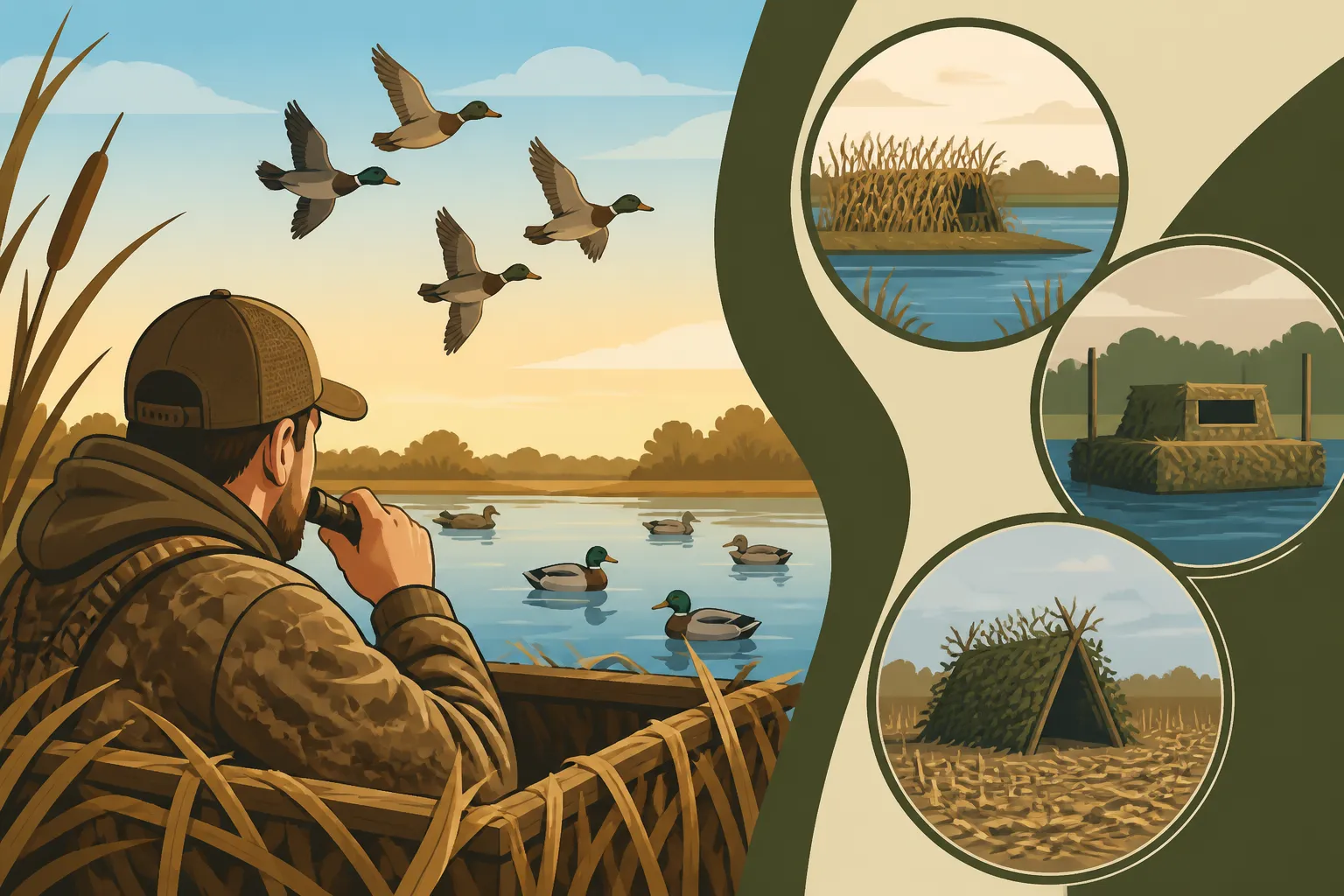
For field hunting, particularly for geese and ducks in stubble fields, layout blinds are the guide's bread and butter. These low-profile blinds allow hunters to lie down almost flat, becoming virtually invisible amidst cut corn, wheat, or soybean stubble. A guide will meticulously brush in each layout blind, taking local vegetation and stubble to break up its outline. This isn't just throwing some straw on top; it's an art form. They'll ensure the blind melts seamlessly into the field, even from an aerial perspective.
The placement of these blinds within the decoy spread is crucial. They're often positioned on the "upwind" side of the landing zone, facing downwind, so hunters are looking directly at the incoming birds as they set their wings. The guide will ensure sufficient space between blinds for safe shooting and clear sightlines, minimizing any obstruction. The benefit to you, the hunter, is not having to worry about hauling these bulky blinds, finding the right spots, or spending precious morning light camouflaging them – the guide has already done the heavy lifting.
A-Frame and Panel Blinds
While layout blinds are fantastic for flat, open fields, not every field hunting scenario is the same. Sometimes, hunters find themselves along a fencerow, at the edge of a standing cornfield, or near a wooded buffer. In these situations, an A-frame blind or panel blinds might be the more effective choice. These blinds offer more height and can accommodate hunters sitting upright, which can be more comfortable for longer waits.
A guide will construct or deploy these blinds, heavily brushing them in with natural materials from the surrounding environment. This might involve cutting corn stalks, cedar branches, or willow saplings to completely obscure the structure. The idea is to make the blind look like a natural part of the landscape, not an obvious lump in the field. They're often used for Hunting a Standing Corn Field Edge or similar scenarios where a slightly elevated position is beneficial. The guide’s knowledge of local flora and quick brushing techniques are invaluable here, turning a simple structure into a fortress of invisibility.
Natural Concealment and Field Edges
Sometimes, the best blind isn't a manufactured one at all. An experienced guide possesses an intimate knowledge of the land and how waterfowl use it. They might identify a subtle ditch, a natural rise in the topography, a thick fencerow, or a small cluster of brush along a field edge that offers perfect natural concealment. These spots often provide an advantage because they don't require extensive setup and are inherently part of the environment, making them virtually undetectable.
The guide's skill lies in finding these unique features during their extensive How Waterfowl Guides Scout Fields Daily. They’ll scout fields diligently, noting small changes in elevation, brush lines, and natural shadows. Hunters can then tuck into these natural hides, perhaps supplemented with a simple camo net, and become one with the surroundings. This approach is particularly effective for wary birds that have seen every trick in the book. By leveraging natural features, a guide minimizes the hunters' footprint and increases the chances of fooling even the most cautious waterfowl.
Calling Techniques and Sound Discipline
Calling is the voice of your decoy spread, the final, crucial element that convinces wary birds to commit. A waterfowl guide doesn't just call; they communicate, translating the language of the birds into an irresistible invitation.
Mastering the Calls
There’s a world of difference between just blowing a call and actually calling birds. Guides have spent countless hours honing their skills on various calls: short reeds for Canada geese, double-reeds for mallards, and often specialized calls for other duck species like pintails or wigeon. They know the rhythm, the cadence, and the exact volume required for different situations. For geese, a guide might start with loud, hail calls to grab attention, then transition to quieter clucks, moans, and murmurs as the flock gets closer, mimicking a contented flock on the ground.
For ducks, the guide will use a range of quacks, feed chuckles, and greeting calls. The "comeback call" is particularly vital when birds fly past, a series of pleading quacks designed to make them turn and circle back. The guide’s ability to flawlessly produce these sounds and blend them into a natural-sounding symphony is often what seals the deal. They understand that consistency and realism are key, and they've practiced to perfection, ensuring that every note serves a purpose in drawing birds closer.
Reading the Birds and Adapting
Perhaps more important than the ability to make perfect sounds is the guide's skill in reading the birds and adapting their calling accordingly. Waterfowl rarely react the same way twice. Factors like weather, hunting pressure, time of day, and the birds' specific behaviour all influence how they respond to calling. A guide watches intently as a flock approaches: Are they looking? Are they hesitant? Are they working the spread, or just passing by?
Based on these observations, the guide will adjust their calling volume, intensity, and type. If birds are looking, they might go softer, more inviting. If they're flaring, they might back off the call entirely, letting the decoys do the work. If birds seem interested but aren't committing, they might add some urgent comeback calls or a flurry of feed chuckles. This dynamic adaptation is a hallmark of an expert caller and something that only comes with years of experience and countless hours spent observing waterfowl. You can't just learn this from a video; it's an intuitive understanding that a guide brings to every hunt.
The Role of Sound Discipline
Just as crucial as knowing when to call is knowing when not to call. Sound discipline is a critical, yet often overlooked, aspect of waterfowl calling. Many novice hunters make the mistake of overcalling, which can quickly make birds wary, especially heavily pressured birds in areas like Southern Ontario farmland. A good guide understands that silence, at the right moment, can be just as effective as the most alluring call.
When birds are committed, cupped up, and heading straight for the landing zone, the call often needs to go quiet. At this point, any unnecessary noise can spook them. The guide will instruct hunters on when to be absolutely silent, when to make soft clucks, and when to be ready to mount their shotguns. This discipline extends beyond calling; it means no talking, no sudden movements, and absolute stillness until the guide gives the command. The guide acts as the conductor, orchestrating not just the calls, but the entire symphony of the hunt, ensuring every element is in harmony to draw the birds in close.
Logistics and Gear Provided by a Guide
Beyond the technical skills of decoy placement and calling, a waterfowl guide offers an immense logistical advantage, saving you significant time, effort, and expense. For many hunters, this alone makes a guided hunt worthwhile.
Decoys, Blinds, and Heavy Lifting
Imagine waking up before dawn, driving to a field, then having to unload hundreds of pounds of decoys, several bulky blinds, and all your other gear, then spend an hour or two setting everything up in the dark, cold, or even rain. That's the reality of unguided field hunting. When you book a guided waterfowl hunt, all that heavy lifting is handled for you. The guide typically arrives hours before dawn, often with a dedicated crew, to set the perfect spread and brush in the blinds.
This means you show up to a fully prepared setup, ready to hunt. The decoys, which can be an expensive investment on their own, are all top-quality, realistic full-bodies or shells designed to be highly effective. The blinds are well-maintained and properly camouflaged. This isn't just a convenience; it's a huge time saver and ensures that the setup is executed to professional standards, significantly increasing your chances of success. You get to focus on the hunt, not the logistics, which is why platforms like BookYourHunt can connect you with guides who manage all this effortlessly.
Scouting and Location Expertise
One of the greatest values a waterfowl guide provides is their extensive scouting and intimate knowledge of local bird patterns. Waterfowl are highly migratory and their locations can change daily based on weather, food availability, and hunting pressure. A good guide spends countless hours scouting fields, often driving hundreds of kilometers, watching bird movements, identifying feeding patterns, and securing access to prime private land. This ongoing effort is detailed further in Scouting Fields for Ontario Waterfowl.
This means you're not guessing where the birds will be; you're hunting in a location that the guide knows has been holding or attracting birds recently. They understand the intricacies of Ontario Duck Season Dates by District and Ontario Goose Season Dates by District and where the birds will be during those times. This level of dedication and local expertise is nearly impossible for an individual hunter to replicate on a short trip. It’s what transforms a hopeful outing into a high-probability hunt, leveraging insights gained from daily observation and a deep understanding of waterfowl ecology.
Post-Hunt Logistics and Clean-up
The hunt doesn't end when the shooting stops. After a successful morning, there's still the task of gathering all the birds, packing up every decoy, dismantling blinds, and cleaning up the site. Again, the guide takes on the vast majority of this work. They'll retrieve downed birds, help with field dressing if needed, and ensure all the gear is packed away efficiently.
For many hunters, especially those traveling from out of town, having the guide handle these post-hunt chores is a huge relief. It means you can relax, share stories of the hunt, and know that everything is being taken care of properly. It also ensures that the landowner's property is respected and left in pristine condition, which is vital for maintaining future hunting opportunities. From getting you to the ideal location to ensuring the cleanup is complete, a waterfowl guide provides a truly comprehensive, hassle-free hunting experience.
Decoy Spread Elements a Guide Might Use
| Decoy Type | Purpose | Placement Example (Goose) | Placement Example (Duck) |
|---|---|---|---|
| Full-Body Decoys | Most realistic, provide confidence, good visibility | Main body of the spread, in feeding/resting postures | Clustered in small groups, near motion |
| Shell Decoys | Lighter, easier to transport, mimic resting birds | Outer edges or behind full-bodies, in feeder positions | Mixed with full-bodies for volume |
| Sentry Decoys | Mimic watchful birds, add realism | Upwind, slightly elevated to look out | Often a few on the edge of the duck spread |
| Spinning-Wing Decoy | High visibility, mimics landing birds, attracts attention | Upwind of landing zone, slightly elevated | At the head of the duck spread, above decoys |
| Feeder Decoys | Depict birds feeding, highest confidence | Dominant in the landing zone | Within tight feeding clusters |
| Motion Decoys (Jerk) | Realistic movement in water or on ground | On a jerk string in water puddle or on ground | Used to animate a small group of duck decoys |
Disclaimer
This article is for general informational purposes only and does not constitute professional advice. Laws, prices and regulations vary by location and change over time. Consult a qualified professional for guidance on your specific situation.