Calling Moose in Ontario’s Boreal Forest
The vastness of Ontario's boreal forest can feel overwhelming, especially when you're after something as elusive and powerful as a bull moose. You’ve likely spent countless hours scouting, driving remote logging roads, and maybe even seen fresh sign, only to find yourself wondering how to actually draw one of these giants into range. It's a common frustration, feeling like you're speaking a foreign language in the wilderness. This comprehensive guide is dedicated to demystifying moose calling in Ontario's rugged north, helping you understand their vocalizations, master calling techniques, and ultimately, increase your chances of a successful hunt.
The Language of the Boreal Giant: Understanding Moose Communication
Before you even think about putting a call to your lips, it's crucial to understand the nuanced language moose use. They're not just making noise; every grunt, moan, and crack of antler against brush carries a specific message, especially during the rut. Knowing what these sounds mean is the first step to truly effective calling.
Decoding Bull Grunts and Cow Moans
Moose communication is primarily vocal, especially when they're looking for love or asserting dominance. Bulls typically emit deep, guttural grunts. These can vary from a deep, drawn-out "urr-aahhh" when they're asserting their presence or searching for cows, to a more aggressive, shorter "uh-huh-huh" when they're challenging another bull or excited by a nearby cow. Imagine standing at the edge of a vast swamp on a crisp September morning, the mist still hanging heavy, and hearing that deep, resonant grunt echo through the trees. It sends shivers down your spine, doesn't it? That's a bull announcing his availability and dominance, and your job as a caller is to respond in kind, or to mimic a cow that might pique his interest.
Cow moose, on the other hand, have a distinct, plaintive moan. It's often described as a long, drawn-out "oo-waahhh" sound, sometimes with a hiccup or break in the middle. This is their primary way of advertising their presence to bulls during the breeding season. A cow moan is an invitation, a signal that she's ready to breed. When a bull hears this, especially one that's been searching hard, it can be an irresistible draw. Think about trying to replicate that exact tone and cadence; it's not always easy, but practice makes perfect. The intensity of a cow's moan can also tell you a lot; a more excited, faster moan might indicate a cow in estrus actively seeking a bull, while a softer, more drawn-out call could simply be a cow looking for company.
The Significance of Raking and Rubbing
Beyond vocalizations, moose use physical actions to communicate, and mimicking these can be incredibly effective. Raking involves a bull rubbing and thrashing his antlers against small trees, bushes, and even the ground. This isn't just to scratch an itch; it's a visual and auditory display of strength and frustration. He’s essentially tearing up the landscape to leave his scent and make noise, sending a clear message to other bulls that this is his territory, and to cows that he's a strong, capable mate. The sound itself—the snapping of branches, the tearing of bark—is distinct and carries well through the dense boreal forest.
Many hunters underestimate the power of incorporating raking into their calling sequence. Imagine you're deep in the bush, perhaps Hunting Moose in Ontario's Northern Bush. You've let out a few cow moans and a soft bull grunt, and you're waiting. Suddenly, instead of just repeating calls, you pick up a dry branch and aggressively thrash it against a small spruce or poplar, mimicking a bull raking. The sound of splintering wood can be the trigger that brings a cautious bull in. It adds realism and a visual element they can "hear." Sometimes, a bull might be hanging up, trying to pinpoint the source of a vocal call. The sound of raking can convince him that another bull is right there, perhaps with a cow, forcing his hand to investigate or challenge.
When Silence Speaks Volumes
While calling is paramount, knowing when not to call is equally important. Moose, particularly mature bulls, are incredibly wary animals. They've survived many hunting seasons and are adept at recognizing unnatural sounds or patterns. Often, after a calling sequence, the most effective strategy is to sit absolutely still and listen. This is where patience truly pays off. A bull might circle downwind, trying to catch your scent before committing. He might approach silently, testing the waters.
If you're constantly calling, you might spook him or give away your exact location too soon. There have been countless times when I've held a calling sequence, waited for twenty minutes, and then, just as I was about to call again, a massive bull would materialize out of the thick timber, having approached with uncanny stealth. It’s a testament to their incredible senses and their cautious nature. Learning to trust your setup and let the silence work for you is a skill developed over many hours in the bush. Consider integrating a platform like GoHunt into your pre-hunt planning; their tools can help you analyze terrain and wind patterns, guiding you on optimal locations to set up and allow silence to be part of your strategy.
Timing is Everything: When and Where to Call Moose
Just like real estate, moose calling is all about location, location, location, and crucially, timing. You could have the most realistic call in the world, but if you're calling at the wrong time of day, or in a location devoid of moose, your efforts will likely be fruitless. Understanding the moose rut and their habitat preferences in the boreal forest is key to maximizing your success.
The Peak of the Rut: A Caller's Dream
The moose rut in Ontario typically peaks from late September through the first couple of weeks of October. This is the golden window for calling. During this time, bulls are actively seeking cows, often covering significant distances, and are far more responsive to calls than at any other point in the year. Their hormones are raging, their guard is down, and their primary focus is finding a mate.
Imagine the early mornings of October, when the air is crisp, and a heavy frost has settled on the leaves. Bulls are bellowing, cows are moaning, and the forest is alive with their courtship. This is when your cow moans are most effective, as they mimic exactly what a bull is desperately searching for. A frustrated bull that hasn't found a cow yet will often respond aggressively to another bull's grunt, thinking he's found a rival or a bull with a receptive cow. Understanding When Ontario's Moose Rut Peaks is paramount, as it directly impacts how and when you should be calling. Outside of this peak, calling can still work, but the responses will generally be less enthusiastic and require more patience.
Pre-Rut Strategies: Stirring Up Interest
While the peak rut is prime, the two weeks leading up to it, known as the pre-rut, can also be highly productive, albeit with a slightly different strategy. During the pre-rut, bulls are starting to feel the urge but aren't quite as frenzied as they will be later. They're establishing dominance, rubbing antlers, and making their presence known.
In the pre-rut, aggressive bull grunts and extensive antler raking can be incredibly effective. You're trying to agitate a bull, to challenge him, or to make him think there's a rival moving in on his potential territory or a nearby cow that might be coming into estrus soon. A well-placed, loud, and confident bull grunt, followed by some serious raking against a substantial tree, can often provoke a bull into responding, even if he's not yet in full rut mode. He might not come charging in, but a grunt back or a thrashing sound from a distance tells you he's there and interested. This is also a good time to try subtle cow moans, as some cows will come into estrus earlier than others, and an early-bird bull will be keen to find them.
Prime Locations within the Boreal Forest
The boreal forest is vast, but moose aren't everywhere. They have specific habitat preferences that you need to key into. Look for areas with a mix of dense cover for security and bedding, and open areas with plenty of browse (willow, aspen, dogwood, balsam fir) for feeding. Swamps, beaver ponds, and low-lying wet areas are absolute magnets for moose. They love the aquatic vegetation found there and use these areas as travel corridors and escape routes.
When you're trying to call moose, focusing your efforts around these prime locations will drastically increase your odds. A classic setup involves positioning yourself on a slight rise or a bush edge overlooking a beaver pond or a swampy clear-cut. Hunting Moose Around an Ontario Beaver Pond is a particularly effective strategy. The acoustics over water are excellent, and it provides a natural funnel for moose moving through. Old logging cuts, especially those 3-7 years old that have regenerated with dense new growth, are also phenomenal areas. Moose love the tender new shoots, and the thick cover provides safety. Use mapping tools like those offered by GoHunt to identify these prime habitat features before you even step foot in the bush. Look for areas where different habitat types converge—a hardwood ridge meeting a cedar swamp, or an old cut adjacent to mature timber—these transition zones are often high-traffic areas for moose.
Your Voice in the Wilderness: Types of Moose Calls
The sounds you make are your primary tool in the moose woods. Just like a musician has different instruments for different melodies, a moose caller needs to master various calls to effectively communicate with these magnificent animals. It's not just about one sound; it's about a symphony of moose talk.
Mimicking the Cow's Allure
The cow moan is arguably the most powerful call in your arsenal, especially during the peak of the rut. It's the sound that drives bulls crazy, the siren song that can pull them out of thick cover. There are several ways to mimic a cow moan:
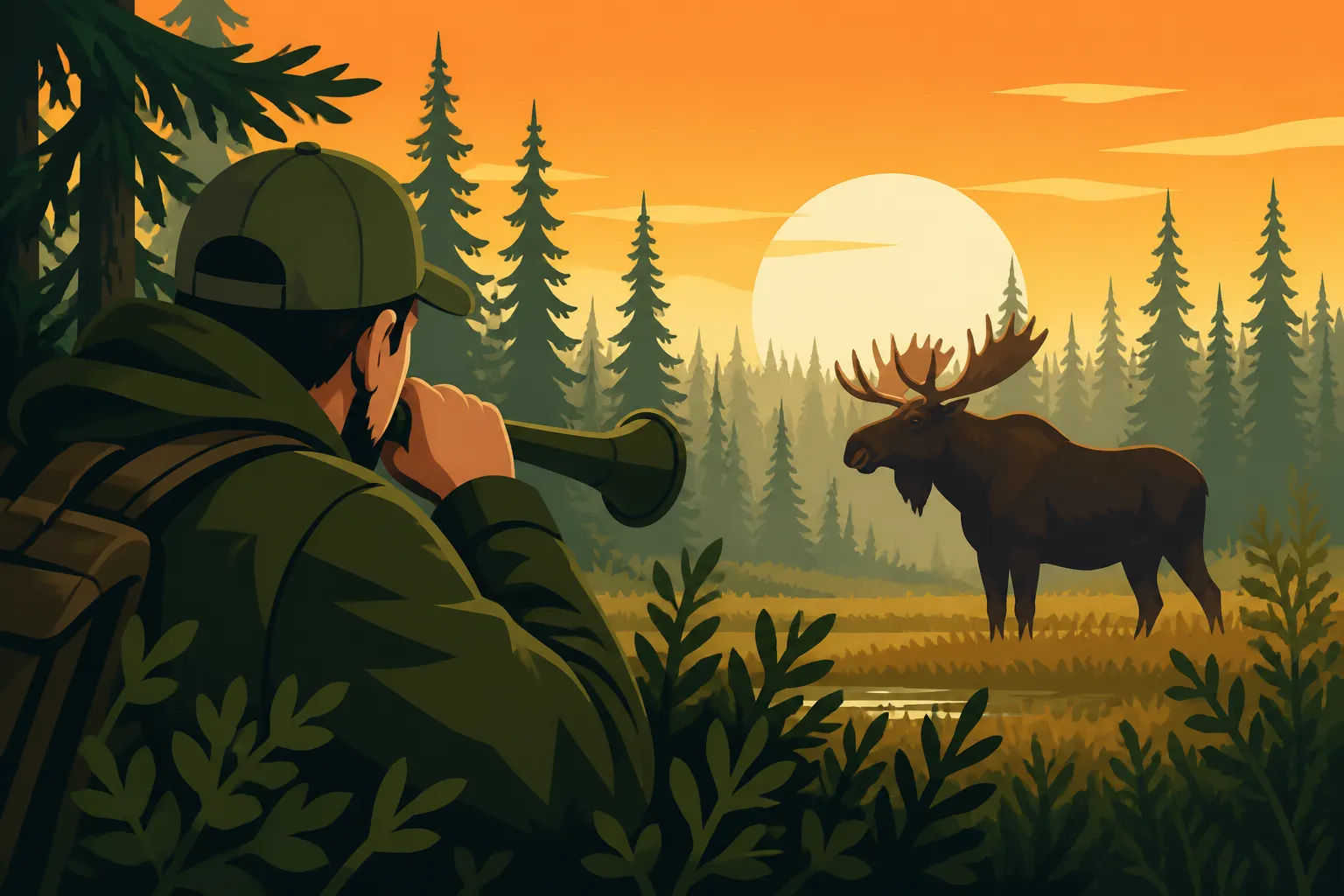
- Vocal Calling (Cupped Hands): This is the most traditional and often most effective method. Cup your hands around your mouth, creating a megaphone effect, and use your voice to produce that long, drawn-out "oo-waahhh" sound. Experiment with the pitch and duration. A cow in estrus might have a slightly higher, more urgent tone, while a casual cow might be lower and softer. The key is to make it sound natural and unforced. Practice at home, recording yourself and comparing it to actual cow moans you can find online.
- Birch Bark Call: Many seasoned moose hunters swear by a rolled-up piece of birch bark. The natural resonance of the bark provides a very authentic, reedy quality to the moan. Roll a piece of fresh, pliable birch bark into a cone shape, with the inner bark facing out. Place the narrow end to your mouth and vocalize through it. The slight vibration and natural material give it a distinct advantage. It can be a little tricky to get the hang of, but once you do, it produces an incredibly realistic sound.
- Commercial Calls: Brands like Woods Wise or Primos offer excellent commercial cow calls, often made of rubber or plastic, designed to replicate the cow's vocalizations with minimal effort. These can be great for beginners or when you need a consistent, reliable sound. Just remember that no mechanical call will ever perfectly replace the nuance of a well-practiced vocal call.
When calling, consider the scenario. If you're Hunting the Rut in Early to Mid November (if the season extends that far in your WMU), a series of urgent cow moans might be necessary to pull a bull away from an already established cow. Earlier in the rut, a softer, more inquisitive moan might be enough to pique his interest.
Emulating the Bull's Challenge
While the cow moan attracts, the bull grunt challenges. This call is best used to either draw in a dominant bull looking for a fight or to make a cautious bull think another male is moving in on his territory or potential mate.
- Deep Guttural Grunts: Again, your voice is your best instrument. Practice making a deep, throaty grunt. It should sound powerful, almost like a controlled burp or cough from deep in your chest. Some hunters add a snort or a rattle at the end to signify agitation. A bull grunt often follows a cow moan, suggesting that a bull is already with a cow and is warning off other suitors.
- Breathing Techniques: Achieving that deep, resonant sound often comes from breathing from your diaphragm. Try to push the sound out from your stomach, not just your throat. This creates a fuller, more authoritative grunt.
- Commercial Bull Calls: Just like cow calls, there are various commercial bull calls available. Some are mouth calls that require specific techniques, while others are external bellows. They can be very effective, especially for projecting sound over long distances in the dense bush.
Remember to vary your bull grunts. A single, challenging grunt might work, but sometimes a series of shorter, more aggressive grunts, almost like heavy breathing, can simulate a bull that's worked up and ready for confrontation. This can be especially effective when you're dealing with a bull that's hanging up just out of sight.
The Power of Antler Raking and Bush Bashing
This is where you don't just use your voice but become an active participant in the forest soundscape. As mentioned, raking is a powerful visual and auditory display for moose.
- Antler Rake Imitation: Find a small tree, sapling, or sturdy bush (poplar or spruce works well) that's roughly the size a bull would thrash. Using a moose shoulder blade, a stick, or even a smaller set of antlers you might carry, aggressively rake and thrash the bush. Break branches, tear bark, and make a general ruckus. The goal is to sound like a bull letting off steam.
- Timing the Rake: This is crucial. A natural sequence might involve a few cow moans, then a bull grunt, followed by a period of raking. This tells an approaching bull, "Hey, there's a cow here, and I'm with her, and I'm not afraid to show it." The raking reinforces the vocalizations, making your setup incredibly realistic.
- Bush Bashing: Sometimes, simply breaking branches or stepping heavily on dry sticks can add to the realism. When you're trying to Call a Bull Moose in the Rut, combining these elements creates a full sensory experience for the moose. They'll hear the vocalizations, the sounds of a physical presence, and the message will be much stronger. Just be careful not to create so much noise that you sound like a human crashing through the woods. The goal is to mimic, not to obliterate.
Mastering the Art: Practical Calling Techniques
Calling moose isn't a simple button press; it's an art form that requires finesse, understanding, and adaptability. Every situation is different, and what works one day might not work the next. This section delves into the practicalities of putting it all together.
Calling Sequence and Cadence
A typical calling sequence for moose involves a series of varied calls, mimicking natural interactions. Don't just make one sound and wait. Think of it as telling a story to the moose.
A common sequence might look like this:
- Start with Soft Cow Moans: Begin with 2-3 soft, drawn-out cow moans. These are inquisitive and non-threatening. Wait 5-10 minutes.
- Amplify the Cow Moans: If no response, increase the volume and urgency of your cow moans (3-5 calls). Imagine a cow actively searching. Wait another 10-15 minutes.
- Introduce a Bull Grunt: If still no response, or if you hear a distant grunt, add a single, confident bull grunt. This suggests a bull has heard the cow and is responding, or that a bull is already with her.
- Incorporate Raking: After the bull grunt, immediately follow with 30-60 seconds of aggressive antler raking or bush thrashing. This adds realism and visual "noise."
- Listen Intently: After this sequence, sit absolutely still and listen. Moose will often circle, trying to get downwind of the calls to scent-check. This waiting period can be agonizing but is crucial. A bull might be moving in silently.
- Repeat or Adapt: If no response after 20-30 minutes, you can repeat the sequence, or adapt based on any subtle signs (a distant twig snap, a faint grunt). If a bull responds, gauge his interest. If he's grunting aggressively, continue with bull grunts and raking. If he sounds more inquisitive, stick to cow moans to draw him closer.
The cadence of your calls matters. Natural moose sounds aren't perfectly uniform. Vary the duration of your moans, the pauses between your grunts, and the intensity of your raking. Make it sound organic, like a real moose interacting with its environment. This takes practice and a keen ear for natural moose sounds.
The Role of Wind and Terrain
Wind and terrain are your biggest allies and potential saboteurs. Ignoring them is a recipe for failure.
- Wind Direction: Moose, like all big game, rely heavily on their sense of smell. They will almost always try to circle downwind of a call to scent-check the source. This means you need to position yourself so that an approaching moose, trying to get downwind, will pass within your shooting lane, or at least be forced to expose itself. If you're calling from directly upwind, a smart bull will simply scent you long before you see him and disappear. GoHunt maps, for example, often include wind direction overlays, which are invaluable for setting up. Always try to call across the wind, or with a very slight quartering wind, allowing you to see the moose before it gets your scent.
- Terrain Features: Use the terrain to your advantage. Set up on high ground overlooking a low-lying area where moose travel and feed. This gives you a visibility advantage. Utilize natural funnels like narrow strips of bush between swamps or ridges. If you're Hunting Moose on an Ontario Logging Road, setting up off the road itself, perhaps 50-100 yards into the bush, allows you to project calls without making your human presence too obvious on the open road. When you're Glassing a Cut for Ontario Moose, consider how your calls will carry and where a moose might stage before entering the open. Think about how the sound will travel through dense spruce, over water, or along a ridge. Sound travels differently in different mediums.
Patience and Persistence: The Unsung Heroes
Moose hunting, especially calling, is not for the impatient. You will spend far more time listening and waiting than actively calling. It's a game of chess, not checkers.
- The Wait: After a calling sequence, the silence can be deafening. It can feel like nothing is happening. But often, a moose is moving in, slowly, deliberately, using cover. If you get up too soon, or call too frequently, you'll ruin the setup. Give it at least 20-30 minutes of absolute silence after a calling sequence, sometimes even longer if you're in a particularly good spot or suspect a bull is close. A buddy of mine once waited an hour after a series of soft grunts before a bull ghosted in, proving that some animals are incredibly methodical.
- Don't Give Up: Even if a spot seems quiet, try a few calling sequences at different times of the day. Moose activity varies. What if a different bull moves into the area later? Or a different cow becomes receptive? Persistence across several spots and multiple days of your hunt is often the key to success. The boreal forest is vast, and finding that one responsive bull takes dedication. Don't be discouraged by a few hours of silence.
Beyond the Call: Essential Gear and Strategy
Calling is just one piece of the puzzle. To truly enhance your chances of success, you need to combine calling with smart scouting, effective gear, and unwavering attention to safety in the remote Ontario wilderness.
Scouting for Success
You can't call a moose that isn't there. Pre-season scouting, even without calling, is vital.
- Identify Core Areas: Look for fresh tracks, droppings (moose droppings are typically larger and more elongated than deer, often resembling large, dark pellets), rubs on trees, and browsed vegetation. Focus on areas with a good mix of mature timber and new growth.
- Use Topographical Maps and Satellite Imagery: Digital mapping tools, like those integrated into GoHunt, are indispensable. Look for natural funnels, pinch points, swamps, beaver ponds, and thick cover. Identify potential bedding areas (often dense stands of spruce or fir on north-facing slopes) and feeding areas (new clearcuts, willow thickets, alder swamps).
- Ground Scouting: Once you've identified promising areas on a map, get boots on the ground. Walk those logging roads, explore the edges of swamps, and look for active moose sign. This helps confirm your assumptions and gives you a feel for the terrain, which is critical for silent movement and setting up calling locations. A good scouting trip might also reveal a prime location for Hunting Moose From a Boat or Canoe, allowing for silent access to remote areas.
Utilizing Technology for Edge
Modern technology can give you a significant advantage in the vast Ontario bush.
- GPS and Digital Maps: A reliable GPS unit or a smartphone with offline mapping capabilities is a non-negotiable. Not only will it keep you from getting turned around, but it also allows you to mark sign, calling locations, and potential moose travel routes. GoHunt is a fantastic example of a platform that offers detailed topographic maps, satellite imagery, and the ability to mark waypoints, measure distances, and track your movements. Knowing where you are and where you need to go in the dense boreal forest is paramount.
- Binoculars and Spotting Scopes: Quality optics are essential for spotting subtle movements in the thick bush or identifying a bull at a distance before you commit to a full calling sequence. Sometimes, a moose will stand perfectly still, and you'll only catch a glimpse of an antler tip or a dark patch of hide. Good optics can confirm if it's worth pursuing.
- Wind Checkers: A small bottle of wind-checking powder is invaluable for confirming wind direction before and during a calling setup. Even a slight shift in wind can compromise your position.
Safety First in Moose Country
Hunting in remote Ontario is an incredible experience, but it comes with responsibilities. Safety must always be your top priority.
- Tell Someone Your Plans: Always let someone know where you are going, your planned route, and when you expect to return. Give them a detailed map or GPS coordinates.
- Carry Essential Survival Gear: Beyond your hunting equipment, carry a survival kit. This should include a first-aid kit, fire-starting materials, a whistle, a compass, extra food and water, a headlamp, and emergency shelter. The weather in Ontario can change rapidly, and getting turned around is a real possibility, especially when you're focused on a responding moose.
- Bear Spray/Bear Bangers: You're in black bear country. While most bears are shy, it's wise to carry bear spray or bear bangers, especially if you're making a lot of noise with calls and raking, which might attract curious bears.
- Proper Clothing: Dress in layers for the unpredictable boreal weather. Blaze orange is a legal requirement during specific seasons in Ontario and critical for visibility among other hunters. Remember that early season can still be quite warm, so consider Meat Care in Ontario's Warm Early Seasons if you're lucky enough to tag out quickly.
- Communication Device: A satellite communication device (like a Garmin inReach or a Zoleo) is a lifesaver in areas with no cell service. It allows you to send and receive messages and, critically, to trigger an SOS in an emergency.
Common Pitfalls and How to Overcome Them
Even experienced callers make mistakes. Recognizing these common pitfalls and developing strategies to avoid them will greatly improve your success rate.
Overcalling and Under-calling
This is a delicate balance, and often the difference between success and failure.
- Overcalling: Many new callers are so eager that they call too frequently or too loudly. This can sound unnatural, making a moose suspicious. Imagine someone shouting at you every few seconds; it would be annoying and likely make you wary. A moose might interpret overcalling as an agitated, unnatural sound, or simply too much pressure. It also means you're making noise when you should be listening for a subtle response. A bull that's slowly circling or approaching silently needs that quiet time for you to detect him.
- Solution: Less is often more. Stick to a structured calling sequence, and prioritize listening. If a bull responds, match his intensity, but don't overwhelm him. If he's soft, be soft back. If he's aggressive, be aggressive.
- Under-calling: On the flip side, some hunters are too hesitant to call, or they don't call enough to get a moose's attention in the vastness of the boreal forest. Their calls might be too soft, or too infrequent to carry through the dense timber.
- Solution: Don't be afraid to project your calls, especially in open areas or across water. If you haven't had a response after a long period, try increasing the volume and urgency of your calls. Sometimes, you need to be persistent to pique a bull's interest from a distance. A table like this can help gauge common mistakes and their fixes:
| Calling Mistake | Description | Common Consequence | Solution |
|---|---|---|---|
| Overcalling | Too frequent, too loud, or too long sequences. | Spooks wary moose, sounds unnatural, misses subtle responses. | Use structured sequences, prioritize listening, match moose intensity. |
| Under-calling | Calls are too soft or infrequent for the environment. | Moose don't hear you or don't feel compelled to respond. | Project calls, increase urgency if no response, vary locations. |
| Impatience | Not waiting long enough for a response. | Missing silently approaching moose, giving up too soon. | Wait 20-30+ minutes silently after each sequence. |
| Wrong Location | Calling in areas with no moose or poor visibility. | Wasted effort, no opportunities. | Thorough scouting, use maps, focus on prime habitat. |
| Forgetting Wind | Not accounting for wind direction. | Moose scent you before you see them. | Always set up with wind advantage, use wind checker. |
Misreading Moose Behavior
Moose are complex animals, and their reactions to calls can be subtle. Misinterpreting their behavior can lead to missed opportunities.
- The Hanging Bull: A common scenario is a bull that responds to your calls but "hangs up" out of sight, grunting but not committing to come closer. He's interested but cautious. This is infuriating, but it tells you he's there. He might be circling to get downwind, or simply sizing up the situation.
- Solution: Don't chase him. If he hangs up, try to stay put, or very subtly reposition to get a better vantage or wind advantage. Try softer, more pleading cow moans, or if he's being aggressive, more challenging bull grunts followed by heavy raking. Sometimes, moving away from him very slightly can make him think the cow is leaving, prompting him to come in.
- Silent Approach: Some bulls are incredibly stealthy and will approach silently, especially mature ones. You might not hear a sound until he's right on top of you.
- Solution: Constant vigilance. Scan your surroundings meticulously, not just in front of you but to the sides and rear, especially downwind. Look for subtle movements, a flash of antler, or a patch of dark hide.
- Aggressive Response: A bull that charges in, grunting loudly and thrashing, is often challenging another bull.
- Solution: Be prepared! Ensure your firearm or bow is ready. Reassess your safety. Don't engage in an aggressive calling match if you're not comfortable. Sometimes, a dominant bull doesn't need to be challenged further; he just needs to be convinced you're a cow or another bull in his territory. Understanding What a Big Bull Moose Weighs can emphasize why you need to be prepared for an imposing animal to arrive.
Dealing with Unresponsive Bulls
Not every moose will respond to a call, and that's just a reality of hunting.
- Environmental Factors: Weather conditions, such as high winds or heavy rain, can make calling difficult as sound doesn't carry well. High pressure from other hunters can also make moose call-shy.
- Time of Rut: If you're outside the peak rut, bulls simply might not be as interested.
- Saturation: Sometimes, a bull might already be with a cow and simply not interested in another.
- Solution: Don't bang your head against a wall. If a particular area isn't yielding results after several different calling attempts and sufficient waiting periods, it's time to move to another promising location. The boreal forest is vast; there are always other moose. Use your GoHunt maps to identify alternative spots, like another beaver pond or an overlooked clearcut, and apply your strategies there. Sometimes, a change of scenery, and a change of approach, is all it takes to find a responsive bull.
Calling moose in Ontario's boreal forest is a rewarding endeavor that combines skill, patience, and a deep understanding of these incredible animals. It’s about becoming part of the wilderness, speaking its language, and connecting with the land on a profound level.
Disclaimer
Hunting is an inherently dangerous activity. This guide is for informational purposes only and does not substitute for proper hunter education, adherence to all local regulations, and responsible hunting practices. Always prioritize safety, understand and follow all Ontario hunting laws, and ensure you are properly licensed. Remember to consult the official Ontario hunting regulations summary for the most up-to-date and complete information.