What an Ontario Guide Cannot Do
It’s easy to dream of a guided hunt in Ontario, imagining an expert doing all the heavy lifting and almost guaranteeing you a trophy. But the reality is, even the most seasoned Ontario hunting guide operates within strict legal and ethical boundaries. This guide will clarify precisely what your Ontario guide is, and isn't, permitted to do, helping you set realistic expectations and ensure your next adventure north is not only successful but also completely above board.
Understanding the Guide's Role in Ontario
When you venture into Ontario's vast wilderness with a guide, whether for moose, bear, or deer, it's crucial to understand their role isn't that of a personal hunting assistant who handles every aspect of the kill. They are facilitators, educators, and logistical experts, but they are not there to circumvent the regulations or diminish your responsibility as a hunter. This distinction is vital for both your safety and legal compliance.
The Legal Framework for Guides
In Ontario, tourist outfitters and guides operate under specific regulations designed to ensure fair chase, conservation, and ethical practices. These rules are in place to protect wildlife populations and maintain the integrity of hunting. A guide's primary legal responsibility is to provide services that enhance your hunting experience while strictly adhering to all provincial hunting laws. They are not empowered to break or bend these rules, nor should they ever encourage you to do so. Think of them as experienced mentors and logistical coordinators rather than active participants in the physical act of hunting. Their reputation, and their ability to continue operating, hinges entirely on their adherence to these laws. This is why when you're looking for an outfitter, it's smart to check platforms like BookYourHunt, as reputable services tend to be well-vetted and transparent about their operations.
What "Guiding" Legally Means Here
Legally, guiding in Ontario primarily means providing assistance related to locating game, navigating terrain, setting up camps, transporting hunters, and offering expert advice on hunting techniques. It includes things like identifying fresh sign, understanding animal behaviour, and choosing prime hunting locations. For example, a moose guide might lead you to a remote beaver pond where bulls are known to frequent, or a bear guide might show you how to properly sit a bait site. What it doesn't include is anything that removes the actual act of hunting from your hands. You, as the licensed hunter, are always responsible for your firearm or bow, your shot, and your adherence to the Ontario Tag Notching and Attachment Rules. They can advise, prepare, and support, but the hunt itself remains yours.
Restrictions on Direct Animal Interaction
One of the biggest misconceptions about guided hunts is that the guide will intervene directly with the game animal. This is absolutely not the case in Ontario. The act of hunting, from aiming to shooting, must be performed by the licensed hunter. A guide's presence is to facilitate your hunt, not to hunt for you.
No Direct Shooting or Animal Pursuit
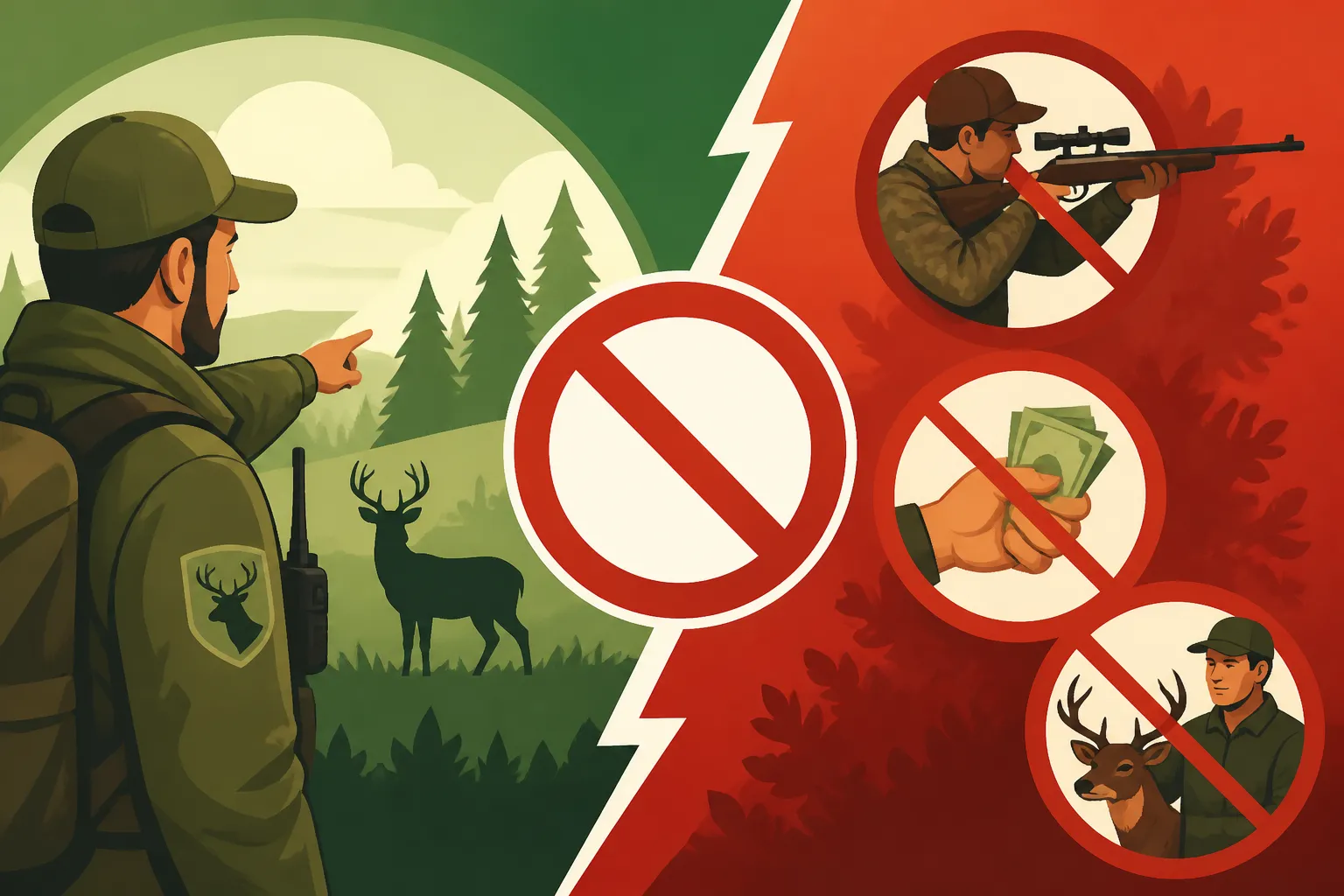
An Ontario hunting guide cannot legally discharge a firearm or bow at a game animal on your behalf, nor can they actively pursue game with the intent to shoot it for you. This means they can’t take the shot if you're nervous, or step in if you miss. The trigger pull, or arrow release, is solely the responsibility of the licensed hunter whose tag is being filled. If you're on a guided Moose Hunting Ontario's Northern Bush trip, for example, the guide might call a bull right into your lap, but it's up to you to make the shot. They also cannot corner an animal or drive it directly to you in a manner that removes the element of fair chase, unless specific deer drive regulations apply and are being followed by all licensed hunters. Their role is to put you in the best position to hunt, not to hunt for you.
Limitations on Tracking Wounded Game
While a guide will undoubtedly assist you in tracking wounded game – this is a critical part of their service and ethical hunting – there are limits. They cannot legally carry a loaded firearm to track wounded big game unless they themselves possess a valid hunting licence and an appropriate tag for that species and season, and are acting as a hunter, not solely as a guide. This means if you wound a bear, and the guide is only licensed as a guide and not also as a hunter with a bear tag, they cannot carry a loaded rifle to finish off the animal if it needs to be dispatched for humane reasons. They can, and absolutely should, help you search, follow tracks, and advise you on how to proceed, but the ultimate responsibility for dispatching the animal falls to the licensed hunter. This is a subtle but very important distinction to understand before you head out.
Boundaries on Licensing and Tagging
One of the core responsibilities of any hunter in Ontario is to ensure they possess all the necessary licences and tags. Your guide can advise you on what you need, but they absolutely cannot procure them for you or use their own.
Guides Cannot Provide Your Licence or Tags
Your Ontario hunting guide cannot apply for, purchase, or provide you with your personal hunting licence, Outdoors Card, or species-specific tags. These are personal documents and entitlements tied directly to you as an individual hunter. For example, if you're a non-resident, you'll need to understand the Rules for Non-Residents Hunting Ontario and acquire your own Ontario Hunting Licences and What They Cost. A guide can certainly walk you through the process, point you to the online portal, or advise you on things like the Ontario Moose Tag Allocation Process if you're planning ahead, but the actual application and purchase are yours alone. They also cannot lend you their own unused tags, even if they have one. Each tag is assigned to a specific hunter or group within the legal framework, and transferring them is illegal.
Restrictions on Tagging Assistance
While a guide will certainly assist with the practical aspects of field dressing and preparing your animal for transport, they cannot be the one to physically attach your tag to the animal. The hunter who harvested the animal is legally required to immediately validate and attach their own tag according to Ontario regulations. Your guide will often be a valuable resource, explaining how to properly notch the tag, where to attach it to the animal, and the proper procedure for Reporting Your Ontario Harvest. However, the physical act of cutting the notches and securing the tag to the animal must be done by you. This ensures accountability and confirms that the harvest belongs to the hunter whose licence and tag were used.
Ethical and Practical Limitations
Beyond the strict legal definitions, there are also ethical and practical limitations that govern what an Ontario guide can, and should, do. These often boil down to ensuring a fair chase and maintaining the integrity of the hunt.
The "No Guarantee" Clause
A good, ethical Ontario guide will never guarantee you a kill, a trophy, or even a shot opportunity. Hunting is, by its very nature, unpredictable. There are countless variables: weather, animal movement, your own shooting ability, and plain old luck. An outfitter might offer incredibly high success rates based on past seasons, which can certainly influence your decision when you're browsing options on sites like GoHunt, but a "guarantee" is a red flag. Their job is to put you in the best possible position for success, using their knowledge, scouting, and experience. They can’t control the wildlife or your aim. Be wary of any guide or outfitter who promises a sure thing; it's often a sign of unethical practices or unrealistic expectations.
Respecting Landowner and Crown Land Rules
Your guide operates within the same land access rules as any other hunter. This means they cannot trespass on private land without explicit permission, nor can they facilitate you doing so. If you're Hunting Ontario's Crown Land, they must adhere to all regulations regarding vehicle use, camping, and permanent structures. If you’re hunting private land, they rely on you having secured Getting Private Land Permission in Ontario beforehand. They can't simply take you onto someone else's property because they know the owner, unless explicit arrangements for your hunt have been made. They are also beholden to local regulations that might restrict specific activities, such as ATV Rules on Ontario Crown Land or the placement of blinds and stands. A reputable guide will always respect these boundaries and ensure their clients do too.
Prohibited Activities and Illegal Practices
There are certain activities that are unequivocally illegal for anyone involved in hunting in Ontario, and a guide absolutely cannot engage in or facilitate these. Knowing these helps you protect yourself and the guide you hire.
No Facilitation of Poaching or Illegal Methods
This might seem obvious, but a guide cannot, under any circumstances, assist in or encourage poaching. This includes hunting out of season, exceeding bag limits, hunting restricted species, or using illegal methods or equipment. For instance, they cannot advise you to use an illegal calibre rifle, or a bow that doesn't meet the Bow Draw Weight Rules in Ontario, nor can they bait animals where baiting is prohibited or not properly managed. Any attempt by a guide to suggest or participate in illegal activities is a serious offence that could lead to severe penalties for both you and the guide, including fines, licence suspensions, and equipment seizure. Always ensure your guide operates with the highest ethical and legal standards, protecting both the resource and your hunting future.
Transporting Uncased Firearms or Loaded Weapons
Ontario has strict regulations regarding the transport of firearms. Your guide cannot transport your uncased or loaded firearm in a vehicle, boat, or ATV. All firearms must be unloaded and encased, and for certain types, trigger-locked, during transport. While a guide can drive you to a hunting location, they cannot allow you to sit in the truck with a loaded rifle ready to jump out and shoot. This rule applies equally to both hunters and guides, and ensures public safety. Before your hunt, discuss with your guide the proper methods for Bringing Firearms Into Ontario and transporting them in the field to ensure full compliance. This also applies to bows; while not treated with the same stringency as firearms, it's best practice to transport bows in a case, especially when travelling by vehicle on public roads.
What a Great Guide Can Do for You
Now that we’ve covered the "cannot-dos," let's balance that out. Because despite these limitations, a truly great Ontario guide brings immense value to your hunting experience, turning a challenging endeavour into a memorable and often successful adventure.
Expert Knowledge and Logistical Support
What a guide can do for you is provide unparalleled local knowledge, honed over years of experience in their specific hunting area. They know the terrain like the back of their hand, understand animal patterns based on weather, food sources, and time of year, and can interpret subtle signs that an inexperienced hunter might miss. They can show you how to properly set up a stand on an Hunting an Ontario Bush Edge, or where Ontario Moose Are Densest. They handle all the complicated logistics: securing access, setting up comfortable camps, preparing meals in remote locations, and ensuring you have the right gear for the conditions. This logistical support frees you up to focus on the hunt itself, rather than worrying about navigation, food, or shelter. Their insights can be invaluable, whether it's understanding What Makes Southern Ontario So Productive for deer or the nuances of Calling a Bull Moose in the Rut.
Enhanced Safety and Experience
Beyond just finding game, a guide significantly enhances your safety in Ontario's often remote and rugged wilderness. They are trained in first aid, carry satellite communication devices for emergencies, and are adept at navigating challenging terrain. They know what to do What to Do If You Get Turned Around and how to react in unexpected situations, such as encounters with other wildlife. Furthermore, a good guide elevates the entire experience. They share stories, teach you about the local environment and conservation efforts, and foster a deep appreciation for the outdoors. They become a companion, a mentor, and often, a friend, making your hunt far more enriching than if you went it alone. When you’re considering Booking an Ontario Moose Hunt, remember the value of a guide isn't just in the kill, but in the entire, safe, and memorable journey they provide. And don't forget to ask about How Much to Tip an Ontario Guide at the end of a successful trip; it's a small way to show appreciation for their hard work and dedication.
| Aspect of Hunting | What an Ontario Guide CAN Do | What an Ontario Guide CANNOT Do |
|---|---|---|
| Locating Game | Scout areas, identify sign, advise on animal movement, call game. | Shoot an animal for you, physically drive animals towards you (unless legal drive). |
| Licensing/Tags | Advise on requirements, direct you to purchase portal. | Purchase your personal licence or tags, lend you their tags. |
| Equipment Use | Advise on proper equipment, help set up stands/blinds. | Discharge your firearm/bow, load your firearm in transit (in vehicle/boat/ATV). |
| Wounded Game | Assist in tracking, provide advice on next steps, carry first aid. | Carry a loaded firearm to dispatch wounded game if not personally licensed/tagged. |
| Legal Compliance | Educate on rules, ensure adherence to seasons/limits. | Facilitate poaching, advise illegal methods, hunt out of season. |
| Logistics/Camp | Arrange transport, set up camp, cook meals, ensure supplies. | Force you to hunt in unsafe conditions, guarantee a kill. |
| Safety | Provide first aid, carry comms, navigate difficult terrain, advise on wildlife encounters. | Ignore safety protocols, put hunters in dangerous situations. |
| Land Access | Access private land with permission, navigate Crown Land. | Trespass on private land, ignore Crown Land vehicle/camping rules. |
Disclaimer
This article is for general informational purposes only and does not constitute professional advice. Laws, prices and regulations vary by location and change over time. Consult a qualified professional for guidance on your specific situation.