Where a Non-Resident Camping Permit Applies
It can be incredibly confusing to plan an Ontario hunting adventure as a non-resident, especially when you're trying to figure out where you can pitch a tent without running afoul of the regulations. You’ve likely heard about Crown Land, but the specific rules for non-residents, particularly around camping permits, can feel like a labyrinth. This guide is going to walk you through exactly where and when a non-resident camping permit applies in Ontario, ensuring your hunting trip is legal, stress-free, and focused on the thrill of the chase, not on administrative headaches.
Understanding Crown Land and Non-Resident Status in Ontario
Navigating the various rules and regulations can definitely be a source of frustration for non-resident hunters visiting Ontario. You want to focus on the hunt, the scouting, the camaraderie, not spend hours poring over government documents. But getting a solid grasp of what Crown Land truly means and how your non-resident status impacts your camping options is the first crucial step to a successful and compliant trip.
What is Crown Land, Anyway?
In Ontario, Crown Land refers to the vast majority of public land managed by the provincial government. It’s land that isn't privately owned, nor is it within a provincial park or conservation area that might have different rules. For many hunters, especially those chasing big game like moose or bear, Crown Land is the quintessential wilderness experience. It offers immense tracts of un-touched forest, shimmering lakes, and winding rivers – the kind of wild landscape that dreams are made of.
However, just because it’s "public" doesn't mean it's a free-for-all, especially for non-residents looking to set up camp. While residents generally have more leeway for camping on Crown Land, non-residents face specific regulations designed to manage usage and support local infrastructure. Imagine driving for hours, finding the perfect spot, only to realize you’re breaking a rule you didn’t even know existed. That’s a headache no one wants. Understanding the nuances is key to Hunting Ontario's Crown Land effectively and without issue.
Who is Considered a Non-Resident Hunter?
For the purposes of Ontario's hunting and camping regulations, a "non-resident" is generally anyone who does not reside in Ontario or, in some cases, elsewhere in Canada. If your primary residence is outside of Ontario, or outside of Canada entirely, then you fall into the non-resident category. This distinction is paramount because it directly triggers the requirement for certain permits, including the non-resident Crown Land camping permit.
This can feel a bit unfair, especially if you're a regular visitor who spends a lot of time and money in the province. But these rules are in place for several reasons: to help fund the management of these public lands, to ensure fair access, and to support the businesses (like lodges and outfitters) that cater to visitors. It means that the rules for your hunting party, particularly concerning where you sleep at night, will be different than for a group of Ontario residents. If you're coming from the States, for example, you'll need to pay close attention to all Rules for Non-Residents Hunting Ontario.
Where the Non-Resident Crown Land Camping Permit is Required
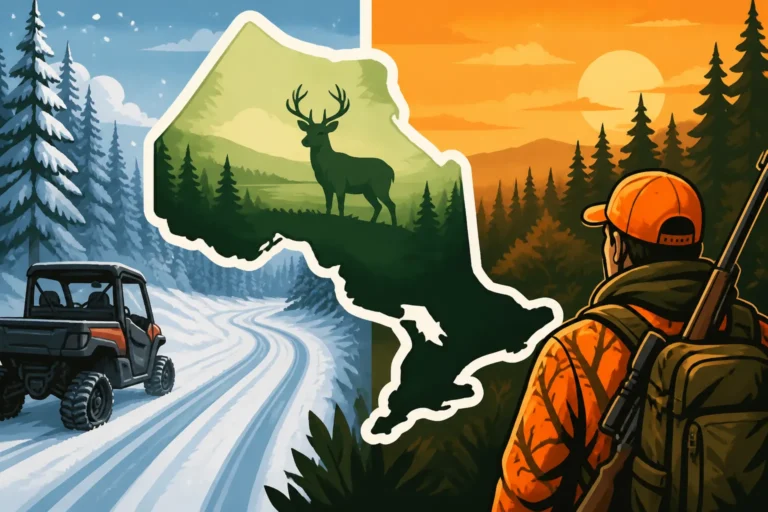
Now, let's get down to brass tacks: where exactly does this permit apply? The key thing to remember is that it's primarily a "Northern Ontario" requirement. The province has drawn a clear line on the map, and if you're planning to camp on Crown Land above that line, and you're a non-resident, you need that permit.
The Geographical Line in the Sand
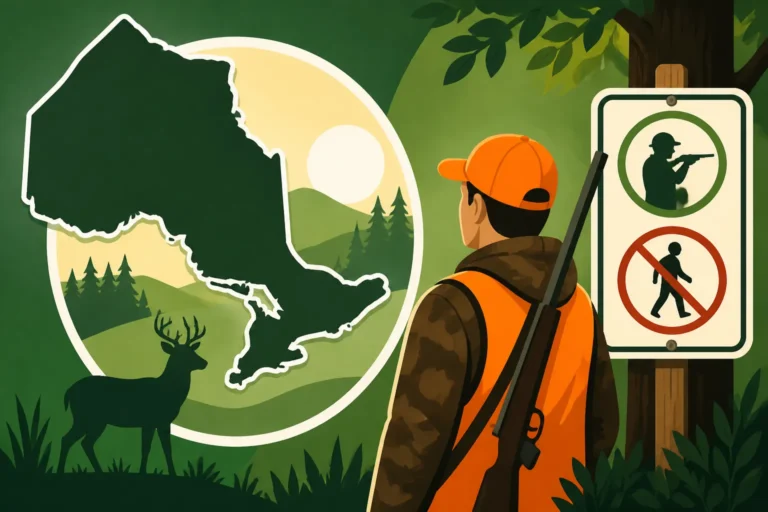
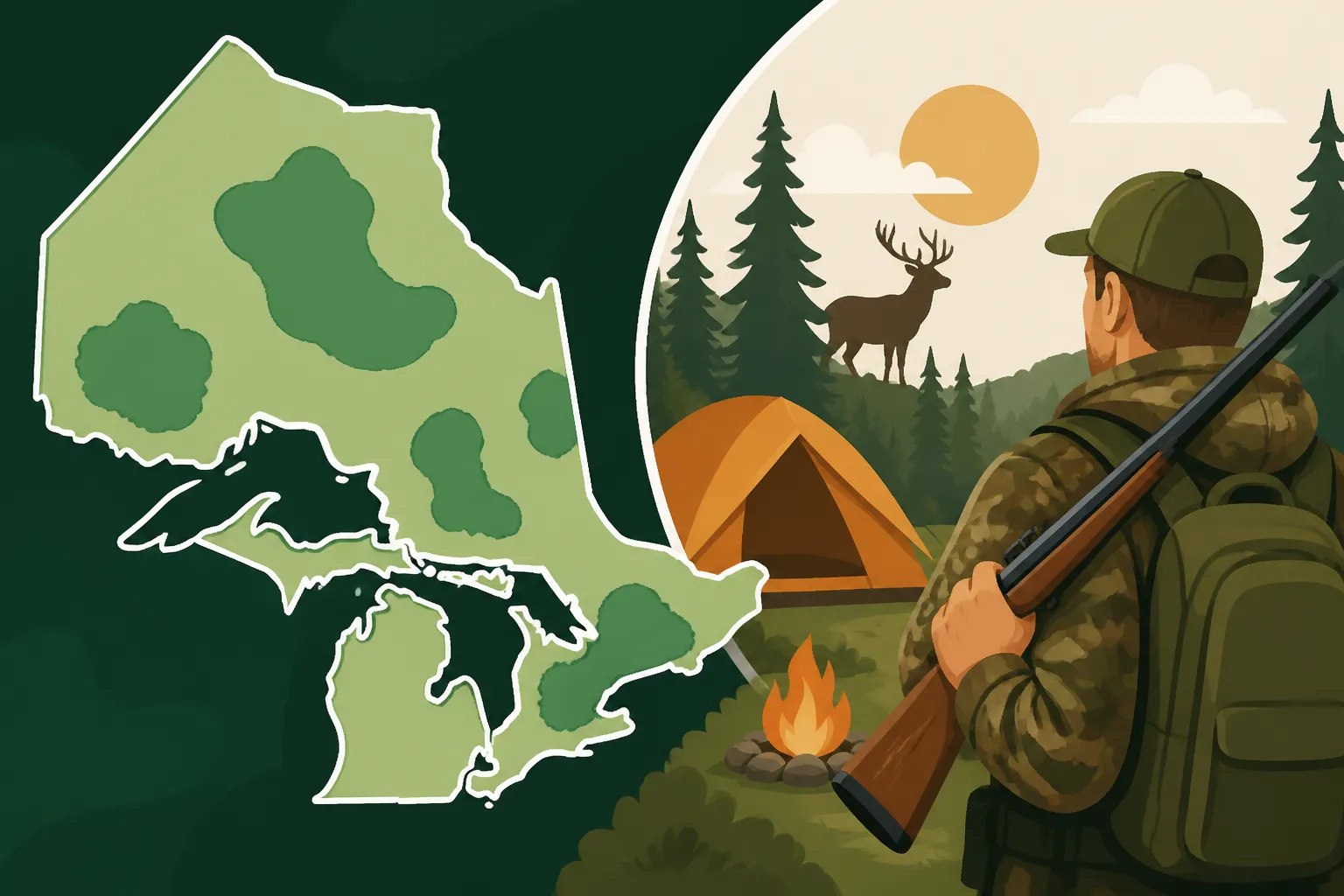
The non-resident Crown Land camping permit is specifically required for camping on Crown Land situated north of the French River, Mattawa River, and the various sections of Highway 17 and Highway 11 that connect them. This effectively encompasses the vast, rugged wilderness that defines much of Hunting Northwestern Ontario's Big Bush and Hunting Northeastern Ontario's Clay Belt.
To make it a bit more tangible, if you're hunting deer near North Bay, moose north of Timmins, or bear in the vast regions around Thunder Bay or Kenora, you're almost certainly in the zone where this permit applies. Think of towns like Sudbury, Sault Ste. Marie, Thunder Bay, and points north of them. Everything generally north of that line, which roughly traces across the middle of the province, is where this permit comes into play for non-resident campers. South of this line, Crown Land is far less common, often smaller parcels, and general recreational camping rules for non-residents are either different or simply don't apply due to the nature of the land use.
When the Permit Applies (and When it Doesn't)
This permit is required for non-residents who are camping on Crown Land in Northern Ontario and are not staying at an established campground, tourist outfitter, or lodge. Let's break that down:
- It applies if: You're a non-resident, you're setting up a tent, parking an RV, or establishing any temporary camp on Crown Land north of the designated line, and you're not paying for accommodation at a commercial establishment. This is your classic "bush camping" scenario.
- It does NOT apply if:
- You're an Ontario resident: Residents generally have the right to camp on Crown Land for free for up to 21 days at one site.
- You're staying in a commercial lodge or outfitter camp: If you've booked a guided hunt and are staying in one of their cabins or facilities, your accommodation is already covered by your booking. The outfitter handles the land-use permissions.
- You're staying in a provincial park campground or private campground: These are commercial operations where you pay a fee directly for your site, and the Crown Land camping permit isn't applicable.
- You're on private land with permission: If you've secured permission from a private landowner to camp on their property, that's entirely separate from Crown Land rules.
- You're hunting in Southern Ontario: As mentioned, Crown Land camping opportunities south of the French/Mattawa line are extremely limited. If you happen to find a rare spot where camping is allowed, the Northern Ontario non-resident permit wouldn't apply, but you'd need to confirm any local municipal or specific land-use rules.
It’s crucial to understand this distinction. Many non-residents come up for a Black Bear Hunting in Ontario trip or to go Moose Hunting Ontario's Northern Bush and stay at a reputable outfitter. In these cases, your accommodation is part of your package, and you don't need to worry about the individual camping permit. It’s really for those adventurous souls who want to do a self-guided, fully DIY wilderness camp on Crown Land. For more specific details, you can always refer to materials on The Non-Resident Crown Land Camping Permit.
Practicalities of the Non-Resident Camping Permit for Hunters
So, you've determined you need one. The next logical question is, "How do I get it, and what's involved?" It’s pretty straightforward once you know the process, and understanding these practicalities before you even hit the road is key to a smooth journey.
How to Obtain Your Permit and What to Expect
The non-resident Crown Land camping permit is typically purchased online through the provincial government's official Outdoors Card and licensing portal. You'll need to have your Outdoors Card in hand or apply for one at the same time, as it's your primary identification for all hunting and fishing licenses in Ontario.
When you go to purchase the permit, you'll generally need to provide:
- Your Outdoors Card number.
- Your personal information.
- The dates you intend to camp.
- The general location (e.g., the Wildlife Management Unit or region) where you'll be camping.
The cost of the permit is a fee, and it's usually structured per person, per night. It's not an exorbitant amount, but it adds up, especially if you're staying for an extended period or have a larger group. Always check the current figures on the official government website.
Once purchased, you'll receive a digital or printable copy of your permit. It is absolutely essential to carry proof of this permit with you while you are camping. Conservation Officers are out there, and they will check. Getting caught without the proper permit can lead to fines and a very unpleasant interruption to your hunting trip.
You can combine this purchase with your hunting licenses when you're Buying Licences Through Ontario's Portal, making it a one-stop shop for your official paperwork.
Why This Permit Matters for Your Hunt
Beyond the legal requirement and avoiding fines, there are deeper reasons why this permit is important for your hunting experience:
- Supporting Conservation: The fees collected from these permits go towards the management, maintenance, and conservation of Ontario's vast natural resources. This includes wildlife management programs, habitat protection, and trail maintenance – all things that directly benefit hunters.
- Ensuring Orderly Use: These permits help the province monitor usage levels on Crown Land. While it might feel like a formality in the middle of nowhere, it's part of a larger system to ensure that these wild spaces remain accessible and healthy for generations of hunters and outdoor enthusiasts.
- Peace of Mind: Knowing you're fully compliant with all regulations allows you to relax and truly immerse yourself in your hunt. You won't have that nagging worry in the back of your mind.
- WMU Specifics: While the permit covers general Crown Land camping, it's always wise to double-check if any specific Wildlife Management Units (WMUs) you plan to hunt in have unique local restrictions or sensitivities regarding camping. Tools like onX Hunt or GoHunt can be invaluable here, often showing land designations and helping you visualize Crown land boundaries. It’s also good practice to consult Reading an Ontario WMU Map Before You Go to catch any specific notes on your area.
Alternative Accommodation Options and Considerations
Perhaps the idea of managing another permit seems like too much hassle, or your hunting plans don't involve the areas where the permit applies. Thankfully, Ontario offers several alternative accommodation options that cater to non-resident hunters, depending on your style and budget.
Private Land and Lodges
For many non-resident hunters, especially those seeking a more comfortable or guided experience, staying on private land or at a commercial lodge is the preferred route. If you have permission from a private landowner to camp on their property, the non-resident Crown Land camping permit is not required. This is often the case when hunting deer in more agricultural regions.
Similarly, booking a trip with one of Ontario's many reputable hunting outfitters or lodges means your accommodation is typically included in the package. Whether it's a rustic cabin deep in the bush or a more luxurious lodge, you're paying for a commercial service. This arrangement bypasses the need for an individual camping permit entirely, as the outfitter handles all necessary land-use agreements or owns the land themselves. Many non-residents who come to Black Bear Hunting in Ontario or for Moose Hunting Ontario's Northern Bush choose this option, as it simplifies logistics and often includes guides, meals, and game retrieval services. Getting Private Land Permission in Ontario is also a viable route in certain regions.
South of the Line Considerations
If your hunting adventure takes you to Southern Ontario, roughly south of the French/Mattawa River line, the rules around Crown Land camping are significantly different. In these more populated areas, vast tracts of Crown Land suitable for general camping are rare. Much of the land is privately owned, designated as provincial parks, conservation areas, or municipal forests, all of which have their own specific rules and fees for camping, if camping is allowed at all.
Therefore, for non-residents hunting in Southern Ontario, the discussion of a Crown Land camping permit becomes largely moot. Your focus will be on securing permission for private land access, booking accommodation at local motels or bed and breakfasts, or staying in established private or provincial park campgrounds where different fee structures apply. Areas like Hunting Deer in Southern Ontario Farmland or even Hunting Central Ontario's Mixed Forest will primarily require private land access or commercial lodging.
Here's a quick overview of scenarios to help clarify:
| Scenario | Location | Permit Required? | Notes |
|---|---|---|---|
| Non-resident hunting & camping | Northern Ontario Crown Land | Yes | Required for individuals/groups camping in tents/RVs on undesignated Crown Land. |
| Non-resident hunting, staying at an outfitter | Northern Ontario (with outfitter) | No | Accommodation is provided by the licensed outfitter; your fees cover their land use. |
| Non-resident hunting, staying at a private campground | Northern or Southern Ontario | No | You pay the campground fee directly; not considered Crown Land camping. |
| Non-resident hunting & camping | Southern Ontario Crown Land | Highly Unlikely | General Crown Land camping for non-residents is extremely rare south of the line. Check specific local regulations for any obscure exceptions, but assume "no." |
| Non-resident hunting, camping on private land | Anywhere in Ontario (with permission) | No | You have landowner permission; not subject to Crown Land rules. |
| Ontario Resident hunting & camping | Any Ontario Crown Land | No | Residents can generally camp for up to 21 days at a site without a fee, though other rules apply. |
Ultimately, knowing where a non-resident Crown Land camping permit applies in Ontario is about smart planning. It saves you potential fines, supports the wildlife and wild spaces you love to hunt, and ensures your focus remains on the incredible outdoor experience Ontario offers. Happy hunting!
Disclaimer
This article is for general informational purposes only and does not constitute professional advice. Laws, prices and regulations vary by location and change over time. Consult a qualified professional for guidance on your specific situation.