Which WMUs Have a Short Spring Bear Season
There's nothing quite like the anticipation of an Ontario spring bear hunt. You've been dreaming of that big black bear emerging from the bush, but then you start looking at the regulations, and suddenly, what seemed like a straightforward season becomes a confusing maze of varying dates and restrictions. It’s frustrating to invest time in planning, only to discover that your chosen Wildlife Management Unit (WMU) might have a significantly shorter season, or even no spring bear season at all. This guide will walk you through the nuances of Ontario's spring bear season, highlighting which WMUs have those more restrictive dates and helping you navigate the regulations so you can plan your hunt with confidence.
The Reality of Ontario's Spring Bear Season Lengths
For many hunters, the image of Ontario's spring bear season conjures up a vast wilderness opening from May 1st to June 15th. And for a good portion of the province, that's absolutely true! The majority of Ontario's northern and central WMUs offer a solid 45-day window to pursue black bears emerging from their dens. However, Ontario is a massive province, and not all WMUs are created equal when it comes to season length. The regulations are designed to manage local bear populations, consider human-wildlife conflicts, and respond to public safety concerns, especially in areas with higher population densities or specific ecological considerations.
Understanding these variations is crucial, whether you're a seasoned local looking to explore new territory or a non-resident planning your first adventure. Ignoring these specific rules can lead to disappointment, or worse, legal issues. The provincial government's annual hunting regulations summary is your ultimate source of truth, but diving into the WMU-specific details can feel like a chore. That’s why we’re breaking it down here, focusing on those areas that deviate from the standard spring season.
How Spring Bear Seasons Are Typically Structured
Across much of Ontario, the spring bear season operates under a relatively uniform schedule. Generally, the season runs from May 1 to June 15. This period is chosen because it coincides with bears leaving their dens, often seeking early forage and becoming more active, making them more detectable for hunters. It's also before the peak berry seasons, which can sometimes make baiting less effective.
This standard 45-day season allows ample opportunity for hunters to participate, whether they are focused on baiting, spot and stalk, or a combination of methods. It’s also often a time when the weather is starting to warm up, making for more comfortable conditions in the bush after a long winter. However, as we delve deeper, you'll see that this "standard" isn't universal, and that's where the planning gets a little more intricate.
Why Some WMUs Have Different Rules
The primary reasons for deviations from the standard spring bear season length are usually tied to localized bear populations and human-wildlife interactions. In areas with lower bear densities, shorter seasons or closures might be implemented to help protect and allow populations to grow. Conversely, in areas with higher human populations, increased development, or significant agricultural activity, the focus shifts to managing potential conflicts. This might mean that hunting is restricted or prohibited to minimize encounters or address safety concerns.
For instance, WMUs closer to major urban centres or those with significant agricultural land might see tighter restrictions. The province also considers public feedback and biological data when setting these regulations. It's a complex balancing act, and the rules can change, so always ensure you're looking at the most current information. Tools like GoHunt or the official Ontario hunting regulations can help you cross-reference details efficiently.
Specific Wildlife Management Units with Restricted or No Spring Bear Seasons
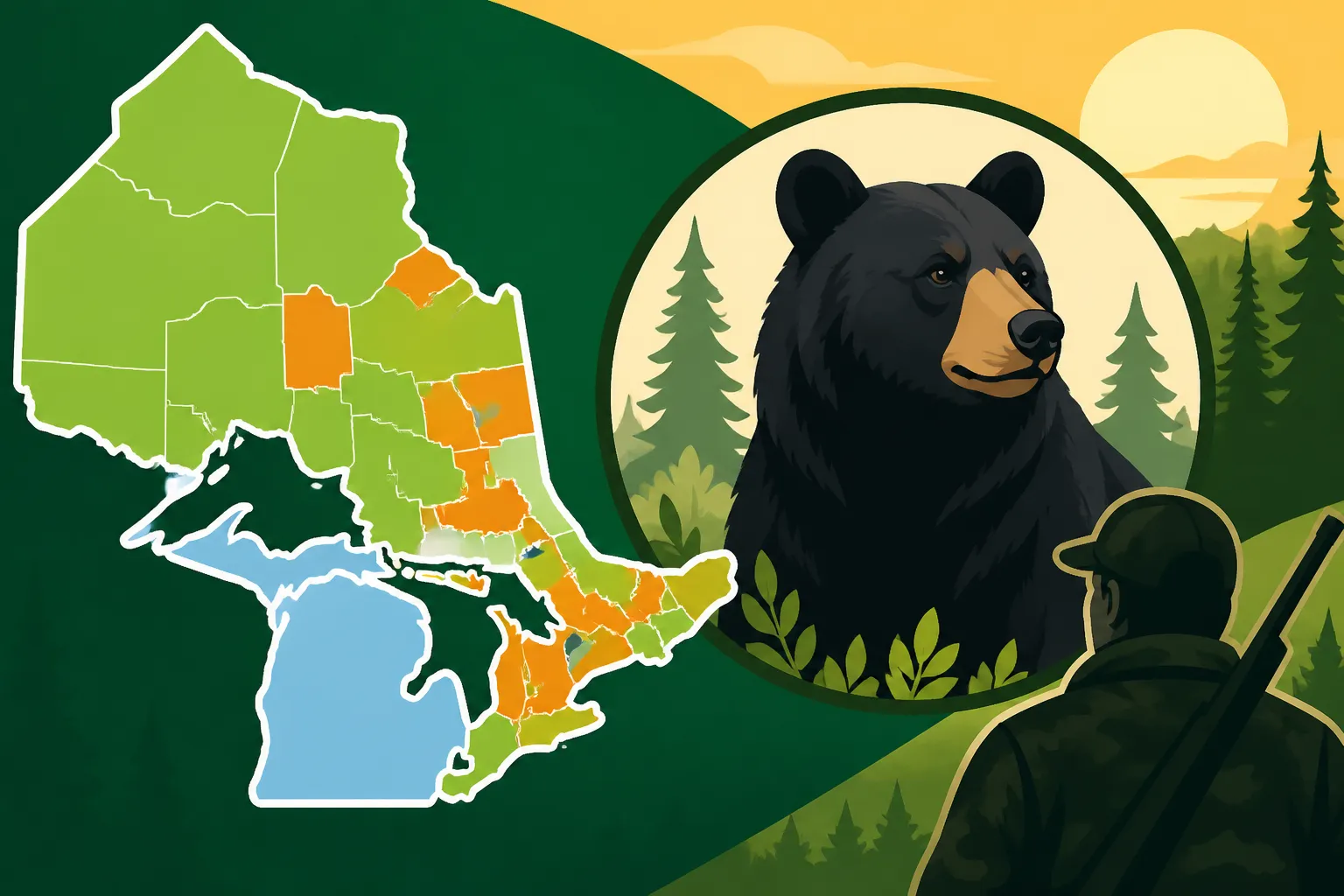
Now, let’s get down to the brass tacks: which specific WMUs have these shorter or non-existent spring bear seasons? When you're poring over a map, it's easy to assume consistency, but that's a mistake we don't want you to make. These exceptions are primarily found in the southern and eastern parts of the province, where human populations are denser and large tracts of remote wilderness are less common.
It’s not just about a few days shorter either; in some cases, the spring season for bears is completely closed. This distinction is vital for planning, as it impacts everything from booking an outfitter to scouting a potential hunting spot. You'll often find these WMUs located in areas that are otherwise quite popular for Whitetail Hunting in Ontario or Spring Turkey Hunting in Ontario, which can add to the confusion if you're not paying close attention to species-specific rules.
WMUs with No Spring Bear Season
This is perhaps the most critical category to understand. Several WMUs in southern and eastern Ontario have no open spring bear season at all. This means that if you're planning a spring bear hunt, these units are completely off-limits for that particular season. You won't find specific start and end dates because the season simply doesn't exist there in the spring.
These WMUs include, but are not limited to:
- WMU 68: This unit is located in the southeastern part of the province, encompassing areas like Prince Edward County. It's an agricultural hub with significant human population density.
- WMU 70: Found in the southwest, around the London and St. Thomas area. Again, high population density and primarily agricultural land.
- WMU 72: Another southwestern unit, typically encompassing parts of the Windsor-Chatham area, known for its productive farmland.
- WMU 73: This unit covers the Niagara Peninsula and surrounding areas, which are heavily populated and developed.
- WMU 74: Located in the Greater Toronto Area (GTA) and surrounding regions, including the headwaters of many rivers. This is a very high-density human population area.
- WMU 75: East of the GTA, extending towards Peterborough, another unit with substantial population and development.
- WMU 76: Further east, covering areas around Kingston and Brockville, with significant agricultural and residential presence.
- WMU 77: The Ottawa Valley, encompassing the nation's capital and surrounding communities.
- WMU 78: Deep in eastern Ontario, bordering Quebec and the St. Lawrence River.
- WMU 80: The Bruce Peninsula and surrounding areas, while wild in parts, also have specific management concerns.
- WMU 81, 82, 83, 84, 85, 86, 87, 88: These represent a block of WMUs in south-central Ontario, stretching from Georgian Bay down towards Lake Erie, including areas like Muskoka and Haliburton. While some of these units do have a fall bear season, their spring season is often absent or highly restricted. It's especially crucial to check the specific year's regulations for these areas as they can have nuances.
This list isn't exhaustive, and regulations can change, so always verify with the current Ontario Hunting Regulations Summary before making any plans. The critical takeaway here is that if you're targeting any of these regions, a spring bear hunt simply isn't an option. However, many of these WMUs do offer excellent Hunting Deer in Southern Ontario Farmland or Small Game Hunting in Ontario opportunities in other seasons.
WMUs with Shorter, Resident-Only, or Otherwise Restricted Spring Seasons
Beyond the complete closures, there are a few WMUs where the spring bear season might be shorter than the standard, or exclusively for Ontario residents, or have other unique conditions. These situations are less common but just as important to recognize.
For example, sometimes a WMU might have a spring bear season that is open only to residents of Ontario, or specific resident tag holders, for a particular duration. This is a crucial detail for non-residents planning a trip, as they would be ineligible to hunt bears in that unit during the spring. This often occurs in units where bear populations are healthy enough for limited harvest but management aims to prioritize local hunting opportunities or control overall harvest numbers more tightly.
It's really important to scrutinize the regulations for any WMU that lies within the southern or central parts of the province, especially those bordering the regions with outright closures. The "Notes" section for each WMU in the official regulations is your best friend here, as it will often highlight these special conditions.
Here's a simplified overview of how spring bear season lengths might vary by WMU, though remember this table is illustrative and you must consult the current regulations for precise, up-to-date details:
| WMU Group/Region | Typical Spring Bear Season | Notes/Restrictions |
|---|---|---|
| Northern/Central | May 1 – June 15 | Standard season, generally open to residents & non-residents |
| Southern/Eastern | No Season | Primarily high population density/agricultural WMUs (e.g., 68, 70, 72-78) |
| Select South/Central | Closed or Resident-Only | Specific WMUs may have no spring season or resident-only conditions (e.g., some within 80-88 block). |
It can be a puzzle, but knowing these general patterns can help you narrow down your search and focus your efforts on WMUs that actually offer what you're looking for. Using detailed maps, perhaps through a service like GoHunt, can help you visualize these WMU boundaries against population centers.
Understanding the "Why" Behind Shorter or Closed Seasons
When you see a WMU with a shortened or closed spring bear season, it’s not an arbitrary decision. There’s always a reason, rooted in wildlife management principles, public safety, and sometimes even social considerations. It helps to understand the rationale behind these regulations, as it provides context and can help you anticipate future changes or plan alternative hunting strategies. These decisions are often informed by data on Black Bear Numbers and Where They Peak as well as human-wildlife conflict reports.
Bear populations, like any wildlife species, are dynamic. They respond to habitat changes, food availability, and human activity. The Ministry of Natural Resources and Forestry (MNRF) monitors these populations closely, using aerial surveys, harvest data, and public reports to inform their management decisions.
Human Population Density and Conflict Management
One of the most significant factors influencing spring bear season length is human population density. In areas with a high concentration of people, towns, and development, the potential for human-bear conflict increases dramatically. Black bears are naturally wary of humans but are also opportunistic feeders. If attractants like garbage, bird feeders, or unsecured compost are readily available, bears can become habituated to human presence, leading to bolder behaviour.
When this happens, interactions can become dangerous, leading to public safety concerns. A spring bear hunt in a highly populated area could exacerbate these issues, potentially increasing negative encounters or creating unsafe hunting conditions near residential areas. Closing or shortening seasons in these WMUs is a proactive measure to minimize such conflicts and ensure public safety, while also allowing bears to exist in these landscapes without undue pressure during a vulnerable time (post-denning).
Habitat Considerations and Bear Densities
The type and quality of habitat available for bears also plays a crucial role. While black bears are highly adaptable, they thrive in large, contiguous tracts of forest with diverse food sources. Many of the WMUs with closed spring seasons are characterized by fragmented habitat, extensive agricultural lands, or a lack of the remote wilderness bears prefer for denning and foraging without human disturbance.
In these areas, bear densities may naturally be lower, or the available habitat may not be sufficient to support a robust hunting season, especially in the spring when bears are seeking fresh forage after hibernation. Limiting or closing the season allows these smaller populations to remain stable or grow without additional hunting pressure. It’s part of a broader strategy for Black Bears Across Ontario's Bush Country and their long-term health.
Historical Management Decisions and Local Context
Sometimes, current regulations are also influenced by historical management decisions and specific local contexts. For example, some areas might have had a history of overharvest or localized population declines that led to more restrictive measures being put in place, and those measures have been maintained to ensure sustained recovery.
Additionally, local municipalities, conservation authorities, and Indigenous communities might have input into wildlife management decisions, reflecting unique local values or traditional practices. These historical and local considerations contribute to the mosaic of regulations you find across the province. It's a complex system, but ultimately, it's designed to ensure sustainable wildlife populations and safe human-wildlife coexistence.
Strategies for Planning Your Spring Bear Hunt in Ontario
Navigating Ontario's spring bear regulations might seem daunting initially, especially with the variations in season lengths. But with a bit of research and a solid plan, you can still have an incredibly rewarding experience. The key is to be informed and flexible. If you're a non-resident, remember to always check Rules for Non-Residents Hunting Ontario as these can sometimes differ.
Whether you're looking to book a guided trip or plan a do-it-yourself adventure on Crown Land, knowing where and when you can legally hunt is your first and most important step. Don't fall into the trap of assuming all of Ontario is open for business during the same period; it simply isn't the case.
Step 1: Pinpoint Your Target WMUs and Verify Regulations
Your first action should be to identify the specific Wildlife Management Units you're interested in hunting. If you're looking for a spring bear, you'll want to focus on WMUs that are generally known for healthy bear populations and open spring seasons, typically in northern and central Ontario. Regions around Thunder Bay, Kenora, Sudbury, Timmins, or even parts of the Algonquin fringe often fit the bill.
Once you have a few WMUs in mind, immediately consult the current Ontario Hunting Regulations Summary. This document is published annually by the Ministry of Natural Resources and Forestry (MNRF) and is the definitive source for season dates, bag limits, and all other pertinent rules. Pay close attention to the specific dates listed for each WMU and any "Notes" or special conditions. Don't rely on outdated information or anecdotal advice; the rules can and do change. This is also where you'll find information on When Ontario's Spring Bear Season Runs.
Step 2: Utilize Mapping Tools for WMU Boundaries and Access
Once you've verified an open WMU, it's time to get a good handle on its geographical layout. Online mapping tools are indispensable for this. Services like GoHunt are excellent for overlaying WMU boundaries onto topographic maps or satellite imagery. This allows you to visualize the terrain, identify potential access points, locate Crown Land, and scout for good bear habitat before you even step foot in the bush.
Look for areas with a mix of forest types, water sources, and natural clearings. If you're considering Baiting Black Bear in Ontario, you'll want to identify secluded spots that offer good concealment and easy access for baiting trips. These maps can also help you identify remote areas that might receive less hunting pressure, increasing your chances of success. Understanding the lay of the land is critical for Scouting a Wildlife Management Unit.
Step 3: Consider Guided vs. DIY and Outfitter Options
With your WMU selected and regulations understood, you can then decide on the logistics of your hunt.
- Guided Hunt: If you’re targeting a specific WMU known for good bear hunting and an open season, booking with an experienced outfitter can greatly increase your chances of success, especially if you're new to the area or bear hunting. Outfitters often have established bait sites, local knowledge, and all the necessary permits. They'll also be intimately familiar with the specific regulations for their area. You can find more information on Booking an Ontario Black Bear Hunt through a reputable guide.
- Do-It-Yourself (DIY): For the more adventurous and experienced hunter, a DIY spring bear hunt is entirely possible, particularly on Ontario's extensive Crown Land. This requires more upfront work in terms of scouting, setting bait sites, and understanding access rules like Ontario's Crown Land Access Rules. You'll need to be self-reliant and well-equipped for wilderness travel. Make sure you have a solid understanding of Setting a Bear Bait Site in Ontario if this is your chosen method.
Regardless of your choice, ensure that your chosen outfitter or your personal plan aligns perfectly with the WMU's specific spring bear season dates. There’s nothing worse than arriving at camp only to discover you’ve misunderstood the season.
Step 4: Plan for the Specifics of a Shorter Season Hunt
If you do find a WMU with a slightly shorter season, or one that’s open but with unique conditions, your planning needs to be even more precise.
- Time Management: With fewer days, you'll need to be incredibly efficient with your time. Every moment in the bush counts. This might mean longer days of hunting or more dedicated scouting efforts.
- Focus on Peak Activity: Try to time your hunt for what you believe will be the most active periods within that shorter window. For instance, the first week of May is often excellent as bears are fresh out of dens, hungry, and actively seeking food.
- Flexibility: Be prepared to adapt. Weather conditions can change rapidly in the spring, and a shorter season gives you less buffer to wait out unfavorable conditions.
- Double-Check Everything: Because these WMUs have special conditions, it's paramount to double- and triple-check all regulations, including Ontario Black Bear Rules and specific tag requirements, to ensure full compliance.
By approaching your spring bear hunt with this detailed planning, you can avoid the frustration of encountering unexpected season closures or restrictions, and instead focus on enjoying the incredible hunting opportunities Ontario has to offer.
Important Disclaimer
The information provided in this guide is for general informational purposes only and is subject to change. Hunting regulations in Ontario are complex and can be updated annually by the Ministry of Natural Resources and Forestry (MNRF). It is the sole responsibility of the hunter to consult the most current official Ontario Hunting Regulations Summary and any relevant local bylaws before participating in any hunting activity. Failure to do so may result in legal penalties.