Minimum Age to Hunt in Ontario
Navigating the world of hunting regulations can feel like deciphering an ancient scroll, especially when you're trying to figure out if your eager young hunter, or even yourself as a new adult hunter, is old enough to legally participate in Ontario. It's not just about picking up a rifle or a bow; it's about understanding the foundational steps, age restrictions, and mentorship opportunities that guide responsible hunting in the province. This guide aims to cut through the confusion, clearly laying out the minimum age requirements and the pathways available for aspiring hunters of all ages in Ontario.
Understanding Ontario's Core Age Requirements for Hunting
Embarking on the hunting journey in Ontario starts with understanding the basic age requirements, which are designed to ensure safety and responsible participation. It's a step-by-step process, beginning with education and culminating in the ability to purchase your own licences.
The Basics: Hunter Education and the Outdoors Card
Before anyone, regardless of their age, can even consider carrying a firearm or bow in the field for hunting purposes in Ontario, they must complete the mandatory Ontario Hunter Education Program. This isn't just a formality; it's a comprehensive course that covers firearm safety, wildlife identification, hunting ethics, conservation principles, and regulations. It's a cornerstone for responsible hunting. Typically, while someone can attend the course at a younger age to learn, they must generally be 12 years of age or older to receive their Hunter Education exam report and apply for their Outdoors Card, which is your passport to hunting and fishing in Ontario.
Think of it like getting your learner's permit for driving – you need to pass a test to show you understand the rules of the road before you even sit behind the wheel with an instructor. The Hunter Education course is similar, instilling crucial knowledge and safety protocols. Once you've successfully completed the program and received your Hunter Education exam report, the next critical step is obtaining an Getting an Ontario Outdoors Card. This card is your primary identification for all hunting and fishing activities in Ontario and is generally valid for three calendar years. Without it, you cannot purchase hunting licences or tags, so it’s something every aspiring hunter, young or old, needs to put on their to-do list.
Minimum Age to Purchase a Hunting Licence
Here's where the age aspect becomes more concrete. While you can complete the Hunter Education course and obtain an Outdoors Card at 12, you generally need to be 16 years of age or older to actually purchase a resident hunting licence in Ontario. This applies to most hunting licences, whether you're after deer, moose, bear, or even small game. This age threshold is a significant milestone because it signifies that the individual is deemed mature enough to make independent decisions in the field, handle their own tags, and fully assume the responsibilities of a licensed hunter.
So, for example, if you have a keen 15-year-old who has already crushed their Hunter Education and has their Outdoors Card, they still can't walk into a licence issuer and buy their own deer tag. They'll have to wait until their 16th birthday. This distinction between being eligible to participate and being eligible to purchase is crucial and often a point of confusion for new families getting into the sport. It's not about prohibiting them from the experience, but rather about ensuring they gain foundational experience under direct supervision before taking on full responsibility. This is where the Apprentice Hunter program truly shines, offering a structured pathway for those not yet 16.
Exceptions for Youth and Apprentice Hunters
Ontario's regulations recognize the importance of introducing younger generations to hunting in a safe, controlled environment. This is precisely why the Apprentice Hunter program exists. This program allows individuals aged 12 and older (who possess a valid Outdoors Card and have completed their Hunter Education course) to hunt without holding a full hunting licence, provided they are under the direct and immediate supervision of a qualified mentor. This isn't just a casual "tag along"; it's a formal designation with specific rules.
The apprentice hunter program is a fantastic bridge for young people, or even new adult hunters, who are eager to get hands-on experience in the field but aren't yet 16 or haven't quite met all the full licence requirements. It allows them to learn by doing, experiencing the thrill of the hunt, tracking, and understanding animal behaviour, all while having the safety net and guidance of an experienced hunter right by their side. This structured mentorship is key to fostering ethical and knowledgeable hunters, ensuring that the traditions and skills are passed down responsibly. It's a privilege, not a right, and it comes with clear obligations for both the apprentice and their mentor.
The Apprentice Hunter Program: Paving the Way for Young Enthusiasts
The Apprentice Hunter program is a vital stepping stone for many, fostering a new generation of hunters by providing real-world experience under careful guidance. It’s designed to educate and instill good habits before a hunter takes on full responsibility.
Who Qualifies as an Apprentice Hunter?
Becoming an apprentice hunter in Ontario is a straightforward process, but it does come with specific requirements. First and foremost, the individual must be 12 years of age or older. They also need to possess a valid Ontario's Outdoors Card Explained and must have successfully completed the Ontario Hunter Education Program. A key part of the definition is that an apprentice hunter must not have previously held a hunting licence in Ontario or any other jurisdiction. This distinction is important; the program is for true novices.
For example, imagine a 14-year-old named Sam who's completed his Hunter Education and has his Outdoors Card. Sam has never bought a hunting licence before. He’s the perfect candidate for the apprentice program. This setup ensures that the apprentice is coming into the field with a foundational understanding of safety and regulations, but still benefits from the hands-on learning that only a mentor can provide. The system is designed to provide a safe, supervised entry into the hunting world, fostering confidence and competence before the apprentice transitions to hunting independently. It’s crucial to remember that while the apprentice might participate in the hunt, they aren't the primary licence holder.
The Role of the Mentor in Apprentice Hunting
The mentor is absolutely central to the success and safety of the Apprentice Hunter program. Their role is far more than just "showing the ropes"; it's about direct, immediate, and comprehensive supervision. A qualified mentor must be 18 years of age or older, hold a valid hunting licence for the game being hunted, and have held an Ontario hunting licence (or an equivalent from another jurisdiction) for at least three years. They must also be in compliance with all hunting regulations. Most importantly, when hunting with an apprentice, the mentor must maintain direct supervision. This means they must be close enough to the apprentice to take immediate control of the hunting device (firearm or bow) at any moment.
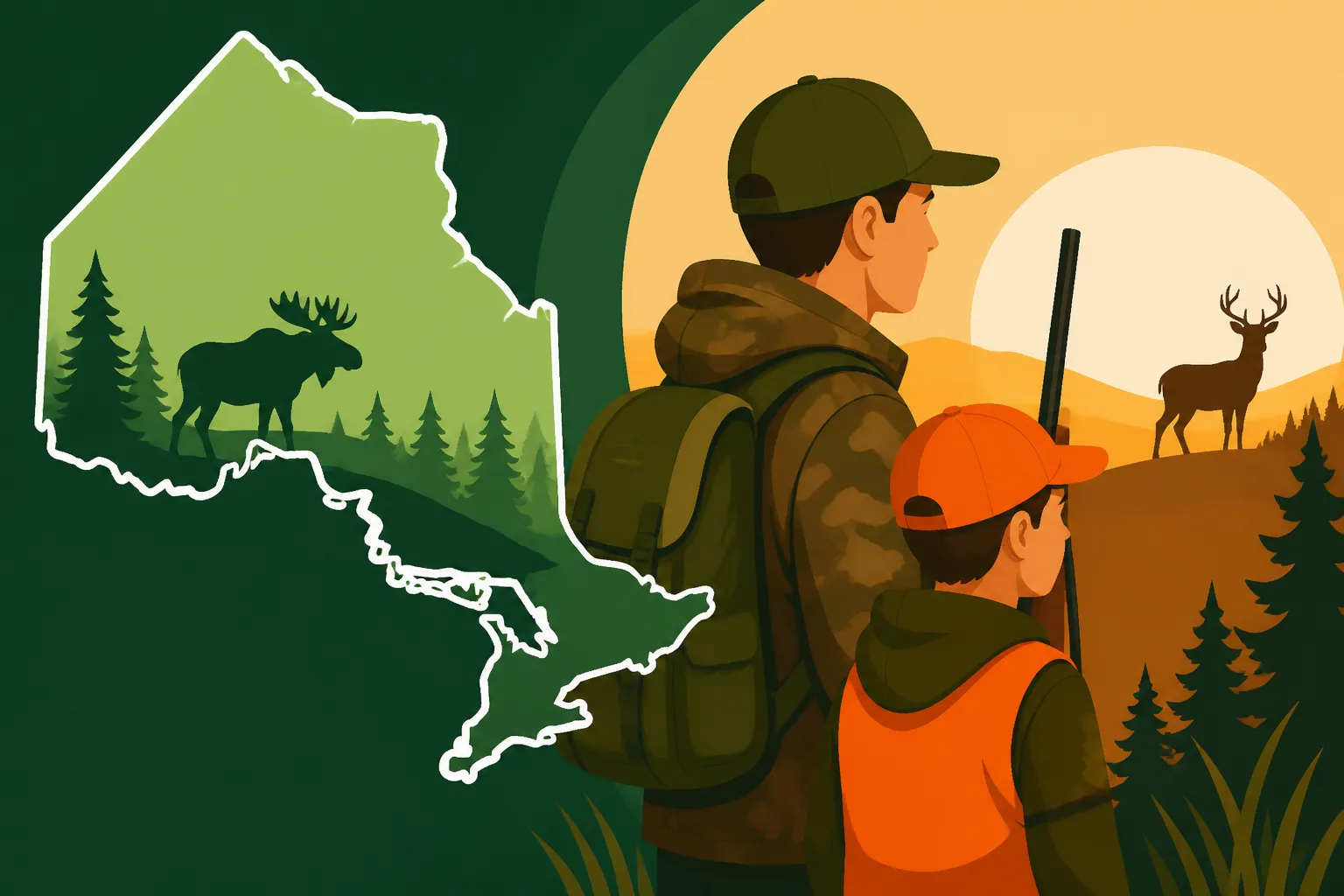
Consider Sarah, an experienced hunter with a valid deer licence, taking her 13-year-old nephew, Ben, on his first deer hunt under the apprentice program. Sarah isn't just walking somewhere in the same bush lot; she's right beside Ben, coaching him on identifying deer sign, helping him track, and ensuring his rifle handling is safe and proper at all times. If Ben were to spot a deer, Sarah would be there to guide his decision-making, ensure the shot is ethical and safe, and be ready to step in if necessary. This one-on-one, hands-on instruction is invaluable, teaching everything from proper firearm handling and shot placement to understanding animal behaviour and ethical harvest. It's a heavy responsibility, but incredibly rewarding for both mentor and apprentice. The goal is to provide a positive, educational, and safe introduction to hunting that prepares the apprentice for future independent hunts.
Licence and Tag Rules for Apprentices
This is another area where the apprentice program differs significantly from a regular hunt. An apprentice hunter does not purchase their own hunting licences or game tags. Instead, they hunt under the authority of their mentor's licence and tags. For big game like deer or moose, this usually means the apprentice may participate in the hunt, but if a big game animal is harvested, it must be tagged with the mentor's valid tag. This is often where a mentor might have a second deer tag, or if hunting as part of a group moose tag, the apprentice contributes to filling one of the party's tags.
For instance, if Sarah (the mentor) has a valid deer licence and a buck tag, Ben (the apprentice) can hunt alongside her. If Ben successfully harvests a buck under Sarah's direct supervision, that buck must be tagged with Sarah's tag. The apprentice himself doesn't possess a specific big game tag tied to their name. However, for small game or migratory birds, the rules can be a little different. An apprentice can hunt small game under the mentor's valid small game licence, and for migratory birds, a Canadian resident under 16 can hunt without their own federal migratory game bird hunting permit if they are accompanied by a permit holder (the mentor) who is 18 years of age or older. This means they are sharing the mentor's legal ability to hunt, rather than having their own. It’s imperative that both the apprentice and mentor clearly understand these rules to avoid any accidental violations, which you can easily double-check in the current Ontario Hunting Licences and What They Cost regulations.
Practical Considerations and Frequently Asked Questions
Understanding the letter of the law is one thing, but applying it in real-world scenarios, especially with younger hunters, requires thoughtful planning and attention to detail.
Age-Specific Rules for Different Game Species
While the general rule of 16 for a full hunting licence and 12 for the apprentice program applies broadly across big game and small game in Ontario, there can be subtle distinctions or overlapping federal rules for specific species. For instance, as mentioned, migratory game birds fall under federal regulations in Canada. A Canadian resident under the age of 16 can hunt migratory game birds without needing their own federal Migratory Game Bird Hunting Permit, provided they are accompanied by a permit holder who is 18 years of age or older. This slightly more lenient rule for youth encourages participation in waterfowl hunting from a younger age.
For other game, like Small Game Species in Ontario such as grouse, rabbits, or squirrels, the same provincial age rules apply. A 12-year-old apprentice could participate under a mentor's valid small game licence. However, they wouldn't purchase their own Small Game Licence. For big game like white-tailed deer, black bear, or moose, the apprentice rules are generally consistent across species, always requiring direct mentor supervision and the use of the mentor's valid tag. It's always a good idea to consult the annual Ontario Hunting Regulations Summary to confirm any species-specific nuances for Ontario Deer Season Dates and Tags or other animals, as rules can occasionally be updated.
Planning a Hunt with Younger Hunters
Planning a hunt with a younger apprentice hunter requires a different mindset than a solo adult hunt or a trip with seasoned veterans. The focus shifts from solely harvesting an animal to providing a safe, educational, and enjoyable experience. Patience is paramount. Shorter hunts are often more appropriate, especially for their first few outings. Choose locations with easier terrain and closer proximity to amenities, like a bush lot accessible by truck rather than a remote canoe-in trip. Instead of sitting in a blind all day, consider more active scouting, tracking, and exploring. Utilize tools like GoHunt to scout accessible areas within your Ontario's Wildlife Management Unit System, checking topography and potential entry points suitable for a younger person.
Safety briefings should be thorough and repeated often. Emphasize ethical considerations, conservation, and the importance of responsible firearm handling even when no game is in sight. It's about instilling the right values from the start. A hunt with a young apprentice might involve more sitting, observation, and conversation, rather than just the pursuit of game. Celebrate small victories, like identifying fresh deer tracks or successfully using binoculars to spot wildlife. Remember, you're not just hunting; you're cultivating a future conservationist and hunter, so make the experience positive and memorable.
Moving from Apprentice to Full-Fledged Hunter
The apprentice program isn't meant to be a permanent state; it's a valuable transition period. Once an apprentice turns 16 years of age, and assuming they have successfully completed their Hunter Education Program and hold a valid Outdoors Card, they are then eligible to purchase their own Ontario Resident Licence Options and tags. This is a significant step, granting them the independence and full responsibility of a licensed hunter.
The experience gained as an apprentice is invaluable during this transition. They've learned firearm safety, how to identify game, basic tracking, and the nuances of being in the bush, all under the watchful eye of an experienced mentor. This foundation helps them make sound, ethical decisions when hunting on their own. While the safety net of the mentor is gone, the lessons learned remain. It’s a moment of pride for both the young hunter and their mentor, marking the successful passage from learner to independent participant in Ontario’s rich hunting heritage. Continued learning, perhaps by joining a local hunt club or seeking advanced courses, further refines their skills and knowledge.
Tools and Resources for Young and New Hunters
Beyond the official regulations, a wealth of resources exists to support young and new hunters, helping them navigate the learning curve and foster a lifelong passion for ethical hunting.
Accessing Ontario's Hunting Regulations
The single most important resource for any hunter in Ontario, especially new ones, is the official Ontario Hunting Regulations Summary. This document, published annually by the Ministry of Natural Resources and Forestry (MNRF), is the definitive source for all hunting rules, season dates, bag limits, and specific regulations by Wildlife Management Unit (WMU). You can access it online through the Ontario government website or pick up a physical copy wherever hunting licences are sold. It's not light reading, but it's essential.
Treat this summary as your hunting bible. Before every season, and especially before taking a new hunter out, review the relevant sections. Rules around blaze orange requirements, legal firearms and bows for big game, and tag notching and attachment rules are all clearly laid out. It eliminates guesswork and ensures you and your apprentice are always in compliance. Ignorance of the law is not an excuse, so dedicating time to understanding these regulations is crucial for responsible hunting.
Using Online Platforms for Planning and Scouting
In today's digital age, online platforms have become indispensable tools for hunters, offering unparalleled capabilities for planning, scouting, and understanding hunting areas. Services like GoHunt are fantastic for new and young hunters. These platforms allow you to overlay crucial information like Finding Ontario Public Land Boundaries, WMU boundaries, and topography onto satellite imagery. This is incredibly helpful when you're just learning where to go and how to interpret the land.
For example, using GoHunt, a new hunter can visually understand the difference between Hunting Ontario's Crown Land versus private land, identify potential access points, or even scout for promising habitat features like a cedar swamp edge or a hardwood ridge without ever leaving the house. This virtual scouting helps build confidence and familiarity with an area before you ever step foot in it, making actual field visits more productive and less intimidating. It's a game-changer for folks who might not have experienced mentors or established hunting grounds, giving them the power to explore new possibilities within their chosen Reading an Ontario WMU Map Before You Go.
Community and Mentorship Opportunities
While the apprentice program provides formal mentorship, the broader hunting community offers informal mentorship and support that can be just as valuable. Joining local hunt clubs, conservation organizations like the Ontario Federation of Anglers and Hunters (OFAH), or even online forums dedicated to Ontario hunting can connect new hunters with experienced individuals eager to share their knowledge. These communities often host events, workshops, and even organized hunts that are perfect for younger or less experienced participants.
These opportunities provide a space to ask questions, learn new techniques, and understand the unwritten rules and ethics that define responsible hunting culture. An experienced hunter might teach you how to read whitetail sign in Ontario hardwoods, the best way for Dragging a Deer Out of a Swamp, or even how to properly field dress an animal. Building these connections enriches the hunting experience and provides a network of support that goes beyond the formal regulations. It's about becoming part of a tradition and ensuring that valuable knowledge and skills are passed down through generations.
| Hunter Category | Minimum Age | Hunter Education Required | Outdoors Card Required | Can Purchase Own Licence/Tags | Requires Mentor | Tagging Rules |
|---|---|---|---|---|---|---|
| Youth (Under 12) | N/A | No | No | No | Yes (Direct Supervision) | Cannot participate in hunting with a firearm/bow |
| Apprentice Hunter | 12+ | Yes | Yes | No | Yes (Direct Supervision) | Uses Mentor's valid tag(s) |
| Full Hunter | 16+ | Yes | Yes | Yes | No | Uses own valid tag(s) |
| Migratory Bird (Youth) | Under 16 | No (Permit for accompanying adult) | No (Permit for accompanying adult) | No | Yes (Accompanying permit holder 18+) | N/A (Hunts under adult's permit) |
Disclaimer
The information provided in this guide is intended for general informational purposes only and does not constitute legal advice. Hunting regulations in Ontario can be complex and are subject to change. Always consult the most current official Ontario Hunting Regulations Summary published by the Ministry of Natural Resources and Forestry (MNRF) or contact the MNRF directly for the most accurate and up-to-date information before engaging in any hunting activities.