Taking the Hunter Education Course Online
Trying to find the time to get your Hunter Education Course done can feel like a monumental task, especially when you're juggling work, family, and everything else life throws at you. For years, it meant dedicating precious weekends or evenings to a classroom, which just wasn't feasible for many aspiring hunters. This guide is here to break down how taking the Ontario Hunter Education Course online makes the process so much more accessible and manageable, opening the door to your hunting journey without completely derailing your schedule.
The Evolution of Hunter Education in Ontario
Hunting in Ontario isn't just about heading into the bush with a licence and a firearm; it's a deep-rooted tradition built on safety, ethics, and a profound respect for wildlife and the land. The path to becoming a responsible hunter has always started with education, but how that education is delivered has certainly changed with the times. For many, the traditional classroom setting was a hurdle, not because of a lack of interest, but simply due to the practicalities of modern life.
Why Hunter Education is Essential
Before you even think about applying for an Ontario Resident Licence Options or even your first Ontario Hunting Licences and What They Cost, you absolutely need to understand the fundamental principles of safe and ethical hunting. Hunter education isn't just a bureaucratic step; it’s the bedrock of responsible outdoor participation. It teaches you firearm safety, how to identify different game species, the ins and outs of Ontario's hunting regulations, and most importantly, the ethical considerations that guide every decision in the field.
The frustrations of those trying to fit these courses into their already packed schedules were real. Imagine working a demanding job, raising a family, and then trying to find a two or three-day block to sit in a classroom. It was a barrier for many who truly wanted to embrace hunting but just couldn't make the logistics work. This is why the move towards more flexible options became so important, ensuring that passion wasn't extinguished by practicality.
Beyond the technical skills, the course instills a critical appreciation for conservation. Hunters are often the first line of defence for wildlife, contributing significantly to habitat management and population control. Learning about these broader responsibilities, like Reporting Your Ontario Harvest, helps new hunters understand their role within the ecosystem and how their actions contribute to the health of Ontario's diverse wildlife populations for generations to come.
The Shift to Online Learning
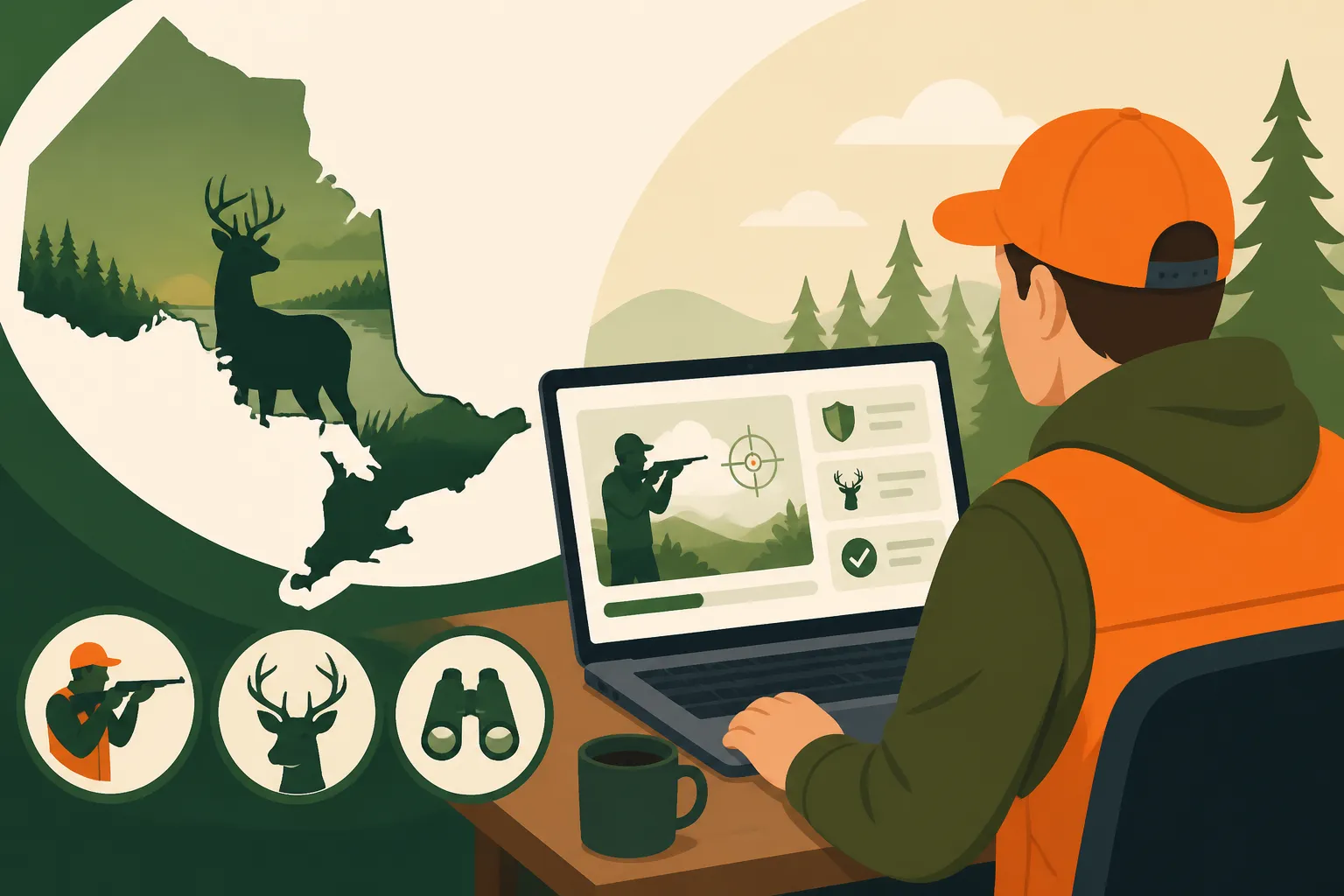
Recognizing the challenges of traditional, rigid scheduling, the Ontario Ministry of Natural Resources and Forestry (MNRF) approved online hunter education options. This was a game-changer for many aspiring hunters, myself included, who found it difficult to commit to fixed classroom times. The online format allows you to learn at your own pace, from the comfort of your home, fitting lessons into evenings, lunch breaks, or quiet weekends when it suits you best. It's about empowering individuals to get the essential knowledge they need without the added stress of rigid schedules.
This shift didn't diminish the quality of education; it simply made it more accessible. The content remains comprehensive, covering everything from firearm handling and storage to Ontario Trespass and Landowner Law and game identification. It's designed to ensure that even though you're learning digitally, you're still getting the robust foundation needed to be a safe and ethical hunter. It mirrors the course you'd take in person, just with the added flexibility that modern technology provides.
For instance, platforms like GoHunt offer detailed modules with interactive quizzes and engaging content that break down complex regulations into understandable segments. This flexibility is particularly beneficial for those in remote areas where in-person courses might be few and far between, or for shift workers whose schedules are constantly changing. The online option democratizes access to hunter education, ensuring that more people can embark on their hunting journey.
Navigating the Online Hunter Education Course
So, you've decided to go the online route – excellent choice! It truly makes things so much easier for most people. But with anything online, you need to make sure you're doing it right to ensure your efforts are recognized. There's a specific path you'll need to follow to get from clicking "enroll" to holding your certification.
Choosing an Approved Online Provider
This is perhaps the most critical first step: ensuring you pick an online course that is officially approved by the Ontario Ministry of Natural Resources and Forestry. You can't just take any random online hunting course; it must meet the province's specific standards. The last thing you want is to spend your time and money only to find out your certification isn't valid. Always double-check that the provider is listed on the MNRF's approved list or explicitly states their accreditation.
Several reputable organizations offer these approved online courses. For example, some hunters find platforms like GoHunt to be user-friendly and thorough, providing all the necessary information in an accessible format. These platforms are designed not just to tick boxes, but to genuinely educate you on all aspects of safe and responsible hunting practices, including the nuances of Ontario Hunter Education Requirements.
Before committing, take a moment to explore different approved providers. Look at their course structure, reviews from other students, and how they handle the transition to the required in-person practical test. A good provider will make this entire process as smooth as possible, giving you confidence that you're investing in a legitimate and high-quality educational experience.
What the Online Course Covers
The online hunter education course is incredibly comprehensive, touching on every facet of hunting you'll need to understand before heading afield. It’s not just about pointing a gun and pulling a trigger; it’s about understanding a complex system of rules, ethics, and natural history. You'll delve deep into subjects that ensure you're not only safe but also a knowledgeable and ethical participant in the hunting community.
Expect to learn extensively about firearm safety, including handling, storage, and transportation rules. You'll cover specific regulations for different game species, understanding season dates and bag limits, which are crucial for any hunt, whether it's for White-Tailed Deer Across Ontario or migratory birds. The course also details the legal firearms and bows for big game, ensuring you're compliant with all equipment requirements.
Beyond the technicalities, you'll gain an appreciation for wildlife identification, habitat, and the role of hunting in conservation. Ethical hunting practices are a huge component, teaching you about shot placement, tracking wounded game, and proper field dressing. You'll also learn about important safety measures like Ontario Blaze Orange Requirements and how to avoid accidental discharge. It truly prepares you for the entire experience, from the moment you consider a hunt to the successful harvest and beyond.
The Process: From Registration to Certification
Once you've chosen your approved online provider, the journey to certification typically follows a clear, step-by-step path. First, you'll register and pay for the course, gaining access to the online learning modules. These modules are usually self-paced, allowing you to stop and start as needed, which is ideal for working around a busy schedule. You'll work through the material, taking quizzes or module exams along the way to test your understanding.
After completing all the online modules and passing any required online exams, you'll receive a completion certificate for the online portion. This certificate is crucial because it's your ticket to the next, equally important step: the in-person practical test. Without completing the online component, you won't be eligible to move forward, so make sure you save or print this document.
The final stage involves finding and booking an in-person practical test with an approved instructor. This is where the rubber meets the road, where your theoretical knowledge is assessed alongside your practical skills. Once you successfully pass both the online course and the practical test, you'll officially be certified, and ready to get your Getting an Ontario Outdoors Card and then your hunting licence.
The In-Person Practical Test Component
Now, here's where some people get a little tripped up, thinking the online course is the entire process. It's not! While the online modules give you all the foundational knowledge, Ontario wisely requires a hands-on, in-person component. This is critical because some things just can't be learned through a screen.
Why the Practical Test is Crucial
The practical test isn't just an arbitrary hurdle; it's a vital safety measure. You can read all the rules about firearm handling in a textbook or online, but demonstrating that you can safely carry, load, unload, and clear a firearm under the watchful eye of a certified instructor is a completely different ballgame. This hands-on experience is paramount for ensuring public safety and your own when you're out in the field. Imagine learning about how to properly secure a firearm on a quad, for example, without ever actually holding one. It just wouldn't be as effective.
Furthermore, the practical test evaluates your judgment and ethical decision-making in simulated scenarios. Instructors often present situations that require you to apply your knowledge of Rules on Hunting From a Vehicle or Rules on Shooting Across a Road, species identification, and safe shot angles. This isn't about rote memorization; it's about showing you can think critically and act responsibly under pressure, which is exactly what you'll need to do in the dynamic environment of a hunt.
This in-person component also allows for direct interaction and clarification. You might have questions that only an experienced instructor can truly answer, or you might benefit from their real-world anecdotes that bring the regulations to life. It's a chance to solidify your understanding and ensure that you're not just passing a test, but truly integrating the principles of responsible hunting into your mindset.
Preparing for and Booking Your Practical Test
Once you've completed the online course, the next step is finding and booking your practical test. This can sometimes be the trickiest part, as spots can fill up quickly, especially during peak seasons. Start by checking the MNRF website or your online course provider's resources for a list of certified instructors and upcoming test dates in your area. Don't wait until the last minute, or you might find yourself waiting months for an open slot.
When preparing, review your online course material, paying special attention to firearm safety protocols, game identification, and ethical scenarios. Many instructors will provide a summary of what to expect, or you might find practice quizzes and study guides online. Consider asking an experienced hunter friend to help you practice safe firearm handling with an unloaded firearm, or even just walk through common scenarios. The more comfortable and familiar you are with the procedures, the more confident you'll be on test day.
It's also a good idea to ensure you understand the requirements for Minimum Age to Hunt in Ontario or if you're exploring options like Ontario Apprentice Hunting Rules for youth. Knowing these details upfront will save you any surprises or delays down the line. Make sure you have all your documentation, like your online completion certificate and valid photo ID, ready well in advance of your practical test date.
What to Bring and Expect on Test Day
On the day of your practical test, you'll typically need to bring a few key items. First and foremost, have your online course completion certificate ready – this is your proof that you’ve done the theoretical groundwork. You’ll also need valid government-issued photo identification. Dress appropriately for potentially being outdoors or in a range-like setting, and be prepared to be attentive and engaged. Most importantly, bring a positive attitude and a willingness to learn.
Expect the practical test to cover several stations or scenarios. You'll likely demonstrate safe firearm handling, including loading, unloading, carrying, and storage techniques. You might be asked to identify various game species and demonstrate your understanding of shot placement. Instructors will assess your knowledge of ethical hunting practices, such as when not to take a shot, and your understanding of field situations. This might involve using dummy firearms or replicas to ensure safety.
The instructors are there to evaluate your competence, not to trick you. They want to ensure you are a safe and responsible hunter. Listen carefully to instructions, ask questions if you're unsure, and demonstrate the knowledge and skills you've acquired. Successful completion of this practical component, combined with your online learning, is the final step before you can proceed to get your Ontario's Outdoors Card Explained and finally a hunting licence.
Benefits and Considerations of Online Hunter Ed
The move to online learning has certainly brought a lot of positives to the table for aspiring hunters in Ontario, addressing many of the old pain points. But like anything, it's not without its unique set of challenges that are worth considering before you dive in.
The Flexibility of Online Learning
The biggest, most undeniable benefit of taking your hunter education course online is the sheer flexibility it offers. Gone are the days of having to clear your entire weekend or sacrifice precious vacation days to sit in a classroom. With an online course, you can study at your own pace, fitting modules into your lunch break, after the kids are in bed, or whenever you have a quiet moment. This is a game-changer for people with demanding jobs, irregular shifts, or significant family commitments. You get to control your learning schedule, making the process much less stressful and more enjoyable.
For those who are self-starters and prefer to absorb information independently, the online format is ideal. You can review challenging sections multiple times, take notes at your leisure, and really ensure the concepts sink in before moving on. This personalized pace caters to different learning styles and can often lead to a deeper understanding of the material than a rushed classroom setting might allow. Plus, it eliminates travel time and costs associated with getting to a physical location, which for some in Ontario's vast distances, can be substantial.
Many online platforms, including those like GoHunt, are designed with interactive elements and multimedia that can make learning engaging. Videos, animations, and practice quizzes help reinforce concepts, making the educational experience dynamic. This innovative approach helps keep you motivated and ensures that the vital information, from firearm safety to the importance of Scouting a Wildlife Management Unit, is effectively communicated.
Potential Challenges and How to Overcome Them
While online learning offers incredible flexibility, it also demands a certain level of self-discipline. There's no instructor physically present to keep you on track, so you need to be motivated to log in and complete the modules consistently. It's easy to procrastinate when there isn't a fixed schedule, so setting personal deadlines and creating a study routine is crucial for success. Treat it like a scheduled appointment you can't miss.
Another consideration is technical requirements. You'll need a reliable internet connection and a device (computer, tablet) capable of running the course software without issues. Technical glitches can be frustrating and disrupt your learning flow. If you're not particularly tech-savvy, this might present a minor hurdle, but most platforms offer support services to help you navigate any issues. Ensuring your system is up-to-date and compatible before you start can prevent many headaches down the road.
Finally, while the online portion is convenient, remember the mandatory in-person practical test. Finding a suitable date and location for this component can sometimes be challenging, especially in less populated areas or during busy times of the year. It's wise to plan ahead, research available test dates, and book your spot well in advance. This ensures a seamless transition from your online studies to your practical assessment, getting you one step closer to your hunting licence.
Online vs. Traditional Hunter Education Course Comparison
Here's a quick look at the differences you might encounter between taking your hunter education course online versus the traditional classroom setting in Ontario.
| Feature | Online Course | Traditional Classroom Course |
|---|---|---|
| Flexibility | High – Self-paced, study anytime, anywhere. | Low – Fixed schedule, specific dates/times. |
| Pace | You control the speed of learning. | Instructor-led, pace set by the group. |
| Cost | Generally similar, covers materials and access. | Generally similar, covers instructor and facility. |
| Interaction | Primarily self-directed, limited direct Q&A. | Direct interaction with instructor and peers. |
| Access | Requires internet and computer/tablet. | Requires physical presence at a venue. |
| Content Delivery | Multimedia, interactive quizzes, digital text. | Lectures, discussions, physical materials. |
| Discipline | Requires strong self-motivation. | External schedule provides structure. |
| Practical Test | Still required in-person after online completion. | Integrated into the course or scheduled separately. |
Disclaimer
The information provided in this guide is for general informational purposes only and does not constitute legal advice. Hunting regulations in Ontario can change, and it is the hunter's responsibility to consult the most current official regulations and summaries published by the Ontario Ministry of Natural Resources and Forestry (MNRF) or other relevant authorities before engaging in any hunting activities. Always prioritize safety and ethical practices.