Hunting Ontario’s Eastern Farm Belt
Hunting in Ontario's Eastern Farm Belt presents a unique set of challenges and immense rewards for those willing to put in the effort. Unlike the vast Crown Land expanses of the North, this region is a patchwork of agriculture, woodlots, small towns, and private property, making access and understanding local game movements absolutely crucial. This guide is designed to help you navigate these intricacies, offering deep insights and practical strategies for a successful hunt in this diverse and productive part of the province.
Understanding the Eastern Farm Belt's Unique Landscape
The Eastern Farm Belt of Ontario is a truly distinct hunting environment, often overlooked by those who envision Canadian hunting as solely vast wilderness. However, this area, stretching across regions like the Ottawa Valley, Prince Edward County, and parts of the Frontenac Arch, offers incredible opportunities, especially for species thriving in human-modified landscapes. The key to unlocking its potential lies in understanding its specific geography and how that shapes wildlife behaviour.
Geography and Habitat Diversity
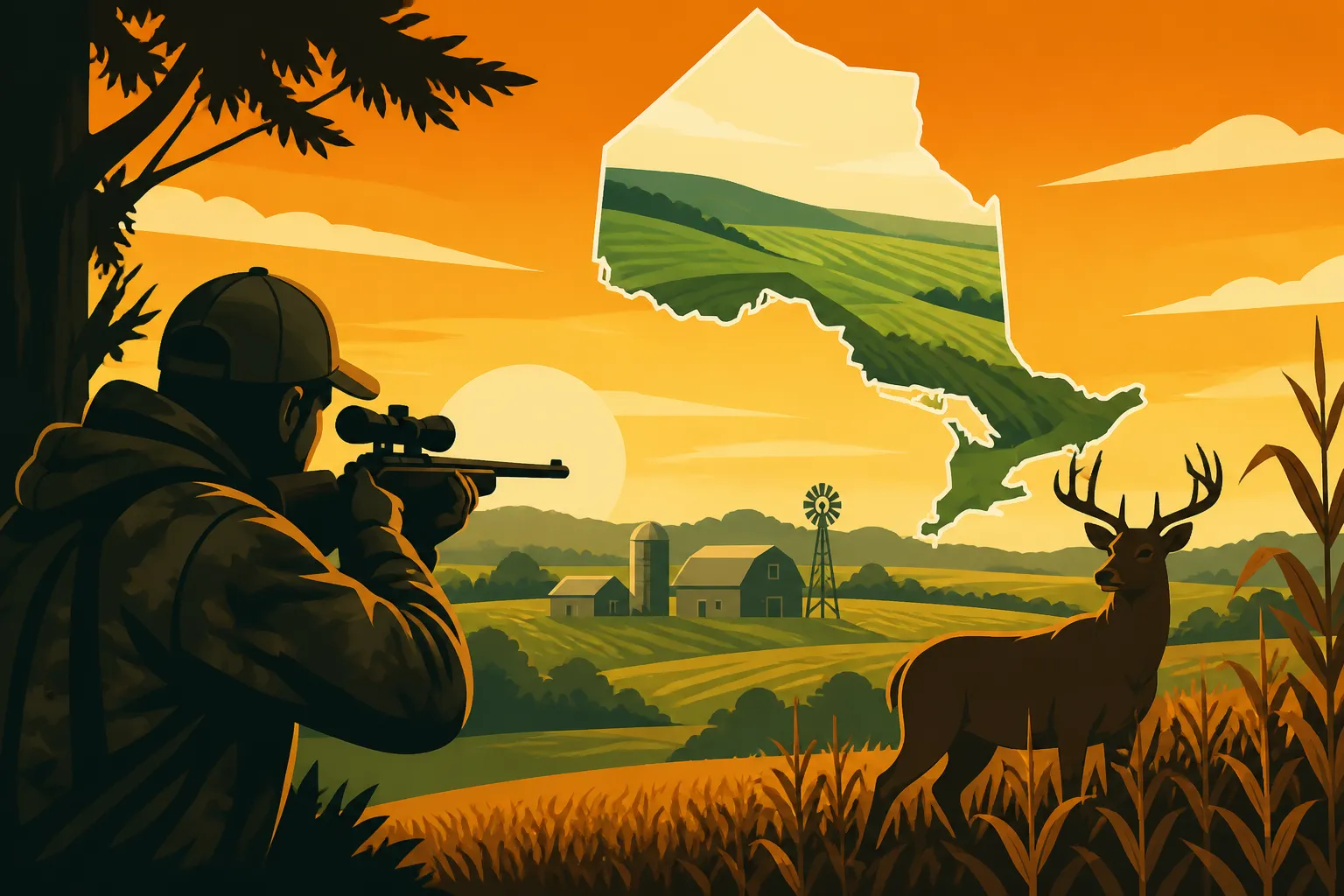
Imagine a mosaic where fertile fields of corn, soybeans, and winter wheat meet dense hardwood forests, winding river valleys, and pockets of cedar swamp. That's the Eastern Farm Belt. The topography here is generally gentler than the Canadian Shield to the north, but it still features rolling hills, ancient rock outcrops, and numerous small water bodies. You'll find everything from open agricultural plains where Canada geese feed, to thick bush that whitetail deer call home, to quiet alder bottoms perfect for woodcock. This diversity means that game species are often concentrated in specific habitat types, making scouting and understanding these patterns paramount. The edges where these different habitats meet – a woodlot bordering a cornfield, a river running alongside a pasture – are often highways for wildlife, especially during prime hunting hours. These "edges" are goldmines for tracking movement.
The smaller, fragmented nature of the woodlots means that wildlife often moves between them, crossing open fields under the cover of darkness or during low-pressure periods. It's a game of connecting the dots, observing how deer, turkeys, and other animals use these limited cover areas and travel corridors. Hunters often find themselves focusing on smaller bush lots, creek bottoms, and fencerows that might be overlooked in larger wilderness settings. This micro-habitat management means paying attention to details like a single oak tree dropping acorns in a field corner or a small, overgrown thicket providing bedding cover.
Key Game Species in the Region
While the vastness of Northern Ontario might boast moose and bear in larger numbers, the Eastern Farm Belt excels in other departments, particularly with healthy populations of white-tailed deer and wild turkeys.
- White-tailed Deer: These are undoubtedly the flagship species of the Eastern Farm Belt. The rich agricultural land provides abundant food, leading to good body weights and impressive antler growth in many areas. Deer here are often patterned around crop fields, woodlot edges, and river systems. They're smart, accustomed to human activity, and will often use dense cover during the day, emerging into fields to feed at dawn and dusk. Hunting Deer in Southern Ontario Farmland is a great resource for understanding these patterns, as many principles apply directly to the eastern region. The fragmented habitat can mean deer travel less distance, often sticking to a few key properties, which, if you gain access, can be a real boon.
- Wild Turkeys: The success story of wild turkeys in Ontario is particularly evident in the Eastern Farm Belt. Healthy flocks roam the mixed forests and farm edges. Both spring and fall seasons offer excellent opportunities. In spring, gobblers will strut and call from woodlots adjacent to open fields, while in the fall, family groups forage through forests and along agricultural margins. You'll find them roosting in mature hardwoods and feeding in cut fields.
- Small Game: For those who enjoy a more active hunt, rabbits, hare, and various upland birds like ruffed grouse can be found, particularly in larger bush parcels, regenerating clearcuts, and dense fencerows. Hunting Cottontails Along a Fencerow can be a productive method in this region. The dense thickets and brushy areas that line old fields are classic spots to jump rabbits or grouse.
- Waterfowl: Given the numerous rivers, small lakes, and agricultural fields, waterfowl hunting can be exceptional. Canada geese, in particular, will stage and feed in the corn and stubble fields, while various duck species utilize the smaller wetlands and river systems. Scouting fields and gaining permission for access is key for geese. Hunting Canada Geese on Ontario Farmland provides valuable strategies for this pursuit.
- Coyotes: These opportunistic predators thrive in the mixed farm and bush landscape. They provide a challenging and year-round hunting opportunity, often responding well to calling sequences, especially during the colder months when food sources are scarcer. Calling Coyotes in Ontario Farm Country is a popular tactic here.
Accessing Hunting Opportunities in the Eastern Farm Belt
Finding places to hunt in the Eastern Farm Belt is often the biggest hurdle. Unlike the vast tracts of Crown Land further north, this region is predominantly privately owned. This reality means that your success often hinges on your ability to build relationships and respect property rights. It's not impossible, but it requires a different approach.
Navigating Private Land Permission
The vast majority of huntable land in the Eastern Farm Belt is privately owned, primarily by farmers and rural landowners. This means that securing permission to hunt is not just good etiquette; it's a legal necessity. Approaching landowners respectfully and at the right time is paramount. Don't show up with your rifle on opening morning; instead, try to make contact weeks or months in advance, well before hunting season. Farmers are busy people, especially during planting and harvest, so pick your timing wisely. A mid-week afternoon in late summer or early fall can be ideal.
When you do approach a landowner, be prepared and present yourself well. Have a clear idea of what you want to hunt and when. Offer to help with chores, even something as simple as mending a fence or helping with firewood. Many landowners are wary of hunters due to past negative experiences, so building trust is crucial. Emphasize that you are a safe, ethical hunter who respects their property and their wishes. Ask about specific areas where they'd prefer you not to hunt, such as near their home, livestock, or sensitive areas. Offer to share some of your harvest, which can go a long way in fostering goodwill. Always get clear permission, and it's always a good idea to confirm boundaries and any specific rules they might have. Remember, a "no" today doesn't mean a "no" forever. Be polite, thank them for their time, and you might have better luck another year. Understanding Ontario Trespass and Landowner Law is also critical to ensure you're always on the right side of the rules.
Identifying Limited Public Hunting Areas
While private land dominates, there are still some public hunting opportunities in the Eastern Farm Belt, though they are often smaller, more pressured, and require diligent research. These include pockets of Crown Land, specific Conservation Authority (CA) properties, and some municipal forest tracts.
- Crown Land: Small, often isolated parcels of Crown Land exist, sometimes tucked away between private farms or along river systems. These aren't the large, easily identifiable blocks you find up north. Finding them requires meticulous map work. Tools like onX Hunt or GoHunt (which we'll discuss more later) are invaluable here, as they overlay property boundaries and ownership information directly onto a map. You might find small, overlooked patches that offer excellent opportunities, especially if they provide a corridor between larger private woodlots. These areas often receive more pressure, so getting there early or being willing to walk further off the beaten path can pay dividends.
- Conservation Authority Lands: Many Conservation Authorities own and manage significant tracts of land throughout the Eastern Farm Belt. While some are designated for recreation with no hunting allowed, others explicitly permit it, often under specific conditions or for certain species. Each CA has its own rules and regulations, so it's vital to check their individual websites or contact them directly. You might need to obtain a special permit or register your hunt. These areas can be excellent for turkeys, small game, and even deer, but they require homework.
- Municipal Forests and Other Public Lands: Some townships and municipalities manage their own forest tracts, and a few of these permit hunting. Again, this requires local research and contacting the municipal office or parks department. These are often smaller parcels, but they can be close to urban centres, providing accessible opportunities.
Always remember that public land in this region often sees more hunter traffic. Being respectful of other users, understanding your backstop, and practicing safe firearm handling are paramount. Reading an Ontario WMU Map Before You Go will help you identify the general areas, but for specifics on property lines, digital mapping tools are your best friend.
Strategies for Eastern Farm Belt Whitetail Deer
Hunting white-tailed deer in Ontario's Eastern Farm Belt is a thrilling pursuit, as the region consistently produces quality animals due to abundant food sources and good cover. However, it requires a nuanced approach that blends traditional woodsmanship with an understanding of deer behaviour in a semi-agricultural setting.
Hunting Woodlots and Bush Edges
The woodlots, whether large or small, are the backbone of deer habitat in the Eastern Farm Belt. These are where deer find cover, bed down, and often travel between feeding areas. Your strategy here should revolve around understanding how deer use these blocks of timber.
- Locating Bedding Areas: Deer will typically bed in the thickest, most secluded parts of a woodlot, often on south-facing slopes to catch the sun in cooler weather, or in dense cedar swamps for thermal cover. Look for dense conifer stands, thick regenerating clearings, or blowdowns. Approaching these areas quietly and carefully is key.
- Identifying Travel Corridors: Deer need to move between bedding areas, feeding areas (often crop fields), and water. Look for well-worn trails, especially along natural funnels like narrow strips of bush, fencerows, or creek bottoms. Hunting a Fencerow Between Two Fields can be incredibly effective, as deer use these subtle pathways as much as obvious trails. The edges of woodlots are essentially superhighways, so setting up stands or blinds to overlook these transition zones is a classic and effective tactic.
- Stand Placement: When hunting woodlots, consider prevailing winds, sun direction, and the likely approach routes of deer. Hang stands in a spot that offers good visibility into travel corridors and potential feeding areas within the bush, but always prioritize concealment. Accessing your stand undetected is just as important as the stand's location itself. Consider a stand on the edge of the woodlot overlooking a field at dawn or dusk, or deeper within the timber to catch deer moving during midday.
Targeting Agriculture Fields
Crop fields are magnets for deer, especially during the fall. Corn, soybeans, winter wheat, and even hayfields provide crucial calories and attract deer like almost nothing else. However, hunting them effectively requires precision and stealth.
- Understanding Crop Cycles: Deer use fields differently depending on the crop and its stage of growth. Standing corn provides excellent cover and food; deer will often bed right in it. Hunting the edges of these fields, or understanding where deer enter and exit, is vital. Once the corn is cut, deer will still scavenge for dropped kernels, but their cover is gone, making them more skittish. Hunting a Field of Standing Corn requires specific tactics, often involving elevated stands or ground blinds set up along the periphery.
- Scouting for Sign: Look for tracks, scat, and browse lines along the edges of fields. Pay attention to distinct trails leading from woodlots into fields. A spotting scope or good binoculars can be invaluable for observing deer patterns from a distance without disturbing them. Identify where deer are consistently entering and exiting a field.
- Wind and Time of Day: When hunting fields, the wind is your absolute master. Deer will almost always approach a field with the wind in their favour, scent-checking the open ground before entering. Set up on the downwind side of their expected travel route. Early mornings and late evenings are prime times, as deer feel most secure moving into open areas under the cover of low light.
Understanding Deer Movement in Farm Country
Deer in the Eastern Farm Belt are often more accustomed to human presence, but this also makes them incredibly wary. Their movement patterns are highly influenced by farming activities, property lines, and available cover.
- Nocturnal Habits: Many mature bucks in farm country become largely nocturnal, especially during periods of high hunting pressure. They'll spend daylight hours bedded in thick cover and only emerge into open fields after dark. To combat this, focus on catching them moving to or from their bedding areas at legal shooting light. This means identifying those narrow travel corridors and setting up just inside the timber.
- The Rut: The rut is a game-changer. Deer movement increases significantly as bucks actively seek does. This is often the best time to catch a mature buck moving during daylight hours, as their focus shifts from survival to breeding. In Ontario, the rut typically peaks in early to mid-November, making Hunting the Rut in Early to Mid November a high-priority period. During this time, rattling and grunt calls can be highly effective, especially in a region where deer densities are healthy.
- Pressure Points: Because huntable land can be fragmented and private, deer learn where they are safe. They will often cross property lines into unhunted sanctuaries when pressured. Understanding these safe zones and how deer use them can give you an edge. Sometimes, the best strategy is to hunt the fringe of these sanctuaries, catching deer as they leave or enter.
Beyond Deer: Other Hunting Pursuits
While whitetails may be the main draw, the Eastern Farm Belt offers fantastic opportunities for a variety of other game species, providing diverse hunting experiences throughout the year. Don't limit your horizons; these other hunts can be just as rewarding.
Spring and Fall Turkey Hunting
Ontario's Eastern Farm Belt boasts some of the province's best wild turkey hunting. The combination of mature hardwood forests for roosting and agricultural fields for feeding provides ideal habitat for these wary birds.
- Spring Season: The spring turkey season is a thrilling hunt, focused on calling in a strutting gobbler. Early mornings are crucial, as turkeys often sound off from the roost just before fly-down. Locate their roost trees the evening before, then set up quietly in the dark before dawn. Place decoys strategically in an open field or woodlot edge where the gobbler will see them as he flies down. Calling sequences, from soft tree yelps to excited hen calls, are essential. Remember that turkeys have excellent eyesight, so Setting Up Against a Big Maple or another large tree for concealment is non-negotiable. Patience is key; a gobbler might hang up just out of range, requiring persistence or a slight adjustment to your setup.
- Fall Season: The fall season offers a different, but equally engaging, challenge. Hunters can pursue either sex, and the tactics often involve breaking up a flock and calling individual birds back. This is where scouting for flocks becomes critical. Once you locate a flock, try to scatter them and then set up quickly, waiting for them to start yelping and trying to regroup. A Hunting the Fall Turkey Season With a Bow can be especially challenging and rewarding during this time, often requiring close-range shots. Fall turkeys are typically less vocal than in spring, so careful observation and stealth are paramount.
Waterfowl and Small Game Opportunities
The Eastern Farm Belt, with its mix of water bodies and agricultural lands, provides excellent hunting for waterfowl and small game.
- Waterfowl: For goose hunters, the post-harvest corn and stubble fields are prime locations. Canada geese will congregate in large numbers to feed. Securing permission from landowners for field hunting is essential. This typically involves setting up large decoy spreads and using layout blinds to hide. Early mornings, especially after a clear, cold night, can see large flights moving from roosting areas to feed. For ducks, focus on smaller ponds, marshy areas, and river systems. Jump-shooting smaller ponds or setting up small decoy spreads in cattail marshes can be productive. Remember that non-toxic shot is mandatory for all waterfowl hunting in Ontario. Hunting Canada Geese on Ontario Farmland is a skill worth developing in this area.
- Small Game: The numerous fencerows, thickets, and regenerating bush lots provide excellent habitat for rabbits and hare. Running beagles is a traditional and highly effective method for snowshoe hare in suitable cover, or simply still-hunting through dense cover can jump cottontails. Squirrels are abundant in the hardwood forests, offering another fun small game pursuit. Ruffed grouse can also be found in mixed woodlots, especially along old logging roads and ATV trails. Hunting Ruffed Grouse on an Ontario Bush Road can be a great way to explore new territory and bag some birds. These hunts are often less pressured and can be fantastic ways to introduce new hunters to the field.
Predator Calling for Coyotes
Coyotes are prolific throughout the Eastern Farm Belt and offer a challenging hunting opportunity, often extending beyond the traditional big game seasons. They thrive in the fragmented habitat, preying on small game and deer fawns.
- Calling Tactics: Predator calling is the most common and effective method for coyotes. This involves using electronic callers or mouth calls to mimic distress sounds (rabbit, fawn, bird) or coyote vocalizations (howls, barks). Set up in a location that offers good visibility, ideally with the wind in your face to prevent coyotes from circling downwind and catching your scent. Pay attention to terrain that funnels their approach. Coyotes are incredibly intelligent and wary, so concealment and minimal movement are crucial.
- Timing: Early mornings and late evenings are generally best, but coyotes can be called at any time of day. During the colder months, when natural food sources are scarcer, they often respond more aggressively to calls. Winter hunting over snow can also make tracking and spotting them easier. Calling Coyotes in Ontario Farm Country is a popular year-round activity for many local hunters. Always check local regulations for specific hunting hours and rules.
Essential Gear and Tactics for the Eastern Farm Belt
Hunting in Ontario's Eastern Farm Belt, while different from a remote wilderness trip, still demands careful preparation and the right tools. Your gear and tactics need to be adapted to the region's characteristics: smaller properties, wary game, and a blend of agricultural and forested environments.
Scout Smarter with Modern Tools
In a region where private land is prevalent and public parcels are fragmented, digital mapping and scouting tools are not just a luxury; they are a necessity. They can save you countless hours of knocking on doors and walking blind.
- onX Hunt: This app, and similar ones like GoHunt, is a game-changer for Eastern Farm Belt hunters. It overlays property boundaries, landowner names (where available), and land classifications (Crown Land, Conservation Authority, etc.) onto detailed satellite imagery and topographic maps. This allows you to identify huntable public land you might never find otherwise, scout access points, and, crucially, know exactly whose door to knock on for private land permission. You can mark potential stand locations, game trails, food sources, and bedding areas. Knowing precisely where property lines are is vital to avoid accidental trespass.
- Satellite Imagery: Before you even set foot in the field, use satellite imagery to identify key features. Look for narrow strips of bush connecting larger woodlots, fencerows, creek bottoms, distinct travel corridors, and potential bedding thickets within larger parcels. Identify different crop types and their proximity to cover. This "e-scouting" allows you to develop a solid plan, understand the lay of the land, and pinpoint areas of interest before you ever drive there. Scouting With Satellite Imagery in Ontario can be incredibly effective when combined with ground visits.
- Topographic Maps: While the Eastern Farm Belt generally has less dramatic elevation changes than the Shield, topo maps still reveal subtle ridges, drainage features, and depressions that can funnel deer movement. These small terrain features are often overlooked but can be critical travel routes for wary game.
Adapting Your Setup for Smaller Properties
Many of the woodlots and huntable parcels in the Eastern Farm Belt are smaller than what you might find in larger wilderness areas. This necessitates a more adaptable and discreet hunting setup.
- Low-Impact Access: With smaller properties, your entrance and exit routes become even more critical. Deer are highly attuned to changes in their environment. Plan your approach to minimize scent, noise, and visual disturbance. Often, this means using existing farm lanes or field edges, or even accessing from a road if permissible, keeping wind direction in mind.
- Portable Stands and Blinds: Instead of permanent stands, consider portable treestands or ground blinds that can be easily moved and set up in different locations based on recent scouting and wind conditions. This allows you to adapt to deer movement patterns, which can shift rapidly with weather, crop harvest, or hunting pressure. A portable ground blind, especially in areas with good brush cover, can be a discreet and effective option. For turkeys, a lightweight pop-up blind can offer excellent concealment. Hanging a Stand on an Ontario Bush Edge requires careful thought about concealment and wind direction.
- Scent Control: Given the proximity to human activity and potentially wary deer, meticulous scent control is paramount. Use scent-eliminating sprays, wash hunting clothes in scent-free detergents, and store them in airtight containers. Play the wind religiously; it's your most important scent-control tool.
Ethical Considerations and Landowner Relations
Hunting in the Eastern Farm Belt places a strong emphasis on ethics and maintaining positive relationships with landowners. The future of hunting access in these privately-owned regions depends entirely on hunters acting responsibly.
- Respect Property: This cannot be stressed enough. Always know your boundaries, only hunt where you have explicit permission, and leave no trace. Pack out everything you pack in. Do not damage fences, gates, or crops. Treat the land as if it were your own, or better.
- Communication is Key: Keep landowners informed. Let them know when you'll be hunting and when you've finished. If you harvest an animal, offer to show it to them or share some of the meat. If you see anything amiss on their property (damaged fences, suspicious activity), report it to them. Building a relationship of trust will pay dividends for years to come and potentially open doors to new hunting opportunities.
- Safety First: Be acutely aware of houses, farm buildings, livestock, and other people in the area. In an agricultural landscape, clear sightlines and safe backstops are even more critical. Always know what is beyond your target. Blaze orange requirements are mandatory for big game seasons for a reason – visibility is key.
- Mandatory Harvest Reporting: Don't forget that in Ontario, reporting your harvest is mandatory for many species. This data is crucial for wildlife management, helping the province set future seasons and quotas. Reporting Your Ontario Harvest is a simple but vital responsibility for every hunter. By adhering to these principles, you not only increase your chances of a successful hunt but also ensure that future generations of hunters will continue to have access to these valuable lands.
Disclaimer
This article is for general informational purposes only and does not constitute professional advice. Laws, prices and regulations vary by location and change over time. Consult a qualified professional for guidance on your specific situation.