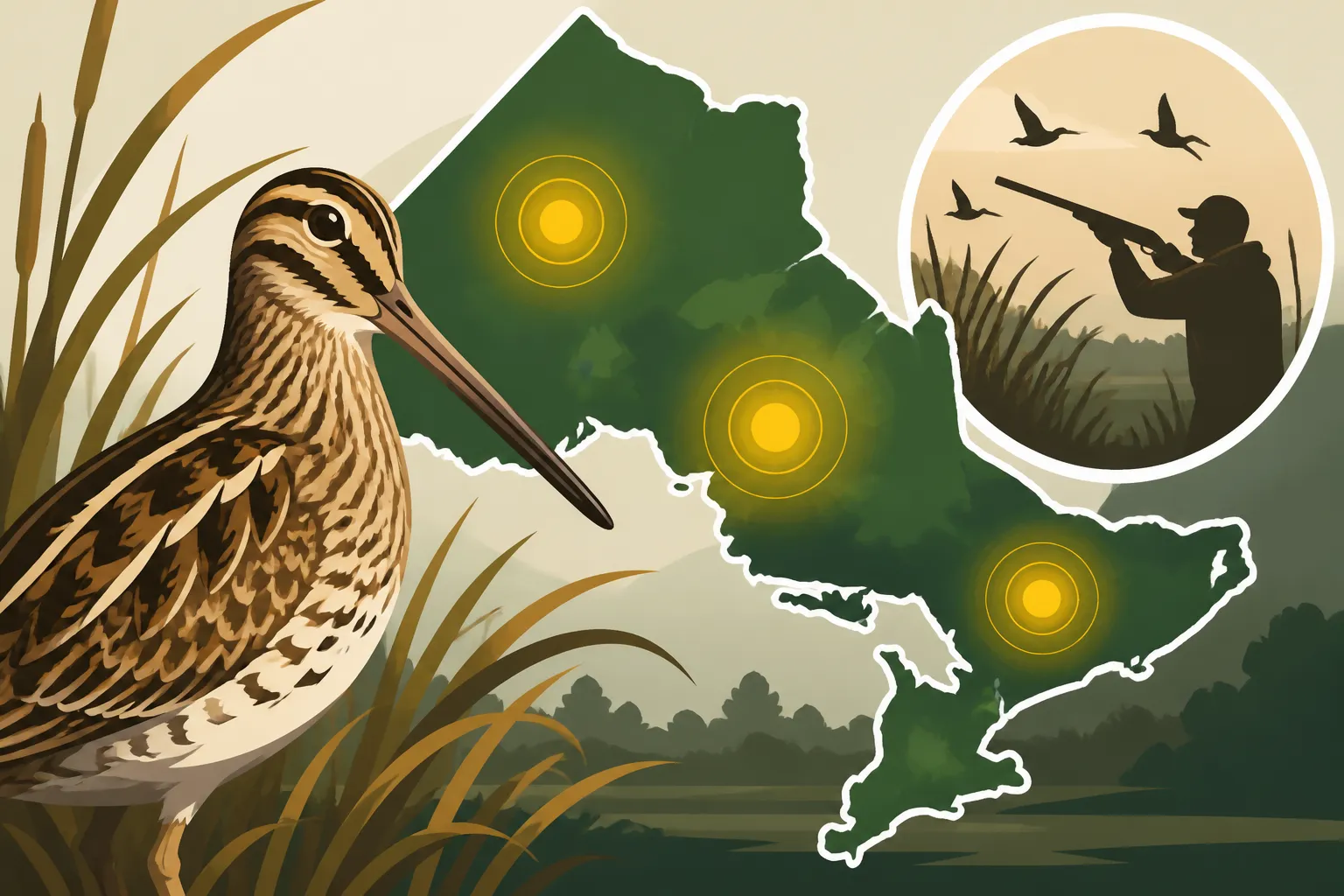
Where Ontario Snipe Concentrate
Ever spent a damp afternoon slogging through what looks like prime snipe cover, only to flush nothing but a grumpy red-winged blackbird? It's frustrating, isn't it? Finding those elusive, zig-zagging aerial acrobats in Ontario can feel like a guessing game, but it doesn't have to be. This guide will shine a light on where Ontario snipe truly concentrate, helping you maximize your efforts and put more of these challenging birds in the bag.
Understanding the Elusive World of Ontario Snipe Habitat
Snipe are unique, long-billed shorebirds that thrive in very specific environments. They aren't like ducks or geese, flocking to open water, nor are they typical upland birds, preferring dry fields or dense bush. Instead, snipe are creatures of the wet edges, the squishy, muddy places that most hunters tend to avoid. Understanding these preferences is the absolute first step to consistently finding them.
The Critical Role of Wet Meadows and Bogs
When you're thinking "snipe," you should be thinking "wet feet." These birds absolutely adore shallow, muddy areas where they can probe their long bills into the soft earth, searching for worms, insect larvae, and other invertebrates. Wet meadows, often found adjacent to larger marsh systems or nestled within mixed forest, are prime territory. We're talking about areas with standing water that's usually no more than a few inches deep, often with sparse, emergent vegetation like sedges, rushes, and short grasses. The ground beneath should be soft, almost like quicksand in places, which is why appropriate footwear is non-negotiable for a snipe hunt. If the ground is firm, the snipe likely aren't there.
Bogs, particularly those at the edges of larger bodies of water or where a stream meanders slowly, can also be incredible snipe magnets. These areas tend to have more acidic soils and specific vegetation like sphagnum moss and cranberries, but the common denominator is always that soft, moist substrate. It's often tough walking, characterized by spongy ground that bounces with your steps, but that's exactly what these birds are looking for. Don't overlook low-lying depressions in fields that hold water after heavy rains either; these can be temporary goldmines.
Transitory Habitats: Why Snipe Move Around
One of the challenges and excitements of snipe hunting is their tendency to be somewhat nomadic. They don't just pick a spot and stay there all season. Their presence is highly dependent on water levels and food availability, which can fluctuate with weather patterns. A fantastic wet meadow one week might be bone dry the next, sending the snipe packing in search of more hospitable digs. Conversely, a heavy rainfall can transform a previously dry area into a temporary snipe haven overnight.
This means that successful snipe hunting often requires scouting and adaptability. You can't always rely on the exact same spot year after year, or even week after week. If a beaver dam breaks and floods a new area, or if a field's drainage changes, you might suddenly have a new hotspot. This ever-changing landscape is what makes snipe hunting so engaging; you're constantly reading the land and adjusting your strategy. It’s also why many hunters find it helpful to focus on areas with consistent water sources, even if the immediate ground changes, like the edges of persistent marshes or slow-moving creeks.
Pinpointing Prime Snipe Concentration Zones in Ontario
Ontario is a vast province, and snipe can be found in suitable habitat almost anywhere, but there are definitely regions where their numbers tend to concentrate due to the prevalence of ideal wetlands.
Southwestern Ontario's Agricultural Fringe
Believe it or not, some of the best snipe hunting can be found right alongside the most intensely farmed land in Southern Ontario. Think about the extensive network of drainage ditches, particularly those bordering corn or soybean fields that have just been harvested. These ditches, often with muddy banks and a trickle of water, provide perfect probing grounds. Farmers often "tile" their fields, and the outflow points into these larger ditches can create excellent, nutrient-rich, soggy spots.
Small, neglected wetlands or low-lying depressions within or bordering agricultural properties, especially if they are seasonally flooded, are also prime. After heavy rains, parts of fields themselves can become saturated, creating temporary feeding areas. The key here is persistence and respectful scouting. Many of these spots are on private land, so Knocking on Doors in Southern Ontario for permission is crucial. Don't be surprised if the landowner has no idea there are "game birds" in their ditch; snipe are often overlooked.
Central and Eastern Ontario's Marshy Edges
As you move north and east into Central and Eastern Ontario, the landscape becomes more a mosaic of forest, rock, and water. Here, snipe concentrations shift to the natural wetlands and the edges of larger river systems and lakes. Beaver ponds are absolute snipe magnets. The constantly changing water levels from beaver activity create perfect muddy flats and emergent vegetation at the edges. A canoe or small boat can be incredibly effective for accessing these areas, allowing you to float silently along the shoreline and jump-shoot birds that flush from the muddy banks. Hunting a Beaver Meadow Crossing can be highly productive for these birds.
River floodplains, particularly during periods of low water when muddy banks and sandbars are exposed, are another excellent choice. Look for sections where the current slows, allowing sediment to settle and create that soft, mucky consistency snipe crave. Alder thickets, especially those growing in low, wet areas adjacent to streams or marshes, are also worth investigating. The dense cover provides protection, and the damp ground offers ample feeding opportunities. These areas are often found in Wildlife Management Units (WMUs) that have a mix of agricultural and forested land.
Northern Ontario's Vast Boreal Wetlands
If you're willing to go a bit further off the beaten path, Northern Ontario offers vast expanses of boreal wetlands that can hold incredible numbers of snipe. From the huge peat bogs of the far north to the myriad of smaller marshes and beaver flows found throughout the Canadian Shield country, the sheer amount of suitable habitat is staggering. Access can be the biggest challenge here, often requiring ATVs, boats, or even float planes to reach the most pristine spots.
However, for those willing to put in the effort, the rewards can be substantial. Look for areas along old logging roads where drainage has created shallow ponds and muddy depressions. The edges of large lakes, particularly where rivers or creeks flow in, can also concentrate birds. When you're Hunting Ontario's Northern Lake Country, pay close attention to the shallower bays and the mouths of feeder streams. These remote locations often see far less hunting pressure, and the snipe can be more forgiving, holding tighter before flushing. Just remember your bug spray!
Strategies for Locating Snipe Hotspots
Finding snipe isn't always about stumbling upon them. There are definite strategies that can dramatically increase your chances of success, turning a hopeful wander into a calculated hunt.
Scouting with Maps and Boots on the Ground
Modern mapping tools are a game-changer for snipe hunting. Services like GoHunt allow you to pore over aerial imagery, looking for those tell-tale signatures of snipe habitat: light green areas indicating rushes or sedges, darker, often mottled spots suggesting standing water or deep mud, and clear signs of drainage patterns. You can identify potential wet meadows, beaver flows, and agricultural ditches without even leaving your home. Use topographical maps to pinpoint low-lying areas or depressions that would naturally collect water. Mark these potential hotspots on your GoHunt app or GPS unit for further investigation.
Once you have a list of promising locations, the next step is boots on the ground. This often means driving to the nearest access point and walking in. Don't be afraid to get a little muddy! Sometimes, a seemingly dry area on a map might actually be perfectly soft and damp once you're walking it. Pay attention to the ground underfoot; if it's squishy and your boots sink a bit, you're in the right kind of place. Look for actual snipe droppings, which are often dark and liquidy, or probe marks from their bills in the mud. Even if you don't flush birds on your first scout, finding these signs confirms you're in good habitat.
The Importance of Water Levels and Recent Rainfall
As mentioned earlier, snipe are incredibly sensitive to water levels. A prime snipe bog can become completely barren if it dries out, and a previously unproductive ditch can suddenly teem with birds after a heavy rain. This means you need to pay close attention to recent weather patterns. A good strategy is to time your hunts a day or two after a significant rainfall, especially if there has been a dry spell. The fresh moisture will draw snipe into newly softened ground.
Conversely, during periods of prolonged drought, focus on areas with more consistent water sources that are less likely to dry up, such as perennial streams, larger beaver flows, or permanent marsh edges. It's often a game of "follow the water." If one area seems too dry, expand your search to adjacent, lower-lying spots or check larger wetland complexes that retain moisture better. Keeping a log of when and where you found birds, along with the prevailing weather conditions, can help you build a valuable mental map of snipe movements over the seasons.
Working with a Flushing Dog
While you can absolutely hunt snipe without a dog, a good flushing dog can be an invaluable asset. Snipe tend to hold incredibly tight, often not flushing until you're practically stepping on them. This makes them notoriously difficult to find in dense cover, even when you know they're there. A dog, with its superior nose, can root out these birds from thick grasses, rushes, and alder clumps, giving you those precious few seconds to shoulder your shotgun as the bird bursts skyward.
Any energetic flushing breed, like a Springer Spaniel, Labrador Retriever, or even a determined pointer, can be trained for snipe. The key is to teach them to work relatively close to you and to retrieve reliably. Due to the muddy conditions, make sure your dog is well-conditioned and comfortable working in wet environments. Non-toxic shot is a must for all Waterfowl Hunting Across Ontario including snipe, so ensure your loads are appropriate. A dog not only helps you locate birds but can also greatly reduce the number of lost birds in thick cover, which is a common frustration for snipe hunters.
Seasons, Equipment, and Ethics for Ontario Snipe
Being prepared for a snipe hunt means more than just finding the right habitat; it means understanding the rules and having the right gear.
When to Hunt Ontario Snipe and What You Need
Ontario's snipe season generally runs from early September through to mid-December, though specific dates can vary by Wildlife Management Unit. Check the current Small Game Season Dates and Limits for your area. The early season can be productive, but many hunters find the best action comes during the migration periods in mid-fall, when local birds are joined by migrants moving south. A crisp, overcast day with light winds can be ideal for hunting, as it often encourages birds to hold tighter and provides better shooting conditions.
As for equipment, a light, open-choke shotgun (like a 20 or 12 gauge with an Improved Cylinder or Skeet choke) is perfect for the fast-flushing, close-range shots snipe often present. Because snipe are migratory game birds, you must use non-toxic shot, even though they are technically considered small game. Small shot sizes like 7 or 7.5 are ideal. Don't forget your Ontario Outdoors Card, a valid Ontario Small Game Licence Rules, and a Federal Migratory Game Bird Hunting Permit – all non-negotiable.
Here's a quick overview of essential gear:
| Item | Importance | Notes |
|---|---|---|
| Waterproof Boots | Absolute necessity for muddy, wet terrain | Chest waders or knee-high rubber boots are best |
| Lightweight Shotgun | For quick swings on fast-flushing birds | Open chokes (IC/Skeet) recommended |
| Non-Toxic Shot | Federally mandated for migratory birds | Shot sizes #7, #7.5, or #6 are common |
| Bug Spray | Essential, especially early season and in wet areas | Northern Ontario can be brutal without it |
| GPS/Mapping App | To mark hotspots and navigate wetlands | GoHunt is an excellent choice for detailed aerials |
| Game Vest/Bag | For carrying birds and extra shells | Lightweight and breathable for slogging through cover |
| Orange Hat/Vest | Safety, especially if hunting with others or dogs | Required in many areas, always a good idea |
Ethical Considerations and Conservation
Hunting snipe, like any other game, comes with a responsibility for ethical conduct and conservation. Always adhere to bag limits and possession limits, which are usually quite generous for snipe. Respect private property, always asking for permission before you hunt. Ontario Trespass and Landowner Law is strict, and a polite request goes a long way.
Be mindful of other wetland users, whether they are birdwatchers, hikers, or other hunters. A snipe hunt can be noisy with flushes and shots, so be aware of your surroundings. Conservation of snipe habitat is also paramount. These birds rely on healthy wetlands, so supporting organizations that work to preserve and restore these critical ecosystems directly benefits snipe populations. By being a responsible hunter, you contribute to the ongoing opportunity to pursue these incredibly challenging and rewarding game birds in Ontario.
This article is for general informational purposes only and does not constitute professional advice. Laws, prices and regulations vary by location and change over time. Consult a qualified professional for guidance on your specific situation.