Red Fox and Grey Fox in Ontario
For many hunters across Ontario, spotting a fox darting across a field or melting into the bush is a common sight. But sometimes, it's hard to tell if you've just seen a common red fox or if you've stumbled upon the much rarer grey fox. This guide will help you understand the differences, where these cunning canids live in our province, and what you need to know about them if you're out in the field.
Understanding Red Fox in Ontario: The Widespread Opportunist
The red fox is arguably one of the most recognizable animals in Ontario's landscape, and for good reason—they're incredibly adaptable and found almost everywhere. From the farmlands of the south to the edge of the boreal forest, these clever creatures have figured out how to thrive alongside us, sometimes right in our backyards. Their cunning nature and striking appearance make them a fascinating part of our provincial wildlife.
Appearance and Habitat Preferences
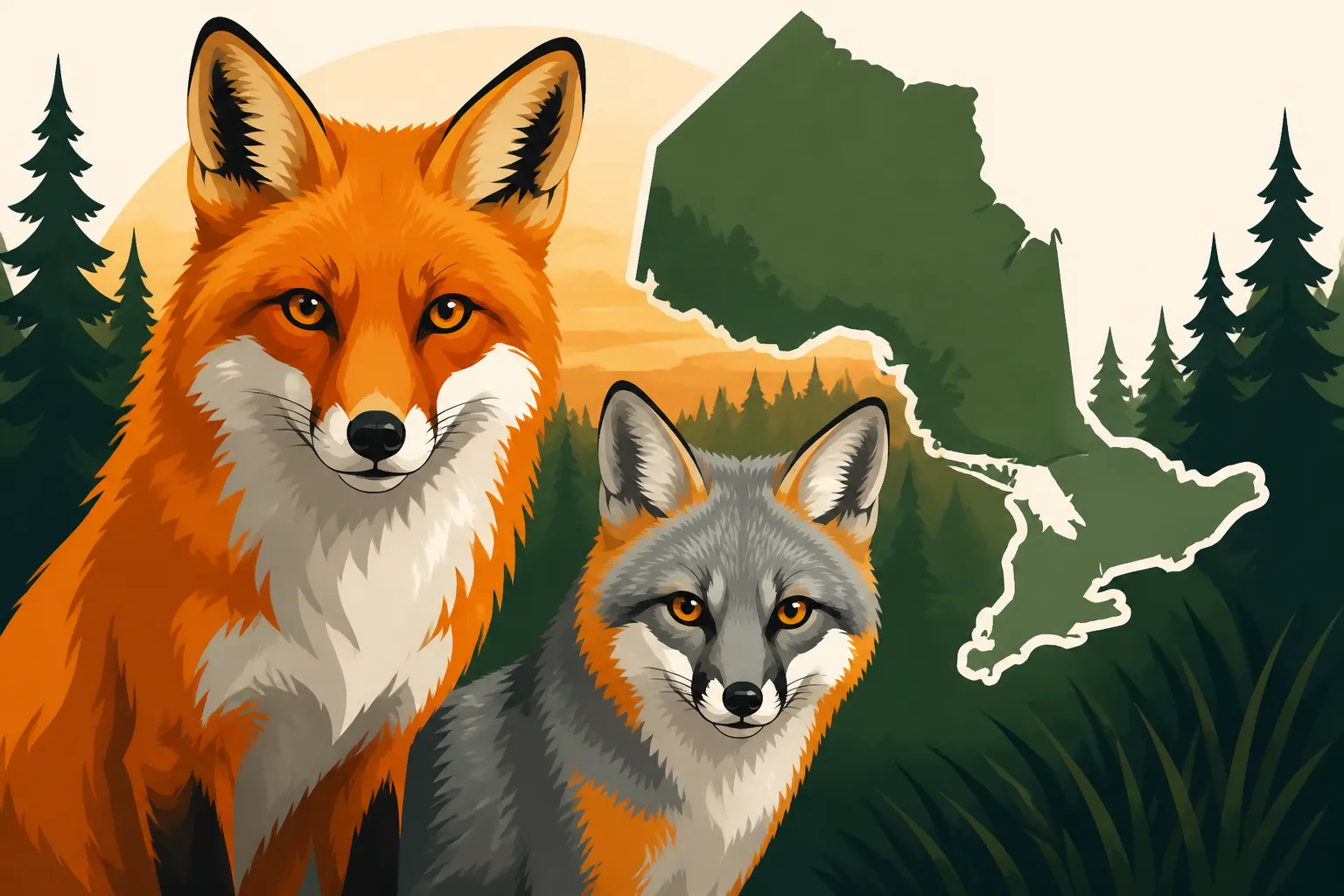
When most people picture a fox, they're picturing a red fox ( Vulpes vulpes ). They typically boast a rich reddish-orange coat across their back and flanks, fading to white on the belly and throat. What truly sets them apart, however, is that unmistakable white tip on their tail. This is a crucial identifier that distinguishes them from almost all other canids you'll encounter in Ontario. Their legs are usually darker, often black, giving them a sleek, almost stocking-like appearance. While the classic red is most common, don't be surprised to see variations like the "cross fox" with a dark stripe down its back and across its shoulders, or even the rarer "silver fox," which can range from grizzled grey to almost black. These are all still red foxes, just different colour phases.
Red foxes are masters of adaptation, which is why they can be found in such diverse habitats. They're not picky; they'll make a home almost anywhere there's food and cover. You'll often find them lurking along the edges of agricultural fields, where brush rows and woodlots meet open ground. These transition zones provide excellent hunting opportunities for small rodents and birds, and the dense cover offers safety from predators. They also inhabit mixed forests, particularly those with clearings or old logging cuts, and are increasingly common on the fringes of urban and suburban areas, learning to navigate human-modified landscapes with surprising ease. A hunter scouting for deer in these varied environments using a tool like GoHunt might often stumble upon fox sign without even trying. They utilize old dens dug by other animals, like groundhogs, expanding them for their own families.
Diet, Behavior, and Hunting Insights
Red foxes are true opportunists when it comes to their diet. Small mammals like mice, voles, and rabbits form the bulk of their meals, but they won't pass up an easy meal of ground-nesting birds, insects, or even fruits and berries when available. They are known for their distinctive hunting pounce, where they leap high into the air and dive headfirst into snow or tall grass to catch prey. This effective method showcases their agility and precision. During the lean winter months, they're often seen scavenging carrion, a critical food source when live prey is harder to come by. Their incredible sense of hearing allows them to pinpoint prey moving beneath snow or thick cover, giving them a significant advantage.
For hunters, understanding red fox behaviour can be helpful, whether you're specifically targeting them or just appreciating their role in the ecosystem. They are primarily crepuscular, meaning most active at dawn and dusk, but it's not uncommon to see them out and about during daylight hours, especially if food is plentiful or they're raising kits. They're typically solitary hunters, though a family unit will stay together during the breeding season and while raising young. Their tracks are generally straight and purposeful, often appearing like a neat line in the snow, a characteristic that sets them apart from the more meandering paths of some other canids. If you're out Calling Coyotes in Ontario Farm Country, a red fox might just be the first creature to investigate your calls. They respond well to distress calls of small animals, making them a challenging yet rewarding quarry for those who pursue them.
Decoding Grey Fox in Ontario: The Elusive Tree-Climber
Now, when we talk about the grey fox ( Urocyon cinereoargenteus ) in Ontario, we're talking about a much different animal. While red foxes are widely distributed, the grey fox is considered rare in our province, often seen only in the southernmost regions. Encountering one is a special event for any outdoors enthusiast, a truly unique moment that speaks to their elusive nature and specific habitat requirements. Their presence hints at a richer, more diverse ecosystem where they manage to carve out a niche.
Distinctive Features and Preferred Haunts
The grey fox is a striking animal, though often mistaken for its red counterpart by the untrained eye. Its coat is a salt-and-pepper grey on the back and sides, with rufous (reddish-brown) patches on the neck, flanks, and legs. The belly is white, similar to the red fox. However, the most definitive distinguishing feature is its tail: the grey fox's tail has a black stripe running down its top, and critically, a black tip, not white. This is the absolute giveaway. Their face is also often marked with more prominent black and white patterns, giving them a slightly different facial structure than the red fox. They also tend to be a bit smaller and stockier than red foxes.
Unlike their red cousins, grey foxes have a much more restricted range in Ontario. They are primarily found in the far southern parts of the province, often in pockets of mature deciduous or mixed forests with dense undergrowth. They favour areas with rocky outcrops, dense thickets, and proximity to water. What really sets them apart in the animal kingdom, and makes them truly unique among North American canids, is their ability to climb trees! They have semi-retractable claws that allow them to scramble up trunks and branches, often seeking refuge from predators like coyotes or even getting a bird's eye view of their surroundings. This arboreal skill also helps them access food like tree-dwelling birds or nuts. If you're hunting in southern Ontario's mixed forests, especially near older woodlots, you might just find a subtle sign of their presence, perhaps a print near an old hollow log, or even catch a glimpse of one scaling a leaning tree.
Unique Behavior and Conservation Status
The grey fox's diet mirrors the red fox in many ways, focusing on small mammals like rabbits and rodents, but they also consume a higher proportion of plant matter, including fruits, berries, and nuts. Their tree-climbing ability also grants them access to bird nests and arboreal prey items that other foxes can't reach. They are generally more nocturnal than red foxes, preferring to hunt under the cover of darkness, which further adds to their elusive reputation. When threatened, a grey fox is more likely to bolt for a tree than to run off across open ground, a distinctive escape strategy that reflects their unique evolutionary path.
Because of their limited distribution and smaller populations, grey foxes are a species of interest to conservationists in Ontario. While not listed as endangered provincially, their numbers are certainly much lower than red foxes, and their habitat is more specific and often fragmented. Understanding their movements and preferred habitats is vital for ensuring their continued presence in the province. Hunting regulations for foxes in Ontario generally encompass both species, but the rarity of the grey fox means they are very seldom encountered by hunters. Anyone who encounters a grey fox in the wild is truly seeing a special part of Ontario's biodiversity. For serious outdoors people who like to keep track of their sightings and hunting opportunities, a digital mapping system like GoHunt is an excellent tool for understanding the landscape and identifying potential grey fox habitat based on historical range maps and cover types.
Hunting Opportunities and Ethical Considerations
Hunting foxes in Ontario offers a unique challenge and can be a rewarding pursuit for those looking to expand their predator hunting skills. While red foxes are more numerous and widely distributed, understanding the regulations and ethical considerations applies to both species. Fox hunting can be an exciting way to spend time outdoors, test your calling abilities, and contribute to wildlife management.
Legalities and Seasons
Before you head out, it's absolutely crucial to familiarize yourself with Ontario's hunting regulations, especially regarding foxes. Foxes are typically classified under the province's small game regulations. This means you'll generally need an Outdoors Card and a small game licence. The seasons and bag limits for foxes can vary by Wildlife Management Unit (WMU), so always check the current hunting summary for the specific area you intend to hunt. Some WMUs may have year-round open seasons, while others may have specific dates. There are often no limits on bag or possession for red and grey foxes, reflecting their status as common predators.
It's also essential to be aware of local bylaws, especially if you're hunting near populated areas or private land. Ontario Trespass Law for Hunters is very strict, and having explicit permission from landowners is paramount when hunting on private property. If you're on Crown Land, ensure you know the boundaries and any specific restrictions for that area. Tools like GoHunt can be invaluable here, helping you visualize property lines and WMU boundaries on a map. Knowing Small Game Season Dates and Limits is your first step to a legal and ethical hunt.
Common Hunting Methods
The most common methods for hunting foxes in Ontario include calling, still-hunting, and sometimes incidental take during other hunts.
- Calling: This is arguably the most effective and exciting method. Using electronic or mouth calls to mimic the distress cries of small prey animals (like rabbits or mice) can draw foxes in from a surprising distance. Patience is key, as is setting up downwind to avoid being scented. Early morning and late evening are often the best times. You'll want to position yourself where you have good visibility but also enough cover to break up your silhouette. Remember, foxes are incredibly alert, and even a slight movement can spook them.
- Still-Hunting: This involves moving slowly and deliberately through areas known to hold foxes, pausing frequently to observe and listen. This method requires a keen eye for tracks and signs, and a deep understanding of fox behaviour and habitat. Look for fresh tracks in the snow, scat, or areas where small game is abundant. Reading Whitetail Sign in Ontario Hardwoods can also give you clues about other game animal movements, including foxes.
- Incidental Take: It's not uncommon for hunters pursuing other game, like deer or coyotes, to encounter a fox. If you have the appropriate licence and it's within season, you can harvest a fox encountered this way. This is particularly true if you are out Hunting Coyotes on Ontario Farm Ground, as both species share similar habitat and often respond to predator calls.
Regardless of the method, shot placement is critical for an ethical harvest. Aim for the vitals to ensure a quick, humane kill. Foxes are relatively small, so precise shooting is a must.
Conservation, Management, and Ecological Role
While both red and grey foxes are part of Ontario's rich ecosystem, their different population statuses mean their management and conservation needs vary. Understanding their ecological role helps us appreciate why they're important and how human activities can impact them.
Population Status and Management
The red fox population in Ontario is considered robust and healthy. Their adaptability allows them to thrive across diverse landscapes, and their numbers are not a concern from a conservation standpoint. In fact, in some areas, their populations are quite high, and hunting them can be a form of management, especially where they might impact certain ground-nesting bird populations or small game animals. The provincial government monitors furbearer populations, including foxes, through various surveys and harvest reports, to ensure sustainable management.
The grey fox, as mentioned, is a different story. Their limited range and smaller numbers mean they are a species of special concern for many wildlife enthusiasts, though not formally listed as at-risk provincially. Habitat loss and fragmentation, particularly in southern Ontario where their preferred mature forest habitat is shrinking, are the primary threats to their population. Competition with other canids, like coyotes and red foxes, might also play a role, though grey foxes' unique tree-climbing ability gives them a competitive edge in some scenarios. There are no specific management programs focused solely on grey foxes, but broader habitat conservation efforts in southern Ontario indirectly benefit them.
Ecological Importance
Both red and grey foxes play a crucial role in Ontario's ecosystems as mesopredators. They help control populations of small rodents and rabbits, which in turn can protect agricultural crops and reduce the spread of certain diseases carried by these prey animals. By preying on weak or sick individuals, they contribute to the overall health of their prey populations. They are also scavengers, cleaning up carrion and helping to recycle nutrients in the environment.
However, their presence also impacts other species. For example, foxes are known predators of wild turkey poults and the eggs and young of ground-nesting birds like ducks and geese. This complex web of predator-prey relationships is a natural part of any healthy ecosystem. For hunters, understanding these dynamics can influence management decisions, such as Calling Coyotes at First Light to help manage local predator numbers, or deciding where to focus small game efforts.
The Fox in Ontario's Landscape
| Feature | Red Fox ( Vulpes vulpes ) | Grey Fox ( Urocyon cinereoargenteus ) |
|---|---|---|
| Coat Colour | Reddish-orange, can be cross or silver phase | Salt-and-pepper grey with rufous highlights |
| Tail Tip | White tip | Black stripe along top, black tip |
| Legs | Often black "stockings" | Rufous/reddish-brown |
| Size | Generally larger, more slender | Slightly smaller, stockier build |
| Distribution | Widespread across most of Ontario | Primarily extreme Southern Ontario (rare) |
| Habitat | Adaptable; fields, forests, urban fringes | Mature deciduous/mixed forests, dense cover |
| Unique Trait | No | Can climb trees using semi-retractable claws |
| Activity | Crepuscular, often seen during the day | More nocturnal |
In summary, whether you're observing them from afar or pursuing them with a call, red and grey foxes are integral parts of Ontario's wild tapestry. The red fox, a resilient and clever survivor, is a common sight that adds vibrancy to our landscapes. The grey fox, on the other hand, is a rare gem, a testament to the hidden biodiversity that still thrives in specific pockets of our province. Learning to distinguish these fascinating canids enriches every moment spent in Ontario's great outdoors.
Disclaimer
This article is for general informational purposes only and does not constitute professional advice. Laws, prices and regulations vary by location and change over time. Consult a qualified professional for guidance on your specific situation.