When Ontario Gobblers Start Strutting
There’s nothing quite like the sound of an Ontario gobbler shattering the morning silence with a booming gobble, especially when you know he’s not just talking, but strutting for all he’s worth. Yet, one of the biggest frustrations for spring turkey hunters is trying to pinpoint exactly when that full-on strutting behaviour truly kicks into high gear. It can feel like you're always a week too early or a few days too late. This guide is all about helping you understand the natural rhythm of Ontario’s wild turkeys, so you can time your hunts to coincide with those magical weeks when gobblers are feeling their most confident and vocal, ready to put on a show.
The Rhythmic Dance of Spring: Understanding the Strutting Cycle
The strut of a wild turkey gobbler is one of nature's most spectacular displays, a full-body performance designed to impress hens and intimidate rival toms. It's more than just a pretty sight; it's a vital part of their reproductive cycle, driven by instinct and the lengthening days of spring. Understanding when these big birds decide to inflate, fan, and puff up can make all the difference to your hunting strategy.
The Biological Imperative: Why Gobblers Strut
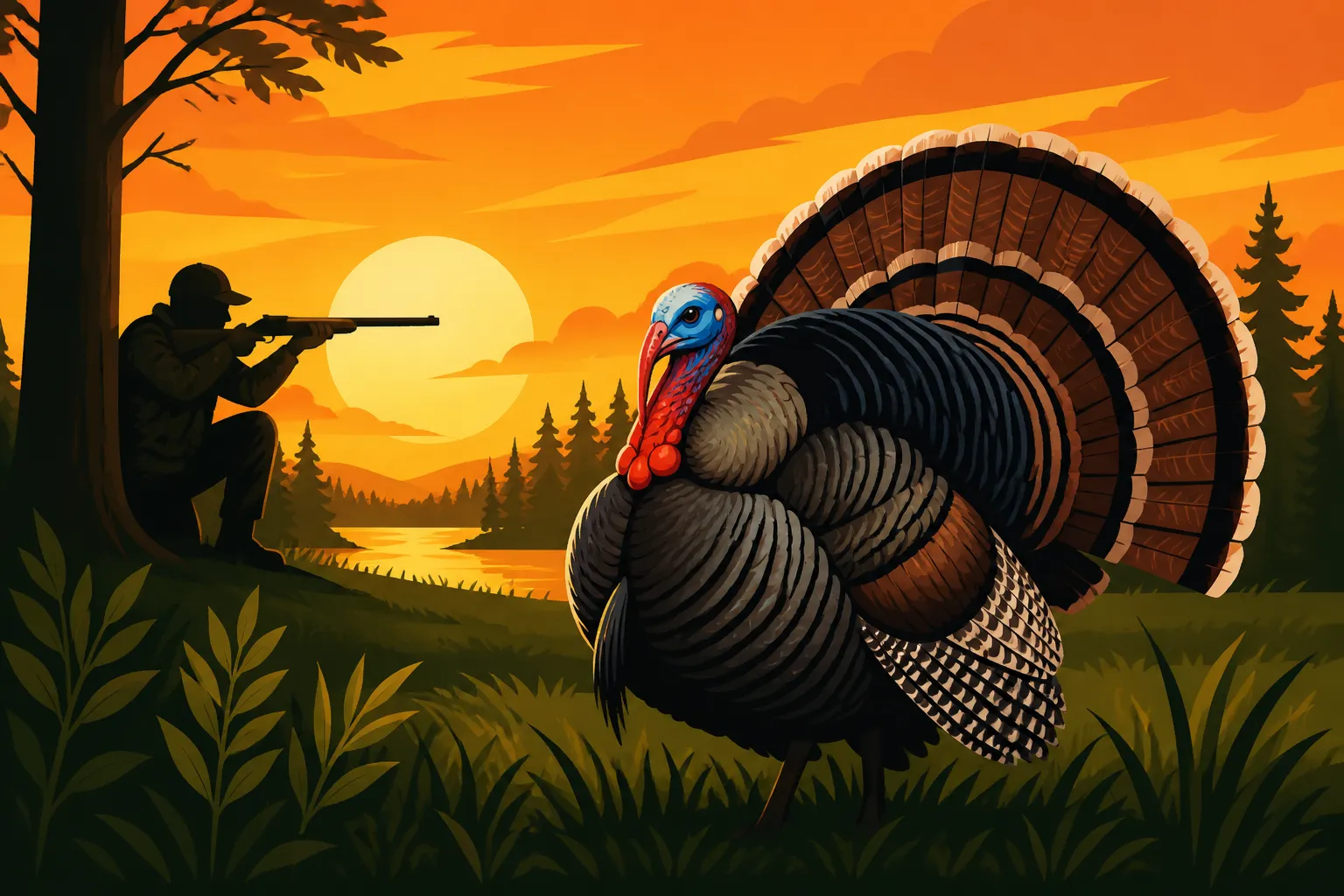
At its core, strutting is all about reproduction. As spring advances and the days grow longer, male turkeys experience hormonal changes that drive them to seek out mates. The strut is their ultimate advertisement. Picture a big tom, wings dropped, tail fanned out like a magnificent bronze-and-black halo, head and neck intensely coloured with reds, whites, and blues, buffing out his chest and dragging his primary wing feathers on the ground, creating a distinct "drumming" sound. This whole theatrical display serves several crucial purposes.
Firstly, it signals his virility and health to potential hens. A vibrant, strong strut indicates a robust male, and hens are naturally drawn to these displays as a sign of good genes. It’s like their version of an online dating profile, but way more impactful. Secondly, it's a dominance display for other gobblers. By strutting, a tom asserts his territory and social standing, often pushing younger or less dominant birds away from receptive hens. It’s a silent, yet powerful, challenge to any would-be rivals. Finally, the sheer volume of a gobble, often emitted during a strut, serves to gather hens from a distance, drawing them into his immediate area for breeding. It's a primal, instinctual call to perpetuate the species, and it’s why we, as hunters, are so drawn to it. The entire spring season revolves around this crucial period.
Early Spring Whispers: First Signs of Strutting
While the peak of strutting activity might feel like it arrives suddenly, the truth is that gobblers start testing the waters much earlier than most hunters realize. Even in late winter or very early spring, you might observe a lone gobbler or a small group of males in a field, occasionally puffing up or half-strutting. These are often the first, tentative signs, driven by subtle changes in daylight hours and a hint of warming temperatures. It’s not the full-blown, all-day affair we hope for, but it’s a precursor.
These early struts are often seen when the weather breaks, even for just a day or two, hinting at spring’s arrival. You might see a gobbler in a field, catching a bit of sunshine, drop his wings and fan for a few seconds before returning to feeding. This is usually before hens are truly receptive to breeding, so it's more about establishing dominance within the pecking order of the bachelor group or simply flexing those hormonal muscles. For hunters, this early activity is a great indicator that the season is approaching. It tells you that the birds are starting to get into the mood, even if they aren't fully committed to the breeding ritual yet. Paying attention to these subtle shifts can help you understand the pace of the spring and anticipate when the action will really heat up. A hunter using a comprehensive mapping application like GoHunt might log these early sightings, building a pattern of where and when the first signs of strutting begin in their preferred Wildlife Management Unit.
Factors That Tune the Gobbler's Drumbeat: Environmental and Pressure Influences
Just because the calendar says it's spring doesn't mean every gobbler in Ontario will be strutting uniformly. The timing and intensity of strutting behaviour are heavily influenced by a myriad of factors, from the fickle spring weather to the localized hunting pressure that can make even the most boisterous tom go silent. Understanding these nuances is key to adapting your hunting strategy and increasing your chances of success.
Weather's Whims: Temperature, Rain, and Sunshine
Ontario spring weather is, to put it mildly, unpredictable. One day you're basking in sunshine, the next you're dodging snowflakes. And these shifts have a direct impact on gobbler behaviour. Generally speaking, turkeys, like most wild creatures, respond positively to stable, warm, and sunny conditions. A string of mild, clear mornings with light winds can kick off a flurry of gobbling and strutting activity. The birds feel comfortable, visibility is good, and it just feels right to be out showing off.
Conversely, a sudden cold snap or persistent rain can significantly dampen the strutting enthusiasm. Gobblers might still gobble from the roost, but once on the ground, they may be less inclined to put on a full display. They become more focused on feeding or seeking shelter, and less on performing. Heavy rain can wash out scent, muffle sounds, and just generally make conditions less conducive for a grand showing. While they might still breed in adverse weather, the visual display and vocalizations we hunters rely on tend to decrease. Overcast days without rain can sometimes be good, as the muted light can make gobblers feel more secure in open areas. Keeping a close eye on the forecast and understanding how it affects the birds' mood is crucial for knowing When Ontario Gobblers Go Quiet in Late May or when they'll be fired up.
Habitat and Geography: Where and When It Peaks
Ontario is a huge province, and turkey populations, along with their behaviour, can vary widely from south to north. In the milder, agricultural regions of Southern Ontario, where spring arrives earlier and is often more stable, gobblers tend to start strutting earlier and maintain that activity longer. The abundance of food sources in farmland – like waste grain in cornfields or insect activity in pastures – supports robust populations, and the warmer climate means an earlier onset of the breeding cycle.
As you move north into the mixed forests of Central Ontario or the more rugged Shield country, spring arrives later, and the weather remains cooler for longer. Here, the peak strutting activity might be delayed by a week or even two compared to the deep south. Deep snow cover, especially in areas like the Haliburton Highlands or near the Ottawa River, can further push back the start of breeding, as hens and gobblers are still dealing with winter's lingering effects. Factors like Why Deep Snow Limits Turkey Range directly impact when gobblers feel secure enough to focus on breeding. Topographical features, density of hardwoods, and proximity to water also play a role. A good tool like GoHunt can provide detailed topographical maps and satellite imagery, helping you identify prime strutting zones based on habitat.
Hunting Pressure and Gobbler Savvy
Unfortunately, human activity can also influence when and how gobblers strut. In areas with high hunting pressure, especially on publicly accessible lands like some tracts of Hunting Ontario's Crown Land, gobblers can become incredibly savvy. They might still gobble from the roost, but once they hit the ground, they become "call shy" or "strut shy." Instead of strutting in the open or responding readily to calls, they might move silently through the timber, only strutting briefly in hidden pockets of cover where they feel safe.
This is a real frustration for hunters, as you know the birds are there, but they just won't cooperate. These educated birds learn quickly that a gobble or a strut in the wrong place can attract unwanted attention. They might strut more often and more openly early in the season before they've encountered much pressure, then become much more wary later on. This is where understanding decoy placement, as discussed in Decoy Placement for Pressured Ontario Gobblers, becomes critical, as a visual cue might sometimes work when a vocal one fails. Adapting your calling techniques, moving more frequently, or targeting less pressured pockets of habitat become essential strategies when dealing with gobblers that have had a few close calls.
Timing Your Approach: Hunting Strategies for Strutting Gobblers
Knowing when gobblers are likely to strut is one thing; translating that into a successful hunt is another. It requires strategic thinking, patience, and a willingness to adapt. The time of day, your setup, and how you read the subtle cues from the birds themselves are all integral to putting yourself in a position for success.
The Roost and the Run: Early Morning Opportunities
There’s a reason so many turkey hunters are up before dawn: the early morning, right off the roost, is often the absolute best time to catch a gobbler in full strut and eager to respond. As the first hints of light begin to paint the eastern sky, gobblers will often let out their first calls from their roost trees. They're signalling their presence, asserting dominance, and hoping to draw in hens that have also spent the night in the trees. This is prime time to set up.
Your goal is to be in position, concealed, and ready to call before the gobbler flies down. You want to be close enough for him to hear your calls, but not so close that you risk bumping him off the roost. The moment he hits the ground, especially if he thinks there's a hen nearby, he's likely to drop into a full strut, puffing and drumming, trying to lure her in. This is your window. Using soft tree yelps, clucks, and purrs can often get him to fly down in your direction. If you can get him committed, he'll likely be strutting the whole way in. Don’t be afraid to try to Calling a Gobbler Off an Ontario Roost – it's a thrilling way to start the day. Remember, patience is key here; let the morning unfold, and listen to the rhythm of the woods.
Mid-Day Lulls and Afternoon Reawakening
While the early morning fly-down can be electric, it's common for gobblers to go quiet once they've gathered their hens and moved off to feed or breed. This period, often from late morning through the early afternoon, is what many hunters refer to as the "mid-day lull." It's tempting to pack up, but seasoned hunters know that this is a great time to implement different strategies. Gobblers might not be strutting and gobbling as frequently, but they are still on the landscape, often trailing hens or looking for new ones.
During these quieter hours, consider covering more ground, especially if you're hunting larger public lands or private properties where you have plenty of room to roam. This is a great time to "run and gun"—move a short distance, make a series of calls, wait, and if no response, move again. You might intercept a lonely gobbler, or one that has been left by his hens. Often, gobblers will re-engage in strutting and gobbling activity later in the afternoon as they begin to think about heading back to the roost or try one last time to find a hen. Setting up near known travel corridors, food sources, or dusting areas can pay off. This is where scouting with tools like GoHunt and really learning the lay of the land, including where to try Setting Up Against a Big Maple or another substantial tree for concealment, becomes invaluable.
Reading the Signs: Beyond the Gobble
Sometimes, gobblers will strut without making a sound, or their gobbling might be muted. This is especially true of pressured birds or those in thick cover. As a hunter, you need to be observant and look for the visual cues that tell you a gobbler has been or is currently strutting, even if you don't hear him. Strut marks on the ground, often circular drag marks left by their wing tips, are a dead giveaway. You'll find these in dusting bowls, open fields, or along logging roads and trails. These fresh marks tell you that a gobbler is using that area for his display.
Other signs include tracks in soft soil, especially large gobbler tracks with splayed toes and a prominent heel pad. You might also find fresh droppings, which are often larger and more elongated for gobblers than for hens. Shed feathers, particularly the distinctive primary wing feathers or tail feathers, are also strong indicators. Pay attention to how the hens are behaving too; if they seem agitated or are looking intently in a certain direction, there might be a silent gobbler strutting just out of sight. Learning to piece together these subtle clues is like reading a story written by the wild turkeys themselves, much like Reading Whitetail Sign in Ontario Hardwoods informs deer hunting. These signs can guide you to areas where gobblers are consistently strutting, giving you a competitive edge.
Navigating the Seasonal Shifts: From Peak Strut to Post-Breeding Behavior
The spring turkey season isn't a static event; it's a dynamic progression, and understanding how strutting behaviour changes as the season wears on is critical for sustained success. What works on opening day might fall flat in the waning weeks, simply because the birds' priorities have shifted.
The Peak Performance: When to Expect the Most Action
For most of Ontario, the peak of gobbler strutting and gobbling activity usually falls in the middle two weeks of May. This is the period when the majority of hens become receptive to breeding, leading to an explosion of competitive displays from the gobblers. The weather is generally more stable, new green growth is emerging, and the entire turkey world is buzzing with activity. During this peak, gobblers are often still grouped up, or in smaller bachelor groups, but they are intensely focused on attracting hens.
You'll hear more consistent gobbling throughout the day, not just off the roost, and you'll see more open-field strutting. This is the time when gobblers are most responsive to calls, as they are actively searching for hens and are eager to respond to any sound that suggests a potential mate. This is the sweet spot, the window of opportunity that every turkey hunter dreams of. If you have the flexibility, try to schedule your hunt around these prime weeks, keeping an eye on the Ontario Spring Turkey Season Dates for your specific WMU. This is also when tools like GoHunt can help you scout historical data or community reports to confirm general peak activity in your area.
The Waning Weeks: Late Season Challenges
As May progresses towards its end, and especially into early June (where seasons extend), the dynamics of gobbler strutting can change dramatically. By this point, many hens have been bred and are nesting. This means fewer receptive hens for the gobblers to pursue. When hens are "heened up" – meaning they are with a gobbler – they are less likely to respond to your calls, and the gobbler has less incentive to leave their side to investigate.
Gobblers in the late season can become notoriously difficult. They might still gobble from the roost, but once they hit the ground with their harem of hens, they can go silent and be extremely hard to pull away. Their strutting might be more sporadic, focused solely on the hens they already have. The challenge here is to find those gobblers that are either still looking for a mate or those that have been abandoned by hens that have gone off to nest. This often requires more aggressive calling, sometimes silent stalking, or even Breaking Up a Fall Turkey Flock (though this applies more to fall, the concept of breaking up a group can sometimes be adapted for late-season spring birds, scattering hens to make a gobbler lonely). Late-season success often hinges on persistence, deep woods scouting, and a willingness to try unconventional tactics when the standard calls aren't producing. Don't be discouraged; a late-season gobbler is often the hardest earned and most satisfying trophy.
| Season Phase | Gobbler Behavior | Strutting Tendency | Hunter Strategy |
|---|---|---|---|
| Early Spring | Sporadic gobbling, mainly from roost; bachelor groups | Intermittent, often half-struts, mainly for dominance or testing the waters; not consistently seeking hens | Locate roosts, subtle calling, focus on intercepting travel; observe patterns |
| Peak Strut | Frequent gobbling, high enthusiasm, actively seeking hens, competitive displays | Consistent, full-blown strutting in open areas; highly responsive to calls, focused on breeding | Aggressive calling, decoy use, target known strut zones; capitalize on activity |
| Late Season | Gobbling may decrease; often "henned up"; less responsive to calls, more wary | Strutting with hens, less likely to break away for calls; may be silent or only strut in cover | Patience, run-and-gun, look for lonely gobblers; adapt to quieter, smarter birds |
Disclaimer
This article is for general informational purposes only and does not constitute professional advice. Laws, prices and regulations vary by location and change over time. Consult a qualified professional for guidance on your specific situation.