Why Deep Snow Limits Turkey Range
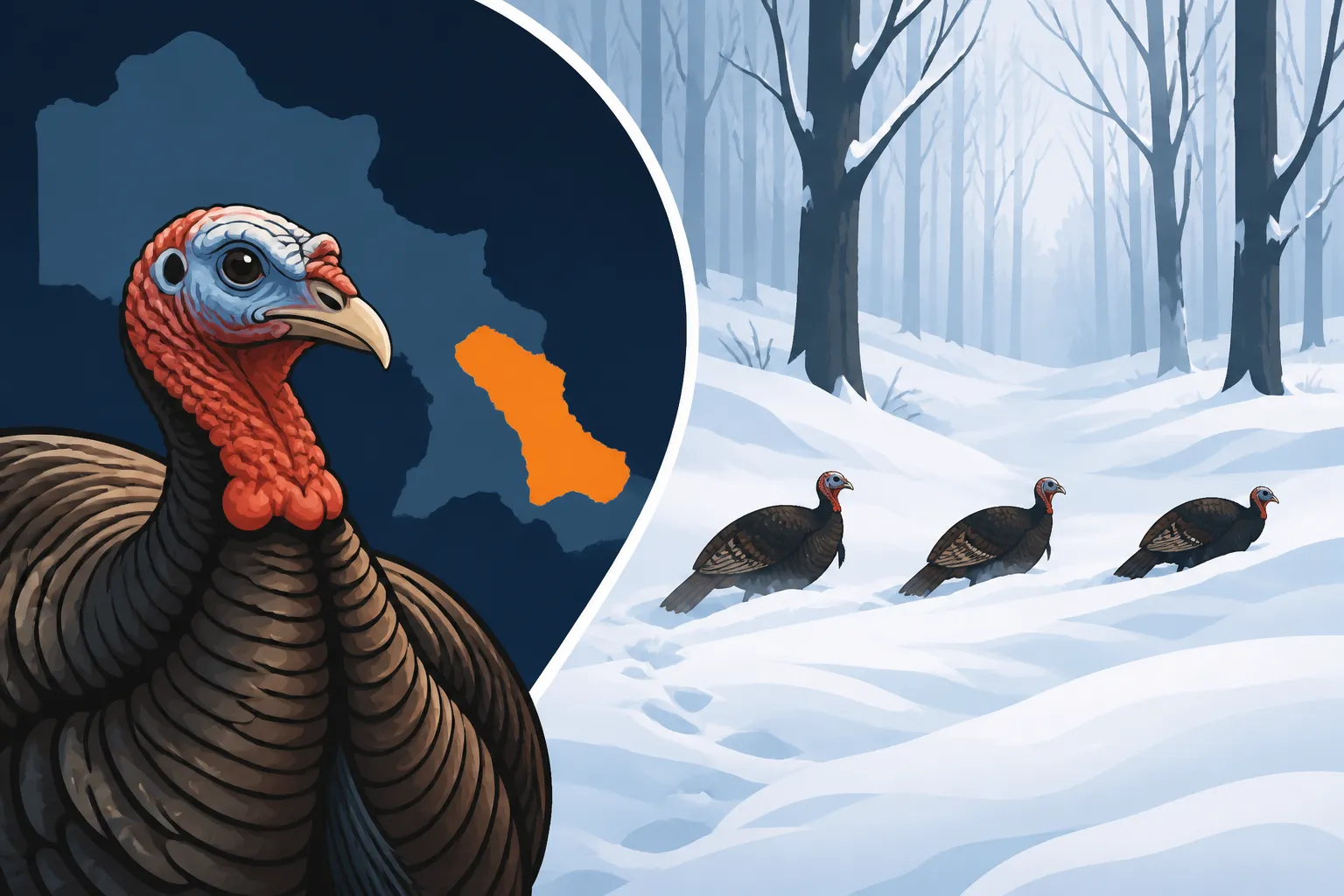
When the snow really starts to pile up across Ontario, many of us start dreaming of warmer days or perhaps turn our attention to ice fishing or predator hunting. But for those of us with a deep appreciation for wild turkeys, those heavy snowfalls bring a whole new layer of concern and challenge. It’s not just about enduring the cold; it's about how those frosty, deep conditions fundamentally alter where turkeys can survive and forage, drastically shrinking their accessible range. This guide will explore the profound reasons why these resilient birds struggle when the white stuff gets too deep, what that means for their winter survival, and how it shapes their habitat use.
The Physical Toll of Deep Snow on Turkey Mobility
It’s easy to imagine a deer or a moose navigating deep snow – their long legs and strong bodies are built for it. Turkeys, however, are a different story altogether. Their anatomy, perfectly suited for scratching and strutting on relatively clear ground, becomes a significant hindrance when snow depths exceed even a few inches. This isn't just an inconvenience; it's a matter of survival, directly impacting their ability to move, escape predators, and find essential food.
Impaired Movement and Energy Expenditure
Imagine trying to walk through knee-deep snow. Every step is an effort, draining your energy much faster than walking on dry land. For a wild turkey, whose legs are relatively short and designed for efficient striding on solid ground, anything over six to eight inches of soft, powdery snow can be like trying to swim. They expend an incredible amount of energy just to move a short distance. This increased energy cost is critical, especially in winter when food resources are already scarce and they need every calorie to maintain body temperature. A turkey that has to struggle through deep snow just to get from its roost to a potential feeding area is burning calories it desperately needs to conserve. This can lead to rapid weight loss, weakening the bird and making it more susceptible to disease and predation.
Furthermore, deep snow makes escaping predators a nightmare. A coyote or a fox, often better adapted to moving through snow with their longer legs or smaller, lighter frames, can have a significant advantage over a bogged-down turkey. The burst of speed and agility that a turkey relies on to evade danger is severely compromised, turning what would normally be a swift getaway into a desperate, energy-draining struggle.
Access to Roosting and Thermal Cover
Turkeys prefer to roost in tall trees, often pines or oaks, that provide some overhead cover and protection from the elements. However, accessing these roosting sites can become difficult when snow drifts are high. If the snow is too deep at the base of the trees, it might force them to roost in less ideal locations, perhaps in smaller trees or areas with less wind protection. This exposes them to harsher temperatures and stronger winds, increasing their energy expenditure to stay warm.
Beyond roosting, turkeys also rely on dense stands of conifers like cedar swamps or thick pine plantations for thermal cover during the day. These areas, with their thick canopy, intercept snowfall, creating pockets of shallower snow or even bare ground underneath. But if the surrounding snow is too deep to access these crucial refuges, they might be forced to spend more time in exposed areas, further exacerbating their energy crisis. Understanding these critical wintering habitats is key, and tools like GoHunt can help identify these dense cover areas when Scouting With Satellite Imagery in Ontario.
The Scarcity of Food Resources Under a Blanket of White
Food is fuel, and in winter, that fuel is harder to come by for turkeys. Their primary method of foraging involves scratching through leaf litter and shallow ground to find seeds, nuts, insects, and waste grain. When deep snow covers everything, this natural behaviour becomes nearly impossible, leading to widespread food scarcity.
Buried Forage and Nutritional Stress
A few inches of snow might not be a huge deal; turkeys can still scratch through it. But once the snow depth gets to six inches or more, most ground-level food sources become inaccessible. Think about acorns, beechnuts, or waste corn in a harvested field – all buried under a thick, insulating blanket. Turkeys don’t have the digging power of a deer or a bear; their strong feet are for scratching, not excavating. This means a significant portion of their diet, which largely consists of mast (like acorns) and agricultural waste grain, is suddenly out of reach.
This lack of access to their preferred high-energy foods puts turkeys under immense nutritional stress. They might resort to browsing on tree buds or other less nutritious vegetation, but these items don't provide the caloric punch needed to sustain them through prolonged periods of cold and limited mobility. Without adequate nutrition, their body condition declines, making them more vulnerable to illness and cold-related mortality. It’s a harsh reality that plays out every winter in parts of Ontario where snow gets particularly deep.
The Importance of Specific Winter Food Patches
Certain areas become vital lifelines during these harsh conditions. South-facing slopes, for instance, often melt faster and expose patches of bare ground, offering temporary relief. Unharvested corn or soybean fields, if accessible, can also provide critical sustenance. These are often small, isolated patches, making them hotspots for turkeys and, unfortunately, for predators too. Hunting a Standing Corn Field Edge or Hunting a Soybean Field at Dusk are often effective tactics precisely because these areas become magnets for game, including turkeys, when natural forage is buried.
Knowing these critical zones can be a game-changer for hunters and conservationists alike. Identifying areas with remnant food sources or even sheltered spots where snow depth might be less severe is crucial for understanding turkey distribution in winter. A platform like GoHunt can be invaluable here, allowing you to mark potential food sources and understand their proximity to good cover, especially when the landscape is covered in snow.
How Deep Snow Shapes Turkey Habitat and Behaviour
The presence of deep snow doesn't just make life harder for individual turkeys; it fundamentally alters their entire habitat use and social behaviour. Their range shrinks, their movements become predictable, and their survival hinges on the availability of specific, often limited, areas.
Concentration in Wintering Areas
When deep snow covers the landscape for an extended period, turkeys will naturally concentrate in areas that offer the best combination of shallower snow, available food, and protective cover. These "wintering areas" often include sheltered valleys, south-facing slopes, dense conifer stands, or areas adjacent to unharvested agricultural fields. These spots act as survival refuges, but their limited size often means a higher density of birds in a smaller area.
This concentration can be a double-edged sword. While it brings birds closer to scarce resources, it also makes them more susceptible to disease transmission and predator pressure. A single disease outbreak or a particularly effective predator could have a more significant impact on a concentrated flock. Understanding these concentration points is crucial for managing turkey populations in challenging winters. We've certainly seen how these patterns unfold when hunting during the Ontario Spring Turkey Season Dates or Ontario Fall Turkey Season Dates, where certain woodlots or field edges consistently hold birds due to unique microclimates or food availability.
Altered Movement Patterns and Increased Predation Risk
Under normal conditions, turkeys range widely throughout the day, foraging and moving between different habitat types. Deep snow severely restricts this movement. Birds become less nomadic, often sticking to established paths or areas where the snow is shallower. This predictability, while making them easier to pattern for hunters, also makes them more vulnerable to predators who quickly learn these patterns. A coyote doesn't have to work as hard to find a meal when turkeys are confined to a smaller, more predictable travel corridor.
Predators like coyotes, foxes, and even larger raptors can take advantage of turkeys struggling in the snow. The energy demands placed on turkeys to move through deep snow leave them weakened and slower, making them easier targets. A turkey that might normally outrun a coyote in an open field struggles to gain traction and speed in a foot of powder, giving the predator the upper hand. The dynamics shift dramatically, often tipping the balance further in favour of the hunters and natural predators.
Adapting Hunting Strategies to Snow-Limited Range
For us hunters, understanding how deep snow limits turkey range isn't just an academic exercise; it directly informs our strategies. When the landscape is blanketed in white, our approach needs to change, focusing on those critical survival zones that turkeys are forced into.
Focusing on Key Wintering Habitats
During periods of deep snow, success often comes down to identifying and accessing those small pockets where turkeys can still function. This means looking for areas like:
- Dense Conifer Stands: Cedar swamps, pine plantations, or thick spruce stands offer crucial thermal cover and often shallower snow underneath. Turkeys will spend significant time here. Hunting a Cedar Swamp Edge can be particularly productive.
- South-Facing Slopes: These areas receive more direct sunlight, causing snow to melt faster and expose bare ground for foraging.
- Agricultural Residue: Unharvested corn, soybean, or wheat fields can be vital food sources, especially if they are close to good cover. Hunting a Field of Standing Corn can be a prime example of where to focus.
- River Valleys and Draws: These natural depressions can sometimes offer shelter from wind and may have slightly less snow accumulation, though this can vary. Hunting an Ontario River Valley can lead you to these spots.
Using mapping applications like GoHunt can be immensely helpful in pre-season scouting or even during the hunt. You can layer satellite imagery with topographic maps to identify south-facing slopes, dense timber, and agricultural fields, even before the snow flies. This allows you to pinpoint potential turkey strongholds when winter conditions are at their harshest, giving you a distinct advantage.
Understanding Turkey Behavioural Shifts
When turkeys are confined by snow, their behaviour becomes more predictable. They'll often move from roost to food source and back to cover along the path of least resistance. This might be a worn deer trail, a plowed laneway, or simply the edge of a field with less snow. Scouting for tracks in light snow can confirm these travel corridors.
Their calling patterns might also shift. While they still gobble, especially during the spring season, their willingness to move long distances to a call might be reduced if the snow is too deep. A hunter might need to get closer to the birds, or employ more subtle calling tactics, as opposed to trying to pull a bird across a snow-covered expanse. Knowing how to adapt your approach to Calling a Gobbler Off an Ontario Roost when conditions are tough is key. Remember, while a lone gobbler might be willing to traverse some snow for a hen, the energy cost still plays a role. Wild Turkeys in Ontario are robust, but not invincible.
The table below summarizes the general impact of varying snow depths on wild turkeys and related hunting considerations.
| Snow Depth (Approx.) | Turkey Mobility & Foraging | Predation Risk | Energy Expenditure | Hunter Strategy Focus |
|---|---|---|---|---|
| 0-3 inches | Minimal impact, normal foraging | Low | Normal | Typical patterns, widespread scouting |
| 4-8 inches | Noticeable effort, limited ground scratching | Moderate | Elevated | Look for preferred food sources, observe travel routes |
| 9-15 inches | Significant difficulty, highly restricted movement | High | Substantial | Focus on dense cover, south slopes, exposed fields |
| 16+ inches | Severely hampered, survival zones only | Very High | Extreme | Identify specific wintering refuges, minimal movement |
This insight into how deep snow impacts wild turkeys not only helps us become more effective hunters but also fosters a deeper appreciation for the resilience of these birds and the conservation efforts required to ensure their populations thrive, even in the face of challenging Ontario winters.
Disclaimer
This article is for general informational purposes only and does not constitute professional advice. Laws, prices and regulations vary by location and change over time. Consult a qualified professional for guidance on your specific situation.