What Wildfire Does to Ontario Game Range
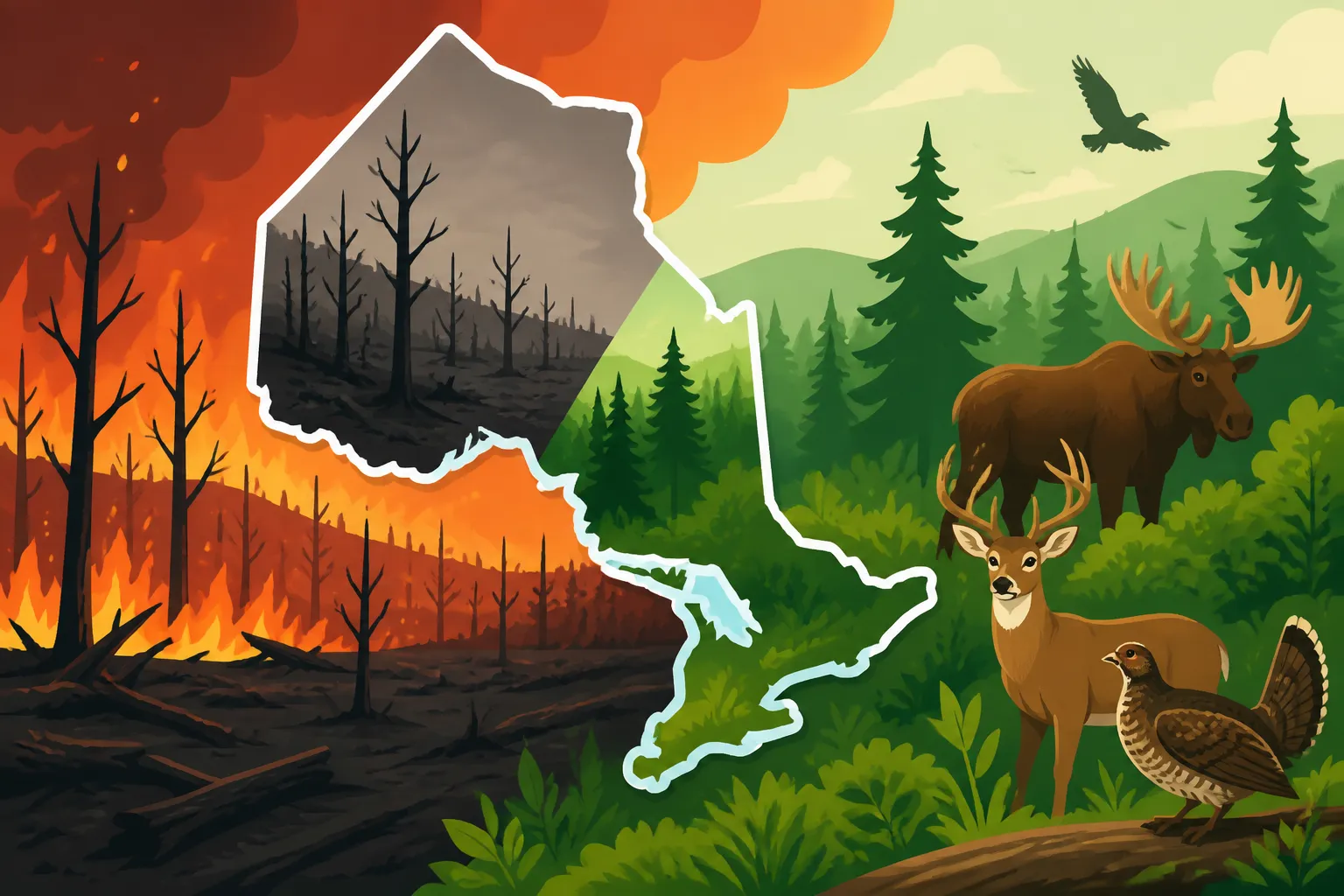
When you see news reports about massive wildfires ripping through Ontario's forests, it’s only natural to feel a pang of worry, especially if those fires are in areas you love to hunt. You might wonder if your favourite bush lot is gone forever, or if the game animals you pursue have simply vanished. The truth is, wildfire has a complex, often misunderstood, impact on game range, sometimes devastating in the short term, but frequently leading to a rejuvenation that creates prime habitat for years to come. This guide will help you understand the intricate relationship between wildfire and Ontario's hunting landscape, so you can adapt your strategies and even find new opportunities in the wake of a burn.
The Immediate Impact on Wildlife and Habitat
When a wildfire tears through a landscape, the immediate consequences can be stark and dramatic, affecting everything from the largest moose to the smallest grouse. It's a period of intense disruption, and understanding this initial shock is crucial for comprehending the long-term ecological changes.
Immediate Danger and Displacement
The most urgent concern during a wildfire is, of course, the immediate danger to wildlife. Animals are incredibly adept at sensing impending danger, often picking up on smoke and heat long before humans are aware of a threat. Their primary response is to flee. Deer, moose, bear, and smaller mammals will generally try to outrun the flames, seeking refuge in unburned pockets of forest, wetlands, or agricultural fields on the periphery of the fire. Some, unfortunately, may not escape, succumbing to smoke inhalation or the fire itself. However, it's important to remember that wildlife populations are often surprisingly resilient, with many individuals managing to move to safety, sometimes travelling considerable distances to do so. This mass displacement can lead to temporary increases in animal density in adjacent, unburned areas, putting pressure on existing food sources and potentially altering local herd dynamics.
Consider a large fire in the boreal forest. A bull moose accustomed to its familiar territory near a productive beaver pond will instinctively push out, perhaps along an old logging road, seeking damp ground or lakeshores where the fire might not spread. Likewise, a sow bear with cubs will lead them to safety, sometimes denning up for a brief period in a previously unused area until the immediate threat passes. This movement isn't random; animals often use established travel corridors or seek out natural fire breaks like large rivers or expansive wetlands. While individual animals are lost, the core populations often manage to find new, albeit temporary, homes, creating a ripple effect on the surrounding ecosystem.
Loss of Habitat and Food Sources
Once the flames die down, the immediate aftermath reveals a landscape transformed. The most noticeable impact is the extensive loss of existing habitat. Dense stands of pine, spruce, or mixed hardwoods, which once provided essential cover for game, can be reduced to charred snags. This removal of shelter leaves animals vulnerable to predators and the elements, particularly in early winter before new growth emerges. More critically, the fire obliterates immediate food sources. Berry bushes, young saplings, and tender herbaceous plants that make up the diet of many species are consumed or incinerated. This forces displaced animals to rely heavily on the forage available in unburned areas, which may already be stressed or overbrowsed.
For a whitetail deer population in a mixed forest setting, a significant burn means the loss of critical browse like red osier dogwood, maple saplings, and low-lying evergreens that provide winter cover. They'll be forced to move into adjacent unburned swamps or find refuge along an Hunting an Ontario Bush Edge, putting pressure on those resources. Similarly, upland birds like ruffed grouse, which depend on dense undergrowth for nesting and protection, will find their immediate cover wiped out. They'll need to locate new pockets of undisturbed habitat, which might be miles away, potentially exposing them to increased predation during their relocation. The scale of this loss can be daunting, and it's the period immediately following a fire when animals are most challenged to find sufficient sustenance and shelter.
The Recovery Phase and New Growth
While the immediate aftermath of a wildfire can look devastating, nature is incredibly resilient. The recovery phase, often starting surprisingly quickly, ushers in a period of renewal that can transform a burned landscape into a dynamic and highly productive game habitat.
Pioneer Plants and Nutrient Cycling
The very act of fire, while destructive, also plays a vital role in nutrient cycling. Wildfires burn off accumulated leaf litter and dead wood, returning essential nutrients like nitrogen, phosphorus, and potassium directly to the soil in the form of ash. This nutrient-rich environment, exposed to sunlight, creates ideal conditions for pioneer plant species to rapidly colonize the burned area. Within weeks, or sometimes even days, after the fire has passed and rain has fallen, you'll start to see a flush of vibrant green. Plants like fireweed, aspen and birch suckers, various grasses, and clover are often among the first to emerge. These hardy species thrive in disturbed soil and abundant sunlight, quickly carpeting the forest floor.
Think of it like this: the forest floor before a fire can be a thick tangle of old growth, fallen trees, and a deep layer of duff, making it hard for new plants to sprout and for game animals to move through or find food. The fire acts as a natural reset button, clearing the way. Aspens, for instance, are particularly adapted to fire; their root systems survive even intense burns and quickly send up hundreds of new shoots, creating dense, highly palatable thickets. This rapid regeneration isn't just aesthetically pleasing; it's the foundation for an entirely new food web, providing crucial forage that is often more nutritious and abundant than what was available in the mature forest.
Emergence of New Forage
As the pioneer plants establish themselves, the burned area becomes a buffet for many game species. The young shoots and sprouts that emerge are incredibly nutritious and highly digestible, acting as a powerful draw for herbivores. For deer and moose, these tender saplings and broad-leafed plants provide a wealth of high-quality browse that was previously unavailable under a dense, shading canopy. Areas that were once sparse and unproductive can become prime feeding grounds, especially during the spring and summer months. The increased sunlight reaching the forest floor also encourages the growth of berries like blueberries and raspberries, which are vital food sources for bears and various bird species.
Consider a patch of forest where a moderate burn has cleared out a thick conifer stand. Within a year or two, you'll likely see a sea of young aspen, birch, and willow sprouts, along with a rich understory of forbs. This burst of growth is exactly what moose, as described in What Moose Eat Through the Year, crave. They will gravitate to these areas, browsing on the nutrient-rich new growth. Whitetail deer will also find these areas highly attractive, benefiting from the increased food availability, which can lead to better body condition and antler growth. This new forage isn't just about quantity; the young plants often have higher protein and mineral content than older, tougher vegetation, translating directly into healthier game animals.
How Different Species Respond to Burns
The impact of wildfire is not uniform across all wildlife. Different species have evolved varying strategies to cope with and even benefit from fire-altered landscapes, leading to distinct patterns of use and abundance in burned areas.
Deer and Moose Adaptations
Deer and moose, being large herbivores, are often among the most conspicuous inhabitants of regenerating burned areas. Immediately after a fire, they will initially evacuate to unburned refugia, but once the land cools and new growth begins, they are often quick to return. The abundant, high-quality browse that emerges in the years following a burn is a massive draw for both species. Young aspen, birch, willow, and various shrubs thrive in post-fire conditions, providing a protein-rich diet that can lead to improved health and reproductive success. For example, a moose population in northern Ontario might find that an area burned a few years prior is now a prime feeding ground, offering far more digestible browse than the mature forest.
However, the timing and intensity of the fire matter. A high-severity burn that completely incinerates vegetation and duff layer might take longer to recover and offer less immediate browse. Conversely, a patchy burn, where some areas are lightly scorched and others untouched, can create a mosaic of habitats, providing both food and immediate cover. For White-Tailed Deer Across Ontario, especially in the northern parts of the province, the loss of dense coniferous cover immediately after a fire can make them more vulnerable to predators and harsh winter weather. Yet, within a few years, the same area, thick with new growth, can become a deer magnet, offering exceptional feeding opportunities that hunters will want to locate. This transition from short-term displacement to long-term benefit is a classic example of ecological succession.
Small Game and Upland Bird Changes
Small game and upland birds also show distinct responses to wildfires. Species like ruffed grouse, snowshoe hare, and various songbirds are heavily dependent on specific types of cover and food sources, which are often dramatically altered by fire. Immediately after a severe burn, areas can become unsuitable for these species due to the lack of cover and food. However, as the habitat regenerates, new opportunities arise. Ruffed grouse, for instance, thrive in areas with dense young aspen and alder thickets, which are common in post-fire landscapes after a few years of regrowth. The open understory in these areas, coupled with dense overhead cover, provides ideal drumming logs, nesting sites, and foraging opportunities.
Snowshoe hares, another key small game species, also benefit from the dense regenerating shrubs and saplings that provide both food and crucial escape cover from predators. In fact, a burned area that is 3-10 years post-fire can often support higher densities of hares than mature forest, especially if the burn created a mosaic of successional stages. This abundance of hares, in turn, can attract predators like lynx and coyotes. For hunters interested in Ruffed Grouse Hunting Ontario's Bush Roads, targeting areas that burned a few years back, particularly those showing vigorous aspen regrowth, can be incredibly productive. However, it's a dynamic process; extremely hot, crown fires might set succession back further, requiring more time for these specific habitat types to establish.
Predator Dynamics
Wildfires also inevitably influence predator populations, leading to shifts in their distribution and hunting strategies. In the immediate aftermath, predators like wolves, coyotes, and bears may follow their prey out of the burned area, concentrating in adjacent unburned habitats. This can lead to increased predator-prey interactions in these refuge zones. As the burned landscape begins to regenerate, however, predators will be drawn back in by the returning prey base. The new growth that attracts deer and moose also attracts the animals that hunt them.
Furthermore, the altered landscape itself can change hunting dynamics. More open conditions in recently burned areas might initially favour predators that rely on sight, while denser regrowth years later can create excellent ambush cover. Black bears, for example, are omnivores that benefit immensely from the flush of berries (like blueberries and raspberries) that often proliferate in burned areas a few years post-fire. This can lead to higher bear densities in these zones, offering new opportunities for hunters interested in Black Bear Hunting in Ontario. The mosaic of burned and unburned areas creates a complex patchwork of hunting grounds for predators, forcing them to adapt to an ever-changing environment and influencing how their populations interact with their prey over time.
Long-Term Ecological Shifts
Beyond the immediate regeneration, wildfires instigate profound, long-term ecological shifts that can reshape an Ontario game range for decades, influencing forest structure, species composition, and even the physical landscape itself.
Forest Succession and Habitat Evolution
Forest succession, the gradual process of change in plant and animal communities over time, is dramatically reset and accelerated by wildfire. After a burn, the forest doesn't just "grow back" to what it was. Instead, it typically progresses through a series of stages, each offering different habitat characteristics. Initially, pioneer species dominate, leading to a shrub and sapling stage that is incredibly productive for browse-dependent animals. Over decades, these pioneer species mature, and slower-growing species, like pines, spruces, or maples, begin to establish themselves, eventually forming a more closed-canopy forest. This evolution means that the "best" habitat for a particular species will shift over time within a burned area.
For example, a severe fire in a mixed coniferous forest in Central Ontario might initially create open ground, then be colonized by raspberries, fireweed, and young poplar. This early successional stage is prime for moose, deer, and black bears. As the poplars grow into a dense, pole-stage forest (15-30 years post-fire), it might become less ideal for moose but still offer good cover for deer and possibly some grouse. Eventually, as longer-lived conifers or hardwoods reclaim the site, the habitat will shift again, favouring species that prefer mature forest. Hunters who understand these successional patterns can identify which stages are most productive for their target game, knowing that areas that burned 5-15 years ago might offer very different hunting opportunities than those burned 50 years ago. This long-term view is essential when considering Hunting Ontario's Crown Land where past burns can be significant landscape features.
Water Quality and Aquatic Life
While often overlooked, wildfires can also have significant long-term effects on water quality and aquatic ecosystems, which in turn impact game species that rely on healthy waterways. The immediate impact can be increased erosion, as vegetation stabilizing the soil is removed. This can lead to sediment runoff into streams and lakes, increasing turbidity and potentially affecting fish spawning beds. Ash and debris can also alter water chemistry, with spikes in nutrient levels that might initially fuel algal blooms. However, over the long term, once vegetation begins to stabilize the soil, these effects can diminish.
The shade provided by riparian vegetation along stream banks is critical for maintaining cool water temperatures, essential for species like brook trout. If this vegetation is removed by fire, stream temperatures can rise, impacting fish populations and the insects they feed on. Conversely, some fire-adapted forest types, particularly in the boreal regions, are designed to burn, and the ecosystem is resilient to these changes. Rivers and lakes can also act as natural fire breaks, creating unburned corridors that provide refuge for wildlife and protect aquatic habitats. The key is to recognize that the health of terrestrial game populations is inextricably linked to the health of the aquatic systems within their range, and long-term changes to one will inevitably affect the other.
Hunting Strategies in Burned Areas
Hunting in areas impacted by wildfire requires a flexible mindset and an understanding of how game animals react to a changed landscape. It’s not about finding the old spots, but discovering the new patterns and opportunities that emerge.
Scouting Burned Areas
Effective scouting becomes even more critical in a burned landscape. You can't rely on your old knowledge of where the deer usually cross, or where the moose historically browsed. Instead, you need to focus on finding the new "sweet spots" where game animals are concentrating. This means looking for the edges of the burn where unburned timber meets new growth, often a high-traffic zone. Pay close attention to pockets of unburned cover, damp areas, or stands of mature trees that escaped the flames – these become crucial refuge areas. Also, seek out areas where the new browse is particularly vigorous, such as lush patches of aspen sprouts or fireweed.
Modern tools can be incredibly helpful here. Utilizing satellite imagery, like that offered by platforms such as GoHunt, can be a game-changer. You can visually identify burn boundaries, locate unburned islands of timber, and even get a sense of the density of post-fire regrowth from the comfort of your home. This allows you to plan your approach before you even set foot in the woods. When you’re on the ground, look for fresh tracks, droppings, and browse lines that indicate recent use. Remember that game might be more concentrated than usual in these productive pockets, so scouting a wider area to understand the overall movement patterns will be beneficial for your Whitetail Hunting in Ontario or other big game pursuits.
Understanding Game Movement
Game movement in burned areas is often dictated by the availability of food and cover. In the immediate years following a fire, animals will concentrate their feeding efforts in the areas with the most productive new growth. However, they still need secure cover for bedding, especially larger animals like moose and deer. This often means they will travel from dense, unburned stands of timber or thick regenerating pockets to the more open, nutritious feeding grounds. These travel corridors, often along the edges of the burn, through unburned strips, or along natural features like creek bottoms, become key pinch points for hunters.
Understanding these patterns allows you to predict where game might be moving and set up accordingly. If you're hunting for moose, for instance, in a recently burned area of northern Ontario, you might focus your efforts on the thick regrowth patches that border a mature, unburned spruce swamp. The moose will feed heavily in the regenerating area but retreat to the dense cover of the swamp for security. Similarly, deer might use the dense young saplings that sprout up in a several-year-old burn for bedding during the day, emerging to feed in adjacent fields or less dense browse areas at dusk and dawn. Tools like GoHunt can help visualize these transitions, highlighting areas where different habitat types meet, creating excellent ambush opportunities. Focusing on these transitions is a great strategy for Hunting an Ontario Bush Edge.
Adapting Hunting Techniques
Given the altered landscape, your usual hunting techniques might need a bit of adjustment. In more open, recently burned areas, long-range shooting opportunities might increase, so practice those shots if you typically hunt in dense cover. If the area is thick with young, regenerating growth, still-hunting or slow-moving drives might be more effective. For archery hunters, finding shooting lanes can be challenging in dense sapling growth, but the concentrated nature of game might offer closer encounters. Calling techniques, such as Calling a Bull Moose in the Rut or Rattling and Calling Ontario Whitetails, can be highly effective in more open burned areas where sound travels further, but you might need to adjust your volume.
Furthermore, consider elevated stands if the terrain allows, as this can give you a better view over dense regrowth or charred blowdowns that might impede ground travel. The key is observation and flexibility. If your usual strategy isn't producing results, don't be afraid to try something new. Spend time watching, listening, and reading the sign. The game is there; you just need to understand how they are using this new landscape. Remember that conditions underfoot can be challenging too, with ash, fallen timber, and uneven ground, so sturdy footwear and careful navigation are essential.
Safety and Regulations Around Wildfires
Hunting in or near wildfire-affected areas comes with additional responsibilities and potential hazards. Staying informed about current conditions and adhering to all regulations is paramount for your safety and the health of the ecosystem.
Access Restrictions and Fire Bans
One of the most critical aspects of hunting near wildfire zones is understanding and respecting access restrictions and fire bans. When wildfires are active, authorities often implement temporary closures of Crown Land, specific Wildlife Management Units (WMUs), or entire forest management areas to ensure public safety and allow firefighting efforts to proceed unimpeded. Entering these restricted areas can not only be dangerous but can also result in hefty fines. It is your responsibility as a hunter to check for these closures before you even leave home. This includes consulting official government sources and local forestry offices.
Beyond direct access restrictions, fire bans are frequently put in place to prevent new fires. These bans can range from restricting open fires to prohibiting certain equipment that might spark a blaze, such as ATVs on dry ground. Even if an area is open for hunting, you must adhere to any existing fire bans. Ignoring these can have catastrophic consequences, jeopardizing lives and vast tracts of forest. Before planning any hunt, especially in dry conditions or areas with a history of wildfire, always verify the current status of the area. This kind of diligence is as important as understanding Reading Ontario Wildfire Closure Maps to ensure you're hunting legally and safely.
Navigating Burned Terrain and Hazards
Burned landscapes present unique hazards that demand extra caution. Even long after a fire has passed, the terrain can be treacherous. Standing dead trees, often called "snags," can fall without warning, especially in windy conditions or after heavy rain. The ground can be uneven, with ash concealing holes, burned-out roots, or loose soil, making footing precarious. Charred logs and stumps can be slippery, and the overall lack of distinct landmarks might make navigation more challenging, even in familiar areas.
It's crucial to wear appropriate footwear with good ankle support and to always carry a reliable GPS device, especially since familiar trails and landmarks might be obliterated. If you typically rely on visual cues, the altered landscape can be disorienting, increasing your risk of getting turned around. This is especially true when hunting in the vastness of Hunting Northwestern Ontario's Big Bush. Let someone know your plans and expected return time. Be extra vigilant when moving through burned areas, constantly scanning for falling hazards and unstable ground. Safety should always be your top priority, even when pursuing game in promising new habitat.
| Impact Category | Short-Term Effects (0-5 Years Post-Fire) | Mid-Term Effects (5-20 Years Post-Fire) | Long-Term Effects (20+ Years Post-Fire) |
|---|---|---|---|
| Habitat Cover | Reduced; open, exposed areas, some snags | Dense regeneration (shrubs, young trees), excellent escape cover | Developing canopy, mature forest, varied understory depending on species |
| Food Sources | Limited initially; rapid flush of pioneer plants | Abundant, nutritious browse (aspen, willow, berries); high palatability | Declining browse as canopy closes; fruit/nut production from mature trees |
| Deer/Moose | Displacement, then return for pioneer browse | High densities due to abundant forage; improved body condition | Shift to mature forest browse or adjacent unburned areas |
| Small Game/Birds | Displacement; limited cover for some species | Excellent habitat (dense thickets) for grouse, hare | Decline as dense understory is shaded out |
| Predators | Follow prey; adapt to open hunting grounds | Drawn by concentrated prey; diverse hunting opportunities | Adapt to mature forest dynamics and prey availability |
| Access/Safety | Restrictions, falling snags, unstable ground | Improved, but can be very dense and difficult to navigate | Generally stable, trails may re-establish |
| Overall Hunting | Challenging but unique opportunities | Often peak productivity for browse-dependent species | Requires scouting for specific habitat niches |
The Dynamic Nature of Ontario's Hunting Landscape
Ontario's vast and diverse hunting landscape is constantly changing, and wildfires are a powerful, natural agent of that change. While the immediate sight of a burned forest can be disheartening, understanding the ecological processes that unfold afterwards reveals a story of renewal and new opportunities for game animals and, consequently, for hunters. These aren't just barren zones; they are dynamic, evolving ecosystems that contribute to the overall health and productivity of Ontario's wildlife populations.
Learning to read these landscapes, to understand how a fire 5 years ago might be impacting the game you pursue today, or how a recent burn could create prime habitat for future seasons, is a skill that enhances your entire hunting experience. It connects you more deeply to the land and its rhythms. The resilience of nature is truly remarkable, and by adapting our approaches, we can continue to find rewarding experiences in these fire-transformed forests. So, the next time you see a patch of burned timber, don't just see destruction; look closer, and you might just spot the seeds of your next great hunt.
Disclaimer
This article is for general informational purposes only and does not constitute professional advice. Laws, prices and regulations vary by location and change over time. Consult a qualified professional for guidance on your specific situation.